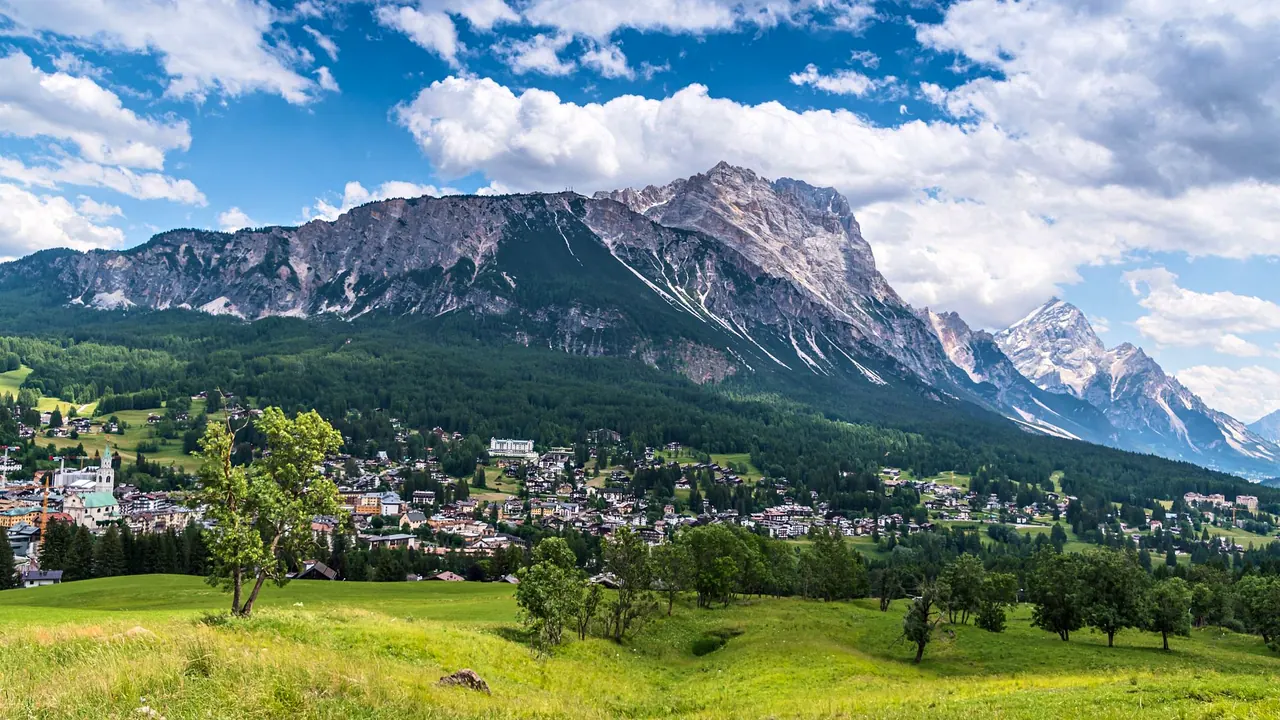
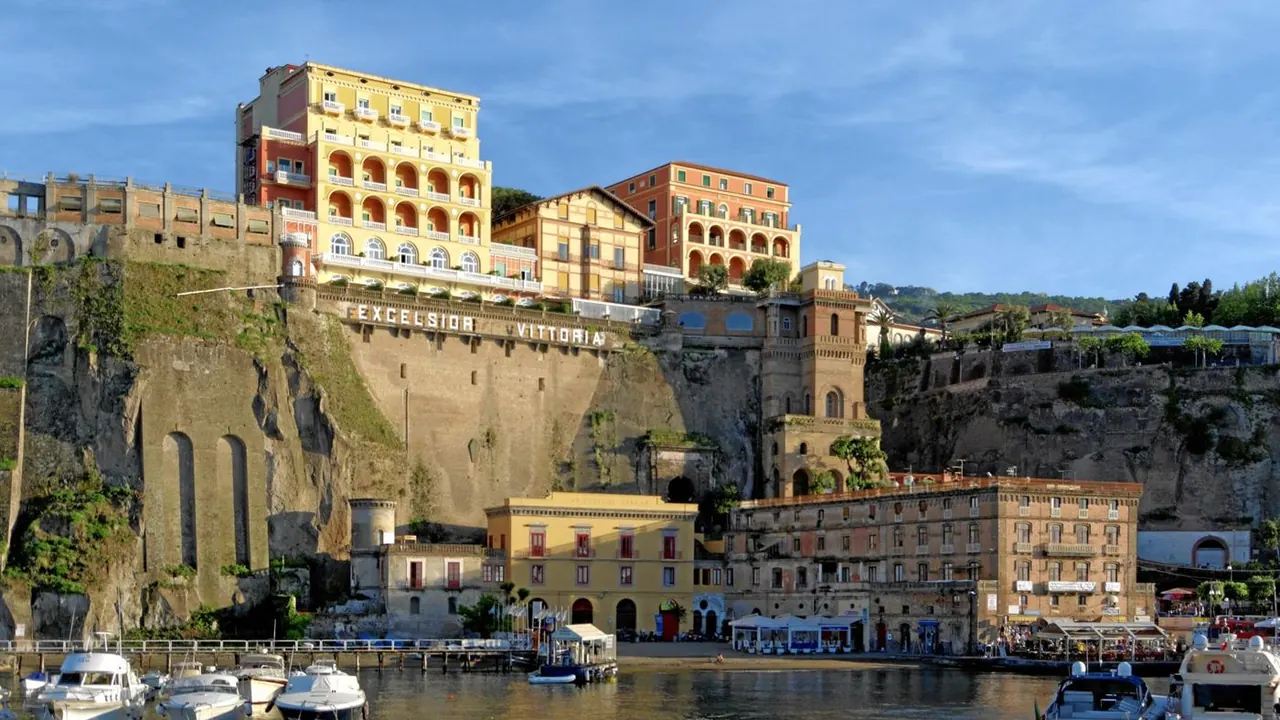
Photos: Cortina d'Ampezzo by Andreas Neubauer, Pexels License; Sorrento by Berthold Werner, CC BY-SA 3.0, cropped.
Cortina d'Ampezzo or Sorrento?
Our verdict in twelve categories, each scored against the same fixed benchmark cities, and the climate month by month, so you can choose for your trip.
Choose Cortina d'Ampezzo for
- nature and the outdoors
- families
- shopping
Cortina d'Ampezzo is the choice when the mountains are the whole point. The Dolomites rise straight from the town and the lifts put you on the peaks within minutes. In winter you ski the Dolomiti Superski area, and in summer you walk from hut to hut or climb the via ferrata routes, all close to your door. In return, expect a high bill, quiet evenings and little to do in town once the weather closes in.
Choose Sorrento for
- beaches
- day trips
- prices
Travellers who want sea, sun and plenty to see will be happier in Sorrento. You swim from piers into clear, deep water and eat Campanian food where it was born. Pompeii, Capri, the Amalfi Coast and Naples are all a short train or boat ride away. It is no bargain either, but it costs noticeably less than Cortina and you can manage without a car.
Scoreboard
Twelve categories on one fixed scale from 0 to 100. The shaded stretch is the gap between the two.
Your match
Pick a travel style or drag the sliders, and both match scores follow your weighting.
Wins on nature and the outdoors and families with your weighting.
Wins on beaches and day trips with your weighting.
What matters to you?
Category by category
What the scores mean for a trip.
Beaches & swimming
These two are nothing alike here. Cortina sits in a high valley more than two hours from the Adriatic. Its alpine lakes, such as Ghedina, stay cold even in midsummer, so swimming really means a hotel pool.
Sorrento has little sand, but the sea is the point. At Marina Piccola and Marina Grande the lidos stand on piers over deep, clear water, and the rocky inlet of the Bagni della Regina Giovanna is a short walk away. In high summer space is tight and much of it is paid. For pebble coves, go to Marina del Cantone or Capri.
Food & drink
Sorrento eats better and offers more. Gnocchi alla sorrentina, fish cooked all'acqua pazza, mozzarella from the hill dairies and Neapolitan pizza make a fuller table, and the villages of the peninsula hold serious fine dining. The trick is to skip the tourist menus around Piazza Tasso and eat in the back lanes or down at Marina Grande.
Cortina's Ampezzan cooking is honest mountain food, such as casunziei with poppy seeds and polenta with game, and lunch on a rifugio terrace is a highlight. In the valley, though, the choice is narrow and rarely cheap.
Culture & sights
Cortina's centre is quickly seen: the basilica with its tall bell tower, painted Tyrolean-style houses, the 1956 Olympic ice stadium and the Rimoldi collection of twentieth-century Italian art. Its most powerful history lies up in the mountains, in the First World War tunnels and trenches on Lagazuoi and the Cinque Torri, which take a full day out rather than a stroll.
Sorrento gives you more to explore within the town itself. Its lanes follow the old Roman street plan, the cloister of San Francesco mixes Arab-style arches with medieval columns, and the Museo Correale shows Neapolitan paintings and porcelain in a villa above the sea. Add the sunken ravine of the Vallone dei Mulini, and the town alone fills a day or two at an easy pace.
Nightlife
Both towns go to bed early, but Sorrento has a little more on through the year. After the passeggiata there are cocktail terraces over the bay, wine bars, and piano bars playing Neapolitan song. Cortina's evenings are après-ski drinks and long dinners, with smart late bars and a club or two only in the peak winter weeks. Neither gives you a proper night out, and in Sorrento the evening trains and ferries stop early, so a big night in Naples or on Capri means staying over.
Nature & outdoors
Both settings are outstanding, but Cortina's is in a different league. The Dolomites ring the town and the lifts rise straight to the peaks. The Tre Cime and Lago di Misurina are under an hour away. Across the year there is skiing, via ferrata, climbing and the Alta Via 1.
Sorrento has the sea and the coast instead. There are lemon and olive terraces, the path to Punta Campanella facing Capri, the protected bay of Ieranto, the Path of the Gods and the crater rim of Vesuvius, and you can take kayaks and boats among the grottoes. The walking is superb in spring and autumn but hot in midsummer.
Day trips
This is where Sorrento pulls furthest ahead. Pompeii is about half an hour away on the Circumvesuviana, with Herculaneum and Vesuvius just beyond. Capri is under an hour by ferry, and Naples, Positano, Amalfi and Ravello are all easy outings.
Cortina's day trips are pleasant rather than essential. Options include San Candido and Brunico in South Tyrol, Bolzano and its Iceman, and Lienz across the Austrian border. Venice is possible, but it means a long coach journey each way.
Good for families
Cortina is the easier choice for active families. Ski schools take all ages and beginners start at Socrepes. The ice stadium has public skating, and in summer there are gentle walks to huts, meadows and a rope park, all around a calm, safe little centre. Rainy days and the cost are the drawbacks.
Sorrento is warm towards children, and its flat centre is easy with a pushchair. The boat to Capri and the ruins at Pompeii go down well. But you swim from piers and rocks into deep water, many hotels sit on steep lanes with no pavements, and the coast buses test young children's patience.
Getting around
Both centres are small and flat enough to walk. The difference is what lies beyond them. In Sorrento you can manage without a car. The Circumvesuviana runs to Pompeii and Naples, and ferries go to Capri and the Amalfi Coast, even if the trains are crowded and the summer buses crawl.
Cortina lost its railway in 1964, so getting there means a coach from Venice or a long drive. Buses to the passes and the Tre Cime run only a limited service. In winter the ski buses and lifts are enough, but in summer most visitors end up hiring a car.
Shopping & style
Shopping is narrow in both towns, but very different in kind. Cortina's Corso Italia is a short street of luxury fashion, jewellers, furriers and expensive mountain wear, anchored by the long-established Cooperativa store, with carved wood and filigree as the local crafts.
Sorrento is more souvenir than boutique: lemon products, ceramics, linen and coral. It also has real intarsia, wood inlaid into boxes and trays, and sandals made to measure while you wait. For fashion, shoppers in Sorrento head to Naples or Capri.
Affordability
A stay in Cortina costs considerably more than one in Sorrento. In the winter peak and in August, hotels charge luxury-resort rates and restaurants in town follow, and lift passes and equipment hire add more. Rifugio meals and early summer ease the bill, and many visitors on a budget sleep in cheaper valleys nearby and drive in.
Sorrento is expensive in summer too, for sea views, sunbeds and private boats. Even so, pizza and the trattorias in the back lanes are fairly priced, trains and buses cost little, and room rates drop well down in spring and late autumn.
Live music & performing arts
Live performance is thin in both, but Sorrento offers a little more. There are shows of Neapolitan song and tarantella for visitors, summer chamber concerts in the cloister of San Francesco, and hotel pianists who keep 'Torna a Surriento' alive. For opera, the Teatro di San Carlo in Naples is about an hour away.
Cortina has no theatre and no regular music venue. Its music comes from summer festivals in churches, halls and sometimes out in the mountains, plus the odd concert at Christmas and New Year.
Wellness & relaxation
Neither town has a bathing tradition of its own, so in both, wellness means a good hotel spa and a slower pace. Cortina's style is Alpine, with saunas, hay baths and clear air on a hut terrace. Sorrento's is Mediterranean, with pools and gardens on cliff terraces over the bay. If you want real hot springs, Ischia's thermal gardens are an hour away by ferry.
Both lose their calm at the busiest times. For rest, choose June or September in Cortina and spring or autumn in Sorrento.
When should you go?
Pick your month. The climate figures are measured averages, not a forecast.
Cortina d'Ampezzo in July
Sorrento in July
Daytime high, °C
Rainfall in the month, mm
Where the figures come from
Sorrento has no rain gauge within 25 km of the centre, so its rainfall comes from a gridded climate dataset read at the city rather than from a gauge further away.
Sorrento's sunshine is measured 54 km from the centre, at Grazzanise.
Temperature and rainfall are climate normals, averaged over the years shown. Cortina d'Ampezzo: 1991-2020 normals, Dobbiaco (22.5 km from centre). Sorrento: 2005-2025 (sunshine 1991-2020, rainfall 1991-2020) normals, Capri (17 km from centre).
Cortina has two seasons. From December to February daytime highs hover around freezing and the air is dry, which is weather for skiing rather than strolling. June to August reach a mild 22°C, good for long days on the trails, but summer is also the wettest time of year, with rain peaking in July at 130mm, so pack for wet days on the paths. Spring and October are cool and in between.
Sorrento works the other way round. June to August are dry and very sunny, and the sea is warm enough for swimming from June into October, reaching 26°C in August. Those midsummer weeks also climb to 30°C, which makes the lanes and the ruins at Pompeii hard going at midday. April and May are kinder for sightseeing, and so is September, although by then the rain has returned. It builds through autumn to a peak of 151mm in November, and winters are mild but wet and dull. In short, Cortina suits winter and high summer in the mountains, and Sorrento suits late spring to early autumn by the sea.
Which traveller are you?
For a beach and sun trip, Sorrento is the only real option. Its lidos stand on wooden piers over warm, clear sea all summer, and boats run to the coves of Capri. Cortina's snowmelt lakes are for walking round, not for swimming.
On an outdoors trip, Cortina wins outright. Lifts climb from the town into the Dolomites, and the Tre Cime and the Alta Via 1 are close by. Winter adds the whole Dolomiti Superski area. Sorrento's coastal paths are lovely but cover far less ground.
For a culture and arts trip, Sorrento makes the far richer base. Pompeii and Herculaneum are a short train ride away, and Naples has its archaeological museum and the San Carlo opera house. Cortina's three small museums will fill a rainy afternoon at most.
Before you go
| Measure | Cortina d'Ampezzo | Sorrento |
|---|---|---|
| Official language | Italian | Italian |
| Currency | Euro (EUR) | Euro (EUR) |
| Sockets | CFL230 V, 50 Hz | CFL230 V, 50 Hz |
| Driving side | Right | Right |
| Time zone | UTC+1, UTC+2 in summer | UTC+1, UTC+2 in summer |
| Emergency number | 112 | 112 |
| Elevation | 1,224 m | 50 m |
| Main airport | Venice Marco Polo Airport (VCE)116 km from centre103 non-stop destinations | Naples International Airport (NAP)30 km from centre131 non-stop destinations |
| Public holidays this year | 13 days | 13 days |
By the numbers
| Measure | Cortina d'Ampezzo | Sorrento |
|---|---|---|
| City population | 5,546 | 15,407 |
| People per km² | 22 | 1,541 |
| Museums within 10 km | 3 | 6 |
| UNESCO World Heritage sites within 50 km | 1 | 5 |
| Swim season, months above 21 °C | - | 5 months |
Where else could you go?
Every comparison below shares a destination with this one, so you can follow Cortina d'Ampezzo or Sorrento somewhere new.
- Positanovs Sorrento
- Amalfivs Sorrento
- Naplesvs Sorrento
- Salernovs Sorrento
- Innsbruckvs Cortina d'Ampezzo
- Venicevs Cortina d'Ampezzo