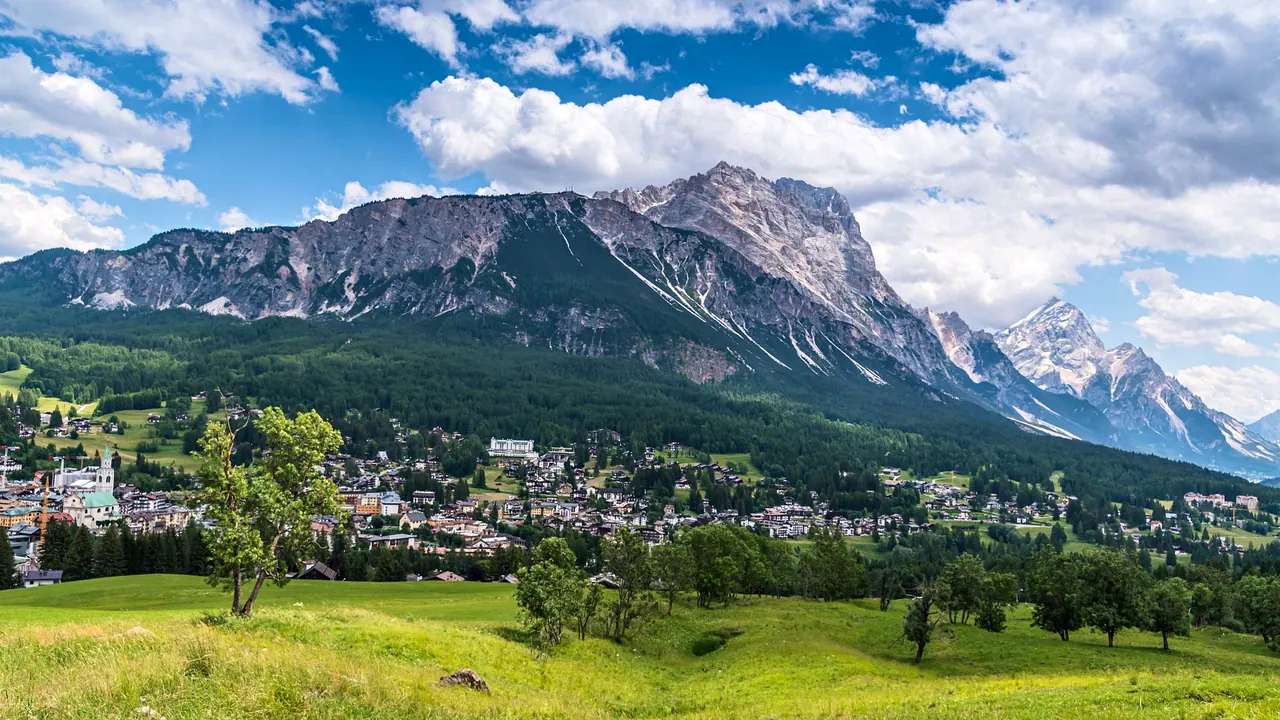
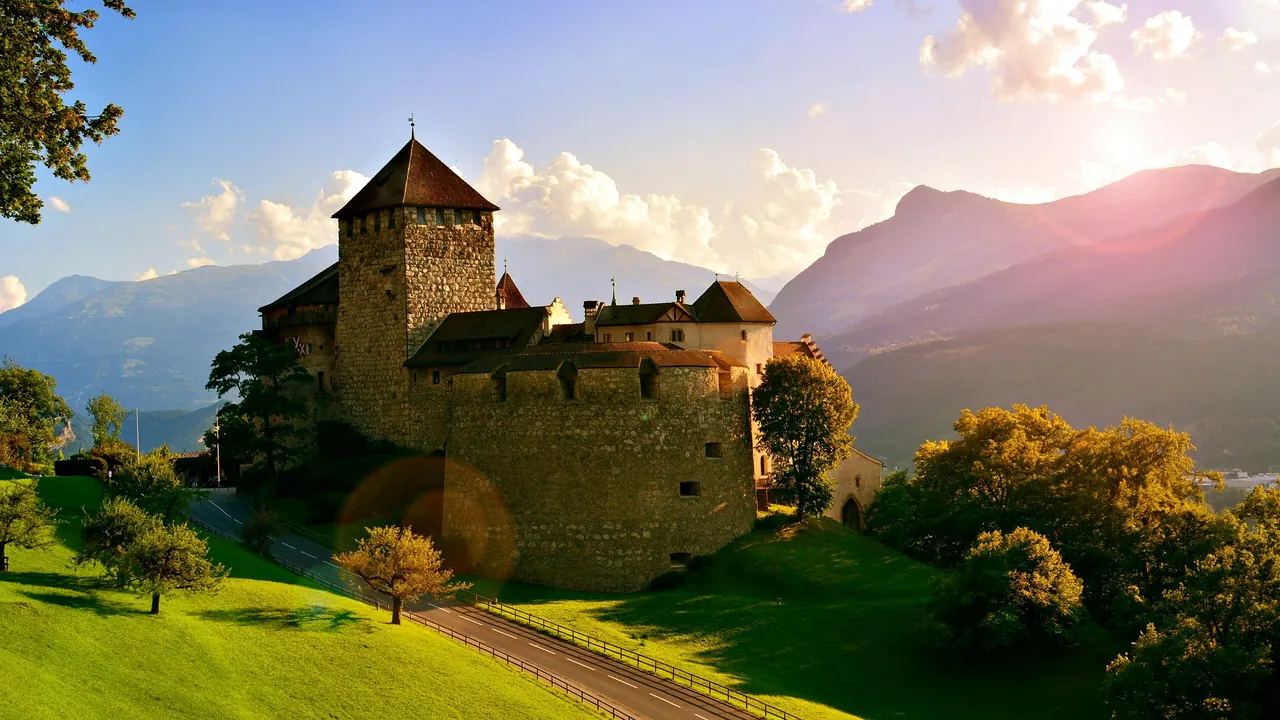
Photos: Cortina d'Ampezzo by Andreas Neubauer, Pexels License; Vaduz by Justin LaBerge, CC BY 2.0, cropped.
Cortina d'Ampezzo or Vaduz?
Our verdict in twelve categories, each scored against the same fixed benchmark cities, and the climate month by month, so you can choose for your trip.
Choose Cortina d'Ampezzo for
- shopping
- food and drink
- families
Cortina d'Ampezzo suits travellers who want the mountains to be the whole point. The Dolomites close in around the valley, lifts rise straight from town, and the skiing, via ferrata routes and hut-to-hut hiking are among the best in the Alps. Long lunches on rifugio terraces, livelier winter evenings and the luxury shops of the Corso Italia round it out, as long as you accept that it is remote and costly.
Choose Vaduz for
- day trips
- getting around
- beaches
Vaduz works better as a calm base for exploring the corner where Switzerland and Austria meet. Feldkirch, St Gallen, Lake Constance and Zurich are all within easy reach, and in town there are two fine modern art museums and a bus network that covers the whole country. The thermal baths at Bad Ragaz are just across the Rhine. Its mountains are gentler than Cortina's and its evenings are quieter, so it suits a slow, varied stay more than an active one.
Scoreboard
Twelve categories on one fixed scale from 0 to 100. The shaded stretch is the gap between the two.
Your match
Pick a travel style or drag the sliders, and both match scores follow your weighting.
Wins on shopping and food and drink with your weighting.
Wins on day trips and getting around with your weighting.
What matters to you?
Category by category
What the scores mean for a trip.
Beaches & swimming
Neither town is a place for swimming, but Vaduz does more with a hot day. It has open-air municipal pools in town, and the Walensee and Lake Constance are both under an hour away and warm enough for a proper swim in high summer.
Cortina's water comes from alpine lakes such as Ghedina and Pianozes. They are fed by snowmelt, so they make lovely walks but very cold swims, and the Adriatic is more than two hours away. In practice, swimming there means the hotel pool.
Food & drink
Cortina eats noticeably better. Ampezzan cooking adds a Venetian touch to mountain food, with casunziei filled with beetroot, polenta with game and barley soup. The best meals often come on rifugio terraces high among the peaks, and the valley has a few ambitious kitchens and wine bars pouring Veneto and South Tyrolean wines.
In Vaduz you choose from hotel dining rooms and village inns serving Käsknöpfle and rösti, which are solid but rarely exciting. Its one real pleasure is local wine from the prince's own estate. In neither place will you find street food or much range.
Culture & sights
Vaduz has a little more to see, and its sights are more distinctive. The black cube of the Kunstmuseum and the white cube of the Hilti Art Foundation hold a strong modern collection, and the National Museum and the Postage Stamp Museum fill out an easy day. The walk up to the castle is worth it for the views, although the castle itself is closed to visitors.
Cortina's centre has its basilica bell tower, painted houses and the 1956 Olympic ice stadium. The Rimoldi art collection is good enough for a wet afternoon. Its most striking history is up in the mountains, in the First World War tunnels on Lagazuoi and the Cinque Torri.
Nightlife
Cortina has the livelier evenings, though mainly in winter. Après-ski drinks lead into the passeggiata along the Corso Italia and long dinners, and in the peak weeks a few smart bars and a club or two stay open late. In summer it is nearly as quiet as Vaduz.
Vaduz has a few wine bars and hotel lounges on the Städtle, and little else. Younger locals cross the border to Feldkirch or go to Zurich for a real night out.
Nature & outdoors
Both towns have mountains on the doorstep, but Cortina's are in another league. The pale Dolomite walls of the Tofane, Cristallo and Cinque Torri ring the valley, and the Tre Cime and Lago di Misurina are under an hour away. Skiing joins the huge Dolomiti Superski area, and summer brings the Alta Via 1, some of the oldest via ferrata routes in the Alps, and mountain biking, with a gentler ride on the old railway line towards Dobbiaco.
Vaduz's outdoors is greener and gentler. Trails climb through vineyards and beech forest from the centre, and from Gaflei above Triesenberg the exposed Fürstensteig path leads into the Rätikon. Malbun is a small ski area, so for bigger skiing you drive to the Swiss resorts. The flat Rhine dam path is excellent for long, easy rides along the valley floor.
Day trips
Vaduz is much the better base for outings. Medieval Feldkirch is twenty minutes away, and St Gallen's baroque abbey library and the painted house fronts of Appenzell are each about an hour. Chur, Bregenz and Lindau on Lake Constance, and Zurich, all make easy days out.
From Cortina, most outings go into the mountains rather than to towns. South Tyrol offers San Candido, Brunico and its castle, and Bolzano with the Iceman, which is about two hours each way. Venice is possible, but it is a long day on the coach.
Good for families
Cortina is better set up for children who like being outdoors. It has ski schools for every age, beginner slopes at Socrepes, public skating in the Olympic ice stadium, a forest rope park and easy walks to huts with meadows to play in. The catch is the cost, and wet days can drag.
Vaduz is very safe, and its flat centre is easy with a pushchair, but there is less laid on for children. Families mostly use the open-air pools, the gentle walks above Triesenberg and Malbun's beginner slopes, so it suits older children who enjoy hiking more than young ones. Neither town has a zoo or theme park.
Getting around
Both centres are small enough to walk, but Vaduz is far better connected beyond its centre. Buses reach every village in Liechtenstein and climb to Malbun, and they link to the railway stations at Buchs, Sargans and Feldkirch. Trips further afield still need a change.
Cortina has had no railway since 1964, so you arrive by coach from Venice or after a long drive. Ski buses work well in winter, but summer buses to the passes and the Tre Cime are limited and the roads are crowded in August. Most visitors end up hiring a car.
Shopping & style
Cortina is far ahead. The pedestrian Corso Italia is lined with luxury fashion, jewellers, furriers and upmarket mountain wear. The Cooperativa di Cortina, founded in 1893, sells everything from local foods to outdoor gear, and there are shops selling wood carving and filigree.
Vaduz has a handful of shops on the Städtle selling watches, souvenirs and collectable stamps. A bottle of local wine is the best thing to take home.
Affordability
Both are among the most expensive places to stay in Europe, but Cortina gives you a little more room to save. Its meals at the rifugi are good value, and rates ease in early summer and late September. Budget travellers can also stay in cheaper valleys nearby.
Vaduz charges Swiss prices all year, from hotel rooms to a simple lunch, and has few hotels at the lower end. Buses and museums are affordable, and the usual way to save is to stay across the border in Austria.
Live music & performing arts
Vaduz has the fuller calendar, though it is still small. The national theatre stage in nearby Schaan puts on drama, dance and touring shows, and the symphony orchestra gives a short concert season. A summer classical festival and a cabaret stage mean there is usually something to see within a week.
Cortina has no theatre season and no regular venue. Summer chamber music festivals bring concerts to churches and sometimes out into the mountains, but for much of the year there is little to go to.
Wellness & relaxation
The two are evenly matched for relaxing, but in different ways. In Cortina, wellness means the hotel spa, with saunas, hay baths and indoor pools after a day on the slopes. In quiet months like June and September, an afternoon on a hut terrace is restful too.
Vaduz has few spas of its own, but the public thermal bath at Bad Ragaz is about twenty-five minutes away, fed by spring water from the Tamina gorge that has drawn bathers for centuries. If you want thermal water, choose Vaduz. If you want a spa under the same roof as your bed, choose Cortina.
When should you go?
Pick your month. The climate figures are measured averages, not a forecast.
Cortina d'Ampezzo in July
Vaduz in July
Daytime high, °C
Rainfall in the month, mm
Where the figures come from
Vaduz's temperatures are measured 51 km from the centre, at Sigmarszell-Zeisertsweiler.
Vaduz has no rain gauge within 25 km of the centre, so its rainfall comes from a gridded climate dataset read at the destination rather than from a gauge further away.
Temperature and rainfall are climate normals, averaged over the years shown. Cortina d'Ampezzo: 1991-2020 normals, Dobbiaco (22.5 km from centre). Vaduz: 1991-2020 normals, Sigmarszell-Zeisertsweiler (51.3 km from centre).
Cortina has two clear seasons. In midwinter daytime highs sit around 0°C and the months are dry, so the snow keeps well and the ski season is at its best. In summer the valley warms to about 22°C, which is ideal for hiking but never hot. The rain falls mostly in summer too, peaking at around 130mm in July, and June and August are also wet, often with afternoon storms. September is the month when the rain eases while the days stay mild, so it is usually the best time for long walks on dry trails. Spring and late autumn fall between the seasons, with neither reliable snow nor settled walking weather.
Vaduz is a few degrees milder all year, reaching about 24°C in July and August. Its rain is spread more evenly, so winters are noticeably wetter than in Cortina and summers are just as wet. Sunshine is plentiful in summer but drops to about 52 hours in December, when the valley floor is often grey. Neither town is ever warm enough for a beach trip. Vaduz is at its best from late spring to early autumn for walking and lake swims, while Cortina also has a second high season in the snow.
Which traveller are you?
On a food and nightlife trip, Cortina is the stronger choice. Its Ampezzan cooking, ambitious kitchens and sunny rifugio lunches give more to eat well on, and in winter its après-ski and late bars outlast Vaduz, which goes quiet once dinner is over.
For a culture and arts trip, Vaduz has more to offer. The Kunstmuseum and the Hilti Art Foundation hold serious modern art, and the theatre in Schaan, the symphony orchestra and the summer festival add evenings out. Cortina's museums fill only a rainy afternoon.
On a shopping trip, Cortina wins easily. The Corso Italia has luxury fashion, jewellers and mountain wear, and the multi-storey Cooperativa has been trading since 1893. In Vaduz there are only a few watch and souvenir shops, so serious shoppers head for Zurich.
Before you go
| Measure | Cortina d'Ampezzo | Vaduz |
|---|---|---|
| Official language | Italian | German |
| Currency | Euro (EUR) | Swiss Franc (CHF) |
| Sockets | CFL230 V, 50 Hz | CJ230 V, 50 Hz |
| Driving side | Right | Right |
| Time zone | UTC+1, UTC+2 in summer | UTC+1, UTC+2 in summer |
| Emergency number | 112 | 112 |
| Elevation | 1,224 m | 455 m |
| Main airport | Venice Marco Polo Airport (VCE)116 km from centre103 non-stop destinations | Zürich Airport (ZRH)81 km from centre226 non-stop destinations |
| Public holidays this year | 13 days | 21 days |
By the numbers
| Measure | Cortina d'Ampezzo | Vaduz |
|---|---|---|
| Population | 5,546 | 5,668 |
| People per km² | 22 | 328 |
| Museums within 10 km | 3 | 7 |
| UNESCO World Heritage sites within 50 km | 1 | 3 |
Where else could you go?
Every comparison below shares a destination with this one, so you can follow Cortina d'Ampezzo or Vaduz somewhere new.
- Zurichvs Vaduz
- Lucernevs Vaduz
- Innsbruckvs Cortina d'Ampezzo
- Venicevs Cortina d'Ampezzo
- Paduavs Cortina d'Ampezzo
- Luganovs Vaduz