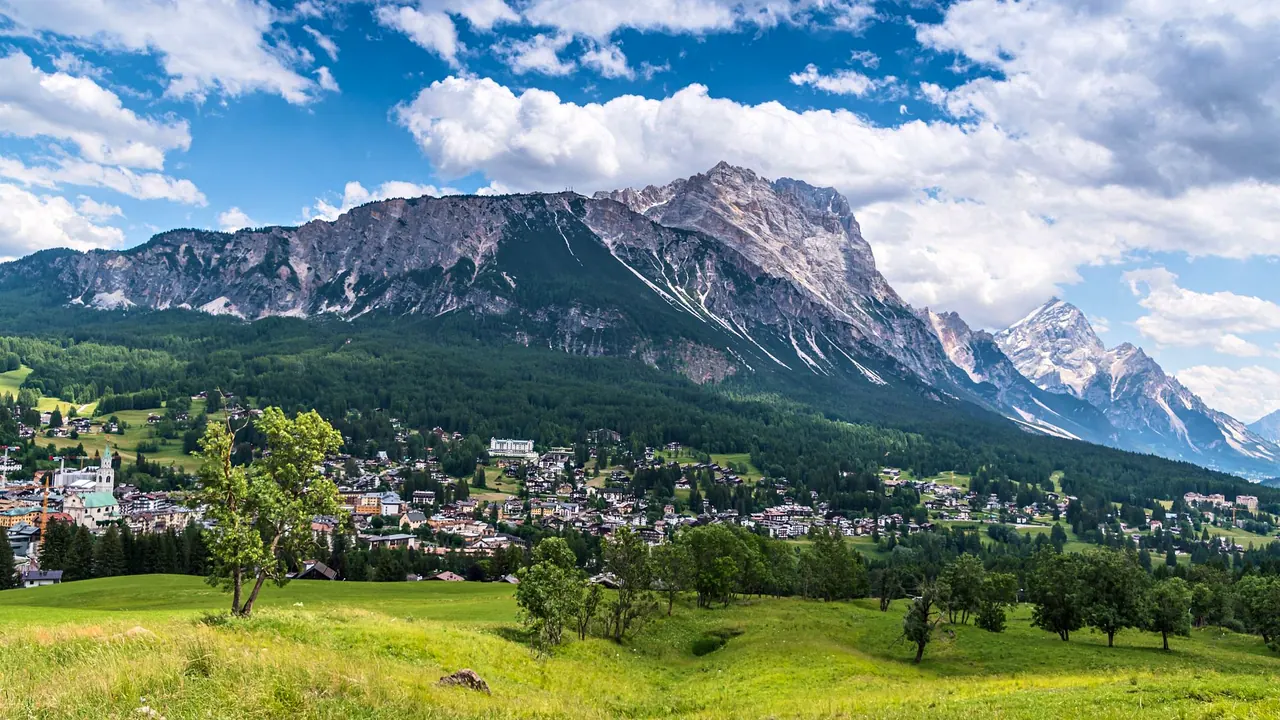
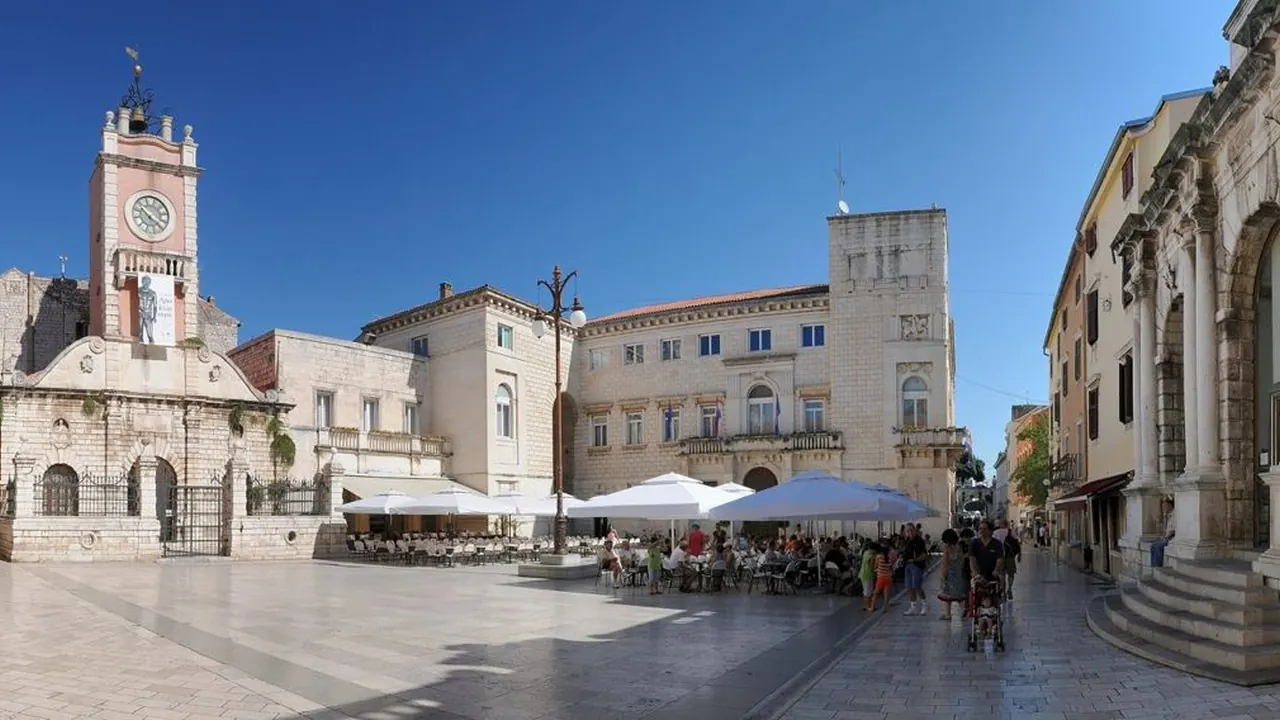
Photos: Cortina d'Ampezzo by Andreas Neubauer, Pexels License; Zadar by Böhringer Friedrich, CC BY-SA 2.5, cropped.
Cortina d'Ampezzo or Zadar?
Our verdict in twelve categories, each scored against the same fixed benchmark cities, and the climate month by month, so you can choose for your trip.
Choose Cortina d'Ampezzo for
- shopping
- nature and the outdoors
- wellness
Cortina d'Ampezzo is the choice when the mountains are the whole point of the trip. Dolomite peaks ring the town, lifts climb straight from the centre onto the slopes in winter, and hut-to-hut trails and via ferrata routes take over in summer. It suits skiers, hikers and climbers who will pay resort prices and are happy to end the day with a long dinner rather than a night out.
Choose Zadar for
- beaches
- prices
- culture and sights
For a broader summer trip that costs far less, Zadar is the better pick. The sea comes first, with daily swims off the promenade and island ferries from the harbour. A walled Roman and medieval old town, warm evenings on the waterfront and easy outings to Šibenik, Krka and the Kornati fill the rest of the days. It is a good outdoors base too, though here the mountains are the backdrop rather than the main event.
Scoreboard
Twelve categories on one fixed scale from 0 to 100. The shaded stretch is the gap between the two.
Your match
Pick a travel style or drag the sliders, and both match scores follow your weighting.
Wins on shopping and nature and the outdoors with your weighting.
Wins on beaches and prices with your weighting.
What matters to you?
Category by category
What the scores mean for a trip.
Beaches & swimming
On beaches there is no contest. Cortina sits in a high valley more than two hours from the Adriatic. Its snowmelt lakes, such as Ghedina and Pianozes, are for walking round rather than swimming in, so a hotel pool is the realistic option.
In Zadar, swimming is part of every summer day, from the stone promenade on the peninsula to Kolovare and Borik, although these beaches are pebble and concrete rather than sand. For softer, shallower water, the sandy beaches at Nin and Sakarun on Dugi Otok are easy outings.
Food & drink
Both towns eat well rather than memorably, and both have a narrow range with little international cooking. What differs is the landscape on the plate. Cortina serves Ampezzan mountain food: casunziei with poppy seeds, polenta with game, barley soup. Its best meals come on rifugio terraces among the peaks, and a few ambitious kitchens in the valley serve its wealthy visitors.
Zadar's cooking is Dalmatian and coastal: grilled fish, black risotto, octopus or lamb cooked under a peka, Pag cheese to start, and Maraschino as the local spirit. Eating out is more casual and cheaper there, while Cortina has the more polished top end.
Culture & sights
Zadar has far more to see. Its walled peninsula fits the open Roman forum, the round Church of St Donatus, a Romanesque cathedral and the UNESCO-listed Venetian walls into a short walk. The Museum of Ancient Glass and the Sea Organ round out about two days of sightseeing.
Cortina's centre has a basilica, painted houses, the ice stadium from the 1956 Olympics and three small museums that will fill a wet afternoon. Its most striking history, the First World War tunnels on Lagazuoi and the Cinque Torri, takes a day in the mountains rather than a stroll through town.
Nightlife
Neither is a party town, but Zadar has more going on after dark. Summer evenings start with sunset on the Riva and move on to café-bars along Kalelarga and terrace bars on the walls. For proper clubbing, Zrće on Pag is about an hour away in high summer.
In Cortina, an evening means après-ski drinks, a stroll along the Corso Italia and a long dinner. A few smart bars stay open late, but only in the peak winter weeks. Outside those weeks Cortina is quiet by late evening, and Zadar is just as quiet from October to May.
Nature & outdoors
Both are fine bases for the outdoors, but Cortina is the stronger. Dolomite peaks ring the town and lifts climb straight onto them, and the Tre Cime, Lago di Misurina and the Fanes-Sennes-Braies park are all close. Dolomiti Superski in winter and the Alta Via 1 and old via ferrata routes in summer make it a mountain base in both seasons.
Zadar's outdoors are more varied but more spread out. There is climbing and gorge hiking in Paklenica, sailing to the Kornati and Telašćica, and Krka and Plitvice by road. The midsummer heat makes walks on high ground hard work, so spring and autumn are better for hiking.
Day trips
Zadar has the better choice of day trips. Šibenik and its UNESCO-listed cathedral are about an hour away and Nin is twenty minutes. Split and Trogir make a long but rewarding day, and ferries from the harbour reach Ugljan, Pašman and car-free Silba.
From Cortina, most days out lead into the mountains rather than to other towns. South Tyrol is the best direction, with San Candido, Brunico, and the Iceman in Bolzano's archaeology museum. Venice is possible, but it means a long coach ride each way.
Good for families
Both work for families who like being outdoors, and neither has a zoo, aquarium or theme park. The difference is in what the days look like. Cortina suits children who ski or skate, with ski schools, beginner slopes at Socrepes and the Olympic ice rink, and in summer there are meadows by the huts and a rope park. Rainy days drag, though, and costs mount quickly.
In Zadar, family days are spent by the sea, and the shallow sandy beaches at Nin are best for small children. The car-free old town, the Greeting to the Sun lighting up after dark and short ferry rides fill the rest. The midsummer heat is the thing to plan around.
Getting around
Both centres are small enough to walk across in minutes, so the difference lies in reaching everything else. Cortina has had no railway since 1964. You arrive by coach from Venice or after a long drive, and buses up to the passes and the Tre Cime are limited, so many visitors hire a car.
Zadar is easier. Kolovare beach is a walk from the old town, local buses run to Borik, and island ferries leave from the edge of the peninsula. A car still helps for the national parks and the wider coast.
Shopping & style
Cortina has the better shopping, though of a very particular kind. The Corso Italia is lined with luxury fashion, jewellers and upmarket mountain wear. The Cooperativa di Cortina, founded in 1893, sells everything from local food to outdoor gear.
Zadar is more modest, with chains and souvenir shops on Kalelarga. The best things to take home are edible or handmade, such as Maraschino, Pag cheese and Pag lace, and the market by the walls is the nicest place to browse for them.
Affordability
In Cortina the bill follows the calendar and the sport. Rooms cost the most in the peak winter weeks and in August, and a ski day adds equipment hire on top of everything else. The cheaper meals are up the mountain rather than in town, because lunch at a rifugio costs less than the view would suggest. Early summer and late September bring rates down, though never to the point where Cortina feels cheap.
Zadar asks for a good deal less overall, and less than Split or Dubrovnik further down the coast. Its costs gather in a few places. A room on or near the peninsula costs far more in high summer than in June or September, and the restaurants along the main old town streets charge visitor prices, while a bakery breakfast stays fair. The real extras are the outings, because entry to Krka or Plitvice and a boat day to the Kornati soon add up.
Live music & performing arts
Neither has much of a stage, but Zadar has the more memorable one. Each summer the Musical Evenings in St Donatus bring early and chamber music into the ninth-century church. In July and August there are also klapa singing and concerts in the squares, and a small national theatre puts on drama in Croatian.
Cortina has no theatre season and no regular venue. There are summer chamber music festivals in churches and sometimes outdoors in the mountains, and a few concerts around New Year.
Wellness & relaxation
Cortina is the better place for a spa-based rest. Its hotels have Alpine spas with saunas, steam rooms, hay baths and indoor pools, and a quiet June afternoon on a hut terrace is restful in itself, although the peak weeks bring traffic.
Zadar has no real spa culture beyond the hotel spas at Borik and the mud lagoon at Nin. Its rest comes from the pace of the day: long café mornings, a siesta, and sunset over the islands from the steps of the Sea Organ.
When should you go?
Pick your month. The climate figures are measured averages, not a forecast.
Cortina d'Ampezzo in July
Zadar in July
Daytime high, °C
Rainfall in the month, mm
Where the figures come from
Zadar has no rain gauge within 25 km of the centre, so its rainfall comes from a gridded climate dataset read at the city rather than from a gauge further away.
Temperature and rainfall are climate normals, averaged over the years shown. Cortina d'Ampezzo: 1991-2020 normals, Dobbiaco (22.5 km from centre). Zadar: 1999-2020 (rainfall 1991-2020) normals, Zadar / Zemunik (9.9 km from centre).
Cortina has two seasons. Winter highs stay around freezing, too cold for lingering in town but right for skiing. From June to September the weather is mild for walking, with highs of about 22°C at most. Summer is also the wettest part of the year, with around 130mm in July, so hikers should expect wet spells. Spring and late autumn fall in between, with neither snow sports nor full hiking weather.
Zadar runs almost the other way. July and August reach 31°C, which is perfect on the beach with the sea at 25°C but hot for sightseeing at midday. The water is warm enough to swim from June to September. Rain arrives in September and peaks in November at 113mm, and the mild winters suit walking the old town but not swimming. In high summer you are choosing between mountain cool and coastal heat. In both places June and September are the gentlest months.
Which traveller are you?
For a beach and sun trip, Zadar is the only real choice. The water is clear and warm enough to swim from June to September, there are city beaches within walking distance, and Nin and Sakarun have sandy shores. Cortina has only cold mountain lakes to offer.
On a trip on a tight budget, Zadar is also well ahead. Private apartments, konoba meals and cheap ferries keep costs at mid-range levels. Cortina's luxury hotels, restaurants and lift passes push even careful travellers out to cheaper valleys nearby.
For skiers, Cortina is the place to go. It is part of the vast Dolomiti Superski area, its lifts start in town, it has ski schools for every age, and long descents such as the Armentarola run are within reach. Zadar has nothing on snow to compare.
Before you go
| Measure | Cortina d'Ampezzo | Zadar |
|---|---|---|
| Official language | Italian | Croatian |
| Currency | Euro (EUR) | Euro (EUR) |
| Sockets | CFL230 V, 50 Hz | CF230 V, 50 Hz |
| Driving side | Right | Right |
| Time zone | UTC+1, UTC+2 in summer | UTC+1, UTC+2 in summer |
| Emergency number | 112 | 112 |
| Elevation | 1,224 m | 5 m |
| Main airport | Venice Marco Polo Airport (VCE)116 km from centre103 non-stop destinations | Zadar Airport (ZAD)10 km from centre66 non-stop destinations |
| Public holidays this year | 13 days | 14 days |
By the numbers
| Measure | Cortina d'Ampezzo | Zadar |
|---|---|---|
| City population | 5,546 | 70,779 |
| People per km² | 22 | - |
| Museums within 10 km | 3 | 1 |
| UNESCO World Heritage sites within 50 km | 1 | 2 |
| Swim season, months above 21 °C | - | 4 months |
Where else could you go?
Every comparison below shares a destination with this one, so you can follow Cortina d'Ampezzo or Zadar somewhere new.
- Innsbruckvs Cortina d'Ampezzo
- Splitvs Zadar
- Venicevs Cortina d'Ampezzo
- Veronavs Cortina d'Ampezzo
- Bledvs Cortina d'Ampezzo
- Salzburgvs Cortina d'Ampezzo