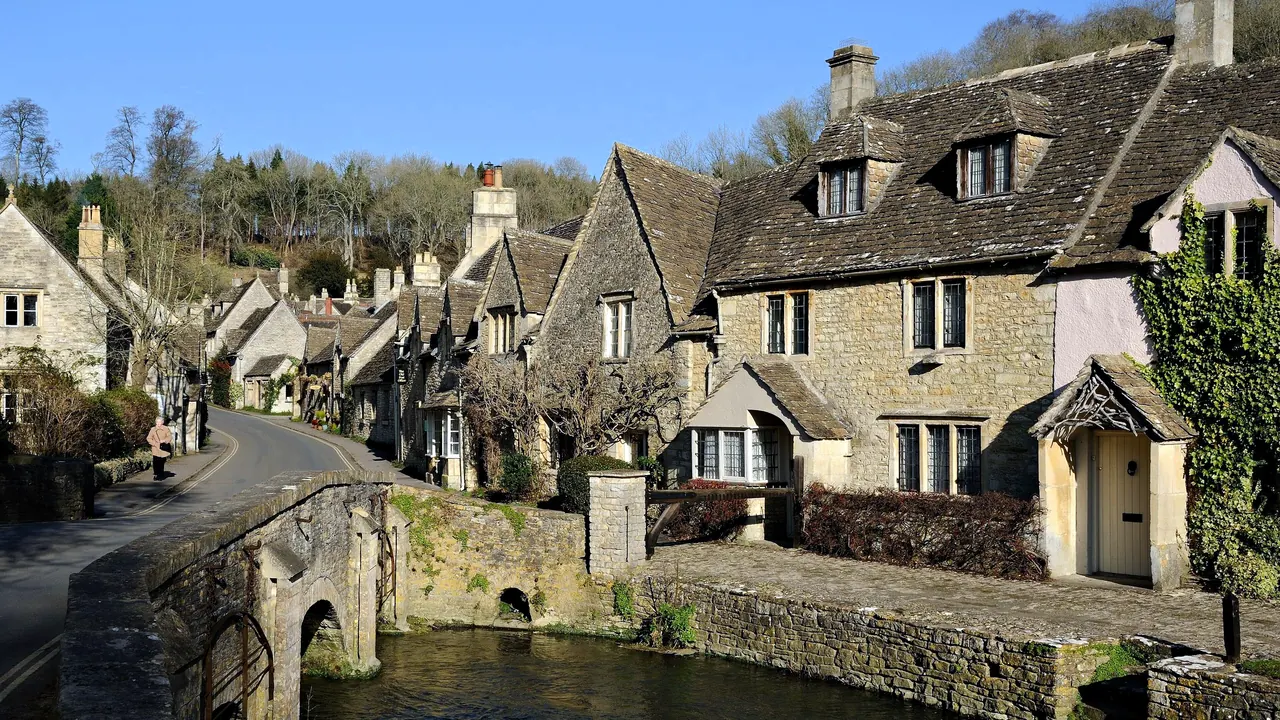
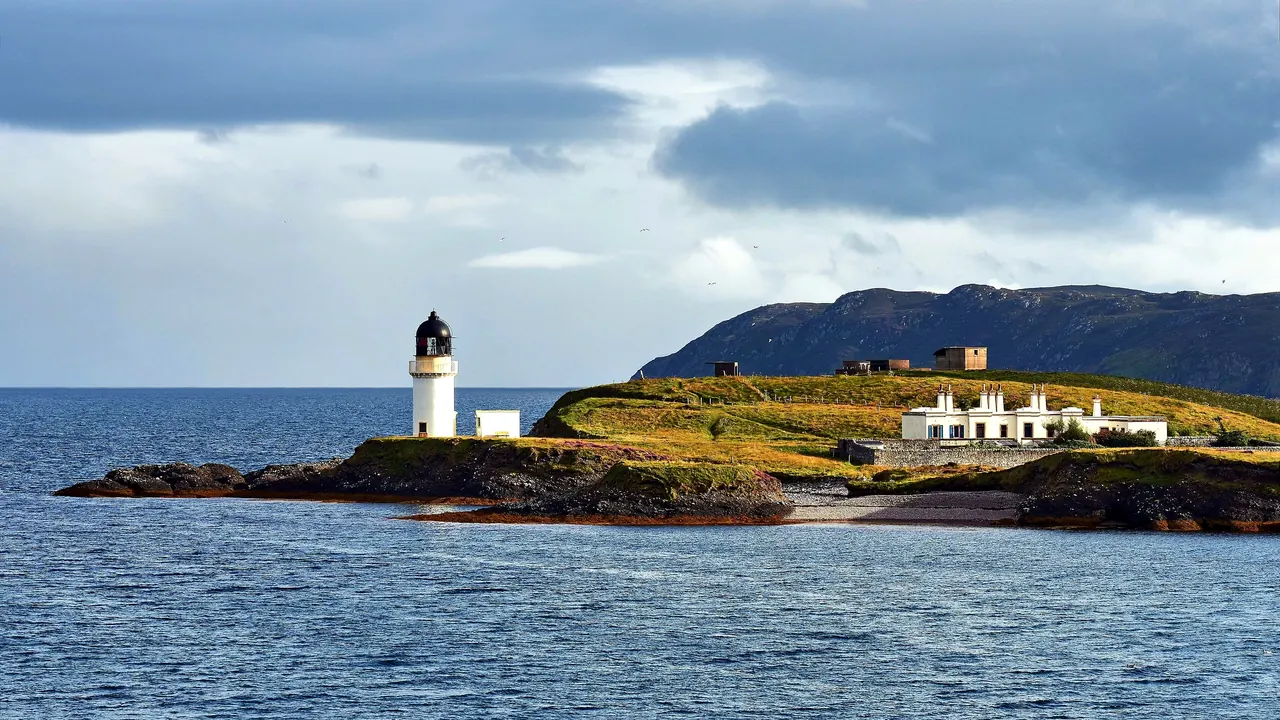
Photos: Cotswolds by Saffron Blaze, CC BY-SA 3.0, cropped; Outer Hebrides by Virtual-Pano, CC BY-SA 4.0, cropped.
Cotswolds or Outer Hebrides?
Our verdict in twelve categories, each scored against the same fixed benchmark cities, and the climate month by month, so you can choose for your trip.
Choose Cotswolds for
- day trips
- wellness
- culture and sights
The Cotswolds suit a traveller who wants a settled, comfortable base with plenty to fill the days. Honey-stone villages, wool churches and great houses such as Blenheim are close together, good country pubs and spa hotels make the evenings easy, and Oxford, Bath and Stratford-upon-Avon are all within an hour. It works for couples, families and anyone who likes variety without long drives.
Choose Outer Hebrides for
- beaches
- nature and the outdoors
- prices
Choose the Outer Hebrides for wild country and a real sense of distance. Bare gneiss, peat moorland and long white beaches, eagles and otters, and the Calanais Stones in low evening light give a trip that is lonelier and more elemental. You give up comfort, choice and almost all entertainment. In return you get empty roads and long summer evenings that the Cotswolds cannot offer.
Scoreboard
Twelve categories on one fixed scale from 0 to 100. The shaded stretch is the gap between the two.
Your match
Pick a travel style or drag the sliders, and both match scores follow your weighting.
Wins on day trips and wellness with your weighting.
Wins on beaches and nature and the outdoors with your weighting.
What matters to you?
Category by category
What the scores mean for a trip.
Beaches & swimming
Neither is a beach destination, but the Outer Hebrides at least have real beaches. Luskentyre, Seilebost and Uig Sands are long white strands with turquoise shallows and often nobody on them. The Atlantic stays cold, though, so swimming means a quick dip or a wetsuit.
The Cotswolds have no coast at all. The nearby Severn Estuary is mud and fierce tides, so the only sand is the lake beach at the Cotswold Water Park near Cirencester.
Food & drink
The Cotswolds have much more choice when it comes to eating out. Stone inns around Stow, Chipping Campden and the Coln valley cook lamb and game to a high standard, farmers' markets in Stroud and Cirencester are good for picnics, and Cheltenham adds fine dining.
On the Outer Hebrides the raw materials may be better, with langoustines and scallops off the boats, local smoked salmon and Stornoway black pudding. But outside Stornoway and a few places on Harris there are few restaurants, many close on Sundays and in winter, and you will probably cook for yourself some of the time.
Culture & sights
The Cotswolds have far more to see. Chipping Campden, Burford and Northleach are wool towns still standing almost as their merchants left them, and around them are fine parish churches, Sudeley Castle, Hidcote's gardens and a World Heritage palace at Blenheim, all within a short drive of each other.
The Hebridean list is shorter and older. The Calanais Stones, the Dun Carloway broch, the blackhouses at Gearrannan and Arnol, and some of the Lewis Chessmen in Stornoway are striking, but they are spread along many miles of single-track road. Island culture shows itself most in everyday Gaelic, not in buildings.
Nightlife
Both are places for early nights, but the Cotswolds at least have Cheltenham, where cocktail bars and late venues around the Promenade and Montpellier fill up at weekends. In the villages the evening ends with a pint by the fire.
The Outer Hebrides are quieter still: a hotel bar, one of Stornoway's few pubs and perhaps a weekend music session. Sundays on Lewis and Harris are almost silent.
Nature & outdoors
The Outer Hebrides offer much wilder country. North Harris climbs to the Clisham, South Harris is bare grey rock running down to white sand, and the Uists are flat land full of lochans and birds, with flowering machair in summer. Golden and white-tailed eagles, otters and corncrakes are reasons to come in themselves, and summer boats run out to the seabird cliffs of St Kilda.
The Cotswolds are farmed and gentle by comparison. Beech woods and dry-stone walls line the wolds, and the Cotswold Way follows the escarpment with long views over the Severn Vale. It is lovely walking, but it is never empty.
Day trips
This is where the two differ most. From the Cotswolds you can reach Oxford, Bath, Stratford-upon-Avon, Warwick Castle and the cathedrals of Gloucester, Worcester and Wells, mostly within an hour, and some of them by train.
Day trips on the Outer Hebrides mean island-hopping over causeways and short ferries from Berneray to Eriskay and Barra. Each day out brings new coast and a harbour village, but rarely a town. The longest outing is the ferry to Skye for Portree.
Good for families
For families the Cotswolds are much easier. The wildlife park near Burford has rhinos and giraffes, Bourton-on-the-Water has a model village and a shallow river to paddle in, and there are farm parks with lambing in spring, a steam railway from Winchcombe and Warwick Castle nearby.
The Outer Hebrides give children freedom rather than attractions: empty beaches, rock pools, seals and eagles. When the weather turns there is little to do beyond the pool in Stornoway, so it suits outdoor families who pack waterproofs.
Getting around
In both you will want a car, but the problems are different. Cotswold villages are close together on narrow lanes, and the main hassles are summer parking in Bibury and Broadway and getting stuck behind tractors. A rail line from London and footpaths between neighbouring villages make a stay without a car possible.
The Hebridean chain runs for about 210km over single-track roads with passing places, plus two ferries that need booking in summer. Traffic is light, but nothing is walkable beyond the village you are staying in.
Shopping & style
In the Cotswolds, shopping means antiques and country interiors. There are dealers in Tetbury and Stow-on-the-Wold and galleries and homeware shops in Burford and Chipping Campden, while Cheltenham's Regency arcades and Montpellier boutiques are the closest thing to a high street.
On the Outer Hebrides the choice comes down to one thing worth the trip: Harris Tweed, often bought from a shed beside the weaver's house. Knitwear, pottery, island gin and smoked fish complete a short list, and Stornoway's high street is modest.
Affordability
The Outer Hebrides work out a little kinder to the wallet, though neither is cheap. The sights, beaches and walks cost nothing, and campsites, campervans and self-catering stretch a longer stay. Car hire, vehicle ferries and food shipped in from the mainland still add up.
In the Cotswolds you pay mainly for the beds and the meals. Manor-house hotels, stone cottages and the better pubs cost well above the rest of rural England, and every stately home and garden charges admission. A cottage shared with a group helps the most.
Live music & performing arts
Cheltenham gives the Cotswolds a proper stage. It has the Victorian Everyman Theatre and long-running festivals of jazz, classical music and literature. In summer Longborough stages opera, Wagner especially, in a converted barn, and the Royal Shakespeare Company at Stratford is about half an hour from the northern villages.
On the islands, traditional music and Gaelic song are part of everyday life more than something you buy a ticket for. The Hebridean Celtic Festival brings bands to Stornoway each July, the town's arts centre has a small programme, and village halls hold ceilidhs in summer. Beyond that, it comes down to catching a pub session.
Wellness & relaxation
For pampering, the Cotswolds are far ahead. Country-house hotels have proper spas with outdoor pools and treatment rooms in old barns, and Bath's natural thermal rooftop pool is a short drive from the southern wolds.
The Outer Hebrides have almost no spas. What they offer instead is stillness: a cottage by a sea loch, empty roads, light late into the evening and a quiet Sabbath. That is restful in its own way, but you will have to do without massages.
When should you go?
Pick your month. The climate figures are measured averages, not a forecast.
Cotswolds in July
Outer Hebrides in July
Daytime high, °C
Rainfall in the month, mm
Where the figures come from
Cotswolds has no rain gauge within 25 km of the centre, so its rainfall comes from a gridded climate dataset read at the destination rather than from a gauge further away.
Cotswolds's sunshine is measured 46 km from the centre, at Lyneham.
Temperature and rainfall are climate normals, averaged over the years shown. Cotswolds: 1961-1990 (sunshine 1991-2020, rainfall 1991-2020) normals, Fairford Royal Air Force Base (22.5 km from centre). Outer Hebrides: 1991-2020 normals, Stornoway (4.1 km from centre).
The Cotswolds are at their best from May to September, when highs reach about 22°C in July and the long sunny days suit walking between villages. Rain falls in every month, a little more from October to December. Winters are cold and grey rather than wild, so a fireside pub stay still works in December. No month is warm enough for a beach trip.
Where most visitors stay on the Outer Hebrides, it is cooler and windier, with highs of about 16°C in July and August. The best weather comes early. May is the sunniest month and one of the driest, and the sunshine falls away through high summer. From September the Atlantic rain builds to about 144mm in January, roughly twice the Cotswold figure, and the winter days are short and dark. The sea never gets above about 13°C, so plan for May to September and expect swimming to be a quick dip.
Which traveller are you?
For a culture and arts trip, the Cotswolds are the clear choice. Wool churches, Blenheim Palace and Chedworth Roman Villa sit close together, Cheltenham's festivals and the Stratford theatres fill the evenings, and Oxford and Bath are easy day trips.
On an outdoors trip, the Outer Hebrides give far more. There is rough hill walking on North Harris, eagles, otters and basking sharks to watch, surf on the Lewis west coast, sea kayaking and boats to St Kilda. Cotswold walking is pleasant, but it is never wild.
On a family trip with children, the Cotswolds are the easier choice. Places built for children are a short drive apart, the villages are calm and the pubs welcome families. The islands have nothing made for children, and a wet day there means long single-track drives.
Before you go
| Measure | Cotswolds | Outer Hebrides |
|---|---|---|
| Official language | English | English |
| Currency | Pound Sterling (GBP) | Pound Sterling (GBP) |
| Sockets | G230 V, 50 Hz | G230 V, 50 Hz |
| Driving side | Left | Left |
| Time zone | UTC, UTC+1 in summer | UTC, UTC+1 in summer |
| Emergency number | 112 or 999 | 112 or 999 |
| Main airport | Bristol Airport (BRS)117 non-stop destinations | Stornoway Airport (SYY)6 non-stop destinations |
| Public holidays this year | 8 days | 10 days |
By the numbers
| Measure | Cotswolds | Outer Hebrides |
|---|---|---|
| Population | - | 26,720 |
| People per km² | - | 9 |
| Swim season, months above 21 °C | - | None |
Where else could you go?
Every comparison below shares a destination with this one, so you can follow Cotswolds or Outer Hebrides somewhere new.
- Isle of Skyevs Outer Hebrides
- Isle of Wightvs Cotswolds
- Peak Districtvs Cotswolds
- Jurassic Coastvs Cotswolds
- Scottish Highlandsvs Outer Hebrides
- Snowdoniavs Cotswolds