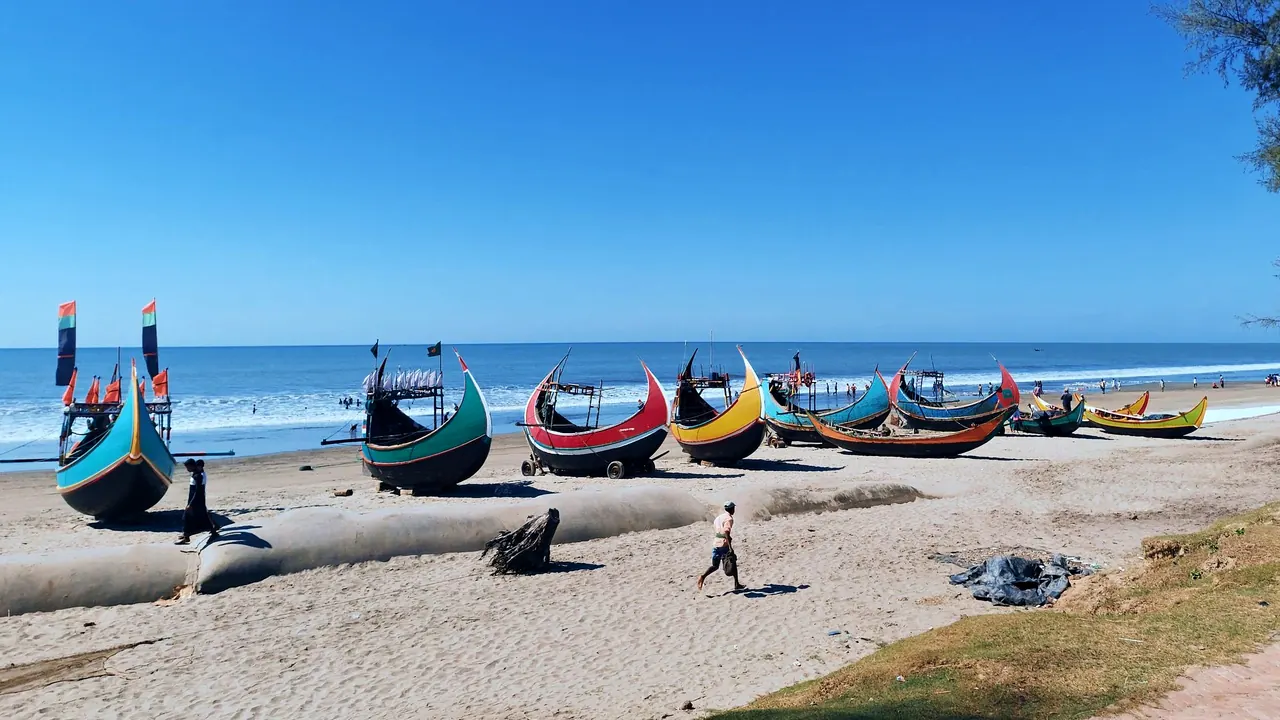
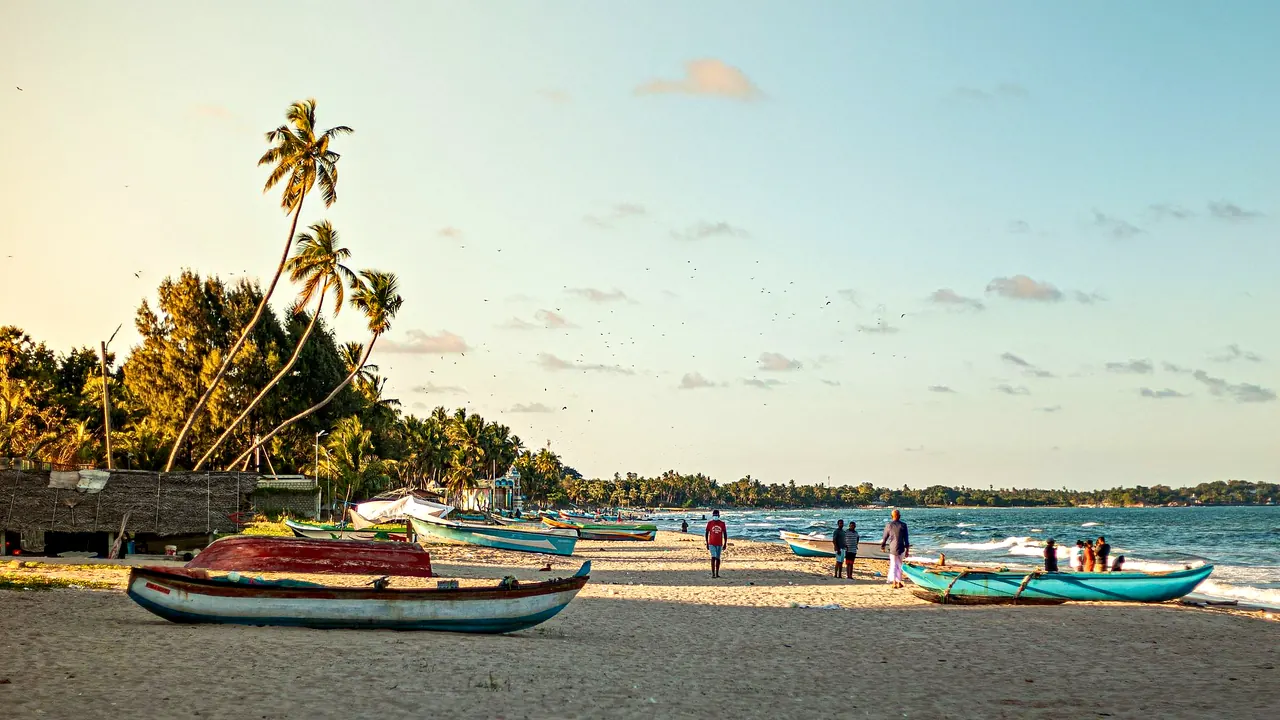
Photos: Cox's Bazar by Jubayer Ahmed, Pexels License; Trincomalee by Sachith Ravishka Kodikara, Pexels License.
Cox's Bazar or Trincomalee?
Our verdict in twelve categories, each scored against the same fixed benchmark cities, and the climate month by month, so you can choose for your trip.
Choose Cox's Bazar for
- shopping
- prices
Cox's Bazar is for a winter beach trip on a very small budget, where the draw is a seemingly endless strand of sand, sunset crowds on the town beaches, fried seafood from the stalls and a drive down the Marine Drive between forested hills and the sea. It feels like a domestic resort town, so it suits travellers who want local life on the sand and can live with cloudy surf, modest bathing customs and few sights beyond the shore.
Choose Trincomalee for
- day trips
- wellness
- beaches
Trincomalee gives more on almost every front that matters on a beach vacation: clearer and calmer water, reef snorkelling at Pigeon Island, whale-watching, Ayurvedic massage in quiet guesthouses and day trips to Sigiriya or Polonnaruwa. Pick it if you want a slow, sunny stay that mixes swimming with ancient sites and wildlife, and if you can travel between spring and early autumn rather than in winter.
Scoreboard
Twelve categories on one fixed scale from 0 to 100. The shaded stretch is the gap between the two.
Your match
Pick a travel style or drag the sliders, and both match scores follow your weighting.
Wins on shopping and prices with your weighting.
Wins on day trips and wellness with your weighting.
What matters to you?
Category by category
What the scores mean for a trip.
Beaches & swimming
Cox's Bazar is all about length: grey-gold sand runs unbroken towards Teknaf, and the town stretches at Laboni, Sugandha and Kolatoli fill at sunset with deckchairs, horse rides and families paddling. The water is cloudy, rip currents are strong and most locals swim fully clothed, so it is a beach for walking and watching rather than serious swimming. Quieter sand lies at Inani and along the Marine Drive.
Trincomalee's beaches are better for actually getting in the sea. Uppuveli and the longer, emptier Nilaveli have pale sand and water that turns clear turquoise in the calm season, Marble Beach is a sheltered cove for easy swims, and boats cross to the reef at Pigeon Island. Expect a quiet guesthouse coast rather than a crowded promenade.
Food & drink
Neither town is a food destination, and both rely on simple local cooking and fresh fish. In Cox's Bazar that means pomfret, crab and lobster fried to order at beach stalls, Bengali fish curries with bhorta and dal, and Rakhine noodles with fiery fish paste. Alcohol is hard to find outside a few licensed hotels.
Trincomalee cooks the Tamil way instead, with dosai, vadai, crab curry and kottu clattering on the griddles at night, and grilled catch at beach tables in Uppuveli and Nilaveli. A beer with dinner is easier to come by, except on Poya full-moon days.
Culture & sights
Trincomalee has more history to see, even if it only fills a day. The headland holds the colonial walls of Fort Frederick, with deer grazing among them, and the clifftop Koneswaram shrine, where visitors can join the puja, plus a Second World War cemetery and painted kovils in town.
Cox's Bazar has the Rakhine monastery of Aggmeda Khyang and a few small pagodas near the bazaar, but the town is mostly concrete hotels, and its better Buddhist heritage lies out at Ramu and on Maheshkhali.
Nightlife
Neither town has a night out, so plan on early evenings in both. The difference is that in Uppuveli you can have a cocktail or a beer on a guesthouse terrace, sometimes by a bonfire, while in Cox's Bazar evenings mean strolling the lit-up markets and beach stalls with no bars to finish in.
Nature & outdoors
Trincomalee's best outdoor experiences are at sea: reef sharks and turtles on the shallow coral at Pigeon Island, dives on wrecks around the bay and blue whales over the deep canyon offshore. Inland, the elephant gatherings at Minneriya and Kaudulla are a classic safari, though the flat scrub country offers no real hiking.
Cox's Bazar is more about the land. The Marine Drive runs for more than 80km between surf and forested hills, Himchari has viewpoints and paragliding, wild elephants roam the Teknaf hills, and boats thread through bird-rich mangroves to Maheshkhali and Sonadia.
Day trips
Trincomalee wins easily because Sri Lanka's Cultural Triangle is within reach. Sigiriya's rock fortress, the Dambulla cave temples and the ruins of Polonnaruwa are each about two hours by car, close enough to see one properly and be back on the coast by sunset.
From Cox's Bazar the outings are shorter and smaller: the monasteries and reclining Buddha at Ramu, the Adinath temple on Maheshkhali island, or a long drive down to Teknaf facing Myanmar. Saint Martin's Island needs an overnight stay.
Good for families
Cox's Bazar offers kites, pony rides, a safari park at Dulahazara and a few aquarium-style attractions. But the surf is dangerous for young swimmers, and the beaches are packed during the Eid breaks and long weekends.
Trincomalee is the easier of the two with children, mainly because the water is safer. In the calm months the shallows at Nilaveli and Marble Beach suit small swimmers, and older children can snorkel, spot deer at the fort and go out to look for whales. There is nothing built for children, though, and the heat is intense. In both places a resort with a pool makes life easier.
Getting around
Getting about is equally basic in both, and you'll rely on three-wheelers and hired drivers. The difference is the layout. In Cox's Bazar the hotels line the beach, so you can walk along the sand between Laboni and Kolatoli, although the roads behind it are chaotic and have few pavements. In Trincomalee you can walk the town and fort, but the beaches are a few kilometres up the coast, so you'll take a tuk-tuk every day, and the buses are too irregular to rely on.
Shopping & style
Cox's Bazar gives you more to bring home. The Burmese markets are worth a browse for lacquerware, Myanmar sandals and cotton lungis, beach-road stalls sell cultured pearls, shell craft and carvings, and the central bazaar sells dried fish and shrimp by the sack.
In Trincomalee shopping is mostly for necessities: spices, fruit and saris in the central market and a few sarong stalls on the beaches. Leave tea, gems and crafts for elsewhere in Sri Lanka.
Affordability
Both are cheap for a foreign visitor. Simple guesthouses, local meals and three-wheeler rides cost little in either, so the difference lies in what pushes the bill up. In Cox's Bazar it is comfort and timing: the resort hotels along the beach and the Marine Drive are expensive by Bangladeshi standards, and rates climb sharply in the winter peak and over Eid and the other long breaks, when domestic tourists fill the town.
In Trincomalee it is the extras: dive and whale-watching trips, a private driver for the Cultural Triangle, and the separate entry fees that foreigners pay at national parks and ancient sites.
Live music & performing arts
The only performances you're likely to see are religious, and they come from different faiths. In Cox's Bazar these are Rakhine Buddhist dances at the new year and the occasional cultural evening at a resort. There is no theatre and no regular live music.
Trincomalee's are Hindu and happen more often. Drums and nadaswaram pipes accompany the evening puja at Koneswaram and the town kovils, and processions fill the streets on festival days. Apart from that, the most you'll hear is a guitar at a beach bar.
Wellness & relaxation
Trincomalee is the more restful place. Its slow small-town pace leaves afternoons for hammocks and verandas, many guesthouses offer Ayurvedic oil massages and steam baths, and the Kanniya hot wells are a curious outing where you pour bucketfuls of spring water over yourself.
Cox's Bazar has no healing tradition of its own, and the town is noisy with horns and crowded markets in season. To relax there, book a garden resort on the Marine Drive with a pool and spa, or come outside the winter peak, when the town quietens.
When should you go?
Pick your month. The climate figures are measured averages, not a forecast.
Cox's Bazar in July
Trincomalee in July
Daytime high, °C
Rainfall in the month, mm
Temperature and rainfall are climate normals, averaged over the years shown. Cox's Bazar: 1982-2025, 17 years observed (sunshine 1991-2020, rainfall 1991-2020) normals, Cox's Bazar (4.1 km from centre). Trincomalee: 1991-2020 normals, Trincomalee (2.6 km from centre).
The two coasts peak at opposite times of year. Cox's Bazar is at its best from November to March, when it hardly rains, the sun shines most days and afternoons are warm rather than fierce, although the sea dips to about 24°C in January. April and May turn hot, and the monsoon then floods the summer, with around 913mm falling in July alone, rough water and sodden trails until October.
Trincomalee is dry and the sea flat and clear from about March to September, but this is also its hottest stretch, with highs near 36°C in June that make walking around town hard work after mid-morning. The rain arrives in October and peaks at about 366mm in November, running into January with red flags on the beaches. The sea stays warm all year at roughly 27 to 30°C, so the main question is timing: winter points to Cox's Bazar, summer to Trincomalee.
Which traveller are you?
On a trip on a tight budget, Cox's Bazar stretches the money a little further. Its best moments, the endless sand, sunset walks and fish fried at the stalls, cost almost nothing, while Trincomalee's highlights each need a boat, a driver or an entry fee.
For a culture and arts trip, Trincomalee is far stronger, largely because of where it sits. An early start brings an ancient royal city or rock fortress within reach, and the clifftop shrine fills another day. Cox's Bazar's heritage is mostly a drive out of town.
On a relaxing and wellness trip, Trincomalee suits better. Its unhurried small-town rhythm does half the work, and an Ayurvedic oil massage is often offered where you sleep. In Cox's Bazar, calm means retreating to a resort away from town.
Before you go
| Measure | Cox's Bazar | Trincomalee |
|---|---|---|
| Official language | Bangla | Tamil, Sinhala |
| Currency | Taka (BDT) | Sri Lanka Rupee (LKR) |
| Sockets | ACGK220 V, 50 Hz | GM230 V, 50 Hz |
| Driving side | Left | Left |
| Time zone | UTC+6 | UTC+5:30 |
| Emergency number | 999 | Police 119, ambulance 110, fire 110 |
| Elevation | 3 m | 8 m |
| Main airport | Cox's Bazar Airport (CXB)6 km from centre1 non-stop destination | Bandaranaike International Colombo Airport (CMB)214 km from centre58 non-stop destinations |
| Public holidays this year | 7 days | - |
By the numbers
| Measure | Cox's Bazar | Trincomalee |
|---|---|---|
| Population | 196,374 | 99,135 |
| People per km² | 303 | 13,218 |
| Museums within 10 km | 0 | 1 |
| UNESCO World Heritage sites within 50 km | 0 | 0 |
| Swim season, months above 21 °C | 12 months | 12 months |
Where else could you go?
Every comparison below shares a destination with this one, so you can follow Cox's Bazar or Trincomalee somewhere new.
- Kandyvs Trincomalee
- Ellavs Trincomalee
- Colombovs Trincomalee
- Baganvs Cox's Bazar
- Gallevs Trincomalee
- Dhakavs Cox's Bazar