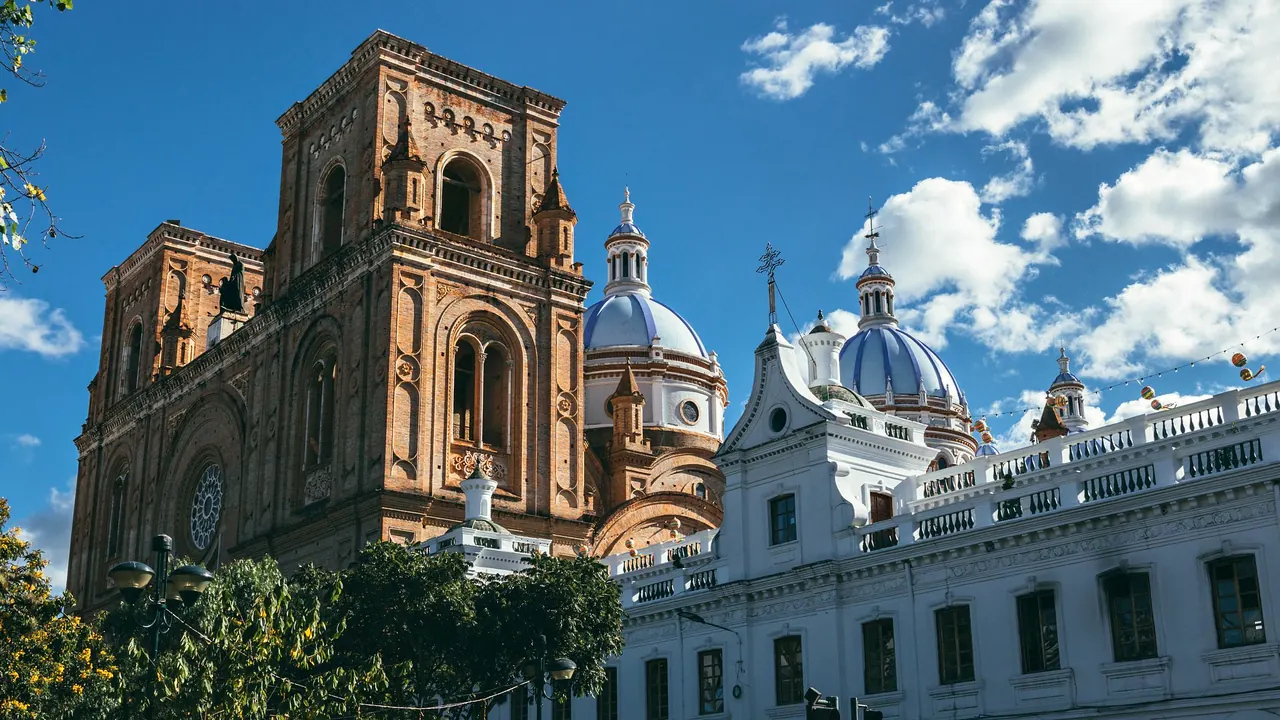
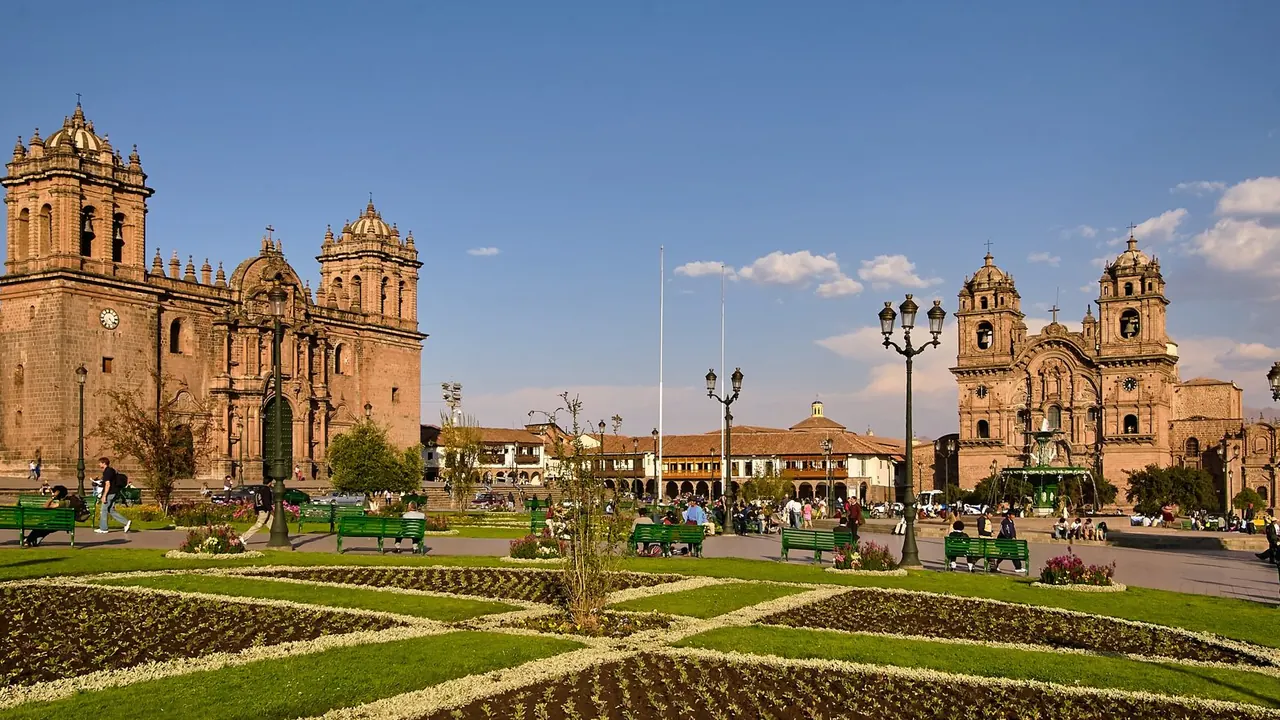
Photos: Cuenca, Ecuador by Charly Chacon, Pexels License; Cusco by Pedro Szekely, CC BY-SA 2.0, cropped.
Cuenca, Ecuador or Cusco?
Our verdict in twelve categories, each scored against the same fixed benchmark cities, and the climate month by month, so you can choose for your trip.
Choose Cuenca, Ecuador for
- families
- wellness
- getting around
Cuenca suits a slower, gentler stay. It is for the traveller who wants to wander a handsome colonial grid, soak in the springs at Baños, eat well and cheaply in the market halls and sleep through quiet, cool nights. It sits lower than Cusco and is easier on the body. It is also far kinder to children, and your money lasts longer there.
Choose Cusco for
- day trips
- culture and sights
- nature and the outdoors
Choose Cusco for the great Andean set pieces. Inca stonework under a Spanish city, the Sacred Valley ruins, Machu Picchu and treks such as Salkantay and the Inca Trail give it much more to see and do, and its restaurants aim higher. The cost is thin air, steep streets, pre-dawn starts and expensive excursions. That makes it a trip for active adults rather than a restful one.
Scoreboard
Twelve categories on one fixed scale from 0 to 100. The shaded stretch is the gap between the two.
Your match
Pick a travel style or drag the sliders, and both match scores follow your weighting.
Too close to call, level with your weighting
Wins on families and wellness with your weighting.
Wins on day trips and culture and sights with your weighting.
What matters to you?
Category by category
What the scores mean for a trip.
Beaches & swimming
Neither city offers any swimming: both sit high in the Andes, far from the Pacific. The small difference is that Cuenca's coast can be reached overland on a long drive, and there are warm thermal pools on the edge of town. From Cusco the coast means a flight, and the lakes in the hills are glacial.
Food & drink
Both kitchens are rooted in highland cooking, and cuy turns up in each. Cuenca's strength is plain and cheap: hornado carved to order in the Mercado 10 de Agosto, mote pillo, potato soups, canelazo on cold evenings and a weekend trip out to Ricaurte for spit-roast guinea pig.
Cusco goes further. Alongside the San Pedro market and the picanterías, it has Novoandino restaurants in San Blas and around the Plaza de Armas that turn alpaca, trout and native potatoes into tasting menus, a kind of cooking Cuenca barely offers. Both run thin beyond local food, and in Cusco the tourist menus nearest the square are best skipped.
Culture & sights
Cuenca's appeal is the whole townscape. Its UNESCO grid of balconied streets, the blue domes of the New Cathedral over Parque Calderón and Pumapungo, where the remains of Inca Tomebamba run down to the river, reward strolling more than ticking off sights.
Cusco carries far more weight. The Inca capital survives in its mortarless walls, with Santo Domingo built on the foundations of Qorikancha, Cusco School paintings filling the cathedral and the zigzag ramparts of Sacsayhuamán above town. Its museums are modest, but the Inca past that Cuenca shows in one museum is here in every street.
Nightlife
Neither city is somewhere to go for its nights, but Cusco has more going on. The bars and clubs off the Plaza de Armas fill with backpackers and trekkers, pub crawls set the pace, and on weekends some places stay open into the early hours. Cuenca's evenings along Calle Larga are smaller and more local. A few bars, craft-beer places and salsa spots are busy with students and expats from Thursday to Saturday and quiet the rest of the week.
Nature & outdoors
Cuenca has real wilderness close by. Cajas, under an hour away, offers páramo, granite ridges and hundreds of glacial lakes on trails of every length, and green paths follow the Tomebamba through town.
Cusco works on a bigger scale. The Sacred Valley, Lake Humantay and the Rainbow Mountain at over 5,000m are day hikes, and multi-day treks such as the Inca Trail, Salkantay and Ausangate make it one of the continent's great hiking bases. Rafting and mountain biking add to that. The price is harder walking in thinner air, often starting in the dark.
Day trips
From Cuenca, the main outings are Ingapirca, Ecuador's largest Inca site two hours north, and a loop through the craft towns of Gualaceo, Chordeleg and Sígsig. They are pleasant, but a few days uses them up.
Cusco has far more within reach. Pisac, Ollantaytambo, Chinchero, and Moray with the Maras salt pans fill several days in the Sacred Valley. Tipón and Andahuaylillas make a quieter route to the south-east, and above it all stands Machu Picchu, a long day or an overnight trip by road, train and bus. Fine as it is, Ingapirca would be a minor stop among Cusco's sites.
Good for families
Cuenca is a calm city where families fill the squares and riverside parks at weekends. Bioparque Amaru, with its condors and spectacled bears, is a proper outing for children. Cobbles and the altitude still tire little ones for the first days.
Cusco is much tougher. At 3,400m, altitude sickness is a real risk for children who may not be able to say how they feel. The streets are steep and narrow, and days are spent at ruins and churches after early starts. Older children who love history can thrive, and families with toddlers often base themselves lower down in the Sacred Valley.
Getting around
Both old centres are made for walking, but Cuenca's is easier going. It is a compact grid with the river just below it, a tram crosses the city and taxis are easy to flag. The steps down to the river are the main effort.
Cusco has no tram or metro, and its walks climb steeply to San Blas and Sacsayhuamán in thin air, so taxis are worth taking for the uphill trip back. Beyond town, both depend on buses, tours or hired drivers, and Cusco adds the train to Machu Picchu.
Shopping & style
Each city has a signature craft. Cuenca's is the toquilla straw Panama hat, finished in workshops around the city and sold in every grade from everyday to superfine, with ceramics, embroidery and silver filigree from Chordeleg alongside.
Cusco's is alpaca: knitwear, blankets and ponchos, best bought from the natural-dye cooperatives of Chinchero. Add the ceramic and carving workshops of San Blas and it has the wider range, though alpaca labels near the Plaza de Armas are not always honest. Neither city has a fashion scene.
Affordability
Both are cheap day to day, with inexpensive market lunches, taxis and guesthouses. Cuenca stays cheap from start to finish: museums and churches charge little or nothing, and there is no one big expense to plan around.
In Cusco, the famous excursions eat the budget. The Machu Picchu train and entry and guided treks such as the Inca Trail are priced for foreigners, and hotels and restaurants by the main square charge close to international rates, so the same length of stay costs noticeably more.
Live music & performing arts
Both scenes are small, but they differ in kind. Cuenca's is more formal. The Cuenca Symphony Orchestra plays regularly in old theatres and churches, often for free, and Teatro Sucre adds a modest season of theatre and dance. Its great street event is the Pase del Niño Viajero on Christmas Eve.
Cusco relies on folklore instead, with costumed dance shows for visitors most evenings and panpipe bands at dinner. Its festivals are the bigger spectacle: Inti Raymi at Sacsayhuamán around the June solstice, Corpus Christi and the masked dancers of the Qoyllur Rit'i pilgrimage.
Wellness & relaxation
Cuenca has its own hot springs at Baños, a short ride from the centre, where public pools, steam rooms and mud treatments make an easy half day. The city's unhurried pace and quiet nights do the rest.
Cusco offers cheap street massage and hotel spas, some of which pump oxygen into the rooms, but its nearest hot springs, at Aguas Calientes and Lares, are well beyond the city. Visitors after real rest usually go down to riverside lodges in the Sacred Valley, because altitude, cold nights and early starts make the city itself tiring.
When should you go?
Pick your month. The climate figures are measured averages, not a forecast.
Cuenca, Ecuador in July
Cusco in July
Daytime high, °C
Rainfall in the month, mm
Where the figures come from
Cuenca, Ecuador has no weather station within reach, so its figures come from a gridded climate model rather than a measured record, and read a broad area rather than the city itself.
Cusco's station stands 151 m below the city centre, so the centre is likely a little cooler than the figures say.
Temperature and rainfall are climate normals, averaged over the years shown. Cuenca, Ecuador: 2001-2020 normals, NASA POWER reanalysis grid, no weather station within 90 km. Cusco: 1991-2020 normals, Cuzco (3.7 km from centre).
Neither city is for the beach, so the question is rain and walking weather. Cuenca feels like spring all year, with daytime highs between 16°C and 19°C and rain spread across the months. March is the wettest, and July to September are the driest, which makes them the best months for Cajas and long days on foot. It is never too hot for the streets, though evenings are cool throughout.
Cusco is warmer by day for most of the year, by three to five degrees from March to November. The gap is widest in midyear, when Cuenca is at its coolest. Cusco's year also splits sharply. From May to August it is almost dry, with under 10mm a month, and September stays light, so skies are clear for trekking and the nights are cold. From December to February the rains set in, with January bringing about 160mm, so the hills turn green and the trails get muddy. In the southern winter Cusco is at its finest. Around the turn of the year, when the two are closest in warmth, Cuenca's steadier, lighter rain holds up better.
Which traveller are you?
On a family trip with children, Cuenca is much the easier choice. It sits about 900m lower, its centre is calm and gentle to walk, and Bioparque Amaru and the Baños pools give children something of their own. Cusco's altitude and steep cobbles wear small children out.
For a culture and arts trip, Cusco wins clearly. Inca walls run beneath its churches, Qorikancha and Sacsayhuamán are within walking distance, and the Sacred Valley and Machu Picchu continue the story. Cuenca's UNESCO centre is lovely but fills two or three days.
On a relaxing and wellness trip, Cuenca is the better fit. Hot springs lie a short ride away, the riverside paths invite slow evening walks and the nights are quiet. In Cusco, the altitude, cold nights and pre-dawn tour departures make it hard to rest in the city itself.
Before you go
| Measure | Cuenca, Ecuador | Cusco |
|---|---|---|
| Official language | Spanish, Shuar, Northern Quichua | Spanish, Aymara, Quechua |
| Currency | US Dollar (USD) | Sol (PEN) |
| Sockets | AB120 V, 60 Hz | ABC220 V, 60 Hz |
| Driving side | Right | Right |
| Time zone | UTC-5 | UTC-5 |
| Emergency number | 911 | 111 or 911 |
| Elevation | 2,550 m | 3,399 m |
| Main airport | Mariscal Lamar Airport (CUE)2 km from centre3 non-stop destinations | Alejandro Velasco Astete International Airport (CUZ)5 km from centre6 non-stop destinations |
| Public holidays this year | 11 days | 17 days |
By the numbers
| Measure | Cuenca, Ecuador | Cusco |
|---|---|---|
| City population | 361,524 | 428,450 |
| People per km² | 5,121 | - |
| Museums within 10 km | 4 | 11 |
| UNESCO World Heritage sites within 50 km | 2 | 2 |
Where else could you go?
Every comparison below shares a destination with this one, so you can follow Cuenca, Ecuador or Cusco somewhere new.
- Guayaquilvs Cuenca, Ecuador
- Quitovs Cuenca, Ecuador
- Arequipavs Cusco
- Punovs Cusco
- La Pazvs Cusco
- Limavs Cusco