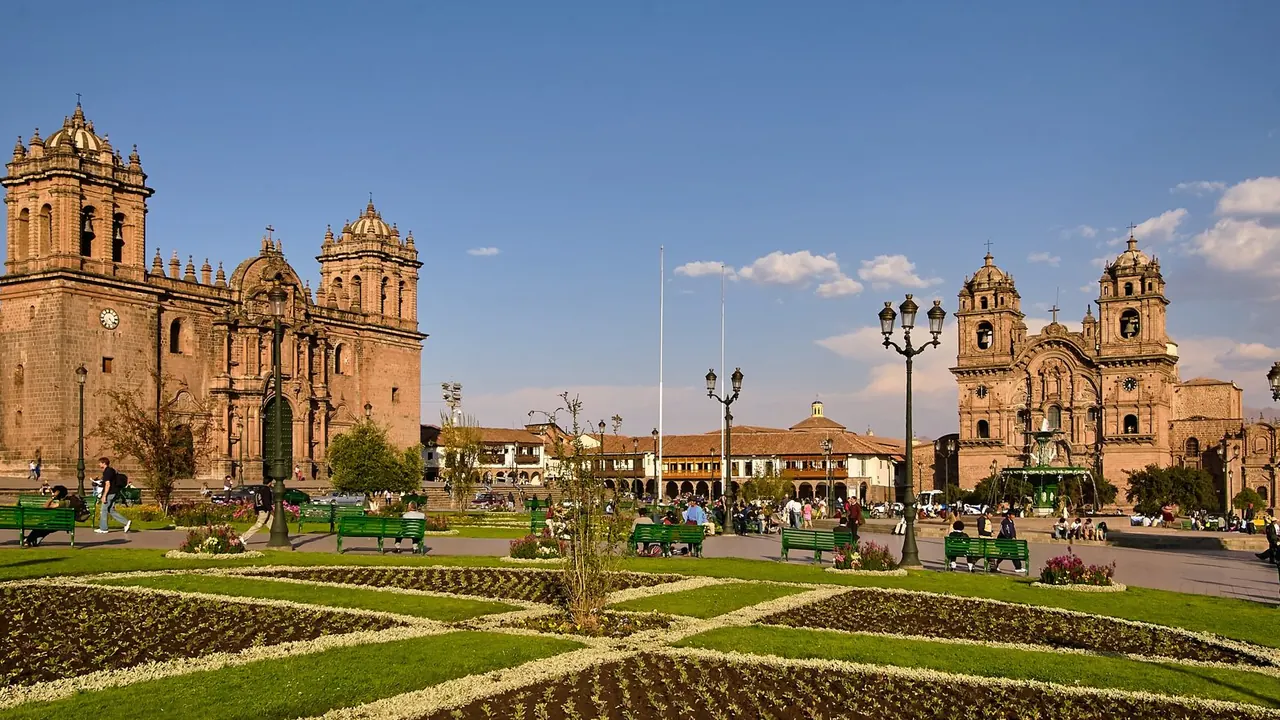
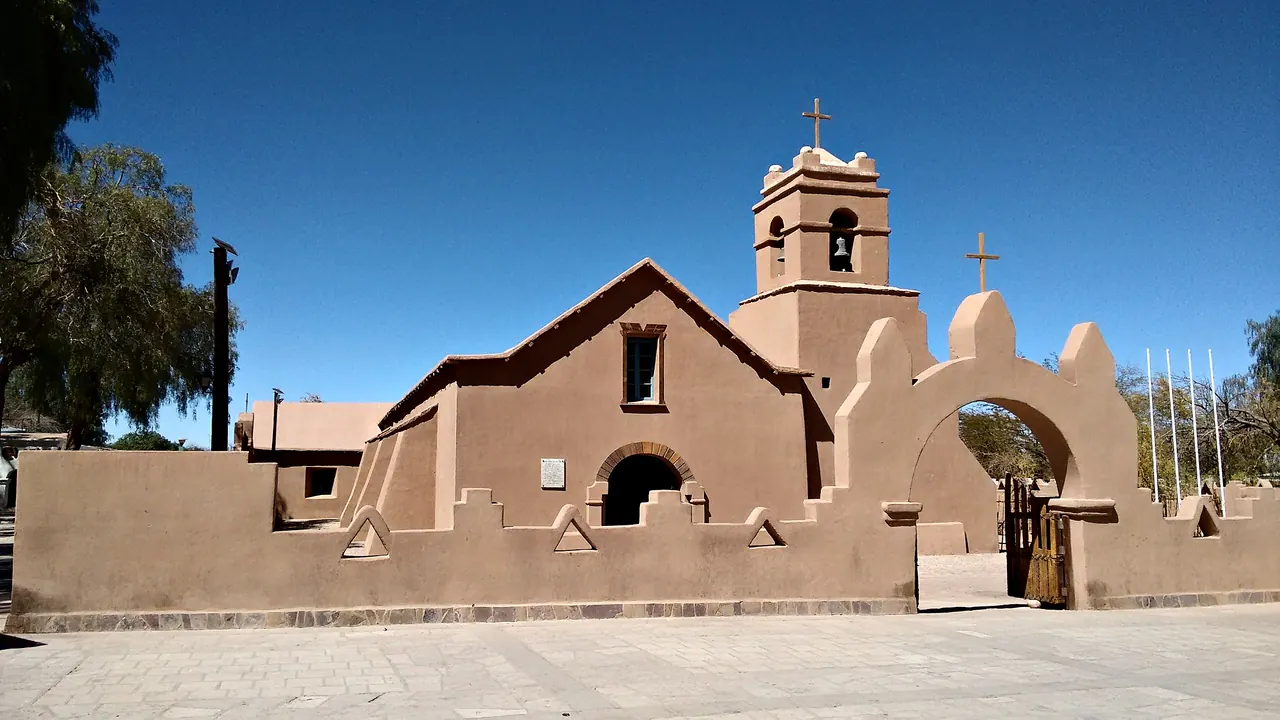
Photos: Cusco by Pedro Szekely, CC BY-SA 2.0, cropped; San Pedro de Atacama by MarcosEscalier, CC BY-SA 4.0, cropped.
Cusco or San Pedro de Atacama?
Our verdict in twelve categories, each scored against the same fixed benchmark cities, and the climate month by month, so you can choose for your trip.
Choose Cusco for
- culture and sights
- day trips
- prices
Cusco suits a trip built around history and a town with some life in it. The old Inca capital has fitted stone walls lining its streets and Qorikancha and the cathedral at its centre, and the Sacred Valley ruins and Machu Picchu are within reach. A real regional kitchen, good Andean textiles and a small bar scene fill the rest of the day, and everyday costs stay low. Its altitude and steep cobbled lanes make it hard work with young children.
Choose San Pedro de Atacama for
- wellness
- families
- nature and the outdoors
Pick San Pedro de Atacama when the landscape is the whole point and the village is just somewhere to sleep. Salt flats, geysers, high lagoons and eroded canyons start close to a small adobe village. The weather is dependable all year, and natural hot pools and lodge spas make it easier to slow down between dawn excursions. Expect quiet evenings under the stars, limited food and noticeably higher costs.
Scoreboard
Twelve categories on one fixed scale from 0 to 100. The shaded stretch is the gap between the two.
Your match
Pick a travel style or drag the sliders, and both match scores follow your weighting.
Wins on culture and sights and day trips with your weighting.
Wins on wellness and families with your weighting.
What matters to you?
Category by category
What the scores mean for a trip.
Beaches & swimming
Neither is a place to swim, and the difference is only one of novelty. Cusco has nothing at all, as its hill lagoons and rivers are glacial. San Pedro at least offers an hour floating in the dense salt water of Laguna Cejar or the Baltinache pools, or a lodge pool. For a real beach, both mean a long journey to the Pacific.
Food & drink
Cusco has a real regional kitchen to explore. Its San Pedro market has juice stalls and set-lunch counters. Picanterías serve hearty soups and chicharrón, trout and cuy are easy to find, and Novoandino tasting menus around San Blas and the Plaza de Armas take native ingredients upmarket. The choice thins fast beyond Peruvian cooking, but there is plenty within it.
San Pedro de Atacama is a village feeding tour groups along Caracoles. Llama, quinoa and rica-rica turn up on the better menus, but there are no markets or street food, and the pizza places and fire-pit dinners soon start to repeat.
Culture & sights
This is where the two are furthest apart. Cusco is the old Inca capital, with mortarless walls along Hatun Rumiyoc and a colonial monastery rising from the foundations of Qorikancha. The cathedral and La Compañía face each other across the main square, and the zigzag ramparts of Sacsayhuamán stand above the town. The museums are modest, but the city itself is the exhibit.
San Pedro has its adobe church with a cactus-wood ceiling, the hillside fortress of Pukará de Quitor and the ancient round dwellings of Tulor. Together they make a pleasant half day by bike, but they are not a reason to come.
Nightlife
Cusco is the only one of the two where a night can run late. At weekends a few places near the main square keep going into the small hours, and you can choose a loud room full of backpackers or a calmer cocktail or craft beer up in San Blas. It is a scene made by travellers rather than locals, and the thin air makes each drink count for more than usual.
San Pedro de Atacama winds down early. A few fire-pit bars on Caracoles fill with people comparing the day's tours, and the village is asleep before midnight, with the geyser trips leaving long before dawn. The outing worth staying up for is an astronomy tour in the dry, high air.
Nature & outdoors
Both are superb bases for high country, and they differ in kind. Cusco is about mountains and trekking. It has the terraced Sacred Valley, day hikes to Humantay lake and Rainbow Mountain, multi-day routes such as the Inca Trail and Salkantay, and rafting on the Urubamba.
San Pedro de Atacama comes out ahead for strange landscapes that are easy to reach. The Valle de la Luna, the flamingo pools of the Salar, the El Tatio geysers and the Miscanti and Miñiques lagoons all lie within reach of the village. The weather holds all year, and the night skies are among the clearest anywhere.
Day trips
Cusco has far more to see beyond the town. Pisac, Ollantaytambo, Chinchero and the Moray terraces with the Maras salt pans fill the Sacred Valley, and Tipón and Andahuaylillas lie to the south-east. Machu Picchu is a very long day by road, train and bus. The themes repeat, but each stop is worth the drive.
From San Pedro, almost every outing goes into the landscape, and few places are worth visiting for their own sake: the white-stone village of Toconao, the old church at Chiu Chiu and the Chuquicamata copper mine. Uyuni, over the Bolivian border, takes several days.
Good for families
Cusco is the harder of the two with young children. At 3,400m altitude sickness is a real risk, the cobbled lanes are steep and the pavements are barely wide enough to walk on. Days go on ruins, churches and long train rides. Families with small children often stay lower down in the Sacred Valley, where the llamas and alpacas are a hit.
San Pedro de Atacama sits noticeably lower, at 2,400m, and its small village is calm and easy to stroll around. Older children and teenagers get sandboarding on the dunes, floating in a salt lagoon and a look at Saturn through a telescope. The catch is the big excursions, with starts before dawn, hours in a minibus and bitter cold high on the altiplano.
Getting around
Cusco's compact centre is walkable, though steep climbs in thin air and narrow cobbled pavements slow you down, and cheap taxis fill the gaps. Shared minibuses run to the Sacred Valley, and the Machu Picchu train leaves from stations outside town.
San Pedro takes ten minutes to cross on foot, but beyond the village there is no public transport at all. The lagoons and geysers mean a tour minibus or a hired high-clearance car, and rented bikes cover the nearer valleys. Calama airport is about an hour and a half away.
Shopping & style
Both trade in alpaca and woven wool, but Cusco has much more depth. It has natural-dye weaving cooperatives in Chinchero, ceramic and silver workshops in San Blas and large craft halls, though much of what is sold near the Plaza de Armas is the same factory-made stock. San Pedro's craft market and the shops on Caracoles sell similar regional knitwear, plus carvings in volcanic stone and lapis lazuli jewellery. Most visitors there buy little beyond a warm layer for the dawn tours.
Affordability
Cusco is much the cheaper stay. Set menus, market lunches, taxis and guesthouses cost little, and a combined ticket covers many churches and ruins. The Machu Picchu train and guided treks are the big expenses.
San Pedro de Atacama is expensive for a village and dearer than most of Chile, because everything is trucked across the desert. Tours and park fees are hard to avoid and rooms cost more than they look. Self-catering, set lunches and cycling to the nearer sights are the main ways to save.
Live music & performing arts
Cusco offers more, though most of it is staged for visitors: folkloric dance shows most evenings and panpipe and charango bands over dinner. Its festivals are the real draw, with Inti Raymi at Sacsayhuamán around the June solstice and the masked dancers of Corpus Christi and Qoyllur Rit'i.
San Pedro has little beyond the occasional restaurant musician. Its traditional dances come out at the feast of San Pedro and San Pablo and at Carnival.
Wellness & relaxation
San Pedro de Atacama is the easier place to unwind. The Termas de Puritama hot pools step down a canyon half an hour from the village, and lodges have spas and pools looking towards the volcanoes. Afternoon siestas set the pace, as long as you leave some days free of dawn alarms.
Cusco has no bathing tradition, and its nearest hot springs are far off at Aguas Calientes or Lares. Cheap massage and hotel spas, some with oxygen pumped into the rooms, help a little. Real rest usually means going down to the riverside lodges of the Sacred Valley.
When should you go?
Pick your month. The climate figures are measured averages, not a forecast.
Cusco in July
San Pedro de Atacama in July
Daytime high, °C
Rainfall in the month, mm
Where the figures come from
Cusco's station stands 151 m below the city centre, so the centre is likely a little cooler than the figures say.
San Pedro de Atacama has no weather station within reach, so its figures come from a gridded climate model rather than a measured record, and read a broad area rather than the city itself.
Temperature and rainfall are climate normals, averaged over the years shown. Cusco: 1991-2020 normals, Cuzco (3.7 km from centre). San Pedro de Atacama: 1991-2020 normals, TerraClimate 4 km grid at the town, no weather station within 90 km.
Cusco's afternoons barely change through the year, staying around 20 to 22°C, so the deciding factor is rain. The dry season from May to September is the time to go, with almost no rain (June sees about 3mm). Skies are clear for trekking and the streets are easy to walk, though the nights freeze. From December to March the rains set in, peaking at about 159mm in January, with greener hills, more cloud and muddy trails.
San Pedro de Atacama is dry almost all year, so the timing is more about temperature. Between December and February afternoons reach about 26°C and the odd altiplano storm can roll in. June and July are the coolest months, around 19°C by day with bitterly cold nights and dawns at altitude. Neither place ever has beach weather.
Which traveller are you?
On a culture and arts trip, Cusco wins clearly. Inca walls run through its streets, Qorikancha and the cathedral's Cusco School paintings sit in the centre, and the Sacred Valley ruins and Machu Picchu lie beyond. San Pedro's sights fill half a day.
For a relaxing and wellness trip, San Pedro de Atacama is the better place. It has the Termas de Puritama hot pools, lodge spas facing the volcanoes and an unhurried village pace. Cusco has cheap massage, but its cold nights, thin air and early tours make rest hard.
On a tight budget, Cusco makes money go much further. Market lunches, set menus, taxis and simple guesthouses cost little, and one combined ticket covers many sites. San Pedro is dearer than most of Chile, and nearly every outing needs a paid tour or a car.
Before you go
| Measure | Cusco | San Pedro de Atacama |
|---|---|---|
| Official language | Spanish, Aymara, Quechua | Spanish |
| Currency | Sol (PEN) | Chilean Peso (CLP) |
| Sockets | ABC220 V, 60 Hz | CL220 V, 50 Hz |
| Driving side | Right | Right |
| Time zone | UTC-5 | UTC-4, UTC-3 in summer |
| Emergency number | 111 or 911 | Police 133/134, ambulance 131, fire 132 |
| Elevation | 3,399 m | 2,407 m |
| Main airport | Alejandro Velasco Astete International Airport (CUZ)5 km from centre6 non-stop destinations | El Loa Airport (CJC)86 km from centre3 non-stop destinations |
| Public holidays this year | 17 days | 16 days |
By the numbers
| Measure | Cusco | San Pedro de Atacama |
|---|---|---|
| City population | 428,450 | 5,347 |
| People per km² | - | 2,325 |
| Museums within 10 km | 11 | 1 |
| UNESCO World Heritage sites within 50 km | 2 | 1 |
Where else could you go?
Every comparison below shares a destination with this one, so you can follow Cusco or San Pedro de Atacama somewhere new.
- Arequipavs Cusco
- Punovs Cusco
- Saltavs San Pedro de Atacama
- La Pazvs Cusco
- Limavs Cusco
- La Pazvs San Pedro de Atacama