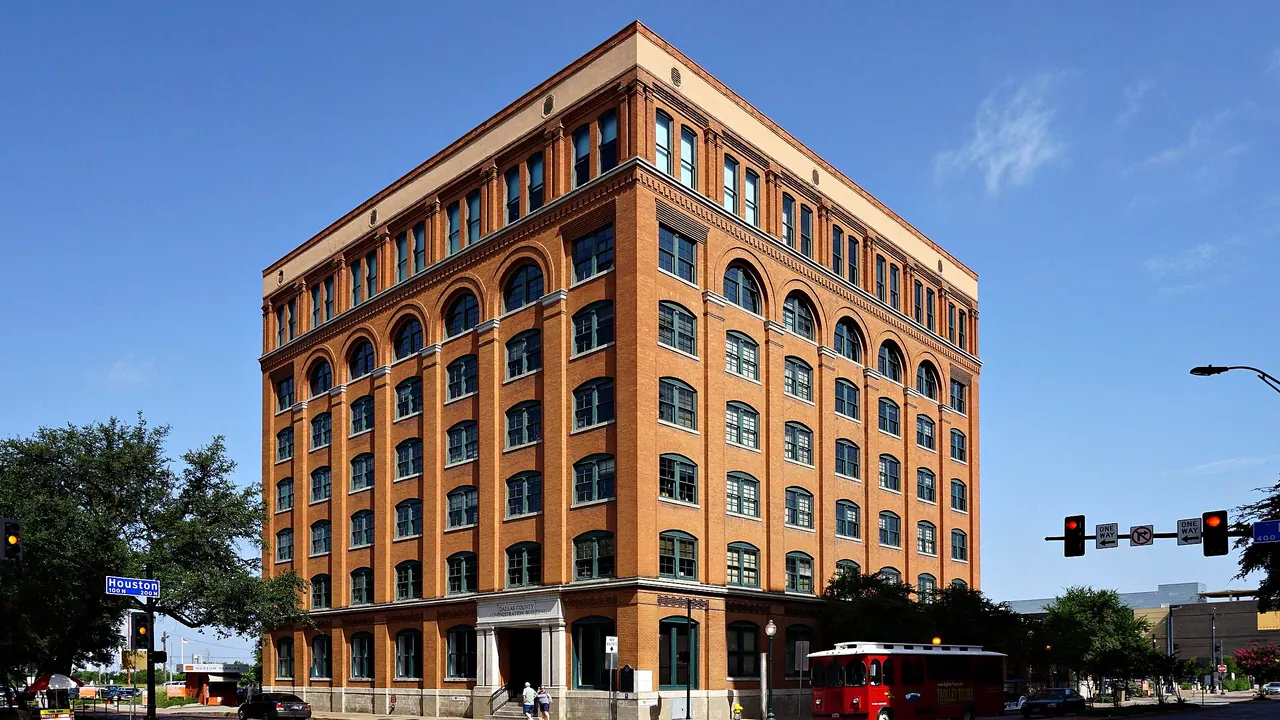
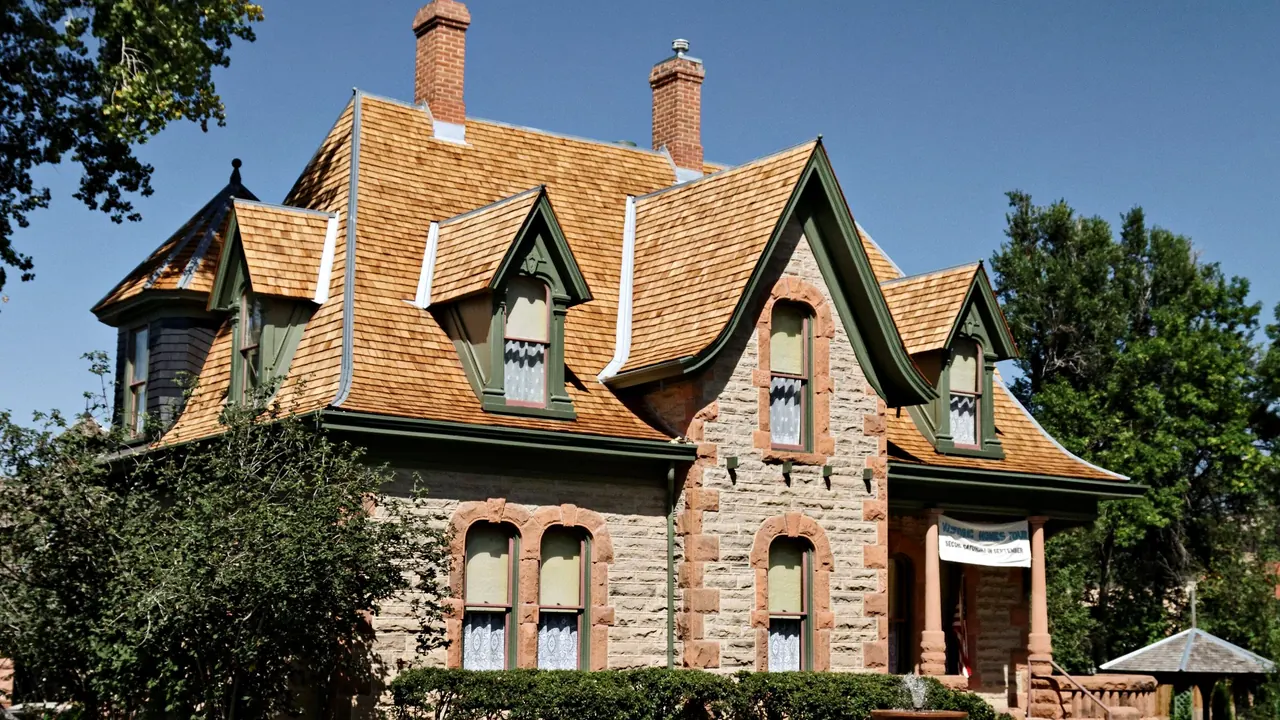
Photos: Dallas by Michael Barera, CC BY-SA 4.0, cropped; Fort Collins by Gribeco, CC BY-SA 3.0, cropped.
Dallas or Fort Collins?
Our verdict in twelve categories, each scored against the same fixed benchmark cities, and the climate month by month, so you can choose for your trip.
Choose Dallas for
- shopping
- culture and sights
- live music and the arts
Dallas is the pick for a big-city trip with plenty to fill the days. You get the Kennedy story at Dealey Plaza, a compact Arts District with major museums and concert halls, serious barbecue and Tex-Mex, luxury malls and the biggest children's attractions in the region. In return you spend a lot of time in a car, and the long summers are fiercely hot.
Choose Fort Collins for
- nature and the outdoors
- getting around
- beaches
Travellers who would rather spend their days outdoors should choose Fort Collins. It sits where the plains meet the foothills, so trails, the Poudre canyon and Rocky Mountain National Park are all within easy reach, and in the evening Old Town's breweries and taprooms make a relaxed place to finish the day. It is small, safe and easy to cycle around. Sights, shopping and dining are thin, though, and for those people head to Denver.
Scoreboard
Twelve categories on one fixed scale from 0 to 100. The shaded stretch is the gap between the two.
Your match
Pick a travel style or drag the sliders, and both match scores follow your weighting.
Wins on shopping and culture and sights with your weighting.
Wins on nature and the outdoors and getting around with your weighting.
What matters to you?
Category by category
What the scores mean for a trip.
Beaches & swimming
Both cities are a long way from the sea, so swimming in either means a reservoir. Dallas has the longer season and more choice, with big lakes such as Lewisville and Grapevine that have plain sandy park beaches and brownish water, plus the water parks in Arlington. Fort Collins has Horsetooth Reservoir, with coves set against the foothills, but it is only warm enough for swimming in July and August.
Food & drink
Dallas is the better place to eat. It takes Texan cooking seriously, from brisket sold by weight to Tex-Mex, steakhouses and taco trucks in Oak Cliff. The northern suburbs add Vietnamese, Korean and South Asian food, although almost all of it needs a drive.
In Fort Collins, drinking matters more than eating. It is one of the country's best-known craft-beer towns, with brewery tours and taprooms all over the city, but the food in Old Town is mostly gastropubs and burgers, and for a serious dinner people go to Denver.
Culture & sights
Dallas has much more to see. The Sixth Floor Museum, at the window the shots came from in 1963, draws visitors from around the world. Within a few blocks of each other, the Arts District has the Dallas Museum of Art and the Nasher Sculpture Center, and Fair Park has its 1930s Art Deco exhibition buildings. Allow two days.
Fort Collins is mostly about walking around Old Town's red-brick streets of the late nineteenth century. Add the Museum of Discovery, the Victorian Avery House and the university's art museum, and one day is enough.
Nightlife
Dallas has a bigger night out, spread across districts with very different crowds. Deep Ellum has dive bars and late, scruffy fun, Uptown has polished patios and cocktail lounges, and Lower Greenville sits somewhere between the two. You usually need a ride-hail to get from one to another, and bars close at 2am.
Fort Collins keeps its nightlife within a few walkable blocks around Old Town's square: pubs, rooftop patios and busy taprooms with a large student crowd. There are hardly any clubs, and things go quiet when the university is on break.
Nature & outdoors
Fort Collins is far ahead here. Horsetooth Mountain and Lory State Park have trails up to rocky summits only minutes from town, and the Cache la Poudre canyon offers rafting, camping and fly fishing. Rocky Mountain National Park, with alpine lakes and elk, is about an hour and a half away.
Dallas has gentler outdoor options: the White Rock Lake loop, the Katy Trail through Uptown, the Great Trinity Forest and the limestone paths at Cedar Ridge Preserve. All of them are pleasant, but summer heat pushes them into the early morning.
Day trips
The two cities have a similar range of day trips, but of a different kind. From Dallas, one trip stands out: Fort Worth, reachable by commuter train, with the Stockyards' longhorn drive and the Kimbell Art Museum. After that come smaller towns with courthouse squares, such as McKinney and Granbury.
Fort Collins has more variety and no single highlight. Boulder sits below the Flatirons, Denver has big museums, Estes Park leads into the mountains, and Cheyenne is just over the Wyoming line. You need a car for nearly all of them.
Good for families
Dallas has far more big days out for children. Six Flags and a water park sit side by side in Arlington, and there are two large zoos, the Perot Museum, the rainforest walk-through at the Dallas World Aquarium, and the State Fair every autumn. The downsides are long drives and summer heat.
Fort Collins is calmer and easier to manage. Families can cycle the river paths, meet the animals at the city farm in Lee Martinez Park, go tubing on gentle stretches of the river and spend days at Horsetooth Reservoir. For a zoo or a theme park, though, you have to drive to Denver.
Getting around
Fort Collins is much easier to get around. Old Town is compact and flat, a rapid bus runs north to south, and protected bike lanes, bike-share and off-street trails make cycling the natural way to get between breweries, campus and parks. You need a car for the foothills and day trips.
In Dallas a car is needed almost everywhere. DART light rail is useful from both airports and for Deep Ellum and Fair Park, and the vintage M-Line streetcar links Uptown with downtown, but elsewhere distances are long and pavements patchy.
Shopping & style
Dallas is a real shopping destination. Neiman Marcus was founded here in 1907, NorthPark Center has a wide range of labels alongside art on display, and the European fashion houses gather in the 1930s Spanish-style Highland Park Village. Western boots, hats and buckles are the local speciality.
Fort Collins is for browsing rather than serious shopping. Its Old Town has independent bookshops, vintage clothing, cycling and outdoor shops, and Colorado-made gifts. There is no luxury shopping at all.
Affordability
The two cost about the same, and both are expensive by world standards once you add a hire car, tax and tip. Dallas has cheaper hotels near the freeways, cheap barbecue and free museums, but its Uptown steakhouses and cocktail bars are expensive. In Fort Collins the trails, river paths and Old Town cost nothing, but hotel prices rise sharply on graduation and football weekends.
Live music & performing arts
Dallas plays on a far bigger stage. The Arts District has I. M. Pei's Meyerson Symphony Center, the Winspear Opera House for opera and Broadway tours, and the Wyly Theatre. Deep Ellum has hosted blues and jazz since the 1920s and has bands on most nights.
Fort Collins works on a regional scale. The Lincoln Center has touring shows and the local symphony, and the university's arts centre stages concerts and opera during term. Small Old Town venues book bluegrass and indie bands, and there are free outdoor concerts on summer evenings.
Wellness & relaxation
Neither city is built around rest, but they are restful in different ways. Dallas offers hotel spas, plus a large Korean-style bathhouse in the north of the city with heated rooms and an all-day lounging culture. Fort Collins has no hot springs nearby, the nearest soak being at Idaho Springs about an hour and three-quarters away, but its slow pace and shaded river paths make it the calmer place to unwind.
When should you go?
Pick your month. The climate figures are measured averages, not a forecast.
Dallas in July
Fort Collins in July
Daytime high, °C
Rainfall in the month, mm
Where the figures come from
Fort Collins has no rain gauge within 25 km of the centre, so its rainfall comes from a gridded climate dataset read at the destination rather than from a gauge further away.
Temperature and rainfall are climate normals, averaged over the years shown. Dallas: 1991-2020 (sunshine 1981-2010) normals, Dallas / Oldham (8.5 km from centre). Fort Collins: 2006-2020 (rainfall 1991-2020) normals, Fort Collins / Redmond (16.1 km from centre).
Dallas is best in spring and autumn. From March to May and again in October and November, days run from the low to the high twenties, which is comfortable for walking. May and October are also the wettest months, each with around 120mm of rain, often in heavy downpours. From June to September highs reach 36°C under long hours of sun, so walking around the city is hard work after early morning, although this is when the reservoirs are warmest for swimming. Winters are mild, with highs in the mid-teens.
Fort Collins has almost the opposite year. Winter is cold, with highs around 5°C, and spring warms slowly. May is its wettest month, at about 60mm, and June and July still bring regular summer showers, even as highs climb to around 32°C in July. That is warm but never as punishing as a Dallas summer. August and early September are the steadiest stretch, with warm, drier days for hiking, cycling and, in high summer, swimming at Horsetooth. From October the air cools quickly, and the drier winter months are too cold for long days outdoors.
Which traveller are you?
For an outdoors trip, choose Fort Collins. Foothills trails start a short drive west, the Poudre canyon has rafting and fly fishing, and Rocky Mountain National Park is close enough for a day out. Around Dallas the land is flat prairie, and the outdoor choices are lakeside loops.
On a culture and arts trip, Dallas gives you far more. It has the Sixth Floor Museum at Dealey Plaza, the Arts District's museums and concert halls, and the Kimbell in Fort Worth nearby. Fort Collins has a handsome Old Town and not much else.
On a shopping trip, Dallas wins easily. It has NorthPark Center, the European fashion houses at Highland Park Village, and Western boots and hats from both everyday shops and custom makers. Fort Collins offers a few pleasant blocks of Old Town boutiques and outdoor gear shops.
Before you go
| Measure | Dallas | Fort Collins |
|---|---|---|
| Currency | US Dollar (USD) | US Dollar (USD) |
| Sockets | AB120 V, 60 Hz | AB120 V, 60 Hz |
| Driving side | Right | Right |
| Time zone | UTC-6, UTC-5 in summer | UTC-7, UTC-6 in summer |
| Emergency number | 911 | 911 |
| Elevation | 131 m | 1,525 m |
| Main airport | Dallas Fort Worth International Airport (DFW)25 km from centre266 non-stop destinations | Denver International Airport (DEN)88 km from centre231 non-stop destinations |
| Public holidays this year | 13 days | 12 days |
By the numbers
| Measure | Dallas | Fort Collins |
|---|---|---|
| Population | 1,304,379 | 169,810 |
| People per km² | 1,309 | 1,181 |
| Museums within 10 km | 20 | 2 |
| UNESCO World Heritage sites within 50 km | 0 | 0 |
Where else could you go?
Every comparison below shares a destination with this one, so you can follow Dallas or Fort Collins somewhere new.
- Estes Parkvs Fort Collins
- Bouldervs Fort Collins
- Denvervs Fort Collins
- Winter Park, Coloradovs Fort Collins
- Keystonevs Fort Collins
- Breckenridgevs Fort Collins