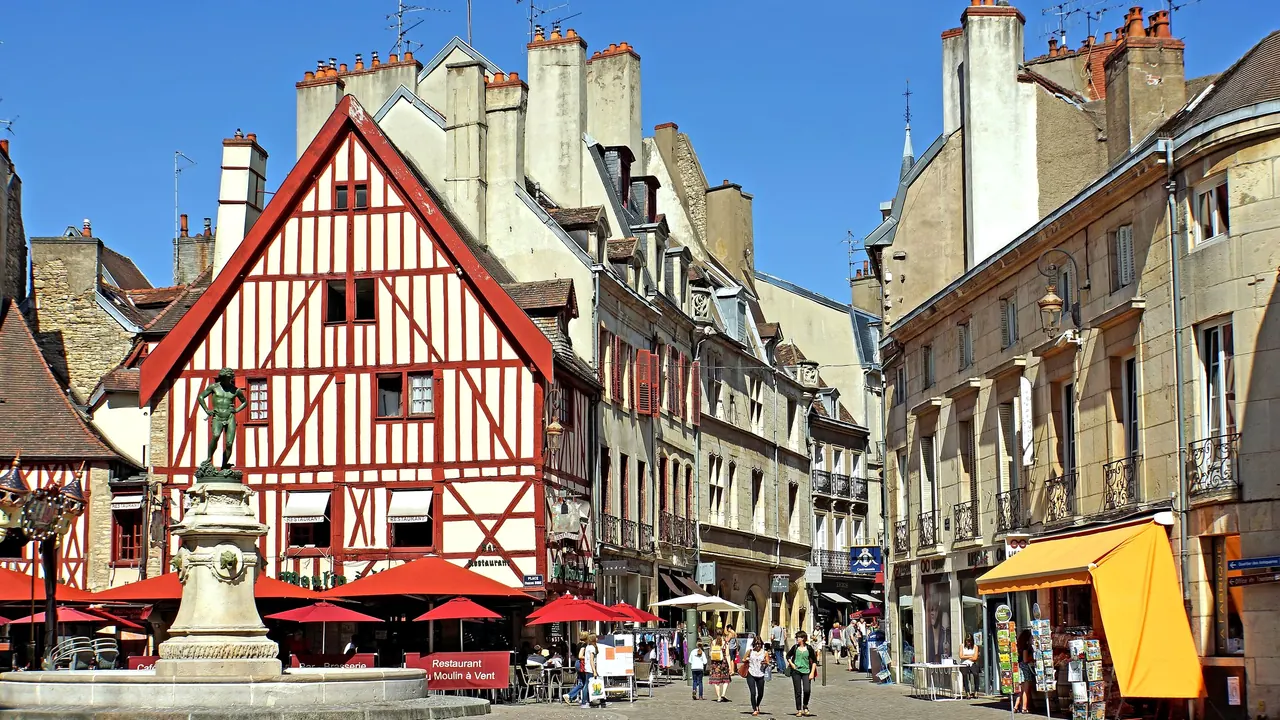
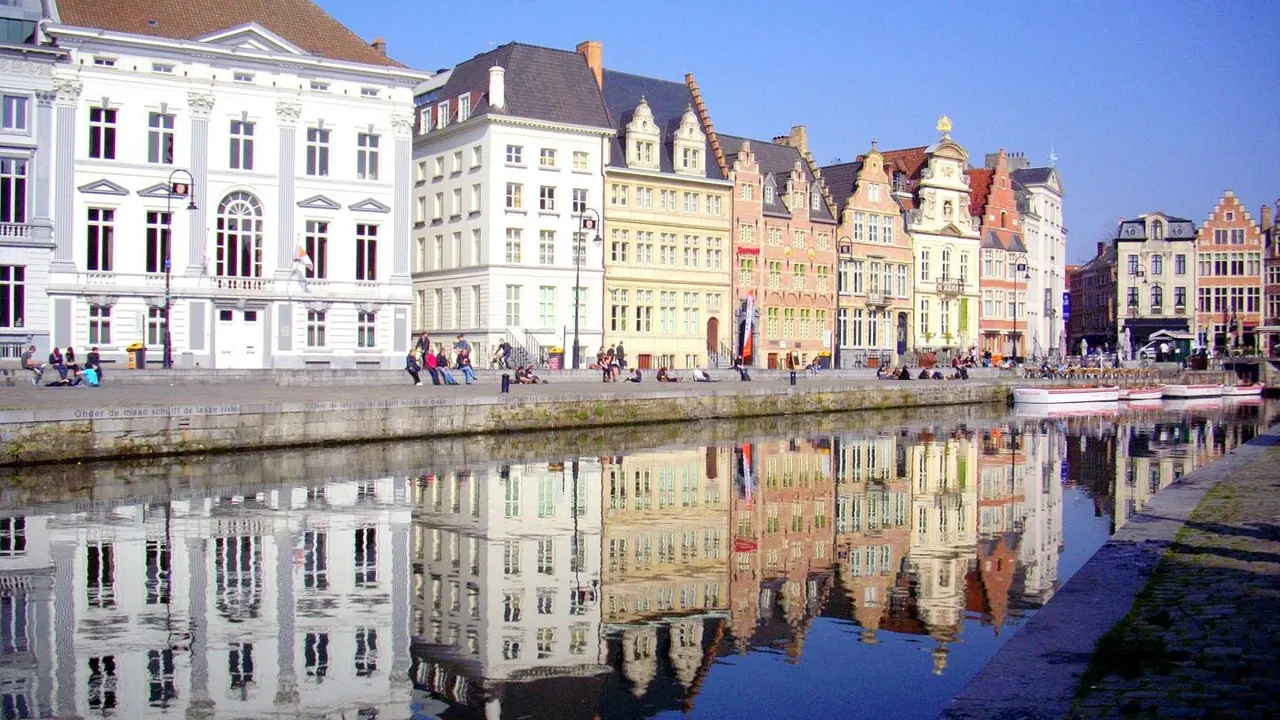
Photos: Dijon by Dennis G. Jarvis, CC BY-SA 2.0, cropped; Ghent by ykeiko, CC BY-SA 3.0, cropped.
Dijon or Ghent?
Our verdict in twelve categories, each scored against the same fixed benchmark cities, and the climate month by month, so you can choose for your trip.
Choose Dijon for
- nature and the outdoors
- prices
- food and drink
Dijon suits travellers who plan their days around the table and the vineyard. The Burgundy wine country starts at the edge of town, Les Halles and the bistros serve the region's classic cooking, and the bill runs lower than in Belgium. The combes and the canal towpath also give walkers and cyclists more to do. Evenings end early, so it works best for an unhurried trip built on long lunches and wine villages.
Choose Ghent for
- nightlife
- beaches
- live music and the arts
Ghent is the better choice for art, evenings out and seeing a whole region by train. The van Eyck altarpiece, the Gravensteen and a wider spread of museums give it more weight on culture. Its student cafés, beer bars and stages keep nights going later than Dijon's, and Bruges, Brussels and Antwerp are all short rail hops away. You pay for it, with sit-down meals and rounds of Belgian beer adding up quickly.
Scoreboard
Twelve categories on one fixed scale from 0 to 100. The shaded stretch is the gap between the two.
Your match
Pick a travel style or drag the sliders, and both match scores follow your weighting.
Wins on nature and the outdoors and prices with your weighting.
Wins on nightlife and beaches with your weighting.
What matters to you?
Category by category
What the scores mean for a trip.
Beaches & swimming
Neither city is a beach destination, but Ghent at least has a coast within reach. Trains reach Ostend in about an hour, and from there the coastal tram runs along wide sands and dunes. The North Sea is cool and often windy, though, so this is a day out rather than a swimming vacation.
Dijon is several hours from any sea. Its swimming comes down to the supervised summer bathing area at Lac Kir, which is much like Ghent's own lake shore at the Blaarmeersen, and pools.
Food & drink
Dijon has the edge, because Burgundy is one of France's great regions for cooking and wine. You get boeuf bourguignon, snails and Époisses at the source, a market hall full of Bresse poultry and charcuterie, and village wines poured by the glass that are rarely sold that way elsewhere. Ghent's Flemish cooking is heartier and plainer, built on waterzooi, beer-braised beef and frites from a paper cone.
Ghent wins on beer, with long lists of Trappist and lambic in its brown cafés, and it is much easier for vegetarians. Both have a narrow range. Neither city is the place for international food or street food beyond Ghent's frites stands.
Culture & sights
Ghent carries more weight. The van Eyck altarpiece in St Bavo's is a work people travel across Europe to see, and the Gravensteen, the guildhalls along the Leie and museums from Flemish masters to SMAK's contemporary art give it more range than Dijon. The medieval centre is still a working city rather than a museum piece.
Dijon's strength is the legacy of the Valois dukes. The palace houses one of France's oldest museums, with the carved ducal tombs and their mourners, and you can add Sluter's Well of Moses, Notre-Dame's gargoyles and its lucky owl. Both cities fill two or three days well, but Ghent's highlights are better known.
Nightlife
Ghent goes out later and in greater numbers. The student bars of the Overpoort run loud into the night in term time, the old cafés around the Vrijdagmarkt and Oudburg suit a long evening over strong beer, and in summer people drink along the quaysides. In July the Gentse Feesten turns the whole centre into a street party.
Dijon also has a university, but its nights are smaller: wine bars and pubs along Rue Berbisey, terraces on Place Émile Zola and a late dinner. Outside term time the streets empty around midnight. Neither city has much of a club scene.
Nature & outdoors
Dijon has the more varied country on its doorstep. Wooded combes cut into the limestone plateau just west of town, with trails, climbing cliffs and views back over the roofs. The Burgundy Canal towpath and the signed vineyard ride towards Beaune make for long, easy cycling. The granite hills and lakes of the Morvan are a further step out.
Ghent's surroundings are flat and farmed. The draw there is gentle riverside cycling along the Leie, birdwatching in the Bourgoyen-Ossemeersen wetlands, and the coastal dunes and the Zwin about an hour away.
Day trips
Both are excellent bases, but Ghent's day trips are easier to do and go further. Bruges, Brussels and Antwerp are each a short, frequent train ride away, and Leuven, Mechelen, Ypres and Lille widen the choice. You can see much of Flanders without ever needing a car.
Dijon's trips are mostly about wine and abbeys: the Route des Grands Crus through Gevrey-Chambertin and Vougeot to Beaune, Fontenay Abbey, and the ramparts of Semur-en-Auxois. Beaune and Besançon are easy by train, but most of the vineyard villages need a car, a bike or a tour.
Good for families
Ghent gives children a little more. The Gravensteen, with its battlements and armour, is a reliable favourite, canal boat trips go down well, the House of Alijn has old toys and games, and the Blaarmeersen offers a lake beach and playgrounds. The catch is cobbles, which make pushchairs hard work.
Dijon is just as calm and safe, but has fewer draws for children. The planetarium and natural history museum at the Arquebuse, the play areas of the Parc de la Colombière and paddling at Lac Kir are the main ones. Days built around tastings and fine art suit the parents more than the children.
Getting around
Both centres are compact and largely car-free, so walking covers most sightseeing. Ghent is a little easier overall. Cycling is the normal way to get about, with bike streets everywhere, and frequent trains to other Flemish cities mean you never need a car. Its main station is a twenty-minute walk from the centre, though.
In Dijon the station is a few minutes from the palace, trams reach the outskirts and the TGV gets to Paris quickly. The wine villages away from the railway are the weak point, since they need a car, a bike or a tour.
Shopping & style
Ghent offers more for browsing. The Serpentstraat and Onderbergen have independent fashion and design, the student quarter has vintage shops, and there are weekend flea and flower markets. Dijon's Rue de la Liberté offers a department store and chains, with antiques in the lanes off it.
In both cities the best things to take home are edible. In Dijon that means mustard, cassis, pain d'épices and bottles of Burgundy. In Ghent it means chocolate, cuberdons and beer. Neither city is for luxury shopping.
Affordability
Dijon is the cheaper stay. It has ordinary French regional prices, moderate hotels and bistro set lunches, and wine by the glass costs less than in most of France. The costs climb when you add cellar tastings, guided wine tours and serious restaurants, which are what many visitors come for.
Ghent has Belgian prices, which are on the high side for Western Europe. Sit-down dinners with a few beers add up quickly, and rooms fill up and cost more during the July festival. Frites stands, bakeries and the free churches help even out the daily bill.
Live music & performing arts
Ghent has the stronger stages. NTGent's theatre is known well beyond Belgium, though most of it is in Dutch. The opera house is one half of the Flemish national company, and De Bijloke, in a medieval hospital, specialises in early and classical music. In summer the Gentse Feesten adds free stages across the city.
Dijon's Opéra spreads opera, concerts and dance between the old Grand Théâtre and the Auditorium, which is known for its acoustics. Its season follows the academic year and slows down to outdoor events in summer, which is when Ghent's is busiest.
Wellness & relaxation
Neither city has thermal baths or a real spa culture, so anyone wanting treatments should go elsewhere. Rest looks different in each. In Dijon it means long lunches, quiet squares and slow afternoons among the vines, with grape-based treatments at a few village hotels.
In Ghent it means the enclosed gardens of the beguinages, walks along the Coupure canal and quiet Sundays once the day-trippers have left.
When should you go?
Pick your month. The climate figures are measured averages, not a forecast.
Dijon in July
Ghent in July
Daytime high, °C
Rainfall in the month, mm
Where the figures come from
Ghent has no rain gauge within 25 km of the centre, so its rainfall comes from a gridded climate dataset read at the city rather than from a gauge further away.
Ghent's sunshine is measured 45 km from the centre, at Vlissingen.
Temperature and rainfall are climate normals, averaged over the years shown. Dijon: 1991-2020 normals, Dijon (7 km from centre). Ghent: 2009-2025 (sunshine 1991-2020, rainfall 1991-2020) normals, Melle / Kalverhaag (10.1 km from centre).
Dijon warms up faster in spring and has the warmer summer. From March to May it runs a degree or two ahead of Ghent, and by July it reaches about 27°C, against 23°C in Ghent. July and August are also noticeably sunnier in Dijon. That suits café terraces, vineyard rides and a swim at Lac Kir, though the hottest afternoons can be tiring on foot. Ghent's milder summer is easier for walking the streets, but July and August are among its wetter months. The North Sea, an hour away by train, peaks at only about 19°C in August, so a beach day there is cool even at its best. Ghent does get a little more sunshine than Dijon in April and May, and May, June and September are comfortable in both cities.
In autumn and winter the two part ways. Dijon's wettest spells come in May and again in October and November, while Ghent keeps getting wetter right through to December, at about 87mm. Both sit at around 6°C in January and get little winter sun, so the colder months are better for museums, markets and long meals than for days outdoors.
Which traveller are you?
For an outdoors trip, Dijon is the better base. The combes just west of town have trails and climbing cliffs, the Burgundy Canal towpath and the vineyard route to Beaune make easy cycling, and the Morvan is within reach. Around Ghent the country is flat farmland.
On a tight budget, choose Dijon. French regional prices, set lunch menus and cheap wine by the glass keep daily costs lower than Belgian city prices do. Skip the guided tastings and fine dining, and a stay costs noticeably less than one in Ghent.
On a culture and arts trip, Ghent gives you more. You get the Ghent Altarpiece, a moated castle in the middle of town and museums from Flemish masters to contemporary art, and in the evenings there is opera, NTGent and concerts at De Bijloke. Bruges and Antwerp are a short train ride away.
Before you go
| Measure | Dijon | Ghent |
|---|---|---|
| Official language | French | French, German, Dutch |
| Currency | Euro (EUR) | Euro (EUR) |
| Sockets | CE230 V, 50 Hz | CE230 V, 50 Hz |
| Driving side | Right | Right |
| Time zone | UTC+1, UTC+2 in summer | UTC+1, UTC+2 in summer |
| Emergency number | 112 | 112 |
| Elevation | 220 m | 12 m |
| Main airport | Lyon Saint-Exupéry Airport (LYS)178 km from centre141 non-stop destinations | Brussels Airport (BRU)56 km from centre191 non-stop destinations |
| Public holidays this year | 11 days | 14 days |
By the numbers
| Measure | Dijon | Ghent |
|---|---|---|
| City population | 161,830 | 272,657 |
| People per km² | 3,890 | 1,728 |
| Museums within 10 km | 8 | 30 |
| UNESCO World Heritage sites within 50 km | 1 | 5 |
| Swim season, months above 21 °C | - | None |
Where else could you go?
Every comparison below shares a destination with this one, so you can follow Dijon or Ghent somewhere new.