Photos: Dijon by Dennis G. Jarvis, CC BY-SA 2.0, cropped; Innsbruck by Wolfgang Weiser, Pexels License.
Dijon or Innsbruck?
Our verdict in twelve categories, each scored against the same fixed benchmark cities, and the climate month by month, so you can choose for your trip.
Choose Dijon for
- food and drink
- prices
- culture and sights
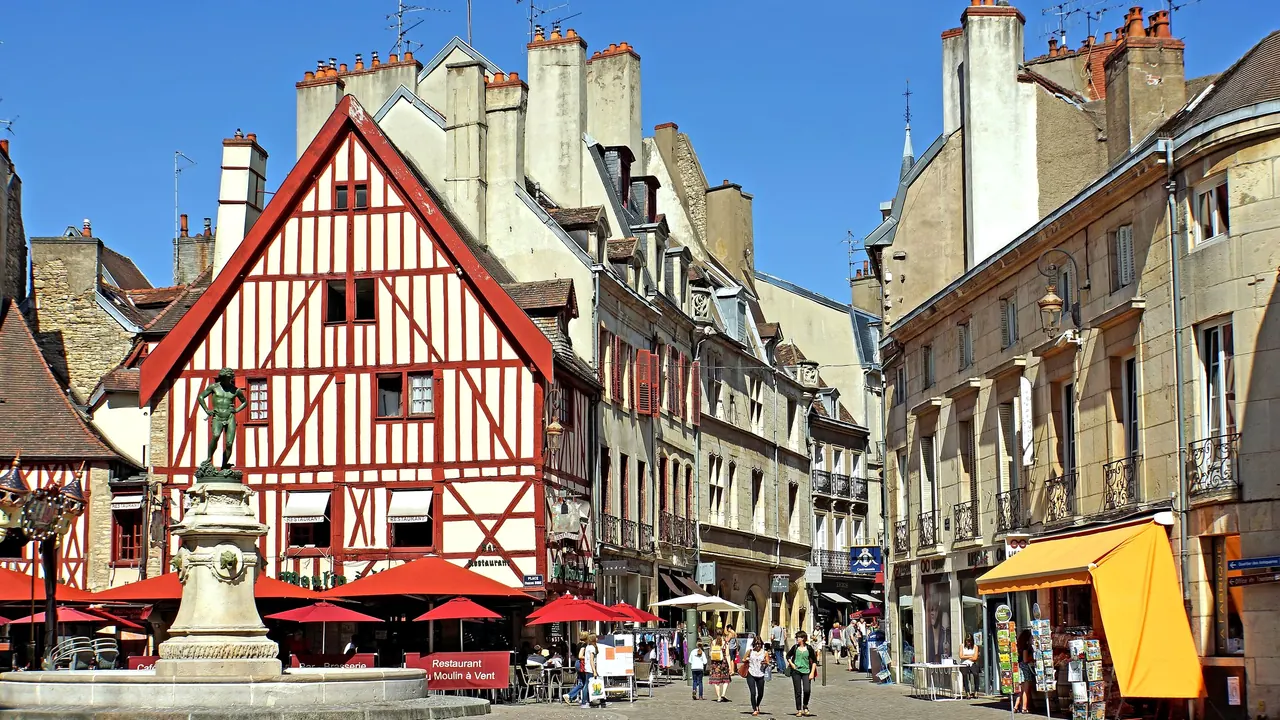
Dijon is for travellers who plan their days around the table. It sits at the head of the Burgundy wine country, so the trip is long lunches, Les Halles on market day, wine bars that pour village Burgundies by the glass, and easy outings to Beaune and the Grands Crus villages. Add the ducal palace and its tombs, a walkable old centre and lower prices, and it makes an unhurried, well-fed stay for couples and food lovers who don't need mountains.
Choose Innsbruck for
- nature and the outdoors
- families
- wellness
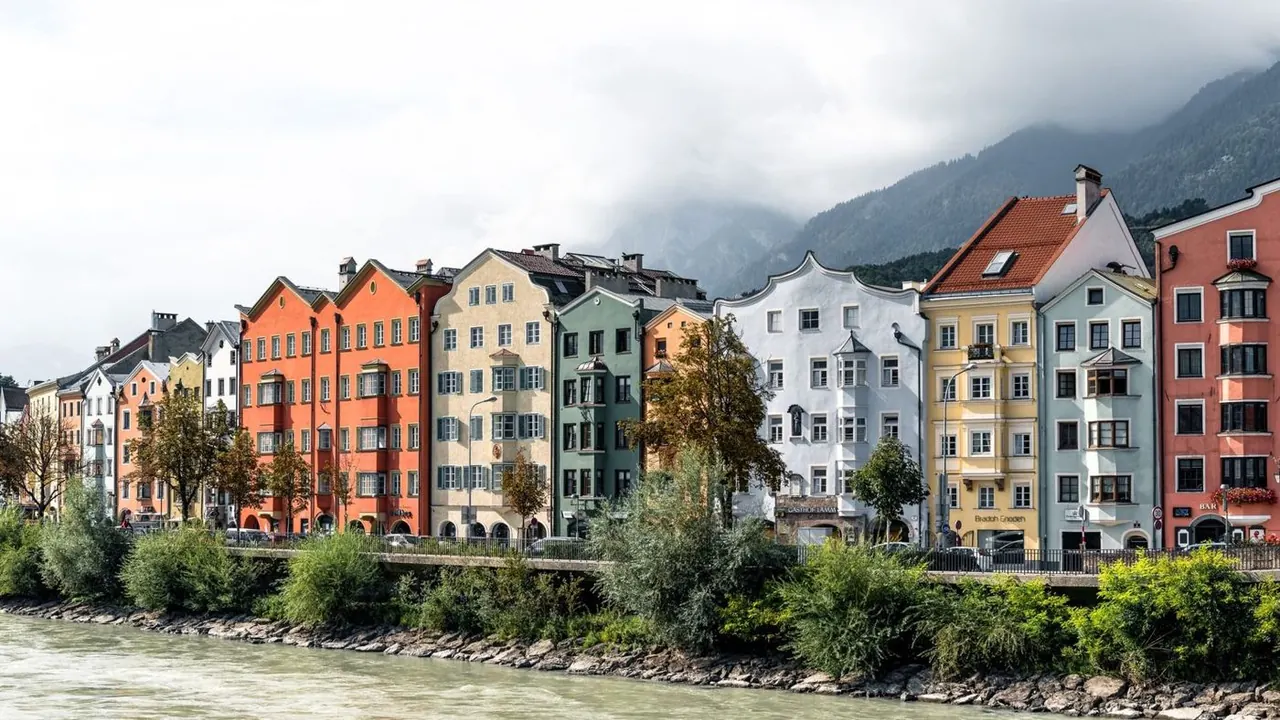
Choose Innsbruck if you want to spend your days outside. A funicular from the edge of the old town connects to cable cars that put you on an Alpine ridge in under half an hour, with skiing in winter and hut-to-hut hiking in summer. It also suits families better, and its spa hotels make for a more relaxing stay. The trade-off is plainer food and higher bills, especially in ski season.
Scoreboard
Twelve categories on one fixed scale from 0 to 100. The shaded stretch is the gap between the two.
Your match
Pick a travel style or drag the sliders, and both match scores follow your weighting.
Wins on food and drink and prices with your weighting.
Wins on nature and the outdoors and families with your weighting.
What matters to you?
Category by category
What the scores mean for a trip.
Beaches & swimming
Neither city has a coast, but Innsbruck has the better summer swimming. The small lakes on the plateaus above town, the Lanser See and Natterer See, warm up to bathing temperatures in high summer, and the clear, cooler Achensee is beautiful for a day out.
In Dijon, the choice is Lac Kir's supervised lawn-and-sand area on the western edge of town, or a pool.
Food & drink
Dijon is the clear winner for eating and drinking. Boeuf bourguignon, jambon persillé, Époisses cheese and Bresse poultry from the iron halls of Les Halles, plus mustard, cassis and grand cru wine from just south of town, make food a reason to go in itself. It also has a proper fine-dining scene.
Innsbruck's cooking is hearty and comforting: Gröstl, Kaspressknödel and Kaiserschmarrn. It tastes best at a mountain hut after a walk. In town, the choice is narrower and there is no market culture, though the coffee houses are good for strudel.
Culture & sights
Both cities fill two or three days, and Dijon has slightly more depth. The Palace of the Dukes houses one of France's oldest museums, with the Valois tombs and their carved mourners. Around it is a medieval and Renaissance centre that is UNESCO-listed together with the vineyards, and Sluter's Well of Moses adds a major piece of sculpture.
Innsbruck's heritage is Habsburg. The Golden Roof and the arcaded old town are the postcard sights. Its single best sight is Maximilian's tomb in the Hofkirche, with its ring of bronze giants, and Ambras Castle has an early cabinet of curiosities. Its modern funicular stations and ski jump add an architectural side that Dijon lacks.
Nightlife
Both have small, student-driven evening scenes, and Innsbruck's runs slightly later. Its bars and small clubs in the brick arches under the railway viaduct stay open into the early hours at weekends. In winter, much of the partying moves out to après-ski in the resorts.
Dijon's evenings mean wine bars and pubs along Rue Berbisey and terraces on Place Émile Zola, usually after a late dinner. The streets tend to empty around midnight.
Nature & outdoors
The gap here is wide. Innsbruck has high peaks rising straight from its streets. The Nordkette ridge is reachable by cable car from the old town, the Karwendel park lies behind it, and glaciers, ski areas and mountain bike trails cover the valleys around it.
Dijon's countryside is gentle: limestone combes with short trails and climbing cliffs, the flat Burgundy Canal towpath, and the vineyard bike route to Beaune. The granite hills of the Morvan are the wildest landscape within reach.
Day trips
Both are excellent bases, and Dijon has a slight edge because its best trips share one theme. The Route des Grands Crus leads through Gevrey-Chambertin and Vougeot to Beaune, and Fontenay Abbey, Semur-en-Auxois and Vézelay fill longer days. Many of the villages are easiest by car, bike or on a tour.
Innsbruck's trips cover more ground. Hall in Tirol is ten minutes away by train, Munich and Salzburg each take a little under two hours, and over the Brenner Pass lie Bolzano and Merano. By car, Neuschwanstein makes a long day.
Good for families
Innsbruck has more to offer children. The Alpenzoo's ibex, bears and lynx are on the funicular route, and the mountains have adventure trails and playgrounds by the huts. In summer there are lake swims, and in winter there are ski schools on gentle slopes. Rainy days take more planning.
Dijon is safe and easy to walk with a pushchair. Beyond the planetarium at the Jardin de l'Arquebuse, the Colombière park and Lac Kir, though, little is aimed at children.
Getting around
Both have small, walkable centres and don't need a car in town. Innsbruck has a slight edge because its transport reaches the mountains. The Hungerburg funicular starts at the old town, trams run to Igls and the Stubai valley, and ski buses run in winter.
From Dijon, regional trains reach Beaune and the TGV gets to Paris in under two hours. Its two tram lines mainly serve the outskirts, and the wine villages away from the railway need a car or bike.
Shopping & style
Neither is a fashion destination, and both are best for regional specialities. Dijon is about food and drink: mustard in dozens of flavours, pain d'épices, cassis, Burgundy from the wine merchants, and cheese around Les Halles, with antiques in the lanes off Rue de la Liberté. Innsbruck sells loden jackets, dirndls, woodcarvings and Speck, and its outdoor and ski shops are excellent.
Affordability
Dijon is the cheaper stay. Hotels are moderately priced, the bistros' set lunches are good value, and wine by the glass costs less than in most of France. The bill rises with fine dining, tastings and good bottles.
Innsbruck adds an Alpine premium to Western European prices, which is steepest in ski season and around the Christmas markets. Cable car tickets add up on an active trip, though the city cards help. Spring and autumn are noticeably cheaper.
Live music & performing arts
The two are evenly matched, each with a solid provincial programme that is worth checking for your dates. Dijon's opera divides its season between the old Grand Théâtre and an Auditorium known for its acoustics, and much of it stops in summer.
Innsbruck has the opposite rhythm. The Landestheater and the Tyrolean Symphony Orchestra fill the winter, but its highlight is the summer Festival of Early Music, held in settings such as the Spanish Hall at Ambras. Folk evenings with yodelling and brass add a local touch.
Wellness & relaxation
Innsbruck is the better place to unwind. The hotels in Igls and on the surrounding plateaus have proper spas with mountain views, the large thermal complexes of the Ötztal and Zillertal are about an hour away, and a sauna after a day outdoors is part of Alpine life.
Dijon offers rest of a different kind: long lunches, quiet squares and slow afternoons in the vineyards. Its spa choice is limited to a few hotels, some offering grape-based treatments.
When should you go?
Pick your month. The climate figures are measured averages, not a forecast.
Dijon in July
Innsbruck in July
Daytime high, °C
Rainfall in the month, mm
Temperature and rainfall are climate normals, averaged over the years shown. Dijon: 1991-2020 normals, Dijon (7 km from centre). Innsbruck: 1991-2020 normals, Innsbruck-Flughafen (3.3 km from centre).
Summer temperatures are almost identical, with highs of about 26°C to 27°C in July in both cities, and both have cold winters. The difference is in the rain and the sun. Dijon's rain is spread fairly evenly through the year, and its summers are the sunnier of the two, so June to early September is the best time for terraces, vineyard cycling and an afternoon at Lac Kir. May is mild but one of its wetter months. From October the rain increases and the days turn grey, and December to February are short and dull.
Innsbruck's wettest months are also its warmest, peaking at around 144mm in August. June to September is still the season for hiking and lakes, but expect regular showers. September is pleasant in both cities, warm enough for walking without the summer heat. October favours Innsbruck, which keeps noticeably more sun while Dijon turns damp. Winter also goes to Innsbruck. Highs are near 4°C, but the sun is much brighter than in Dijon, and the snow on the slopes around it turns December to March into a season of its own.
Which traveller are you?
On a food and nightlife trip, choose Dijon. Burgundian cooking, Les Halles and village wines by the glass put it well ahead at the table. Innsbruck's bars under the railway arches stay open later, but both nightlife scenes are small.
For an outdoors trip, Innsbruck is in a different league. Public transport takes you to the Nordkette, the Karwendel and the Stubai Glacier, for skiing, via ferratas, paragliding and rafting. Dijon has gentle combes, canal towpaths and cycling routes through the vineyards.
On a family trip with children, Innsbruck is the better choice. The mountains start at the edge of town, so active days are easy to fill in any season. Dijon is safe and relaxed, but its tastings and art museums are aimed at adults.
Before you go
| Measure | Dijon | Innsbruck |
|---|---|---|
| Official language | French | German, Austrian Sign Language |
| Currency | Euro (EUR) | Euro (EUR) |
| Sockets | CE230 V, 50 Hz | CF230 V, 50 Hz |
| Driving side | Right | Right |
| Time zone | UTC+1, UTC+2 in summer | UTC+1, UTC+2 in summer |
| Emergency number | 112 | 112 |
| Elevation | 220 m | 574 m |
| Main airport | Lyon Saint-Exupéry Airport (LYS)178 km from centre141 non-stop destinations | Innsbruck Airport (INN)4 km from centre40 non-stop destinations |
| Public holidays this year | 11 days | 16 days |
By the numbers
| Measure | Dijon | Innsbruck |
|---|---|---|
| City population | 161,830 | 132,499 |
| People per km² | 3,890 | 1,263 |
| Museums within 10 km | 8 | 28 |
| UNESCO World Heritage sites within 50 km | 1 | 1 |
Where else could you go?
Every comparison below shares a destination with this one, so you can follow Dijon or Innsbruck somewhere new.