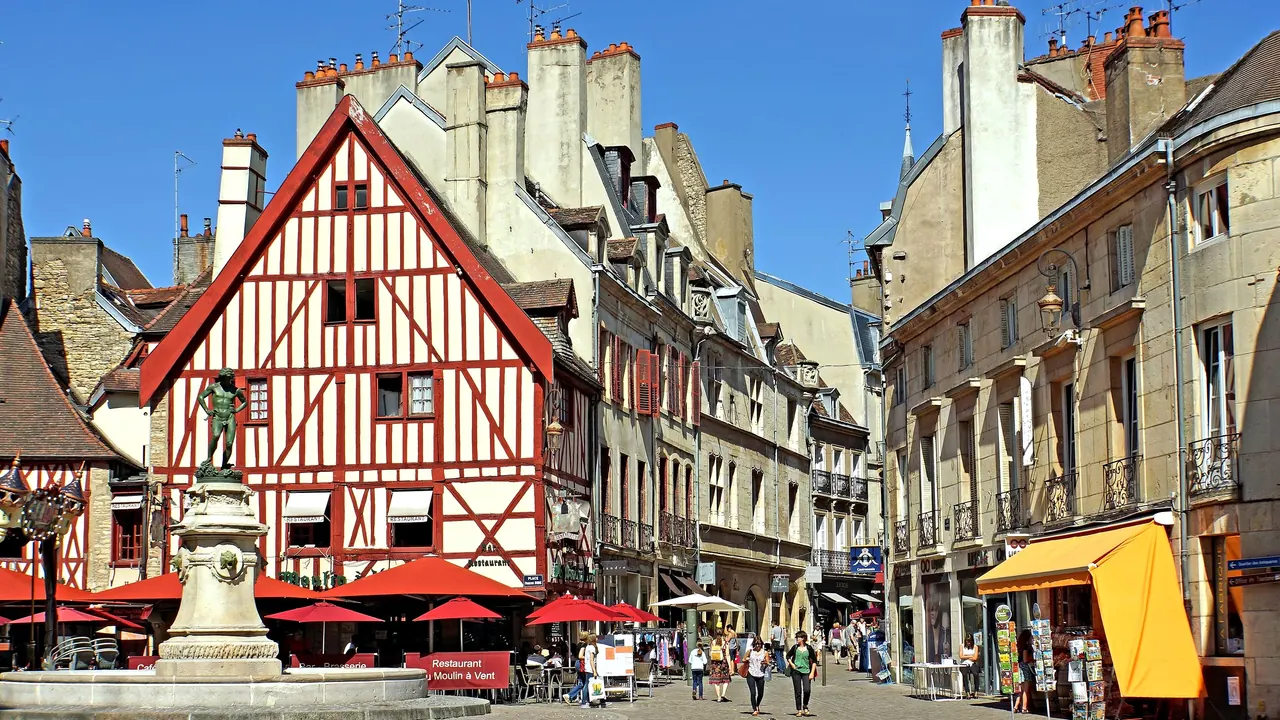
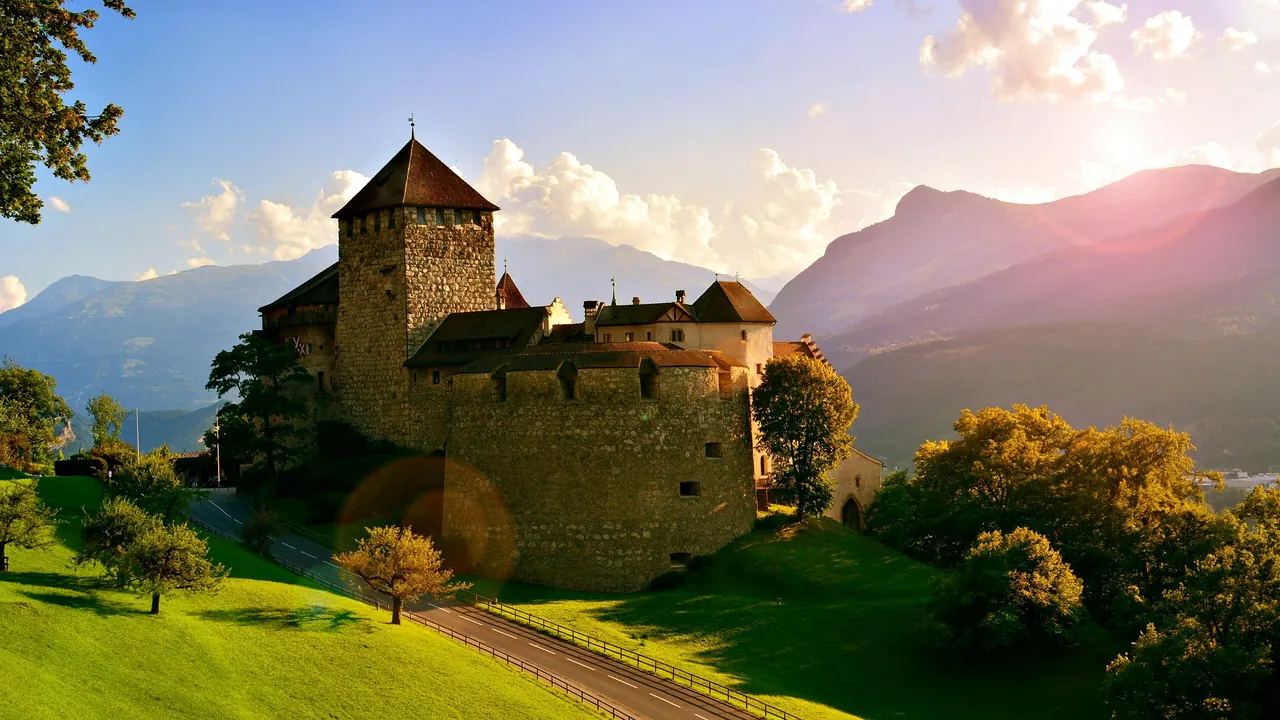
Photos: Dijon by Dennis G. Jarvis, CC BY-SA 2.0, cropped; Vaduz by Justin LaBerge, CC BY 2.0, cropped.
Dijon or Vaduz?
Our verdict in twelve categories, each scored against the same fixed benchmark cities, and the climate month by month, so you can choose for your trip.
Choose Dijon for
- prices
- food and drink
- culture and sights
Dijon is the better choice for a trip built around the table and the vineyards. Burgundian cooking, the market hall at Les Halles and wine bars pouring village wines sit beside a ducal palace and a well-kept old centre, and the Côte de Nuits begins at the edge of town. It is also far easier on the budget, and fast trains make it simple to reach and explore without a car.
Choose Vaduz for
- nature and the outdoors
- wellness
- beaches
Pick Vaduz if you want mountains rather than menus. Trails climb from the town into vineyards and beech forest, the Rätikon peaks are half an hour up the road, Malbun adds gentle skiing in winter, and the thermal bath at Bad Ragaz is close by for tired legs. Expect a quiet and very expensive stay, with early evenings and a short list of sights. It rewards walkers more than diners or night owls.
Scoreboard
Twelve categories on one fixed scale from 0 to 100. The shaded stretch is the gap between the two.
Your match
Pick a travel style or drag the sliders, and both match scores follow your weighting.
Wins on prices and food and drink with your weighting.
Wins on nature and the outdoors and wellness with your weighting.
What matters to you?
Category by category
What the scores mean for a trip.
Beaches & swimming
Neither place works for a beach vacation, and they differ only in what they offer instead. Dijon has Lac Kir on its western edge, with a lawn-and-sand bathing area that is supervised in summer and close enough to reach without leaving town. Vaduz has open-air pools, and a short drive takes you to the Walensee under its steep mountain walls or to Lake Constance. That water is more scenic, but getting there takes an outing rather than a stroll.
Food & drink
Food is one of the widest gaps between the two. Dijon is the gateway to Burgundy's kitchens and cellars: boeuf bourguignon, jambon persillé and Époisses at Les Halles, its own mustard and cassis, wine bars pouring village Burgundies, and the Cité de la Gastronomie in the old hospital, with a serious fine-dining tier on top.
Vaduz serves solid Alpine cooking such as Käsknöpfle, rösti and game in autumn, mostly in hotel dining rooms and village inns in the hills, and the prince's estate wines add a pleasant local touch. There is little choice and no market life, though, so food is something to enjoy along the way rather than a reason to go.
Culture & sights
Dijon has far more to see. The Palace of the Dukes holds the Valois tombs in the Musée des Beaux-Arts, Notre-Dame has its gargoyles and lucky owl, Champmol has the Well of Moses, and the UNESCO-listed old centre of half-timbered houses fills two or three days.
Vaduz takes one unhurried day. Its strength is modern and contemporary art: the black cube of the Kunstmuseum and the Hilti Art Foundation beside it hold a collection well above what a town this small would lead you to expect. Beyond them, the castle is closed to visitors and the rest is a short list of museums and a cathedral.
Nightlife
Neither is a party town, but Dijon at least offers a night out. Its large university fills the bars of Rue Berbisey and the terraces around Place Émile Zola, where evenings run to wine, beer and a late dinner, and there are a few clubs. Vaduz has a handful of wine bars and hotel lounges on the Städtle and nothing late, so younger locals cross to Feldkirch or go to Zurich.
Nature & outdoors
Vaduz is the place for the outdoors. The mountains rise straight from the Rhine valley floor, with trails through vineyards and forest from the centre, high walks in the Rätikon above Malbun, the exposed Fürstensteig and a path across the whole country. Winter adds skiing at Malbun, with larger Swiss resorts within an hour.
Dijon's countryside is gentler. Just west of town there are wooded combes with climbing cliffs, and further afield the flat Burgundy Canal towpath, the cycle route through the vineyards to Beaune and the lakes of the Morvan. It suits easy walking and cycling, with no mountains in sight.
Day trips
Both make good bases, but Dijon has the edge because its outings fit together so neatly. The Route des Grands Crus runs south through Gevrey-Chambertin and Vougeot to Beaune, twenty minutes away by train, while Fontenay Abbey, Semur-en-Auxois and Vézelay lie to the north-west.
Vaduz offers more variety across its borders: Feldkirch twenty minutes away, the abbey library at St Gallen, Appenzell, Chur, and Lake Constance with Lindau and Bregenz. Public transport often means a change at Buchs or Sargans, so a car matters more here, although Dijon's wine villages also call for a car or a bike.
Good for families
Both towns are safe, calm and small, and neither has much built for children. Dijon keeps them occupied in town, with the planetarium and natural history museum at the Jardin de l'Arquebuse, the play areas of the Parc de la Colombière and paddling at Lac Kir. Vaduz sends families outdoors instead, to the pools, easy walks above Triesenberg and the beginner slopes at Malbun, which suits older children who like hiking better than little ones.
Getting around
Dijon is easier both to get around and to reach. Its pedestrian centre puts the station, the market and the palace minutes apart, trams and buses cover the outskirts, regional trains run to Beaune and the TGV reaches Paris in under two hours. Vaduz is just as walkable, and its buses climb all the way to Malbun, but the town has no station, so going further means a change at Buchs, Sargans or Feldkirch, and many visitors drive.
Shopping & style
Dijon gives shoppers more, though mostly things to eat and drink: mustard in dozens of flavours, pain d'épices, cassis, Burgundy from wine merchants and cheese around Les Halles, plus a department store and independents off Rue de la Liberté. Vaduz has a few shops on the Städtle selling watches, jewellery and its famous stamps, and a bottle of local wine makes the best souvenir. Neither suits a fashion shopper, and anyone serious about it goes from Vaduz to Zurich.
Affordability
This is the starkest difference between them. Dijon has French regional prices, with moderate hotels, fair bistro set lunches and inexpensive wine by the glass. The bill rises mainly when you book tastings, wine tours and fine dining.
Vaduz charges Swiss prices for rooms and even for a simple lunch, and with few hotels there is little at the budget end. Some visitors save by sleeping across the border in Austria.
Live music & performing arts
Dijon has a proper season. The Opéra de Dijon stages opera, concerts and dance in both the Grand Théâtre and the Auditorium, which is known for its acoustics, alongside a national drama centre and a venue for touring bands, although most of it follows the academic year. Liechtenstein's offer is smaller and more scattered, with the theatre in neighbouring Schaan, a short orchestral season and a summer classical festival in Vaduz, enough for an evening or two in a week's stay.
Wellness & relaxation
Vaduz is the better pick for rest, mostly thanks to its neighbour. Bad Ragaz, about twenty-five minutes away, has a large public thermal bath fed by warm spring water from the Tamina gorge, and the quiet streets and mountain views do the rest. Dijon has no baths of its own, only a few hotel spas, some offering grape-based treatments, so its restfulness comes from long lunches and slow afternoons in the vineyards.
When should you go?
Pick your month. The climate figures are measured averages, not a forecast.
Dijon in July
Vaduz in July
Daytime high, °C
Rainfall in the month, mm
Where the figures come from
Vaduz's temperatures are measured 51 km from the centre, at Sigmarszell-Zeisertsweiler.
Vaduz has no rain gauge within 25 km of the centre, so its rainfall comes from a gridded climate dataset read at the destination rather than from a gauge further away.
Temperature and rainfall are climate normals, averaged over the years shown. Dijon: 1991-2020 normals, Dijon (7 km from centre). Vaduz: 1991-2020 normals, Sigmarszell-Zeisertsweiler (51.3 km from centre).
Dijon is the warmer and sunnier of the two. Summer peaks at about 27°C in July, warm enough for an afternoon at Lac Kir, and May, June and September are pleasant for walking the old centre and cycling through the vineyards. Rain is spread fairly evenly through the year, with the wettest spells in late spring and in October and November, and winter days are short, grey and cold.
Vaduz runs a few degrees cooler, topping out around 24°C in July and August. That suits hiking but leaves only a short window for lake swimming. Summer is also its wettest season, with about 126mm in August, so mountain walks need an eye on the forecast, and June and September are the most comfortable months for the heights. From December to February, highs near 4°C mark the ski season at Malbun.
Which traveller are you?
For a food and nightlife trip, Dijon wins easily. Burgundian classics, Les Halles on market days and wine by the glass fill the day, and the student bars of Rue Berbisey carry on into the evening. Vaduz has few restaurants and goes quiet after dinner.
On an outdoors trip, Vaduz is the clear pick. Trails leave straight from town, the Rätikon ridges and the Fürstensteig are half an hour away, and winter brings skiing at Malbun. Dijon's combes and canal towpath are pleasant but gentle by comparison.
On a trip on a tight budget, choose Dijon. Bistro set lunches, moderate hotels and inexpensive wine by the glass keep costs reasonable. Vaduz charges Swiss prices for rooms and meals and has almost nothing at the budget end.
Before you go
| Measure | Dijon | Vaduz |
|---|---|---|
| Official language | French | German |
| Currency | Euro (EUR) | Swiss Franc (CHF) |
| Sockets | CE230 V, 50 Hz | CJ230 V, 50 Hz |
| Driving side | Right | Right |
| Time zone | UTC+1, UTC+2 in summer | UTC+1, UTC+2 in summer |
| Emergency number | 112 | 112 |
| Elevation | 220 m | 455 m |
| Main airport | Lyon Saint-Exupéry Airport (LYS)178 km from centre141 non-stop destinations | Zürich Airport (ZRH)81 km from centre226 non-stop destinations |
| Public holidays this year | 11 days | 21 days |
By the numbers
| Measure | Dijon | Vaduz |
|---|---|---|
| Population | 161,830 | 5,668 |
| People per km² | 3,890 | 328 |
| Museums within 10 km | 8 | 7 |
| UNESCO World Heritage sites within 50 km | 1 | 3 |
Where else could you go?
Every comparison below shares a destination with this one, so you can follow Dijon or Vaduz somewhere new.