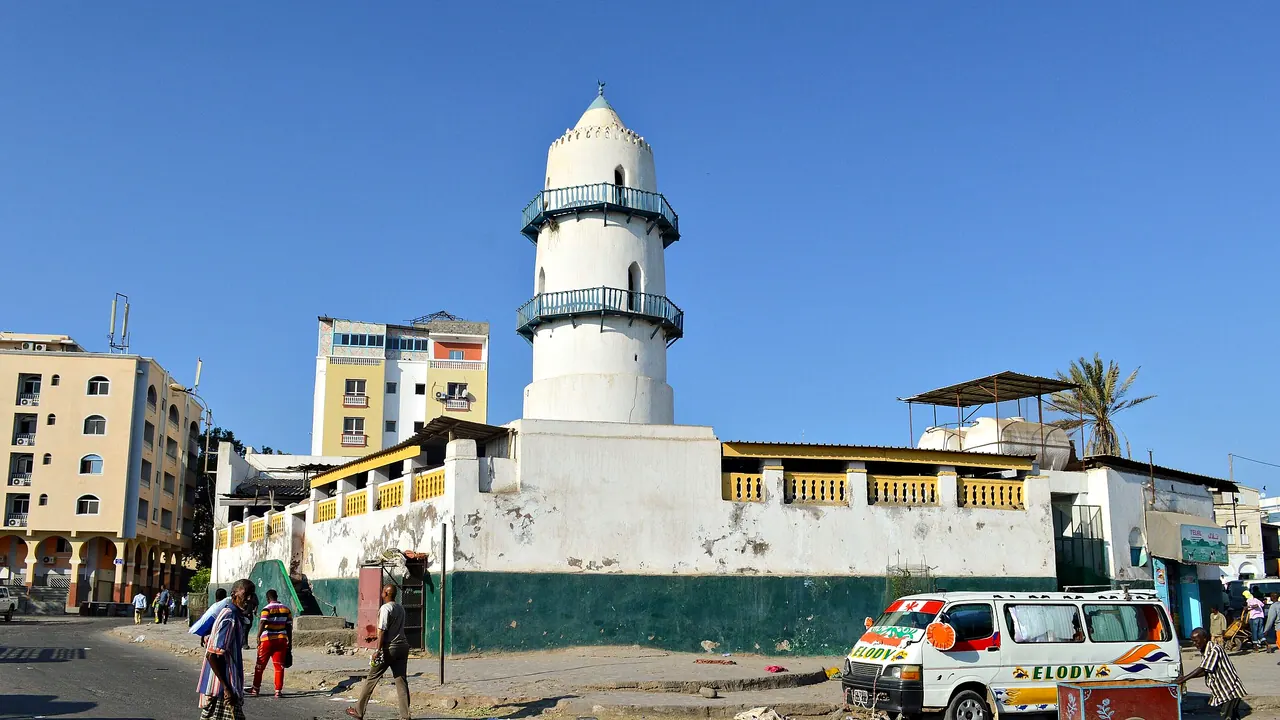
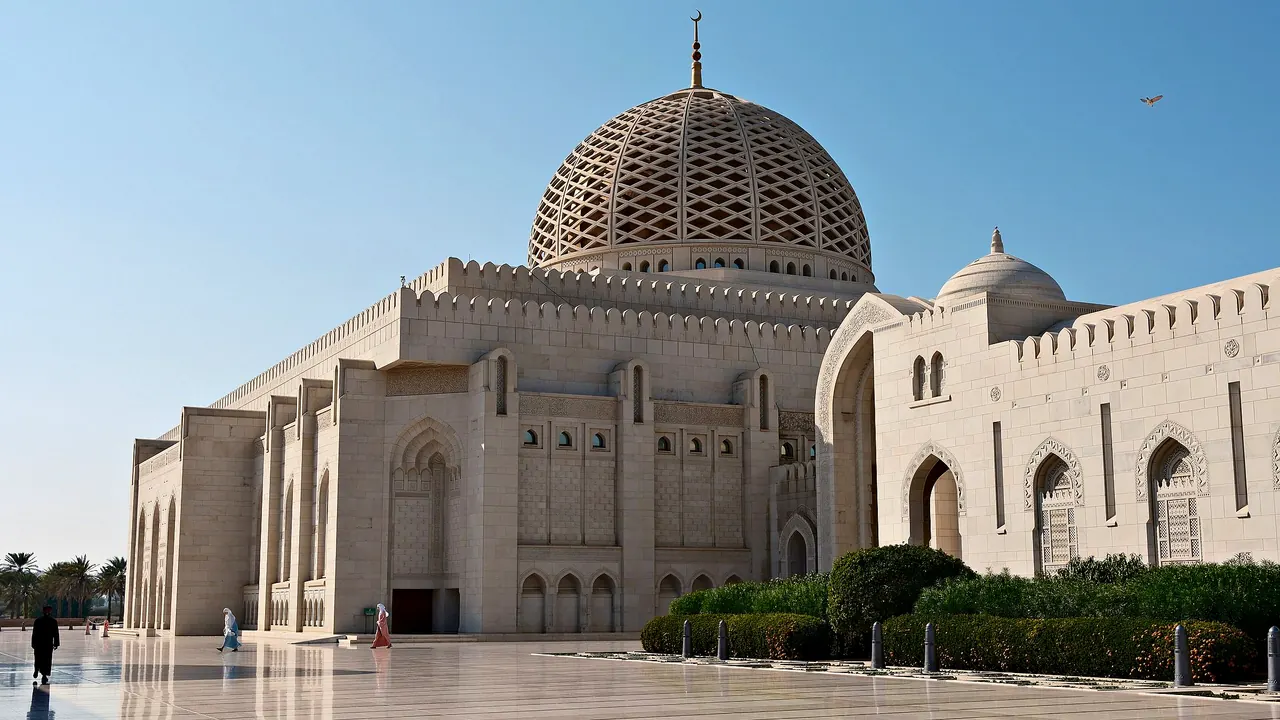
Photos: Djibouti City by Francisco Anzola from United States, CC BY 2.0, cropped; Muscat by Alli Khalil, CC BY 4.0, cropped.
Djibouti City or Muscat?
Our verdict in twelve categories, each scored against the same fixed benchmark cities, and the climate month by month, so you can choose for your trip.
Choose Djibouti City for
- nightlife
- getting around
Djibouti City is for travellers who come for the wild country and the sea life, not for the town. The reason to go is out in the Gulf of Tadjoura, snorkelling beside whale sharks in the cooler months, and inland at the salt flats of Lac Assal and the lava fields of the Ghoubbet. It suits a seasoned traveller who is happy with basic facilities, organised boat and 4x4 trips and a city that takes half a day to see.
Choose Muscat for
- day trips
- wellness
- culture and sights
Muscat makes the rounder and easier trip. It has the Grand Mosque, the forts and museums of Old Muscat, the Mutrah souq, proper city beaches and resort coves, and an interior of mud-brick forts and mountain villages within a day's drive. Families, culture lovers and anyone who wants a calm, comfortable winter break by the sea will find it the better choice, as long as they hire a car.
Scoreboard
Twelve categories on one fixed scale from 0 to 100. The shaded stretch is the gap between the two.
Your match
Pick a travel style or drag the sliders, and both match scores follow your weighting.
Wins on nightlife and getting around with your weighting.
Wins on day trips and wellness with your weighting.
What matters to you?
Category by category
What the scores mean for a trip.
Beaches & swimming
Both seas are very warm, but Muscat has real beaches in the city itself. Qurum and Shatti al Qurum give a long strip of sand for a dusk walk, and the coves at Qantab, Al Bustan and Yiti have clear water and resort facilities. The Daymaniyat Islands add coral snorkelling.
Djibouti City's own shore is port and rocky foreshore. A beach day there means a boat across the bay to Moucha or Maskali, which do have pale sand and coral close to shore, but there is little shade and only basic facilities.
Food & drink
Djibouti City's best meal is Yemeni-style fish baked against a clay oven wall, eaten with flatbread in the grill houses of the African quarter. Around it you get Somali and Ethiopian cooking and good French bread, and not much else.
Muscat offers more range. Omani dishes such as majboos, grilled kingfish and halwa with cardamom coffee sit alongside cheap Keralan, Pakistani and Lebanese canteens in Ruwi and Mutrah, and the early fish market is worth a visit. In both cities alcohol mostly means a hotel.
Culture & sights
This is one of the widest gaps between the two. Djibouti City offers a stroll past the arcaded buildings around Place Menelik and the Hamoudi mosque, with no museum worth the name, and half a day covers it.
Muscat has the Sultan Qaboos Grand Mosque, open to visitors in the mornings, and the walled cove of Old Muscat with Al Alam Palace between the Jalali and Mirani forts. The National Museum and Bait al Zubair explain the country well, and the merchants' houses along the Mutrah corniche fill another day.
Nightlife
Neither city is worth a trip for its nightlife, but Djibouti City gives you slightly more to do. Thanks to the military bases and the expatriates, a handful of bars and nightclubs in the European quarter stay open late at weekends, outside the hotels as well as in them.
In Muscat alcohol is served almost only in licensed hotels, so a night out means a hotel lounge or one of a few hotel clubs. The better evenings there are the sober ones, walking the Mutrah corniche or sitting over shisha.
Nature & outdoors
Both settings are dramatic, and Muscat's is a little easier to enjoy. The Hajar mountains drop straight into the sea behind the city, Wadi Shab's emerald pools and the Bimmah sinkhole are a short drive down the coast, and Jebel Akhdar's terraced gardens are two hours inland. Dolphins and turtles are reached from the marinas.
Djibouti City's landscapes are stranger and rawer. Lac Assal lies below sea level, ringed with salt beside black lava, and the whale sharks of the gulf are a rare draw. Almost everything there needs a 4x4 and a driver.
Day trips
From Djibouti City there is really only Tadjoura, the old whitewashed town across the gulf, with Arta as a cooler stop on the road west. Otherwise a trip out of the city is a trip into the desert.
Muscat is the base for Oman's historic interior. Nizwa's round fort and Friday souq, the UNESCO-listed fort at Bahla, the painted rooms of Jabrin and the terraced village of Misfat al Abriyeen are all within a day's drive. So are the forts of Nakhal and Rustaq and the dhow yards of Sur.
Good for families
Muscat is far easier with children. It is clean, safe and welcoming to them, with calm hotel beaches, dolphin trips, Qurum's park with its lakes and play areas, a hands-on science museum and the aquarium at Seeb for the hottest hours.
In Djibouti City a family relies on a hotel pool and boat trips to the shallow island beaches. Older children may love the whale sharks, but the long, rough drives and the limited medical care make it hard going with small ones.
Getting around
Djibouti City is the easier place to get around on foot. Its European quarter, markets and seafront sit close together and can be walked in winter, and taxis fill the gaps.
Muscat runs for about 50km as a chain of districts linked by highways, with no real centre, so most visitors hire a car on its good, well-signed roads. In both cities, any trip out of town needs a driver or your own wheels.
Shopping & style
Muscat has the one shopping experience worth planning for: Mutrah Souq. Its covered lanes smell of frankincense and sell silver, khanjar daggers, perfume oils and dates, with little hard selling. The suburban malls cover everything else.
Djibouti City's shopping is the central market and the Les Caisses stalls near Place Menelik, mostly spices, cloth, incense and imported electronics. Baskets, Afar knives and silver turn up, but not often.
Affordability
Neither is a bargain, but Muscat costs less. Its South Asian canteens are very cheap, fuel costs little and the sights have small fees, so the main expense is the hotel, and rates drop in summer.
Djibouti City is expensive almost across the board. Hotels are priced for contractors, imported food is dear, and the private boats and 4x4 trips that make the visit worthwhile add up fast.
Live music & performing arts
Muscat has a real stage in the Royal Opera House, which from autumn to spring hosts touring opera, ballet, orchestras, jazz and Arab music stars. It is worth checking the programme before you travel.
Djibouti City has no comparable venue or season. Somali and Afar music and dance belong mainly to weddings and national celebrations, with only the odd concert at a cultural centre.
Wellness & relaxation
Muscat is the place to unwind. The city is low-rise and unhurried, the resort spas in the southern coves offer hammam rituals and frankincense treatments, and the warm springs at Nakhal and Rustaq make a simple local outing.
Djibouti City's hot, dusty port traffic works against rest. Calm there comes from a hotel pool or a night at a desert camp rather than from any spa or bathing tradition.
When should you go?
Pick your month. The climate figures are measured averages, not a forecast.
Djibouti City in July
Muscat in July
Daytime high, °C
Rainfall in the month, mm
Where the figures come from
Djibouti City has no weather station within reach, so its figures come from a gridded climate model rather than a measured record, and read a broad area rather than one spot.
Muscat's sunshine is measured 32 km from the centre, at Seeb, International Airport.
Temperature and rainfall are climate normals, averaged over the years shown. Djibouti City: 2001-2020 normals, NASA POWER reanalysis grid, no weather station within 90 km. Muscat: 1991-2020 normals, Qaboos Port (3.4 km from centre).
Both cities are winter destinations, and rain barely matters in either, since both stay dry all year. Djibouti City is at its best from November to March, with daytime highs around 27°C in January, rising to 30°C by March. From June to September it reaches 39°C, too hot for the beach, the streets or the desert excursions. The sea stays warm throughout the year, so swimming is never the problem. The heat is.
Muscat is a little cooler in winter, with highs around 24°C in January and a sea near 24°C, pleasant for walking but bracing for some swimmers. Its comfortable season runs from about October or November to March. By May and June the air reaches 37°C, and the rest of the summer stays too hot for daytime sightseeing. Muscat is sunny all year, so a winter trip gets clear skies as well as milder air, and it gives you a slightly longer good season than Djibouti City.
Which traveller are you?
For snorkellers who want big marine encounters, Djibouti City has the edge. In the cooler months whale sharks gather in the Gulf of Tadjoura, and you can swim alongside them from a small boat, which Muscat's dolphins and turtles, good as they are, do not match.
On a culture and arts trip, Muscat is clearly better. It has the Grand Mosque, the National Museum, the forts of Old Muscat and an opera house with a real season, and Nizwa, Bahla and Jabrin are within a day's drive. Djibouti City has little more than a faded colonial quarter.
On a family trip with children, choose Muscat. The hotel beaches are calm, there are dolphin trips and Qurum's park, and the aquarium gives the children a break from the heat. In Djibouti City almost nothing is made for children, and medical care is limited.
Before you go
| Measure | Djibouti City | Muscat |
|---|---|---|
| Official language | French, Arabic | Arabic |
| Currency | Djibouti Franc (DJF) | Rial Omani (OMR) |
| Sockets | CE220 V, 50 Hz | CG240 V, 50 Hz |
| Driving side | Right | Right |
| Time zone | UTC+3 | UTC+4 |
| Emergency number | Police 17, ambulance 19, fire 18 | 968 |
| Elevation | 14 m | 69 m |
| Main airport | Djibouti-Ambouli Airport (JIB)5 km from centre10 non-stop destinations | Muscat International Airport (MCT)31 km from centre85 non-stop destinations |
By the numbers
| Measure | Djibouti City | Muscat |
|---|---|---|
| Population | 603,900 | 1,421,409 |
| People per km² | 3,020 | 406 |
| Museums within 10 km | 0 | 10 |
| UNESCO World Heritage sites within 50 km | 0 | 0 |
| Swim season, months above 21 °C | 12 months | 12 months |
Where else could you go?
Every comparison below shares a destination with this one, so you can follow Djibouti City or Muscat somewhere new.
- Dubaivs Muscat
- Abu Dhabivs Muscat
- Addis Ababavs Djibouti City
- Dohavs Muscat
- Manamavs Muscat
- Salalahvs Muscat