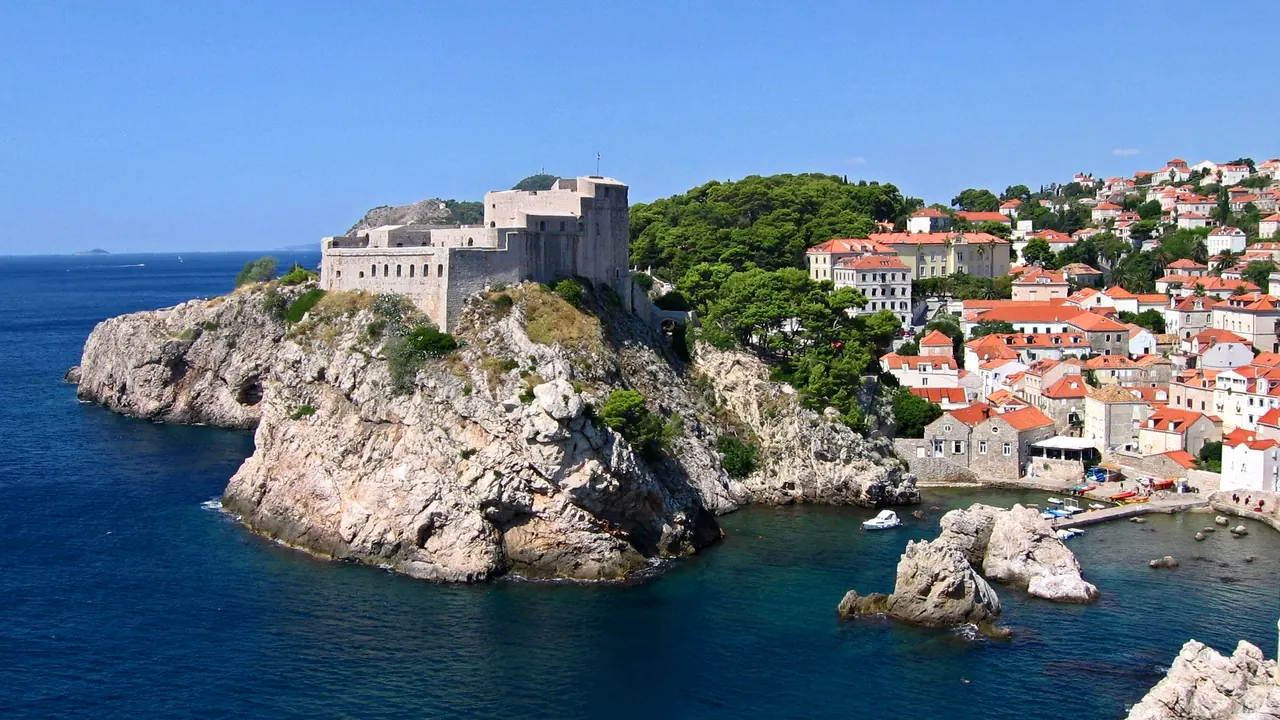
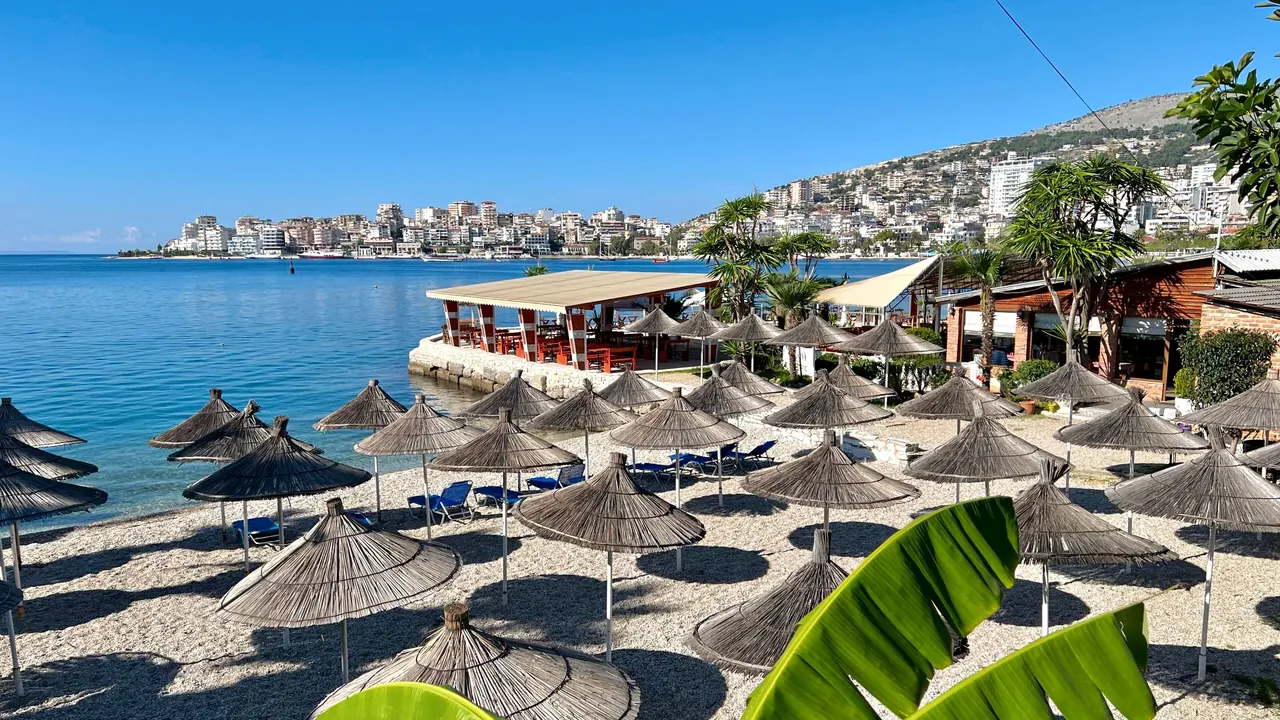
Photos: Dubrovnik by Natalia Semenova, CC BY 3.0, cropped; Saranda by Sharon Hahn Darlin, CC BY 2.0, cropped.
Dubrovnik or Saranda?
Our verdict in twelve categories, each scored against the same fixed benchmark cities, and the climate month by month, so you can choose for your trip.
Choose Dubrovnik for
- culture and sights
- live music and the arts
- getting around
Dubrovnik is for travellers who want a great walled city as well as the sea. A walk round the walls, the monasteries and palaces along the Stradun, and Fort Lovrijenac on its rock fill two or three full days. Summer brings open-air theatre and concerts, and the car-free centre, island ferries and city buses make a stay without a car easy. The price is high, and it is the better choice when the sights matter more than the budget.
Choose Saranda for
- prices
- beaches
- day trips
Saranda makes more sense when the sea and the money come first. The pale coves and islets at Ksamil are the better swimming of the two, and a week here costs far less. The town itself has little history, but Butrint, Gjirokaster and a ferry to Corfu make up for it. Expect patchy buses, a louder summer and very little culture in town.
Scoreboard
Twelve categories on one fixed scale from 0 to 100. The shaded stretch is the gap between the two.
Your match
Pick a travel style or drag the sliders, and both match scores follow your weighting.
Wins on culture and sights and live music and the arts with your weighting.
Wins on prices and beaches with your weighting.
What matters to you?
Category by category
What the scores mean for a trip.
Beaches & swimming
Both towns swim off pebbles rather than sand, in water of much the same warmth, but Saranda's beaches are the bigger draw. Ksamil, a short drive south, has pale coves and small islets in strikingly clear water. Lukova and Borsh up the Riviera give longer, quieter bays if you are willing to drive.
Dubrovnik's swimming is more urban: ladders off the rocks below the walls, Banje beach by the Old Town and the coves of Lapad. For something better you take a boat to Lokrum or the Elafiti islands, where Lopud has the rare sandy cove at Sunj. Both places get crowded in high summer.
Food & drink
Neither town is a food destination, and both cook mainly seafood, but Dubrovnik has more depth. It has Ston oysters, Peljesac reds such as Dingac and a proper wine list, and the konobas of Konavle and Lapad are worth the trip out of the Old Town.
Saranda eats more simply and more cheaply: mussels from the Butrint lagoon, morning byrek, grilled meats and plenty of olive oil, with raki rather than a real wine culture. In both towns, avoid the terraces aimed at passing visitors.
Culture & sights
This is where the two differ most. Dubrovnik is itself the monument: almost 2km of unbroken walls around a marble-paved town of monasteries, palaces and baroque churches, rebuilt after 1667 and again after the siege of the early 1990s. You can spend several full days on it.
Saranda is a modern resort town. The mosaic floors of the old synagogue-church, a few stretches of wall and Lekuresi Castle, which people visit mainly for the view, take a morning at most. Serious sightseeing means leaving town.
Nightlife
The two are about level: small, seasonal scenes that fade outside summer. The difference is in the mood. Dubrovnik is for a sunset drink at the bars cut into the rocks below the walls, then wine and cocktail bars in the stone lanes, with dancing in the old Revelin fortress.
Saranda is louder and younger. The promenade turns from the family evening stroll into cocktail bars with loud music, the beach clubs at Ksamil have DJs, and the crowd is largely Albanians and Kosovars on vacation.
Nature & outdoors
Both sit where bare limestone mountains drop to a clear sea, but Dubrovnik gives you more to do in it. You can ride the cable car up Mount Srd, kayak round the walls to wooded Lokrum, walk between villages on the car-free Elafiti islands, or visit the saltwater lakes and pine forest of Mljet national park.
Saranda's best outdoor places are quieter: the lagoon, reed beds and oak woods of Butrint for birdwatching, and the deep blue spring of the Blue Eye inland. The Riviera trails are mostly unmarked.
Day trips
Saranda's short list of day trips is the stronger one. Butrint, half an hour away, layers Greek, Roman and Venetian remains in lagoon woodland. Gjirokaster's Ottoman stone town is just over an hour inland, and Corfu is less than an hour away by ferry, with no long road border to queue at.
Dubrovnik's best trips cross borders: Kotor and Perast in Montenegro, and Trebinje or a long day to Mostar in Bosnia and Herzegovina. Summer border queues can add hours. Cavtat, Ston and the Elafiti islands are easier half days.
Good for families
Neither town is built for children, but Dubrovnik gives them more to do: the walls, the cable car, boat rides to Lokrum and a small aquarium in the St John fortress. Its weak point is stairs, which make pushchairs a struggle, so families usually stay near the Lapad beaches.
Saranda has the calm, sheltered coves at Ksamil, though the water there is so clear that it can be deeper than it looks, and an evening promenade with ice cream and rides. Beyond that there is nothing aimed at children, and the steep streets and summer traffic are harder work than Dubrovnik's.
Getting around
Dubrovnik is easier to manage without a car. The Old Town is car-free, simple city buses link Lapad, Gruz and Babin Kuk to the Pile gate, and ferries and taxi boats serve Lokrum, Cavtat and the islands.
Saranda's promenade is pleasant to walk, but buses to Ksamil and Butrint run without printed timetables, and the Blue Eye, the Riviera and Gjirokaster are much easier with a hire car or taxi. Both have steep hillsides and a coast road that jams in summer.
Shopping & style
Neither is a shopping destination, though Dubrovnik has a little more worth buying: Konavle embroidery, coral and silver filigree, and figs and candied orange peel from the market on Gunduliceva Poljana. Saranda has beachwear, souvenirs and edible gifts such as olive oil, mountain honey and raki. For crafts, the old bazaar in Gjirokaster is the place to go.
Affordability
This is the second big gap between them. In summer, Dubrovnik's rooms in and near the Old Town cost about as much as in a major Western European capital, and the walls, the cable car and boat trips add more. Staying in Lapad or Gruz and coming in spring or autumn helps, but it remains expensive.
Saranda is cheap for a seaside stay in Europe, from family hotels and grilled fish to local buses. Only July and August push up prices at Ksamil and on the seafront.
Live music & performing arts
Dubrovnik has a real draw in July and August. The Summer Festival, held since 1950, stages theatre, classical music and dance at Fort Lovrijenac and in the Rector's Palace atrium. Away from the festival there are symphony concerts and chamber music in churches.
Saranda has almost nothing: the odd seafront concert, an occasional show in Butrint's ancient theatre, and live Albanian music in restaurants. Anyone curious about traditional polyphonic singing should look around Gjirokaster.
Wellness & relaxation
Neither has a bathing tradition, and spas in both mostly mean hotel facilities. Dubrovnik has a few more of them, in the larger hotels around Lapad and Babin Kuk. Its quietest stays are on the Elafiti islands or in harbourside Cavtat, away from the crowded Old Town.
In Saranda, peace and quiet depends on the month. July and August are loud with music and traffic late into the night, while May, June and late September bring long lunches and calm evenings by the bay.
When should you go?
Pick your month. The climate figures are measured averages, not a forecast.
Dubrovnik in July
Saranda in July
Daytime high, °C
Rainfall in the month, mm
Where the figures come from
Dubrovnik has no rain gauge within 25 km of the centre, so its rainfall comes from a gridded climate dataset read at the destination rather than from a gauge further away.
Dubrovnik's sunshine is measured 83 km from the centre, at Mostar.
Saranda's temperatures are measured 30 km from the centre, at Kerkyra Airport.
Saranda has no rain gauge within 25 km of the centre, so its rainfall comes from a gridded climate dataset read at the destination rather than from a gauge further away.
Temperature and rainfall are climate normals, averaged over the years shown. Dubrovnik: 1999-2020 (sunshine 1991-2020, rainfall 1991-2020) normals, Dubrovnik / Cilipi (15.3 km from centre). Saranda: 1991-2020 normals, Kerkyra Airport (29.8 km from centre).
Both coasts have the same pattern of hot, dry summers and wet winters, and both are good for swimming from June to early October. Saranda runs hotter. Its July and August afternoons reach about 32°C, against 29°C in Dubrovnik, so sightseeing in high summer is harder in Saranda and Butrint is best seen early in the day. The sea is much the same off both towns, about 25°C at its peak, and Saranda gets a little more sunshine through the summer.
May, June and September suit both for a mix of swimming and walking, before the heat sets in and after it eases. Rain comes back in September and builds through autumn. Saranda's winter is milder but much wetter, with over 220mm in both November and December, so neither town is a good choice for a winter beach trip. Dubrovnik's walls and lanes still work for a cool, quiet city break in spring.
Which traveller are you?
For a culture and arts trip, choose Dubrovnik. The intact walled Old Town, its monasteries, palaces and Dalmatian paintings, and the Summer Festival staged in its fortresses have nothing to match them in Saranda. Saranda's history lies outside the town, at Butrint and Gjirokaster.
On a trip on a tight budget, Saranda is the clear pick. Rooms, simple seafood meals, local buses and entry to Butrint all cost little. Dubrovnik is expensive even in Lapad or Gruz, and the walls, the cable car and boat trips soon add up.
For a beach and sun trip, Saranda has the edge. Ksamil's clear coves and islets are close by, the Riviera has quieter bays further north, and summers are a little hotter and sunnier. Dubrovnik's swimming is mostly off rocks and platforms, with the better coves a boat ride away.
Before you go
| Measure | Dubrovnik | Saranda |
|---|---|---|
| Official language | Croatian | Albanian |
| Currency | Euro (EUR) | Lek (ALL) |
| Sockets | CF230 V, 50 Hz | CF220 V, 50 Hz |
| Driving side | Right | Right |
| Time zone | UTC+1, UTC+2 in summer | UTC+1, UTC+2 in summer |
| Emergency number | 112 | 112 |
| Elevation | 10 m | 0 m |
| Main airport | Dubrovnik Ruđer Bošković Airport (DBV)16 km from centre76 non-stop destinations | Corfu Ioannis Kapodistrias International Airport (CFU)32 km from centre88 non-stop destinations |
| Public holidays this year | 14 days | 14 days |
By the numbers
| Measure | Dubrovnik | Saranda |
|---|---|---|
| Population | 41,562 | 22,613 |
| People per km² | - | 383 |
| Museums within 10 km | 7 | 0 |
| UNESCO World Heritage sites within 50 km | 3 | 3 |
| Swim season, months above 21 °C | 5 months | 5 months |
Where else could you go?
Every comparison below shares a destination with this one, so you can follow Dubrovnik or Saranda somewhere new.
- Corfuvs Saranda
- Kotorvs Dubrovnik
- Budvavs Dubrovnik
- Mostarvs Dubrovnik
- Sarajevovs Dubrovnik
- Kalambakavs Saranda