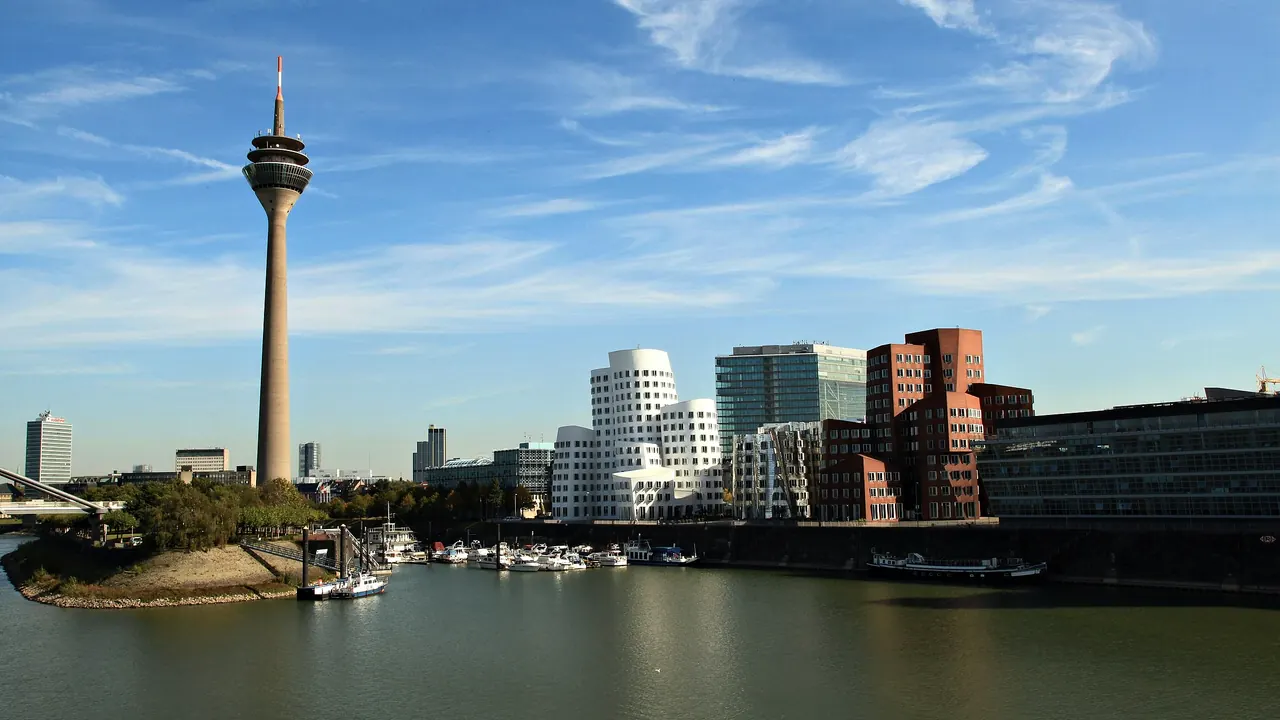
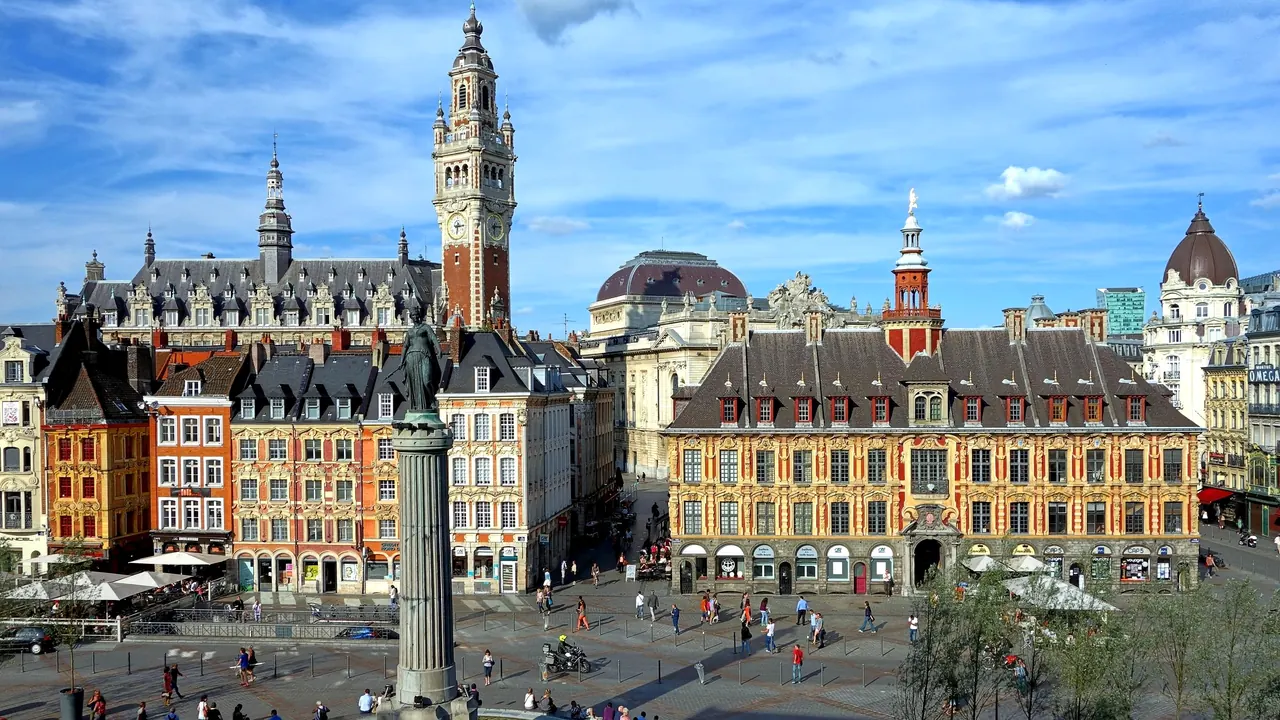
Photos: Dusseldorf by Frank Vincentz, CC BY-SA 3.0, cropped; Lille by Velvet, CC BY-SA 3.0, cropped.
Dusseldorf or Lille?
Our verdict in twelve categories, each scored against the same fixed benchmark cities, and the climate month by month, so you can choose for your trip.
Choose Dusseldorf for
- wellness
- nature and the outdoors
- families
Düsseldorf suits a traveller who wants a polished, comfortable few days with plenty going on in the evenings. It has serious modern art, the Altbier lanes of the Altstadt, opera and concerts, and the Königsallee for shopping. Add the Rhine meadows, an easy sauna culture and more for children to do, and it makes a well-rounded stay for couples, families and anyone who likes a city that is lively at night but calm by day.
Choose Lille for
- day trips
- culture and sights
- beaches
Lille is the better pick if you care most about old streets and great paintings. Vieux-Lille keeps its Flemish baroque brick and stone, and the Palais des Beaux-Arts is a major museum in its own right. The city's real trump card is its position: Brussels, Bruges, Ghent and Paris are all close enough by fast train to be easy day trips. It also comes out a little easier on the wallet.
Scoreboard
Twelve categories on one fixed scale from 0 to 100. The shaded stretch is the gap between the two.
Your match
Pick a travel style or drag the sliders, and both match scores follow your weighting.
Wins on wellness and nature and the outdoors with your weighting.
Wins on day trips and culture and sights with your weighting.
What matters to you?
Category by category
What the scores mean for a trip.
Beaches & swimming
Neither city is a place for beach life, and the difference is only in where you would go for a swim. In Düsseldorf the Rhine is off limits, so people swim in Unterbacher See, a lake with lawns on the city's edge. You can reach it by local transport on a warm afternoon.
Lille has no lake like that, but the sea is closer. The wide, windy sands of Malo-les-Bains at Dunkirk are about an hour away by train, though the water stays cool even in August.
Food & drink
Both cities eat heartily and drink beer rather than wine, but the flavours are quite different. Düsseldorf has two sides: the Altstadt brewhouses, where waiters keep bringing small glasses of Altbier with sauerbraten and spicy mustard, and the Japanese quarter around Immermannstrasse, with ramen counters, izakaya and Japanese bakeries.
Lille sticks to Flemish comfort food in wood-panelled estaminets: carbonnade, potjevleesch, the cheese-heavy welsh and Maroilles in everything, with Belgian and northern French ales to go with it. It is better for sweet things, from Meert's filled waffles to the Sunday market at Wazemmes. What Lille lacks is anything like Düsseldorf's Japanese quarter.
Culture & sights
Lille has more to see, mainly because its past is still standing. Vieux-Lille is a real Flemish baroque quarter, with the Vieille Bourse, the Grand Place and the UNESCO-listed belfry. The Palais des Beaux-Arts, with its Flemish masters, Goya and relief maps, is a museum worth planning a visit around. La Piscine in Roubaix adds an unusual setting just a metro ride away.
Düsseldorf's strength is modern art: Klee at K20, the net under the dome at K21 and the Kunstpalast. Its Altstadt, however, was largely rebuilt after the war. For older history you have to travel out to Benrath Palace or the ruins at Kaiserswerth.
Nightlife
Düsseldorf offers the bigger night out. The few streets of the Altstadt turn into a crowded street party at weekends, with people standing outside the brewhouses well past midnight. Carnival takes over the whole city for days. Stag groups are part of the crowd, and quieter cocktail bars sit in Carlstadt and the Medienhafen.
Lille's evenings are younger and cheaper, built around the students on Rue Masséna and Rue Solférino, with beer cafés in brick cellars in Vieux-Lille. Clubbing is modest in both cities, but in Lille a really late night has traditionally meant crossing into Belgium.
Nature & outdoors
Neither city is scenic, but Düsseldorf has more within reach. Its Rhine meadows and long cycle paths start in the centre. The Neandertal and the wooded Bergisches Land are less than an hour away, with the Siebengebirge and the volcanic Eifel a little further.
Lille sits in flat farmland, so the Citadel park and the towpaths along the Deûle are what you get on an ordinary day. The Monts de Flandre are only low hills. For real scenery you need a long day out to the chalk cliffs of the Opal Coast.
Day trips
Both cities are excellent bases, but Lille's choice is broader and more international. Brussels is about half an hour away by fast train, Ghent and Bruges not much further, and Paris around an hour. London is even possible for an ambitious day. Arras, Amiens Cathedral and the First World War battlefields fill the French side.
Düsseldorf's trips stay mostly within the Rhineland. Cologne Cathedral is under half an hour away, followed by Bonn, the palaces at Brühl, the industrial heritage of the Ruhr at Zollverein, and Aachen or Maastricht at a stretch.
Good for families
Düsseldorf has more for children within the city. The Aquazoo combines fish tanks and natural history, the Grafenberg game park brings deer and boar close, and the tilted windows of the Rheinturm are a hit. Phantasialand and Movie Park are about an hour away, and the Carnival parades shower the crowd with sweets.
Lille manages a pleasant morning in the Citadel park with its small zoo and playgrounds, plus a hands-on science centre reached by metro. But its big outings, such as Pairi Daiza and Nausicaá, mean a longer trip, and the cobbles of Vieux-Lille are hard going with a pushchair.
Getting around
Both centres are flat, compact and easy on foot, so this comes down to how each is wired to the outside. Düsseldorf's trams and light rail belong to a regional network reaching Cologne and the Ruhr, and the airport is only minutes away by train, though the fare zones take some getting used to.
Lille's advantage is that its two main stations stand side by side within walking distance of the old town. Its driverless VAL metro and tram cover Roubaix and Tourcoing.
Shopping & style
Düsseldorf is the stronger shopping city, thanks above all to the Königsallee. Its luxury flagships, jewellers and arcades line the canal, and the city's fashion trade fairs give the streets a well-dressed edge. Schadowstrasse and the big department stores cover the mainstream, while Flingern and the Japanese quarter add something different.
Lille's high streets and the Euralille mall are more ordinary. Its charm is in the independent fashion and delicatessens of Vieux-Lille. It also has the Braderie each September, an enormous citywide flea market that Düsseldorf has nothing to match.
Affordability
Expect to pay roughly the same in both, with Lille slightly easier on the budget. Düsseldorf's hotels carry a business-city premium and jump sharply during its trade fairs. Lille's rooms are reasonable for most of the year and rise mainly for the Braderie and its own fairs.
On the ground, the cheap options differ. In Düsseldorf it is brewhouse meals and Japanese noodle bars. In Lille it is estaminet dinners, an inexpensive metro and museums that do not cost much.
Live music & performing arts
Both cities have opera, ballet and a symphony orchestra, but Düsseldorf's programme runs deeper. The Deutsche Oper am Rhein sits by the Hofgarten, the orchestra plays in the domed Tonhalle on the river, and the Schauspielhaus is one of the leading German-language theatres, though most of its work suits German speakers. As the home of Kraftwerk, the city also has a place in electronic music, and its summer jazz festival puts stages across the old town.
Lille's season is dependable rather than deep. There is the grand Opéra on Place du Théâtre, the Orchestre National and the Théâtre du Nord, with contemporary dance in Roubaix and Tourcoing.
Wellness & relaxation
Saunas are part of everyday life in Düsseldorf, while Lille has no bathing culture of its own. Düsseldorf's public baths have sauna areas that locals use as a matter of routine, mostly mixed and without swimwear. Large thermal complexes and the hot springs at Aachen make an easy day out, and the Japanese garden in Nordpark is good for quiet hours.
In Lille, relaxing means a hotel spa or a long afternoon in one of Vieux-Lille's tea rooms. For a proper soak you would take the short train to the thermal baths at Saint-Amand-les-Eaux.
When should you go?
Pick your month. The climate figures are measured averages, not a forecast.
Dusseldorf in July
Lille in July
Daytime high, °C
Rainfall in the month, mm
Temperature and rainfall are climate normals, averaged over the years shown. Dusseldorf: 1991-2020 normals, Düsseldorf (8.3 km from centre). Lille: 1991-2020 normals, Lille (7.8 km from centre).
The two cities share almost the same climate, so pick your dates by the kind of trip you want, not by the weather. Both are mild and grey in winter, with highs around 7°C from December to February and short days. Spring warms steadily, and from May to September it is pleasant for walking, with July and August at about 25°C in Düsseldorf and a degree cooler in Lille. Neither city gets too hot for sightseeing, and neither is warm enough for a beach trip.
Rain falls all year in both. Düsseldorf is a little wetter in high summer, when August brings the most rain at 77mm. Lille's wettest stretch comes later, in November and December. Sunshine follows the same curve in both cities, peaking from May to August, so late spring and early autumn are the best times for long days on foot without the summer showers.
Which traveller are you?
On a family trip with young children, Düsseldorf asks less of parents. It is safe and orderly, the trams take buggies easily, and a full day out rarely needs a long journey. In Lille the best family outings mean travelling out of town, and the cobbled old quarter wears out small legs.
On a relaxing and wellness trip, Düsseldorf builds rest into the day. The pace is slow for a business city, a sauna session is part of ordinary local life, and the riverbank lends itself to unhurried walks. Lille's terraces suit a lazy afternoon, but there is little in the way of proper pampering.
For a short city break, Lille packs more into two or three days. Düsseldorf's centre is easy to walk too, but much of it was rebuilt after the war. In Lille the old Flemish streets and a major art museum sit close together, and fast trains to Belgium leave from beside the old town.
Before you go
| Measure | Dusseldorf | Lille |
|---|---|---|
| Official language | German | French |
| Currency | Euro (EUR) | Euro (EUR) |
| Sockets | CF230 V, 50 Hz | CE230 V, 50 Hz |
| Driving side | Right | Right |
| Time zone | UTC+1, UTC+2 in summer | UTC+1, UTC+2 in summer |
| Emergency number | 112 | 112 |
| Elevation | 38 m | 17 m |
| Main airport | Düsseldorf Airport (DUS)7 km from centre182 non-stop destinations | Lille Airport (LIL)8 km from centre61 non-stop destinations |
| Public holidays this year | 11 days | 11 days |
By the numbers
| Measure | Dusseldorf | Lille |
|---|---|---|
| City population | 619,444 | 238,246 |
| People per km² | 2,849 | 6,846 |
| Museums within 10 km | 25 | 23 |
| UNESCO World Heritage sites within 50 km | 4 | 6 |
Where else could you go?
Every comparison below shares a destination with this one, so you can follow Dusseldorf or Lille somewhere new.
- Colognevs Dusseldorf
- Brugesvs Lille
- Ghentvs Lille
- Maastrichtvs Dusseldorf
- Brusselsvs Lille
- Antwerpvs Lille