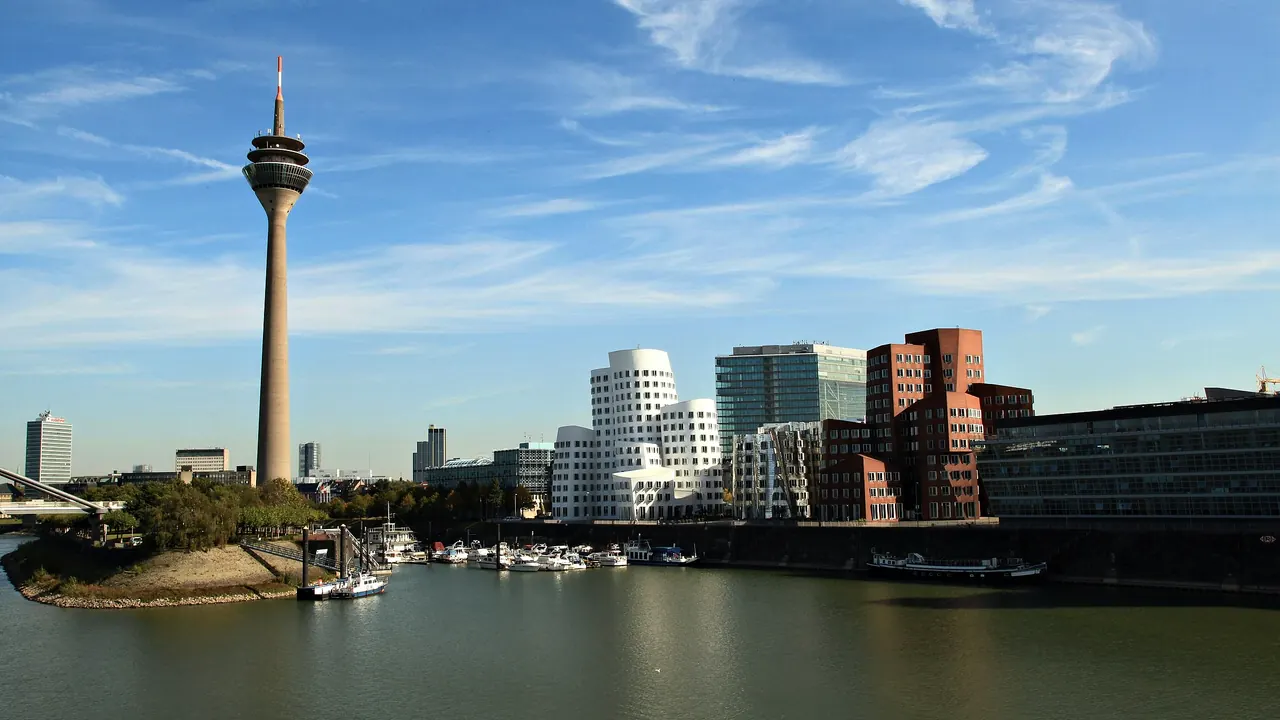
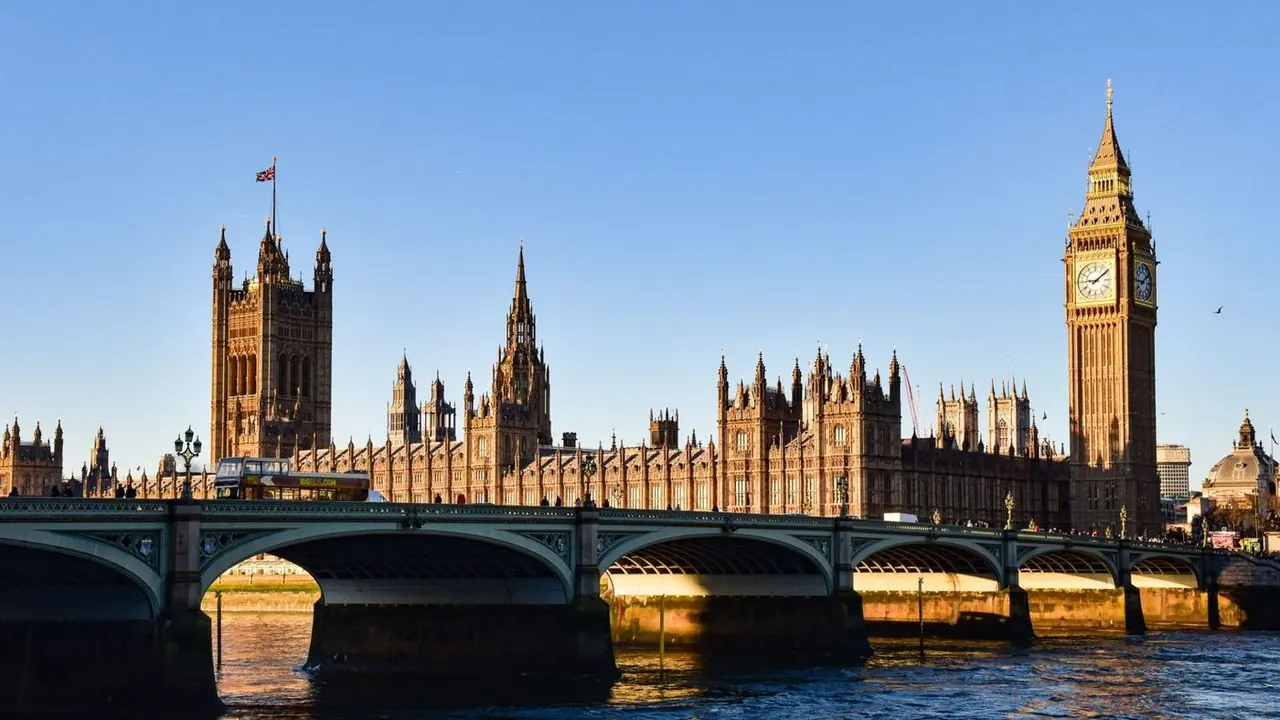
Photos: Dusseldorf by Frank Vincentz, CC BY-SA 3.0, cropped; London by AXP Photography, Pexels License.
Dusseldorf or London?
Our verdict in twelve categories, each scored against the same fixed benchmark cities, and the climate month by month, so you can choose for your trip.
Choose Dusseldorf for
- prices
- wellness
Düsseldorf suits a traveller who wants a manageable, less costly few days in a city that can be crossed on foot. Its strengths are specific: modern art at K20 and K21, Altbier poured in the Altstadt brewhouses, ramen around Immermannstrasse and a train network that makes Cologne, Aachen and the Ruhr easy outings. Choose it for a relaxed art and beer weekend, or as a base for exploring the Rhineland, without London's crowds or its bills.
Choose London for
- culture and sights
- live music and the arts
- shopping
London is the stronger pick for almost every other kind of trip, and by a wide margin in theatre, museums, shopping and eating out. Here you get a thousand years of landmarks, free national collections, the West End and a different neighbourhood to eat or drink in every night. It costs a great deal more and asks more stamina, but for culture or a first big European city it gives far more to do.
Scoreboard
Twelve categories on one fixed scale from 0 to 100. The shaded stretch is the gap between the two.
Your match
Pick a travel style or drag the sliders, and both match scores follow your weighting.
Wins on prices and wellness with your weighting.
Wins on culture and sights and live music and the arts with your weighting.
What matters to you?
Category by category
What the scores mean for a trip.
Beaches & swimming
Neither city works for a beach vacation, but London gets you to salt water more easily. Brighton's pebble beach is about an hour by train, and Margate and Whitstable offer sandier shores in Kent. In town, the lidos at Brockwell Park and Parliament Hill and the Hampstead Heath ponds give London a real outdoor swimming culture.
Düsseldorf's Rhine is unsafe for swimming, so locals go to Unterbacher See or the region's gravel-pit lakes. The nearest coast is the cool Dutch North Sea, a long day away.
Food & drink
London eats far more widely. It has Bangladeshi cooking on Brick Lane, Turkish grills in Green Lanes, Caribbean and West African food south of the river, and Borough Market and the weekend yards for grazing. Fine dining and modern British cooking sit on top of all that.
Düsseldorf offers two strong threads rather than breadth. One is hearty Rhineland food in the Altstadt brewhouses, with Altbier and spicy local mustard. The other is the Japanese quarter's ramen counters, izakaya and bakeries, which are among the best in Europe.
Culture & sights
London's depth is hard to match. Its great national museums and galleries are mostly free, and its landmarks run from the Tower and Westminster Abbey to Wren's St Paul's and Greenwich. A week there still leaves a long list unseen.
Düsseldorf is an art city above all. Klee at K20, the net under K21's glass dome and the Kunstpalast are the highlights. Wartime bombing left little old fabric, so beyond the galleries the main historic visit is the pink rococo Benrath Palace.
Nightlife
London offers many separate nights out: Soho's late bars and gay scene, warehouse parties in Hackney and Dalston, and big venues in Brixton and Peckham, with thousands of pubs underneath it all. Clubbers in particular will find far more there.
Düsseldorf's night is concentrated in one place. The Altstadt's few hundred brewhouses and bars turn into a loud street party at weekends, and calmer cocktail bars are found in Carlstadt and the Medienhafen. Its big moment is Carnival, when the whole city goes out in costume.
Nature & outdoors
London is the greener of the two inside its own limits. Richmond Park's deer and ancient oaks, the hilltop views from Hampstead Heath and Kew's gardens give real open space. The Chilterns and South Downs are an hour or so away by train.
Düsseldorf's outdoors is flatter and quieter: grassy Rhine meadows with long cycle paths to Kaiserswerth, Grafenberg forest and the wooded Neandertal. It suits an easy ride by the river more than a day of serious walking.
Day trips
Both are excellent bases, and London has the slightly longer list. Oxford, Cambridge, Windsor, Bath, Canterbury and Stonehenge make very different days out across southern England.
Düsseldorf's strength is how close everything is. Cologne Cathedral is under half an hour away, and Bonn, the Brühl palaces, the Zollverein colliery and Aachen are all a short train ride. Even Dutch Maastricht and the castles of the Middle Rhine are within a day's reach.
Good for families
London gives children more to do, and much of it is free. There are the dinosaur halls of the Natural History Museum, the Science Museum's hands-on galleries, the pirate ship playground in Kensington Gardens and the zoo in Regent's Park. Legoland Windsor and the Harry Potter studio tour are close by. The downside is crowds, long distances and Tube stairs with a buggy.
Düsseldorf is smaller in what it offers but easier day to day. Short tram rides take you to the Aquazoo Löbbecke Museum, the Rheinturm's tilted windows and the free game park in Grafenberg, and Phantasialand is about an hour away.
Getting around
London's network is the more complete. The Tube, the Elizabeth line, buses and riverboats reach nearly everywhere, and one contactless card pays for all of it. The cost of that reach is scale, with long journeys and packed, hot trains at rush hour.
Düsseldorf is compact and flat, so the Altstadt, Königsallee and the Japanese quarter are a stroll apart and the airport is minutes away by train. Its fare zones take some figuring out, but the regional network also covers Cologne and the Ruhr.
Shopping & style
Düsseldorf keeps its shopping within a short walk, while London spreads it across whole districts. In Düsseldorf, the Kö's jewellers and arcades sit a few minutes from Schadowstrasse and the Kö-Bogen, and the trade-fair fashion business shows in its big department stores. Flingern's design shops, stationery and homeware in the Japanese quarter and the stalls of Carlsplatz add some character, but there is no crafts or market tradition to speak of.
London's appeal goes well beyond its luxury streets. You can spend a day among the bookshops of Charing Cross Road, the vintage and design shops of Shoreditch and Spitalfields, Camden's alternative stalls and Greenwich market at the weekend, or browse Marylebone High Street and Seven Dials. Each district feels different, so several shopping days need not repeat themselves.
Affordability
Düsseldorf is the cheaper of the two, though it is not a bargain. Hotel rooms jump during the big trade fairs, so check the fair calendar before booking. Otherwise brewhouse meals and noodle bars keep daily costs reasonable.
In London, small central rooms, rounds in the pub and theatre seats all cost a lot. Its saving grace is that the great museums, the parks and many markets cost nothing to visit.
Live music & performing arts
London leads by a wide margin. It has the West End's historic playhouses, the National Theatre, the Globe and the pub fringe, plus the Royal Opera House, five major orchestras and the Proms at the Royal Albert Hall. Much of it is in English, so visitors can follow everything.
Düsseldorf has a solid programme for its size, including the Deutsche Oper am Rhein and the domed Tonhalle on the river. Its distinctive draw is its place in music history as the home of Kraftwerk and early German electronic music. Its leading theatre plays mostly in German.
Wellness & relaxation
The two are about equal here, and both are better for a city break than for rest and recovery. Düsseldorf has a relaxed pace, long walks in the Rhine meadows and the Japanese garden in Nordpark. Its saunas are the German kind, mixed and without swimwear, and large thermal complexes and Aachen's hot springs are within reach.
London's bathing is more historic: Victorian Turkish baths in Bayswater and Islington, grand hotel spas and cold dips at the Hampstead ponds. For proper thermal waters, Bath is about an hour and a half away by train.
When should you go?
Pick your month. The climate figures are measured averages, not a forecast.
Dusseldorf in July
London in July
Daytime high, °C
Rainfall in the month, mm
Temperature and rainfall are climate normals, averaged over the years shown. Dusseldorf: 1991-2020 normals, Düsseldorf (8.3 km from centre). London: 1992-2020 (sunshine 1991-2020, rainfall 1991-2020) normals, London Weather Centre (1.3 km from centre).
The two cities share a mild, changeable climate, and neither is a beach destination at any time of year. Late spring to early autumn is the best time for walking either one, with long, fairly sunny days from May to August. Düsseldorf's summers are a little warmer, reaching about 25°C in July against London's 23°C. Its rain also peaks then, at around 77mm in August, so summer showers are more likely on the Rhine than on the Thames.
London is the drier and slightly gentler city for much of the year. Spring there is notably dry, with March bringing only about 38mm, which makes April and May pleasant months for parks and day trips. Its wetter season comes in October and November. In winter London stays a couple of degrees milder, while Düsseldorf drops to around 6°C in January with little sun. Neither is too hot for sightseeing at any point.
Which traveller are you?
On a trip on a tight budget, Düsseldorf is the easier choice, though not a cheap one. Its hotels are pricey for a city of its size and climb steeply in trade-fair weeks, but brewhouse meals and noodle lunches help. London costs far more, even with its free museums.
For a culture and arts trip, Düsseldorf offers fine modern art at K20, K21 and the Kunstpalast, but little old fabric beyond it. London is in a different league, pairing the British Museum, the National Gallery and the Tates with the West End and the National Theatre.
On a shopping trip, Düsseldorf has the elegant, canal-lined Königsallee but much less variety around it. London wins clearly, with Bond Street's luxury houses, Savile Row tailoring, Harrods and Selfridges, and markets running from Portobello Road's antiques to the Sunday flowers on Columbia Road.
Before you go
| Measure | Dusseldorf | London |
|---|---|---|
| Official language | German | English |
| Currency | Euro (EUR) | Pound Sterling (GBP) |
| Sockets | CF230 V, 50 Hz | G230 V, 50 Hz |
| Driving side | Right | Left |
| Time zone | UTC+1, UTC+2 in summer | UTC, UTC+1 in summer |
| Emergency number | 112 | 112 or 999 |
| Elevation | 38 m | 4 m |
| Main airport | Düsseldorf Airport (DUS)7 km from centre182 non-stop destinations | London Heathrow Airport (LHR)23 km from centre224 non-stop destinations |
| Public holidays this year | 11 days | 8 days |
By the numbers
| Measure | Dusseldorf | London |
|---|---|---|
| City population | 619,444 | 8,799,728 |
| People per km² | 2,849 | 5,598 |
| Museums within 10 km | 25 | 216 |
| UNESCO World Heritage sites within 50 km | 4 | 4 |
Where else could you go?
Every comparison below shares a destination with this one, so you can follow Dusseldorf or London somewhere new.