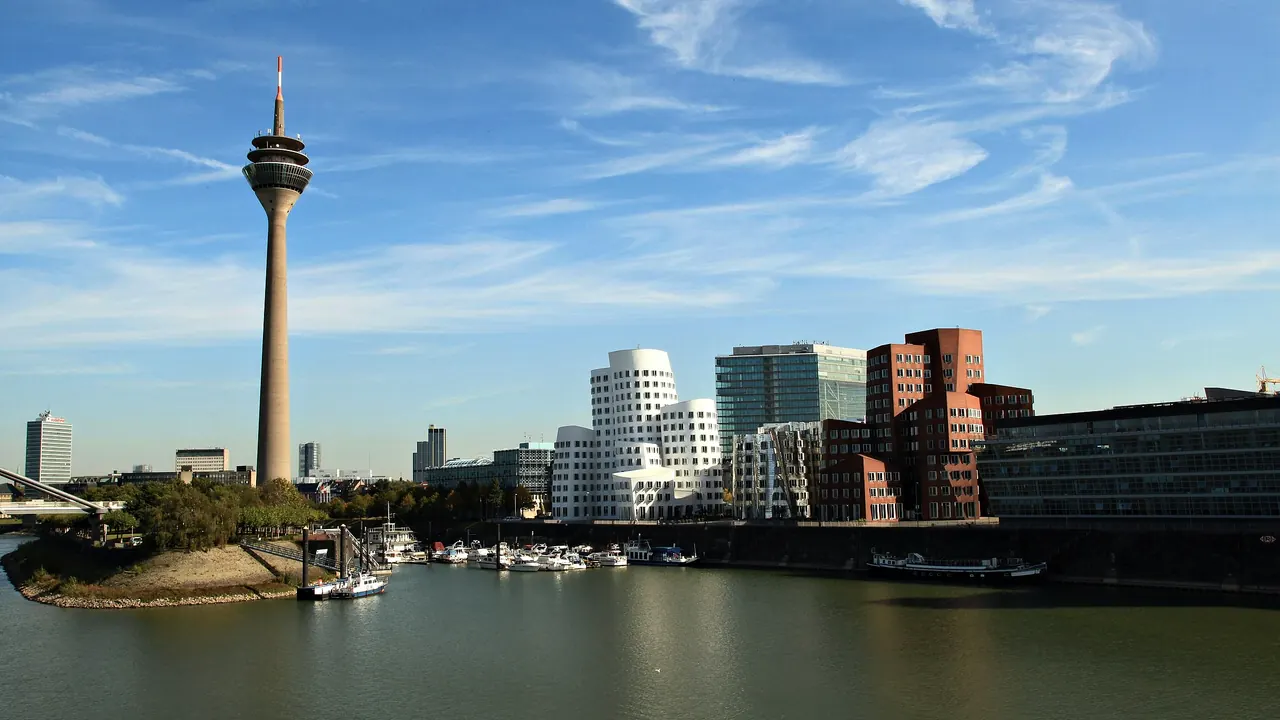
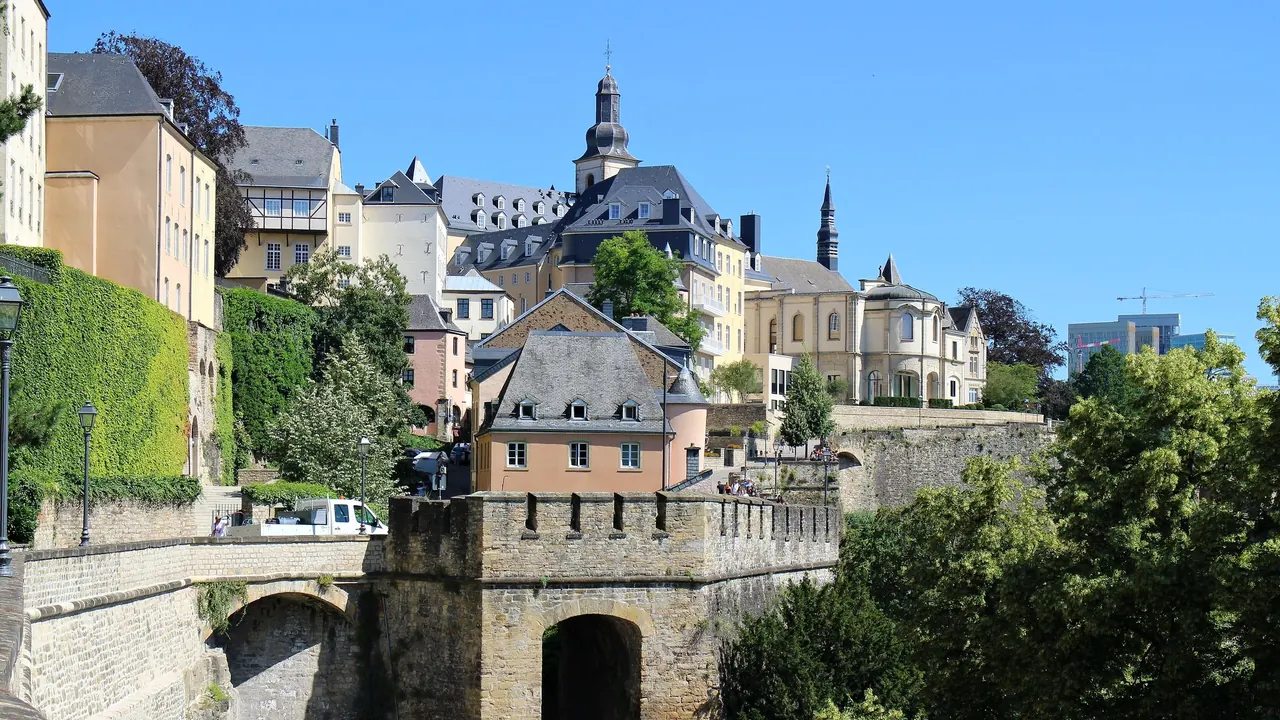
Photos: Dusseldorf by Frank Vincentz, CC BY-SA 3.0, cropped; Luxembourg by Suicasmo, CC BY-SA 4.0, cropped.
Dusseldorf or Luxembourg?
Our verdict in twelve categories, each scored against the same fixed benchmark cities, and the climate month by month, so you can choose for your trip.
Choose Dusseldorf for
- nightlife
- prices
- shopping
Düsseldorf suits travellers who want a city that fills its evenings and its shopping bags. The Altstadt's brewhouses and bars, the food of the Japanese quarter, the Königsallee and a full opera and concert season make it the livelier stay, and it is the easier of the two on the budget. With Cologne under half an hour away by train, it also works as a base for a longer trip through the Rhineland.
Choose Luxembourg for
- nature and the outdoors
- getting around
- wellness
For a quieter and more scenic break, Luxembourg is the better pick. Its old town stands on a fortified plateau above wooded gorges, which makes it the more striking place to walk. The Müllerthal and the Moselle vineyards bring real countryside close, and free public transport makes getting about effortless. Come for two or three calm days, and expect to pay well for them.
Scoreboard
Twelve categories on one fixed scale from 0 to 100. The shaded stretch is the gap between the two.
Your match
Pick a travel style or drag the sliders, and both match scores follow your weighting.
Wins on nightlife and prices with your weighting.
Wins on nature and the outdoors and getting around with your weighting.
What matters to you?
Category by category
What the scores mean for a trip.
Beaches & swimming
Neither city has a beach, and in both a swim means a lake on a hot day. In Düsseldorf the sandy Rhine banks look inviting, but strong currents and barge traffic make the river unsafe. Locals swim at Unterbacher See instead, which lies within the city on its south-eastern edge.
Luxembourg's lakes are further out: the Upper Sûre reservoir in the wooded north, about an hour away, or the gravel-pit lakes at Remerschen in the Moselle valley. With either city, sand and warm sea belong to a different trip.
Food & drink
Düsseldorf gives a hungry traveller more to work with. The Altstadt brewhouses serve Altbier with sauerbraten and Halve Hahn, sharpened by the local mustard. Around Immermannstrasse, one of Europe's largest Japanese communities keeps ramen counters, izakaya and bakeries busy.
Luxembourg is at its best in the glass. Moselle Riesling and crémant are poured everywhere, and the city has serious fine dining for its size. Its own dishes are few, though, and cheap casual eating is thin, so the lunch menu is where it offers the best value.
Culture & sights
The two offer about the same amount of sightseeing, but of very different kinds. Düsseldorf is an art city: Klee at K20, the net slung under K21's glass dome, the Kunstpalast and the galleries that grew around its academy. Its rebuilt Altstadt has little old fabric, and the best historic site, Benrath Palace, is out in the suburbs.
Luxembourg is the reverse, because the main sight is the city itself. The UNESCO-listed fortress, the Bock casemates and the view from the Chemin de la Corniche down to the Grund are the draw, with MUDAM for contemporary art. Choose Düsseldorf for paintings and Luxembourg for ramparts and gorges.
Nightlife
The gap here is wide. Düsseldorf's Altstadt packs a few hundred pubs and brewhouses into a handful of streets, and on weekend nights the crowds drink in the lanes until well past midnight. At Carnival the whole city is out in costume for days.
Luxembourg's nights belong to its international finance and EU crowd, who fill the Rives de Clausen and the Grund's riverside pubs on Thursdays and Fridays and then often leave for the weekend. The usual evening there is a glass of crémant on a terrace.
Nature & outdoors
Luxembourg is the better choice for anyone who wants to get out on foot. Wooded gorges cut through the middle of the city, and half an hour away the mossy sandstone passages and beech forest of the Müllerthal make a proper day's hike. The Ardennes and the Moselle vineyards lie beyond.
Düsseldorf's outdoors is flatter and gentler: Rhine meadows with long cycle paths, Grafenberg forest and the Neandertal. The Bergisches Land hills are close, but nothing nearby matches the Müllerthal's rock scenery.
Day trips
Both are excellent bases, but they point in different directions. From Düsseldorf, fast and frequent trains run through a dense German region. Cologne cathedral is under half an hour away, with Bonn, the Brühl palaces, the industrial heritage of the Ruhr and Aachen beyond.
Luxembourg's day trips cross borders. Roman Trier and Metz are each under an hour away and Nancy a little further, while at home there are the castle at Vianden and the Moselle wine villages. From Düsseldorf the trips are to big cities, and from Luxembourg to small towns in three countries.
Good for families
Both cities are safe and easy with children, but Düsseldorf has more made for them. The Aquazoo Löbbecke Museum, the Rheinturm's tilted windows, the free game park in Grafenberg forest and two big theme parks within about an hour can fill a longer stay. Children also love the sweets thrown from the Carnival floats.
Luxembourg suits two or three quiet days. The casemate tunnels feel like an adventure, the natural history museum is pitched at younger children, and Parc Merveilleux is its one attraction built for families. With no zoo, aquarium or theme park, a week would stretch it.
Getting around
Düsseldorf's centre is flat and easy to walk. The Altstadt, the Königsallee, the Hofgarten and the Japanese quarter are all a short stroll apart along the Rhine promenade. Trams and light rail reach the Medienhafen, and the same regional network carries you on to Cologne and the Ruhr once you have worked out the fare zones.
In Luxembourg there are no fare zones to learn, because trams, buses and second-class trains are free across the whole country, as far as Vianden and the Moselle. Walking takes more effort, since the city is built on several levels. Public lifts take you down to the Grund, and a funicular climbs to Kirchberg.
Shopping & style
Düsseldorf is the clear choice for a shopping trip. The Königsallee has luxury flagships along its canal, and Schadowstrasse and the Kö-Bogen cover the mainstream. Flingern's design shops and the stationery and homeware of the Japanese quarter add an independent side, and the city's long fashion trade keeps the standard high.
Luxembourg's Grand-Rue has premium brands for a wealthy local clientele, but the range is narrow. The best things to buy there are Villeroy & Boch porcelain from the factory outlet and a few bottles of Moselle crémant.
Affordability
Neither city is cheap, but Düsseldorf is clearly easier on the wallet. Brewhouse meals, Japanese noodle lunches and fairly priced transport keep daily costs at normal Western European levels. Avoid the major trade-fair weeks, though, when hotel rooms cost several times their usual rate.
Luxembourg is expensive to sleep and eat in, because it is priced for business travellers and the European institutions. Free transport, free museums and wine by the glass help, and many visitors stay in Trier or Metz and come in by train for the day.
Live music & performing arts
Düsseldorf has more home-grown performance. The Deutsche Oper am Rhein, the symphony orchestra in the domed Tonhalle and the Schauspielhaus give it a steady season of its own. As Kraftwerk's birthplace, it also has a real place in the history of electronic music. Its theatre and cabaret, however, are mostly for German speakers.
Luxembourg's Philharmonie has excellent acoustics and draws touring orchestras and soloists. The Grand Théâtre stages work in several languages, which helps visitors, but most of what plays in the city comes from elsewhere.
Wellness & relaxation
Düsseldorf unwinds in the sauna, as a matter of habit. Its public pools and leisure baths have sauna areas that locals use as routine, mostly mixed and without swimwear. Add long walks on the Rhine meadows and the Japanese garden in Nordpark. For hot springs, though, you have to go to Aachen or one of the large thermal complexes about an hour away.
Luxembourg has a warm mineral spring only half an hour from the city at Mondorf-les-Bains, with pools, saunas and treatments in a landscaped park. It makes an easy restorative day out. Back in town, quiet evenings and calm paths through the Grund and the Pétrusse valley keep the pace slow.
When should you go?
Pick your month. The climate figures are measured averages, not a forecast.
Dusseldorf in July
Luxembourg in July
Daytime high, °C
Rainfall in the month, mm
Temperature and rainfall are climate normals, averaged over the years shown. Dusseldorf: 1991-2020 normals, Düsseldorf (8.3 km from centre). Luxembourg: 1991-2020 normals, Luxembourg / Luxembourg (6.3 km from centre).
Both cities have the same mild, damp climate, and neither is a beach destination. Their lakes are only pleasant for swimming in July and August. May to September is the best time for walking the streets, with summer highs around 25°C in Düsseldorf and a degree lower in Luxembourg. Neither gets uncomfortably hot.
The real difference is light and rain. From April to September Luxembourg is noticeably sunnier, with around 258 hours of sunshine in July against 207 in Düsseldorf, which suits its hiking country. Both are cold and grey in winter, but Luxembourg is a little colder and wetter, with 89mm of rain in December. For a winter city break, Düsseldorf's galleries and brewhouses are the safer bet.
Which traveller are you?
For a food and nightlife trip, Düsseldorf is the obvious pick. Altbier brewhouses, Japanese ramen counters and the Altstadt's few hundred bars keep every evening full. In Luxembourg, going out is concentrated on Thursdays and Fridays, and the city goes quiet at the weekend.
On an outdoors trip, Luxembourg is the better base. Wooded gorges run through the city itself, the Müllerthal's sandstone trails are half an hour away, and free trains reach the Ardennes and the Moselle vineyards. Düsseldorf offers mostly flat cycling along the river.
On a tight budget, Düsseldorf makes your money go further. Brewhouse meals and noodle-bar lunches are fair value outside trade-fair weeks. Luxembourg's hotels and restaurants are priced for business travellers, so free transport and free museums only partly soften the bill.
Before you go
| Measure | Dusseldorf | Luxembourg |
|---|---|---|
| Official language | German | French, German, Luxembourgish |
| Currency | Euro (EUR) | Euro (EUR) |
| Sockets | CF230 V, 50 Hz | CF230 V, 50 Hz |
| Driving side | Right | Right |
| Time zone | UTC+1, UTC+2 in summer | UTC+1, UTC+2 in summer |
| Emergency number | 112 | 112 |
| Elevation | 38 m | 300 m |
| Main airport | Düsseldorf Airport (DUS)7 km from centre182 non-stop destinations | Luxembourg-Findel International Airport (LUX)6 km from centre115 non-stop destinations |
| Public holidays this year | 11 days | 12 days |
By the numbers
| Measure | Dusseldorf | Luxembourg |
|---|---|---|
| City population | 619,444 | 137,678 |
| People per km² | 2,849 | 2,663 |
| Museums within 10 km | 25 | 19 |
| UNESCO World Heritage sites within 50 km | 4 | 4 |
Where else could you go?
Every comparison below shares a destination with this one, so you can follow Dusseldorf or Luxembourg somewhere new.
- Colognevs Dusseldorf
- Maastrichtvs Dusseldorf
- Maastrichtvs Luxembourg
- Utrechtvs Dusseldorf
- Colognevs Luxembourg
- Strasbourgvs Luxembourg