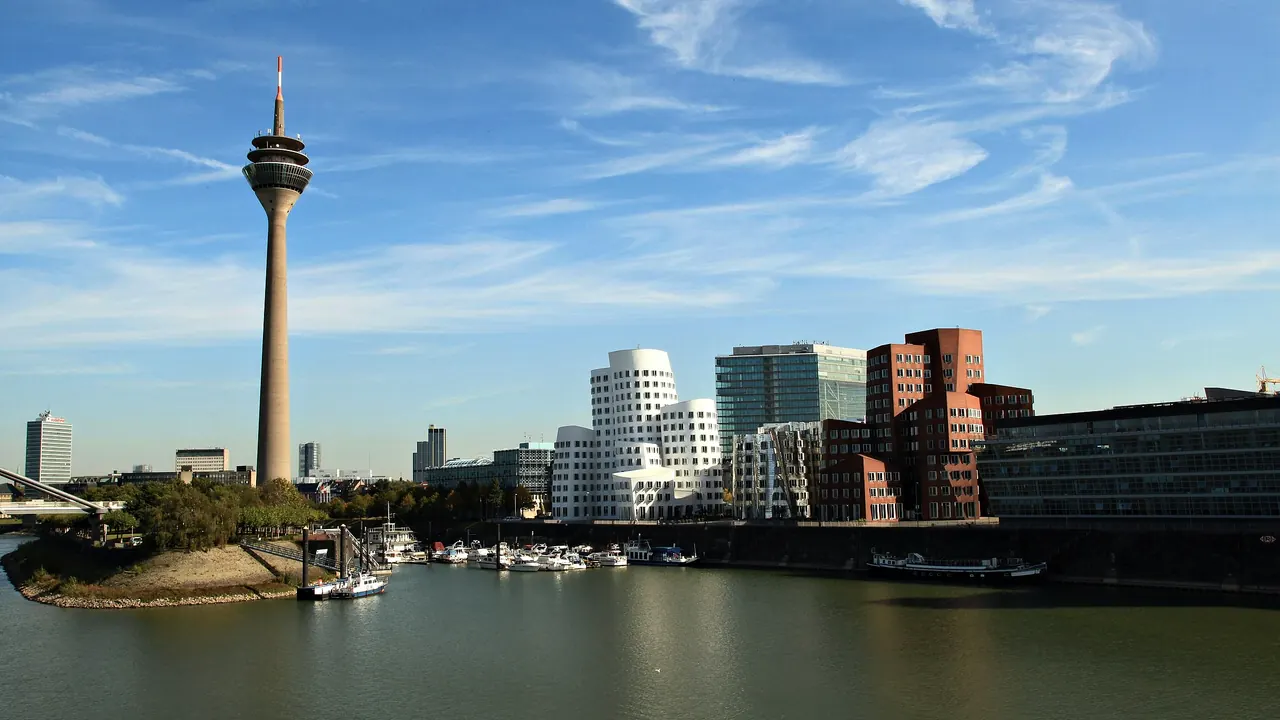
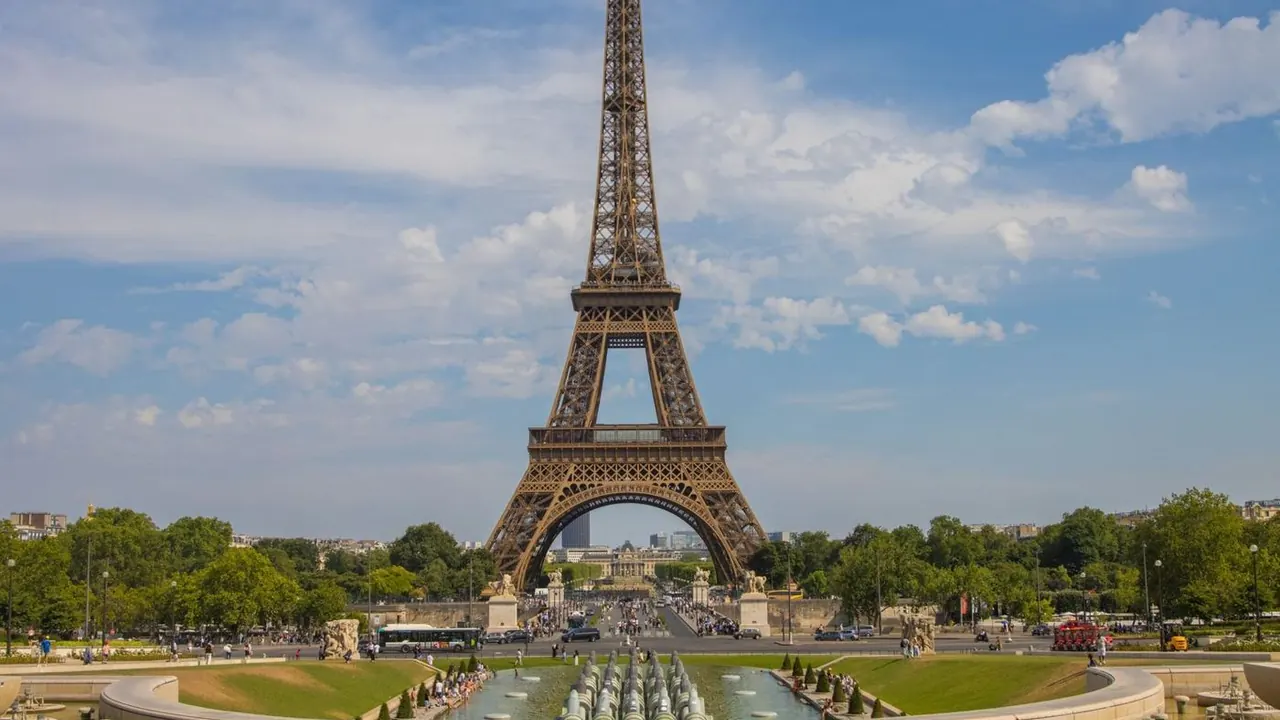
Photos: Dusseldorf by Frank Vincentz, CC BY-SA 3.0, cropped; Paris by Efrem Efre, Pexels License.
Dusseldorf or Paris?
Our verdict in twelve categories, each scored against the same fixed benchmark cities, and the climate month by month, so you can choose for your trip.
Choose Dusseldorf for
- prices
- wellness
- beaches
Düsseldorf suits a shorter, calmer and cheaper trip. Its strengths are a serious modern-art scene, Altbier in the old-town brewhouses, ramen in the Japanese quarter and a flat centre you can cover on foot. It also makes a practical base for the Rhineland, with Cologne, Bonn and the Ruhr close by train. Travellers who already know the great capitals, or who are in town for a trade fair and have a few days spare, will find it easy and unhurried.
Choose Paris for
- culture and sights
- food and drink
- shopping
Paris is the choice when the trip itself is the point. Its museums, food, shopping and stage are among the best anywhere, and the city outdoes Düsseldorf in almost every respect a visitor cares about. The price is in money and patience: hotels cost more, rooms are smaller, queues are long and the metro is crowded. For a first big European city, or for anyone who wants to fill every day, it is worth the trouble.
Scoreboard
Twelve categories on one fixed scale from 0 to 100. The shaded stretch is the gap between the two.
Your match
Pick a travel style or drag the sliders, and both match scores follow your weighting.
Wins on prices and wellness with your weighting.
Wins on culture and sights and food and drink with your weighting.
What matters to you?
Category by category
What the scores mean for a trip.
Beaches & swimming
Neither city is a place to swim, so beach-lovers should look elsewhere for both. The difference is in how locals cool off. In Düsseldorf the Rhine is too dangerous for swimming, so people head out to Unterbacher See and the gravel-pit lakes.
Paris keeps the water in the centre, with summer sand on the riverbanks, bathing spots on the Bassin de la Villette and the Seine, and handsome Art Deco pools. The nearest coast is cool in both cases: Normandy is about two hours from Paris by train, and the Dutch North Sea is a long day's travel from Düsseldorf.
Food & drink
Düsseldorf eats well within two strong traditions. One is the Altstadt brewhouse, with sauerbraten, Halve Hahn and the city's sharp mustard. The other is the Japanese quarter around Immermannstrasse, with ramen counters and izakaya. Outside those two, the choice soon thins out.
Paris is in a different league. Good food is part of everyday life there, from the neighbourhood boulangerie and street markets like Aligre to zinc-counter bistros, neo-bistros in the 11th and the haute cuisine that set the world's standard. Belleville couscous, pho in the 13th and serious patisserie add a breadth that Düsseldorf cannot match.
Culture & sights
Düsseldorf is an art city with a narrow focus. K20's Klee collection, the net under K21's glass dome and the Kunstpalast make a fine museum weekend. Wartime bombing, however, left little old fabric beyond Benrath Palace and the ruins at Kaiserswerth.
Paris has both the collections and the city around them. The Louvre, the Orsay, the Orangerie and Cluny each outweigh anything in Düsseldorf, and the Sainte-Chapelle, the Haussmann boulevards and the Marais townhouses make simply walking around a cultural experience. The cost is queues, so booking ahead matters in a way it does not in Düsseldorf.
Nightlife
Düsseldorf's night out is concentrated in one place. The Altstadt's few hundred bars become a loud, beer-fuelled street party at weekends, stag groups included, and Carnival turns the whole city out in costume. Clubbing is modest.
Paris goes further and later. Bars are spread across Oberkampf, the Canal Saint-Martin, Belleville, Pigalle and the Marais. After 2am the night moves on to house and techno clubs and to summer barges on the river. The mood is chic rather than rowdy, and door policies can be choosy.
Nature & outdoors
Both cities offer gentle green space, not landscape. In Düsseldorf the outdoors means the Rhine meadows, with flat cycle paths to Kaiserswerth and sheep on the dykes. The Neandertal and the wooded Bergisches Land are close, and the Eifel is a little further.
Paris is more about parks: the formal Luxembourg and Tuileries gardens, the cliffs of the Buttes-Chaumont and the big woods at Boulogne and Vincennes. Its best escape is the forest of Fontainebleau, whose sandstone boulders draw climbers.
Day trips
Düsseldorf is a good base in its own right. Cologne and its cathedral are under half an hour by train, Bonn and the baroque palaces at Brühl are a little further up the Rhine, and the Zollverein colliery in Essen shows the industrial side of the Ruhr. If you allow about an hour and a half each way, you can also reach Aachen, Münster and Dutch Maastricht.
Paris is the stronger base by some way. Versailles is under an hour out, and Fontainebleau, Chantilly, Chartres and Monet's garden at Giverny are almost as easy. Fast trains put Reims and its Champagne houses, Rouen and the Loire châteaux within a day. The list is longer and grander than anything around Düsseldorf, and on a long stay it can fill a week of excursions on its own.
Good for families
Paris has far more to do with children. Disneyland and Parc Astérix are near, and in town there are the Cité des Sciences, the Jardin des Plantes galleries and the carousels and toy boats of the Luxembourg. Düsseldorf's list is shorter: the Aquazoo, the Rheinturm, the Grafenberg game park and Phantasialand an hour away.
Day-to-day life is easier in Düsseldorf. The trams take buggies without fuss and distances are short. In Paris, by contrast, families face metro stairs, crowded trains and small hotel rooms.
Getting around
Düsseldorf is easy to get around. Its flat centre puts the Altstadt, the Königsallee and the Japanese quarter within walking distance of each other, trams and light rail fill the gaps, and the airport is minutes from the centre by train. The fare zones take a little working out, but one regional network carries you on to Cologne and the Ruhr.
Paris is better still. Its centre is one of the great cities to explore on foot, from the Marais to Saint-Germain or along the Seine to the Eiffel Tower, and the metro is so dense that a station is rarely more than a few minutes away. The RER lines also reach Versailles and the airports. The catch is practical: long corridors without lifts, packed lines at rush hour and pickpockets on the busiest routes.
Shopping & style
Düsseldorf's shopping centres on the Königsallee, with its luxury flagships along the canal, its department stores and the mainstream shops of Schadowstrasse. Flingern boutiques and Japanese stationery shops add a little character.
Paris is where luxury fashion began, and it shows: the couture houses on Avenue Montaigne, Galeries Lafayette and Le Bon Marché, and the designers and vintage shops of the Marais. Add the covered passages, the Saint-Ouen flea market, the bouquinistes and the chocolate and cheese specialists, and the range goes far beyond anything Düsseldorf offers.
Affordability
Düsseldorf is the cheaper of the two, as long as you avoid the trade-fair weeks, when hotel prices multiply. Brewhouse meals, noodle bars and reasonably priced transport keep daily costs at the level of a prosperous German city.
Paris is costly at almost every turn: small, expensive rooms, pricey terrace drinks and full-price admission at the big sights. Savings take effort. The best ways to cut costs are the free permanent collections in the city's museums, bakery lunches, picnics by the Seine and a hotel in the outer arrondissements.
Live music & performing arts
Düsseldorf has a solid programme for its size. There is opera and ballet at the Deutsche Oper am Rhein and symphony concerts in the domed Tonhalle, and the city has a special place in music history as the birthplace of Kraftwerk.
Paris has more of everything, and much of it is world class. Ballet at the Palais Garnier, opera at the Bastille and concerts at the Philharmonie are joined by candlelit chamber music in the Sainte-Chapelle, jazz cellars and the cabaret of Pigalle. In both cities, spoken theatre is mostly in the local language.
Wellness & relaxation
Neither city is a wellness destination, but each has its own way of unwinding. Düsseldorf follows the German sauna tradition. Its pool saunas are mostly mixed and without swimwear, there are large thermal complexes within an hour, and Aachen has hot springs. The city's slower pace and long walks by the Rhine help too.
Paris has the tiled steam rooms and mint tea of the Grande Mosquée hammam, along with hotel spas. In a faster, louder city, though, rest comes in short breaks on a café terrace or in the Luxembourg gardens.
When should you go?
Pick your month. The climate figures are measured averages, not a forecast.
Dusseldorf in July
Paris in July
Daytime high, °C
Rainfall in the month, mm
Temperature and rainfall are climate normals, averaged over the years shown. Dusseldorf: 1991-2020 normals, Düsseldorf (8.3 km from centre). Paris: 1991-2020 normals, Paris-Montsouris (4.6 km from centre).
The two cities have very similar climates, with Paris a degree or two warmer in most months. Both are most pleasant for walking from May to September. Paris reaches about 26°C in July and August, against 25°C in Düsseldorf. Neither city gets too hot to walk around, and neither is a beach destination at any time of year. Winters are cold and grey in both, with highs in single figures from December to February. That makes them museum seasons, not sightseeing seasons.
Rain falls in a different pattern. In Düsseldorf it is spread through the year and peaks in late summer, at about 77mm in August, but the long, sunny days of May to August make up for it. Paris is noticeably drier in winter and early spring, and May is its wettest month. That makes March and April a good choice for Paris, while Düsseldorf is best in late spring and early autumn.
Which traveller are you?
On a trip with a tight budget, Düsseldorf is the better choice. Hotels are cheaper than in Paris outside the trade-fair weeks, a brewhouse meal and Altbier are fair value, and the centre is small enough to walk. Paris can be done cheaply, but it takes far more effort.
For a culture and arts trip, Paris has no real rival here. The Louvre, the Orsay, the Gothic churches and two opera houses would fill a week. Düsseldorf's modern-art collections are excellent, but they make a focused weekend, not a full itinerary.
On a shopping trip, Paris is far ahead. It has the couture houses on Avenue Montaigne, the historic department stores, Marais designers, the covered passages and the Saint-Ouen flea market. Düsseldorf has the Königsallee and good department stores, but much less variety and character.
Before you go
| Measure | Dusseldorf | Paris |
|---|---|---|
| Official language | German | French |
| Currency | Euro (EUR) | Euro (EUR) |
| Sockets | CF230 V, 50 Hz | CE230 V, 50 Hz |
| Driving side | Right | Right |
| Time zone | UTC+1, UTC+2 in summer | UTC+1, UTC+2 in summer |
| Emergency number | 112 | 112 |
| Elevation | 38 m | 27 m |
| Main airport | Düsseldorf Airport (DUS)7 km from centre182 non-stop destinations | Charles de Gaulle International Airport (CDG)22 km from centre277 non-stop destinations |
| Public holidays this year | 11 days | 11 days |
By the numbers
| Measure | Dusseldorf | Paris |
|---|---|---|
| City population | 619,444 | 2,103,778 |
| People per km² | 2,849 | 19,960 |
| Museums within 10 km | 25 | 251 |
| UNESCO World Heritage sites within 50 km | 4 | 4 |
Where else could you go?
Every comparison below shares a destination with this one, so you can follow Dusseldorf or Paris somewhere new.