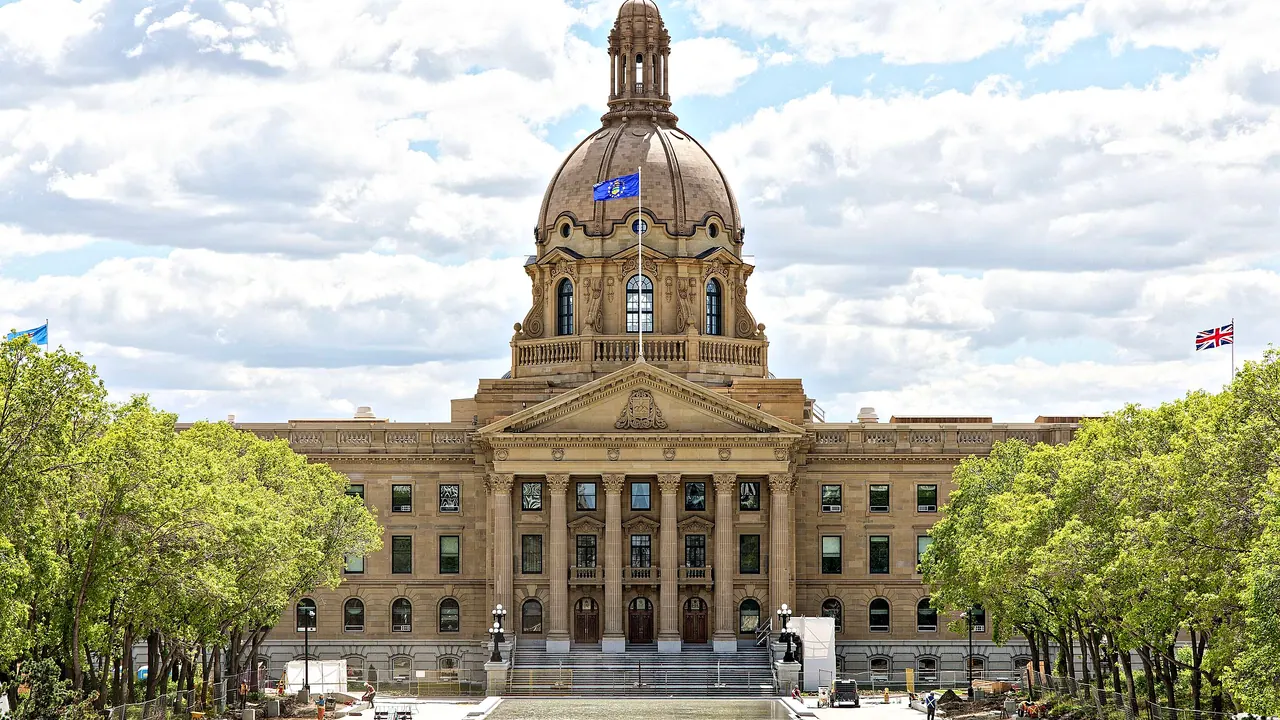
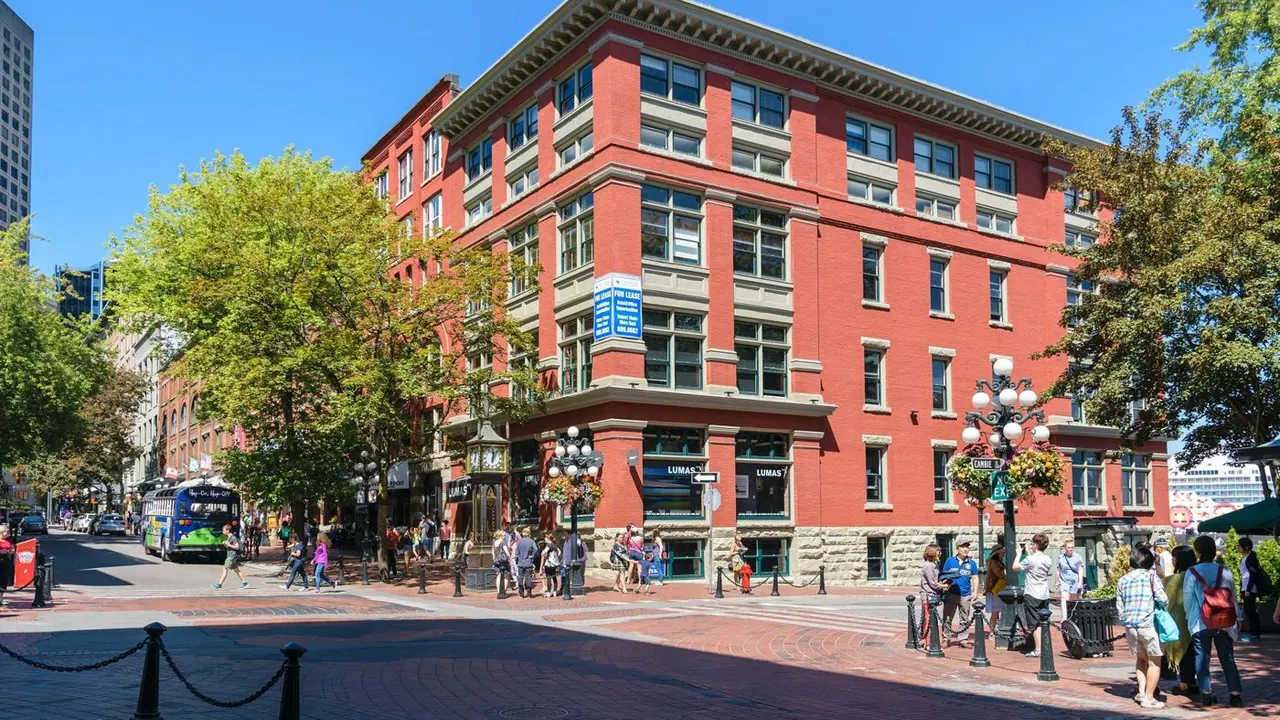
Photos: Edmonton by D. Benjamin Miller, CC0; Vancouver by Xicotencatl, CC BY-SA 4.0, cropped.
Edmonton or Vancouver?
Our verdict in twelve categories, each scored against the same fixed benchmark cities, and the climate month by month, so you can choose for your trip.
Choose Edmonton for
- prices
- live music and the arts
Edmonton suits a traveller who wants a reasonably priced summer city with a strong festival calendar, and who is happy to drive. Rooms and car hire are easier on the budget. August brings the Fringe to Old Strathcona, and the river valley gives miles of free trails through the middle of town. It also works for families who want West Edmonton Mall's indoor rides and pools as a fallback in any weather.
Choose Vancouver for
- nature and the outdoors
- getting around
- beaches
Vancouver is the stronger choice for most other trips, and the reason is its setting. Mountains, rainforest and sea are within easy reach of downtown. The city eats far better, especially if you like Asian cooking and Pacific seafood, and you can manage without a car. It costs noticeably more, but anyone who wants hiking, kayaking, skiing or simply long walks by the water will find far more of it here than on the prairie.
Scoreboard
Twelve categories on one fixed scale from 0 to 100. The shaded stretch is the gap between the two.
Your match
Pick a travel style or drag the sliders, and both match scores follow your weighting.
Wins on prices and live music and the arts with your weighting.
Wins on nature and the outdoors and getting around with your weighting.
What matters to you?
Category by category
What the scores mean for a trip.
Beaches & swimming
In Edmonton, swimming means a drive of about an hour to Pigeon Lake or Wabamun Lake. They are small prairie lakes with a short season, and algae can close them in late summer. Most visitors end up at the indoor wave pool or an outdoor pool in the city instead.
Vancouver has real beaches in the city itself. English Bay, Kitsilano, Spanish Banks and Wreck Beach face the mountains and make a summer evening out of picnics, volleyball and sunsets. The water stays cold, so think of these beaches as places to sit rather than to swim, or use the saltwater pool at Kitsilano.
Food & drink
Edmonton's food is hearty and regional: Alberta beef in the steakhouses and Ukrainian perogies and cabbage rolls from the prairie settlers. Some of the best immigrant cooking is out in strip malls rather than around Whyte Avenue or 124 Street.
Vancouver is a city where eating is one of the reasons to go. The Cantonese dim sum and seafood in the city and in Richmond is very good, and sushi, ramen and Korean barbecue are everywhere. Spot prawns, salmon, oysters and Dungeness crab give the local menus a coastal character that a prairie city cannot match.
Culture & sights
Neither city has a long list of sights, and two days or so covers either one. What differs is the story they tell. Edmonton is about the province and its settlers. The Royal Alberta Museum, the domed Legislature above the river and the living-history village at Fort Edmonton Park trace the fur trade and the settlement of the prairie.
Vancouver's culture centres on the Northwest Coast. The totem poles and carved canoes in the Museum of Anthropology are the best sight in either city. Gastown's Victorian warehouses and the classical Chinese garden in Chinatown add a little period atmosphere.
Nightlife
Going out is about the same in both cities: busy at weekends, quiet midweek and not a reason to visit. Edmonton's nights centre on the student pubs and dive bars of Whyte Avenue and on the crowds around the downtown arena before and after hockey games. Winter keeps most of it indoors.
Vancouver offers more polished drinking: cocktail and wine bars in Gastown's brick buildings, brewery taprooms east of downtown and summer patios in Yaletown. The Granville Street clubs are where it gets loud, and Davie Village gives it a gay nightlife that Edmonton has no real equivalent of.
Nature & outdoors
Edmonton's best outdoor asset is the North Saskatchewan River Valley, a long, wooded corridor of trails through the city where you can see deer and beavers, and ski cross-country in winter. Elk Island's bison herds and the dark skies of the Beaver Hills, good for seeing the northern lights, make a fine outing. Beyond them the land is flat farmland, and the mountains are a multi-day trip away.
Vancouver is one of the best-placed cities on the continent for the outdoors. You can be skiing or hiking in Grouse, Cypress or Seymour within half an hour of downtown. Stanley Park's cedar forest and seawall are in the city, and the Sea-to-Sky Highway leads to Squamish's climbing walls and Whistler. Kayaking, whale watching and autumn salmon runs add the sea.
Day trips
From Edmonton the options are thin. The Ukrainian Cultural Heritage Village, with its onion-domed churches, and the vintage machines at the Reynolds-Alberta Museum fill a day each. Jasper, Banff and the dinosaur country at Drumheller are too far for a day and need at least one night away.
Vancouver has more within a day's reach, though most of it is scenery rather than towns. Victoria is the highlight, a long day out by ferry. Steveston, Fort Langley, Bowen Island and the drive to Whistler make easier outings.
Good for families
Both cities work well with children. Edmonton's big advantage is West Edmonton Mall, where a wave pool, roller coasters and an ice rink under one roof keep a family busy through a frozen winter. Fort Edmonton Park's steam train and costumed guides add history kids can enjoy, but most days out need a car.
Vancouver has more to fill a family week, and much of it is close together. Stanley Park has the aquarium, a miniature train and the flat seawall for scooters. Science World is on False Creek, and the little ferries cross to Granville Island. The suspension bridges and the Grouse gondola add a sense of adventure. It has no theme park, and the rain keeps families indoors more often outside summer.
Getting around
Edmonton is built around the car. The LRT links downtown, the university and the south, and Downtown and Old Strathcona are pleasant to walk, but the mall and Fort Edmonton Park are slow to reach by bus. The pedways help most on the coldest days.
Vancouver is much easier without a car. The SkyTrain runs from the airport into a compact core where the West End, Gastown and Yaletown are a short walk apart, and the SeaBus crosses to the North Shore. The seawall makes cycling a practical way to get around. Buses are slower out to Kitsilano and the university.
Shopping & style
Edmonton's shopping is dominated by West Edmonton Mall, which is huge but mostly chain stores. Whyte Avenue's vintage and record shops and the boutiques on 124 Street offer something more personal.
Vancouver has more variety. Robson Street and the luxury houses on Alberni Street cover the big names. The city's own outdoor and athleisure brands, the artists' studios on Granville Island and the Asian malls in Richmond add range. Indigenous art is worth looking for in both cities, but Vancouver's Northwest Coast prints and carvings are the most distinctive souvenir.
Affordability
Edmonton is clearly the cheaper stay. Hotel rooms, even downtown, are moderately priced except during festival weeks and big games, and car hire and parking cost less than on the coast. Bar drinks and restaurant bills with tax and tip are no bargain in either city.
Vancouver is expensive, above all for a central hotel in summer, and the paid North Shore attractions add up for a family. Cheap dim sum and noodles, free beaches and the seawall, and a visit outside summer bring the cost down.
Live music & performing arts
The two cities are close on stage life, and both are busiest in summer. Edmonton has the bigger festival: its Fringe takes over Old Strathcona every August and is the largest in North America. The folk festival on the Gallagher Park hillside also draws large crowds. The rest of the year, the Citadel Theatre and the Winspear Centre keep a steady programme.
Vancouver's draw is its settings. You can see Shakespeare in tents at Bard on the Beach with the mountains behind, hear the symphony in the gilded 1927 Orpheum, or catch a folk festival on Jericho Beach. Its own Fringe on Granville Island is a smaller affair than Edmonton's.
Wellness & relaxation
Edmonton's relaxation is mostly a winter thing. A handful of Nordic-style spas, mostly reached by car, offer hot pools under snow and cold plunges in freezing air. Otherwise the city has leisure centres, hotel spas and quiet walks in the river valley or among the Muttart Conservatory's plants.
Vancouver is easier to unwind in day to day. It has a long tradition of yoga studios, the seawall and forest trails are close at hand, and massage and reflexology are easy to find in Chinatown and Richmond. Neither city has a bathing tradition of its own, and Vancouver's big outdoor spas are up near Whistler.
When should you go?
Pick your month. The climate figures are measured averages, not a forecast.
Edmonton in July
Vancouver in July
Daytime high, °C
Rainfall in the month, mm
Temperature and rainfall are climate normals, averaged over the years shown. Edmonton: 1991-2020 normals, University Of Alberta Metabolic Centre (2.5 km from centre). Vancouver: 1991-2020 normals, Vancouver Harbour CS (4.4 km from centre).
The two cities have opposite weather problems. Edmonton has a hard continental winter, with daytime highs around -5°C in December and January and snow on the ground for months, so walking the streets is only comfortable from May to September. Summer is warm and bright, peaking at 25°C in July, though July is also the wettest month, at about 104mm, mostly from short thunderstorms. Spring and autumn are short, and the long, dry winter suits only visitors who come for the cold.
Vancouver almost never freezes, but from October to March it is grey and wet, with about 245mm of rain in November and very little sun. It is at its best from late May to September, when the rain eases, the days are long and sunny and the afternoons are warm enough for the beaches. Even then the sea peaks at only about 16°C, so swimming means a quick, cold dip. July and August suit both cities. Outside those months, Edmonton's winter is the bigger obstacle for sightseeing, and Vancouver's is the wetter one.
Which traveller are you?
For an outdoors trip, choose Vancouver. Ski runs, forest trails and rainforest canyons on the North Shore are under half an hour from downtown, and Whistler is two hours away. Edmonton offers its river valley trails and the bison at Elk Island.
For a trip on a tight budget, Edmonton is the better choice. Hotel rooms are moderately priced and car hire is cheaper, and the river valley and many summer festivals are free. In Vancouver, cheap noodles and free beaches help, but the hotels remain expensive.
For a short city break, choose Vancouver. The SkyTrain runs from the airport to a compact, walkable downtown, and the seawall, Gastown and Granville Island are all within walking distance. In Edmonton the main sights are spread out, so a car is often needed.
Before you go
| Measure | Edmonton | Vancouver |
|---|---|---|
| Official language | French, English | French, English |
| Currency | Canadian Dollar (CAD) | Canadian Dollar (CAD) |
| Sockets | AB120 V, 60 Hz | AB120 V, 60 Hz |
| Driving side | Right | Right |
| Time zone | UTC-7, UTC-6 in summer | UTC-8, UTC-7 in summer |
| Emergency number | 911 | 911 |
| Elevation | 645 m | 2 m |
| Main airport | Edmonton International Airport (YEG)25 km from centre52 non-stop destinations | Vancouver International Airport (YVR)9 km from centre109 non-stop destinations |
| Public holidays this year | 13 days | 11 days |
By the numbers
| Measure | Edmonton | Vancouver |
|---|---|---|
| City population | 1,010,899 | 662,248 |
| People per km² | 1,316 | 5,759 |
| Museums within 10 km | 13 | 26 |
| UNESCO World Heritage sites within 50 km | 0 | 0 |
| Swim season, months above 21 °C | - | None |
Where else could you go?
Every comparison below shares a destination with this one, so you can follow Edmonton or Vancouver somewhere new.