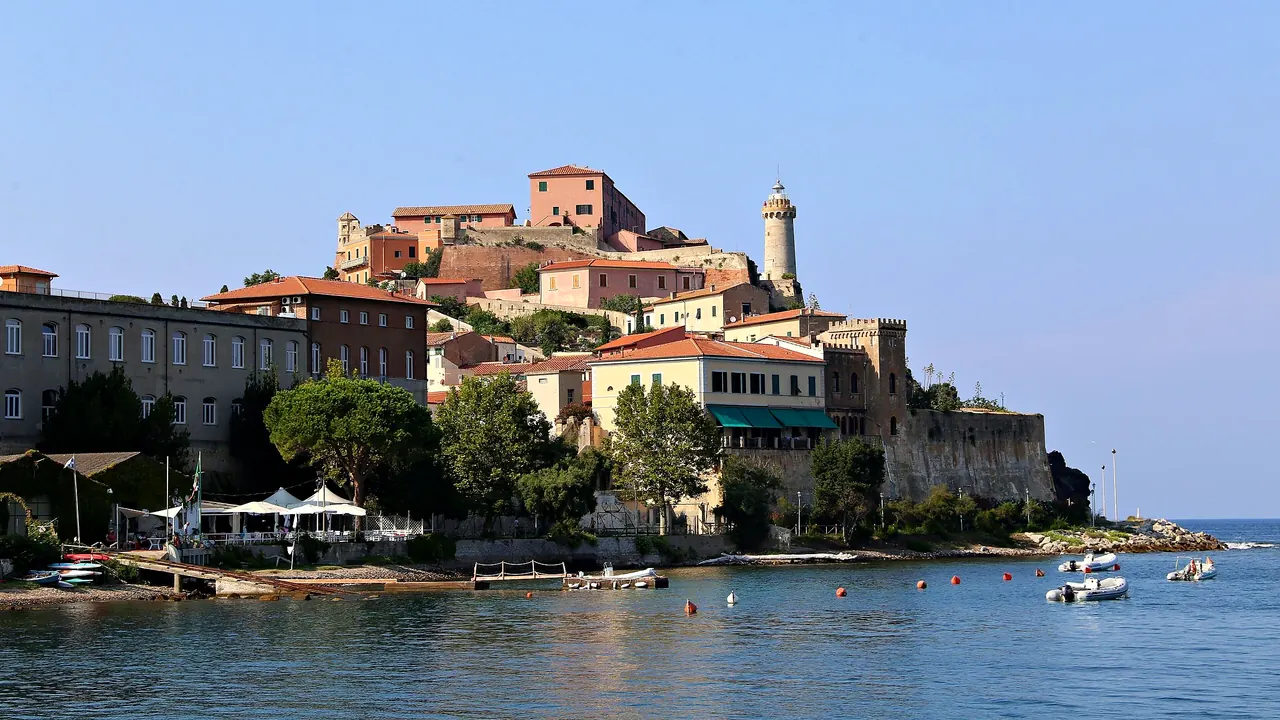
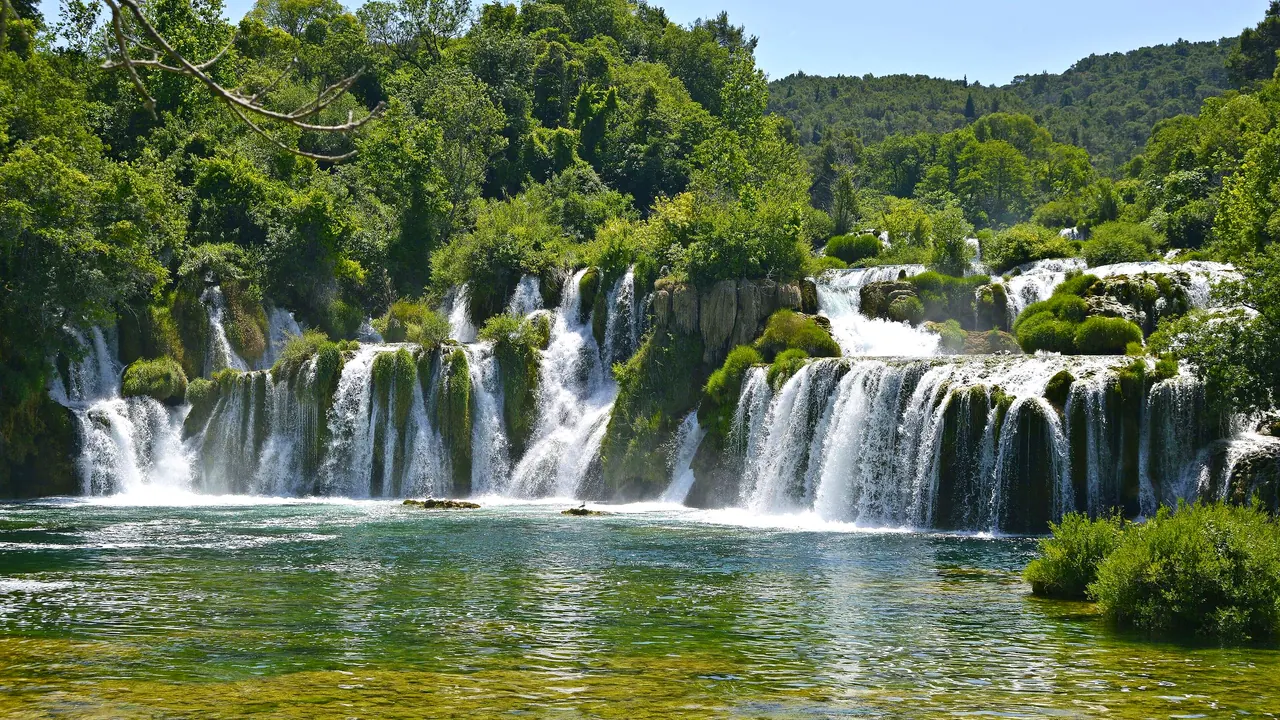
Photos: Elba by Sailko, CC BY 3.0, cropped; Krka by Alberto-g-rovi, CC BY 4.0, cropped.
Elba or Krka?
Our verdict in twelve categories, each scored against the same fixed benchmark cities, and the climate month by month, so you can choose for your trip.
Choose Elba for
- beaches
- wellness
- families
Elba is the pick for a sea vacation on one island. Its south-west bays at Fetovaia and Cavoli have pale sand and turquoise shallows, Marina di Campo and Lacona give families long, gently shelving beaches, and Monte Capanne and the ridge trails are there when you want a day off the sand. It also gives you a little more in the evening and a spa tradition at San Giovanni. The cost is that you stay put: the ferry makes the mainland a real outing, and the summer bill is high.
Choose Krka for
- day trips
- culture and sights
- prices
Krka works better as a base for touring than as a beach stay. You come for the travertine falls and the canyon, then use the location: Šibenik's UNESCO cathedral at the river mouth, Trogir and Zadar about an hour away, and boats to Zlarin, Prvić and the Kornati. The sea is an afternoon's pleasure rather than the point, nights are quiet, and rooms and meals tend to cost less than on Elba in the same season.
Scoreboard
Twelve categories on one fixed scale from 0 to 100. The shaded stretch is the gap between the two.
Your match
Pick a travel style or drag the sliders, and both match scores follow your weighting.
Too close to call, level with your weighting
Wins on beaches and wellness with your weighting.
Wins on day trips and culture and sights with your weighting.
What matters to you?
Category by category
What the scores mean for a trip.
Beaches & swimming
Elba is a proper beach destination and Krka is not. Elba has a choice of bays: the clear water of Fetovaia and Seccheto, the long sandy front at Marina di Campo, and the limestone-backed pebble coves of Sansone and Capo Bianco. Even in August you can find a quiet cove at the end of a path.
At Krka the falls are for looking at, since swimming below Skradinski Buk is banned. For the sea you go down to the pebble coves at Banj and Solaris near Šibenik, to the bays around Primošten, or across to the rocky shores of Zlarin and Prvić. The swimming there is pleasant, but it is a trip within the trip.
Food & drink
The two are broadly level for food, and both serve simple local cooking rather than a scene to travel for. Elba's dishes are Tuscan island food, such as cacciucco, stuffed squid and wine-soaked schiaccia briaca, with Ansonica and Aleatico from its own vineyards. The best trattorias are in the hill villages of Capoliveri and Marciana.
Krka cooks Dalmatian food: meat slow-cooked under the iron bell, Skradin's long-cooked veal risotto, and mussels and oysters from the estuary, with dark Babić wine to drink. Its best tables are in Šibenik's old town. Away from those, both come down to a handful of family places.
Culture & sights
Krka has the richer heritage, and it is spread along the river. You can visit the Franciscan monastery on its lake islet at Visovac, the Orthodox monastery with catacombs beneath it, the Roman arches of Burnum and the old water mills. At the estuary, Šibenik's Cathedral of St James and the sea fortress of St Nicholas are both on UNESCO's list.
Elba's history centres on Napoleon's exile, with the Palazzina dei Mulini and the villa at San Martino. Add the Medici bastions of Portoferraio, the star fort at Porto Azzurro and the iron-mining museums, and you have good breaks between beach days rather than a reason to come.
Nightlife
Neither is a place to go out. Elba has slightly more going on: in July and August the piazza at Capoliveri and the harbours of Porto Azzurro and Marina di Campo stay busy past midnight, and a few open-air discos run on summer weekends. Krka's evenings are a long dinner and a drink by the yachts in Skradin, plus a few bars in Šibenik's lanes, with no clubs at all.
Nature & outdoors
Both are strong for the outdoors, but in different ways. Elba is mountain and coast. Monte Capanne rises to about 1,000m, and you can ride the open lift up from Marciana and look out to Corsica. The Grande Traversata Elbana crosses the island's ridges, the east has rough mountain-bike tracks, and there is diving and snorkelling among the granite reefs.
Krka is a river landscape. It offers boardwalks through the spray at Skradinski Buk, the many small cascades of Roški Slap, park boats through the gorge, and birdlife in the estuary reeds. The walking is gentler and there are no mountains, but boats from the coast reach the bare islands of the Kornati.
Day trips
Day trips are where the two differ most, and Krka has far more within reach. From Elba, the mainland means the hour's ferry from Portoferraio to Piombino. After that, the Etruscan tombs of Populonia above the bay of Baratti, the walled hill towns of Campiglia Marittima and Suvereto, and the Bolgheri wine estates are a short drive. Excursion boats leave from the island itself for flat Pianosa, with its Roman remains, and volcanic Capraia. Even so, most visitors make only one or two outings.
From the Krka there is no water to cross. Trogir, on its own islet, is about an hour south by road, with Split and Diocletian's Palace a little beyond. Zadar's Roman forum is about an hour north, and Primošten is closer still. Small ferries from Šibenik reach car-free Zlarin and Prvić, and inland the fortress above Knin looks out over the upper river.
Good for families
Elba suits families better because the beach does most of the work. The gently shelving sand at Lacona, Biodola and Procchio is safe for paddling, and the campsites there are set up for children. The Monte Capanne lift and the small aquarium at Marina di Campo fill the odd half-day.
At Krka the highlight is a day out. Children love the boardwalks over rushing water and the boat ride to Visovac, but the paths are not built for buggies everywhere. Families usually sleep at resort hotels near Šibenik and drive in.
Getting around
You need a car in both places, but Krka is a little easier. It has good roads, the motorway passes close to the Lozovac entrance, and inside the park buses and boats link the falls, Visovac and Roški Slap. Without a car, though, you will need a tour to reach the upper river.
Elba is only about 27km long, but its roads are narrow and twist over the hills, and the buses are too sparse to rely on. You also have the ferry to book in high season, and August brings queues into Portoferraio and full car parks by the beaches.
Shopping & style
Elba gives you more to browse, though only as part of an evening walk. The lanes of Capoliveri and Porto Azzurro and the old streets of Portoferraio have small shops selling linen, beachwear and jewellery, and the resorts hold summer evening markets. The island's mining past also means crystals and minerals to take home, alongside Aleatico wine and honey.
Around Krka, most of what you buy comes from stalls and small producers: olive oil, dried figs, honey and lavender in Skradin and at the park gates. Šibenik's old town adds a few craft and jewellery shops, and the coral work of Zlarin is the one craft worth seeking out. Fashion and design shopping are missing from both.
Affordability
Krka is the cheaper of the two. Rooms and meals cost about the middle of Western Europe, inland apartments near Lozovac undercut the waterfronts, and the park ticket is the one big cost. Elba in summer adds up through the car ferry, car hire, parking and sunbeds near the best bays. Its campsites, inland trattorias and the quieter months of June and September soften the bill.
Live music & performing arts
Neither has much to offer here, but Krka has a slight edge because of Šibenik. The town has fortress concerts, a long-running children's festival, a small nineteenth-century theatre, and klapa singing on summer evenings. Elba's offer is summer concerts in squares and in Portoferraio's forts, plus a classical chamber festival late in the season.
Wellness & relaxation
Elba has the one real spa tradition of the two: the thermal baths at San Giovanni, which use mud and seawater from the old salt pans. Larger resort hotels around Biodola and Procchio add spas, and Marciana or a vineyard farmhouse is restful outside August.
Krka has no bathing tradition at all, and its spas are a few coastal hotels near Šibenik. What it offers instead is quiet: Skradin's harbour at dusk and the river early in the morning, before the coaches arrive.
When should you go?
Pick your month. The climate figures are measured averages, not a forecast.
Elba in July
Krka in July
Daytime high, °C
Rainfall in the month, mm
Where the figures come from
Elba's temperatures are measured 62 km from the centre, at Grosseto.
Elba has no rain gauge within 25 km of the centre, so its rainfall comes from a gridded climate dataset read at the destination rather than from a gauge further away.
Krka's temperatures are measured 53 km from the centre, at Split / Marjan.
Krka has no rain gauge within 25 km of the centre, so its rainfall comes from a gridded climate dataset read at the destination rather than from a gauge further away.
Krka's sunshine is measured 53 km from the centre, at Split / Marjan.
Temperature and rainfall are climate normals, averaged over the years shown. Elba: 1991-2020 (sunshine 1961-1990) normals, Grosseto (61.7 km from centre). Krka: 1991-2020 (sunshine 1971-2000) normals, Split / Marjan (52.9 km from centre).
The two have very similar summers. Both are hot from June to August, with afternoons around 32°C on Elba, and that is too hot for walking open slopes or boardwalks at midday. On both the sea is good for swimming from June to September. Elba's water reaches about 25°C in August and Krka's coast about 24°C. Elba has the drier summer, with only about 10mm of rain in July. The Krka coast is a little sunnier in every month but wetter all year round.
The rain comes back in September on both. From October it is clearly autumn weather, and on the Krka coast November is the wettest month, at about 106mm. For walking and cycling, May and late September or October are best in both places. Spring has the extra pull at Krka of the falls in full flow, while on Elba it means cool, green hillsides before the summer dries them out.
Which traveller are you?
For a beach and sun trip, Elba is the clear choice. Its 150km coast offers granite bays with pale sand in the south-west and white pebble coves near Portoferraio. At Krka, swimming in the falls is banned and the sea means driving down to Šibenik.
On a culture and arts trip, Krka gives more. There is the island monastery at Visovac, the Roman camp at Burnum and Šibenik's UNESCO cathedral and fortress, and Trogir and Split are within a day's reach. Elba has Napoleon's two houses and its forts, but those fill half-days at most.
On a trip on a tight budget, Krka goes easier on the wallet. Private apartments in the villages around Lozovac and generous konoba meals keep costs down. Elba in summer means paying for the car ferry, sunbeds and rooms by the beach, though its campsites help.
Before you go
| Measure | Elba | Krka |
|---|---|---|
| Official language | Italian | Croatian |
| Currency | Euro (EUR) | Euro (EUR) |
| Sockets | CFL230 V, 50 Hz | CF230 V, 50 Hz |
| Driving side | Right | Right |
| Time zone | UTC+1, UTC+2 in summer | UTC+1, UTC+2 in summer |
| Emergency number | 112 | 112 |
| Main airport | Pisa International Airport (PSA)82 non-stop destinations | Split Saint Jerome Airport (SPU)69 non-stop destinations |
| Public holidays this year | 13 days | 14 days |
By the numbers
| Measure | Elba | Krka |
|---|---|---|
| Population | 32,000 | - |
| People per km² | 143 | - |
| Swim season, months above 21 °C | 4 months | 4 months |
Where else could you go?
Every comparison below shares a destination with this one, so you can follow Elba or Krka somewhere new.