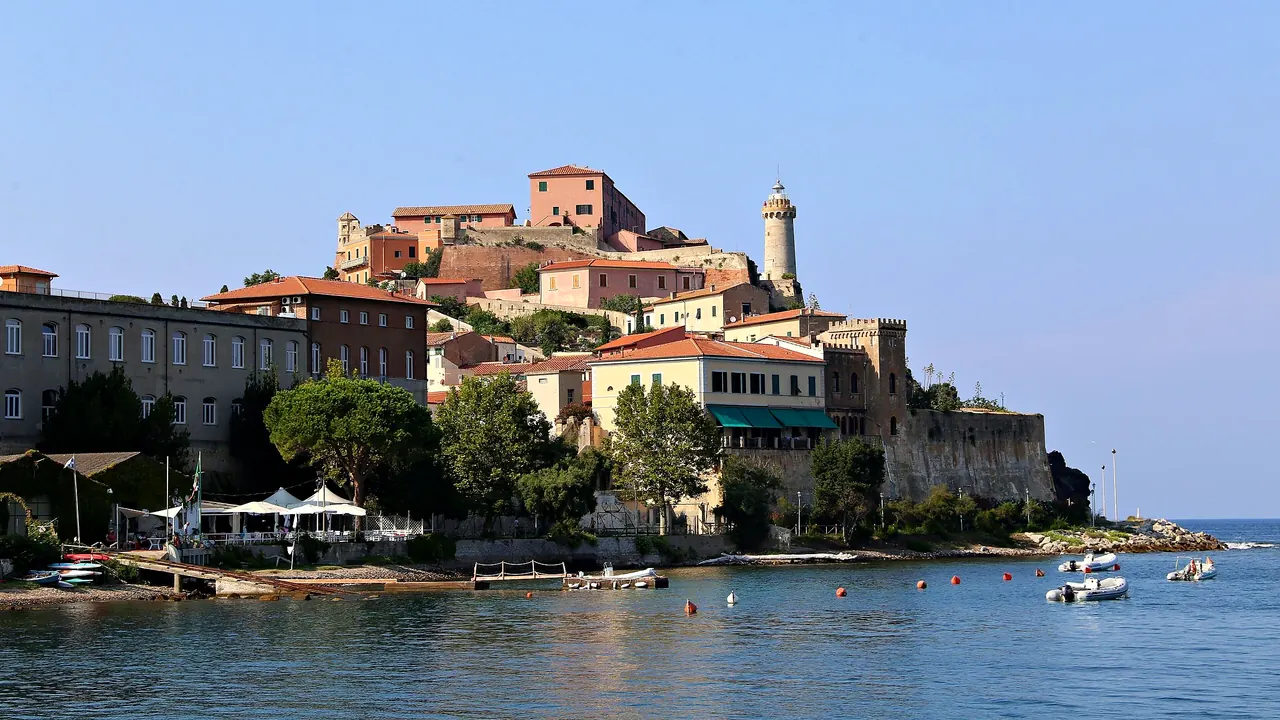
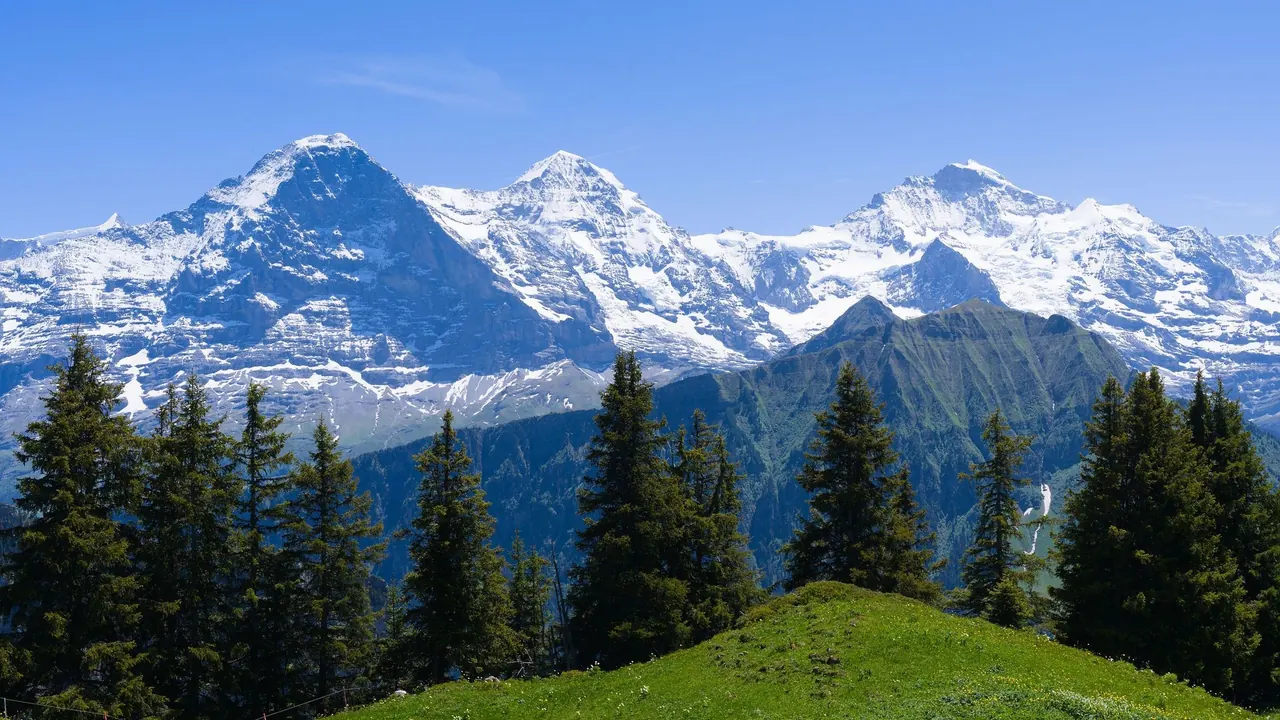
Photos: Elba by Sailko, CC BY 3.0, cropped; Swiss Alps by Jean-Paul Wettstein, Pexels License.
Elba or Swiss Alps?
Our verdict in twelve categories, each scored against the same fixed benchmark cities, and the climate month by month, so you can choose for your trip.
Choose Elba for
- beaches
- prices
- food and drink
Elba is the choice for a summer sea vacation. Its south-west bays at Fetovaia and Cavoli have pale sand and clear water, the wide family beaches of Lacona and Biodola are close by, and evenings are spent in hill villages over Tuscan seafood and Ansonica. It is not cheap in August, but campsites, apartments and the quieter months of June and September keep it within reach of travellers for whom the Alps are out of the question.
Choose Swiss Alps for
- wellness
- getting around
- day trips
Travellers who want big mountain scenery should pick the Swiss Alps. Trains and cable cars take you from the Jungfrau to the Matterhorn and up to high trails without a car, thermal villages like Leukerbad and Vals make rest days easy, and winter adds some of the best skiing anywhere. The cost is the catch: this is among the most expensive places to travel, and the lakes are a pleasant swim, not a beach vacation.
Scoreboard
Twelve categories on one fixed scale from 0 to 100. The shaded stretch is the gap between the two.
Your match
Pick a travel style or drag the sliders, and both match scores follow your weighting.
Wins on beaches and prices with your weighting.
Wins on wellness and getting around with your weighting.
What matters to you?
Category by category
What the scores mean for a trip.
Beaches & swimming
This is Elba's strongest suit and the Alps' weakest. The island has sand and turquoise shallows at Fetovaia, Cavoli and Seccheto, gently shelving bays at Lacona and Biodola, and white pebble coves under the cliffs near Portoferraio, with sea warm enough to swim all summer.
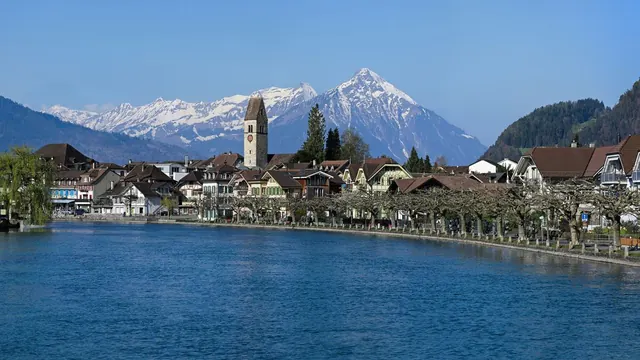
The Alps offer lake bathing, which is lovely but a different thing: clean, cool water at the lidos of Lake Thun and Lake Brienz, the striking Caumasee near Flims, and warmer swims on Lake Lugano and Lake Maggiore in Ticino. It fits a hot afternoon between hikes, but you would not plan a trip around it.
Food & drink
The two are much on a par, and both have a narrow range. Elba's cooking comes from the sea: cacciucco, stuffed squid, local sea bream and Ansonica white, eaten at its best in the trattorias of Capoliveri and Marciana, with schiaccia briaca and Aleatico Passito to finish.
The Alps eat cheese and cured meat on hut terraces, fondue, raclette in Valais, rösti and Graubünden air-dried beef, with rare Valais wines like Petite Arvine and Cornalin. Where they pull ahead is at the top end, with ambitious and very expensive restaurants in Zermatt, St Moritz and Gstaad, something Elba lacks.
Culture & sights
Neither is a culture destination, and they offer about the same amount in different forms. Elba's history is concentrated and easy to follow: Napoleon's exile at the Palazzina dei Mulini and San Martino, the bastioned Medici port of Portoferraio, the Spanish fortress at Porto Azzurro and the island's Etruscan mining past.
The Alps' heritage is spread across valleys and woven into the landscape: sgraffito houses in Guarda, the World Heritage Albula and Bernina railway lines, the Carolingian frescoes of Müstair, the castles of Sion and Bellinzona, and the open-air museum at Ballenberg. Expect half-days on Elba, and sights you pass on the way between walks in the Alps.
Nightlife
The Alps give you more of a night out, but only in winter and in a few resorts. Verbier's slope-side terraces and late clubs, Zermatt's bars at the foot of the pistes and the glossy hotel bars of St Moritz make après-ski a real scene, though summer hiking bases are asleep by eleven.
Elba works the other way round, lively in summer and quiet the rest of the year. July and August evenings mean aperitivo and gelato in the piazza at Capoliveri or along the harbours of Porto Azzurro and Marina di Campo, with a few open-air discos near Procchio at weekends. It is a place for strolling, not clubbing.
Nature & outdoors
Elba is mountainous for a Mediterranean island, and that is its outdoor appeal: Monte Capanne at about 1,000m with views to Corsica, the Grande Traversata Elbana along the ridges, rough bike tracks around Capoliveri, and clear water for diving and kayaking. Its other half is underwater.
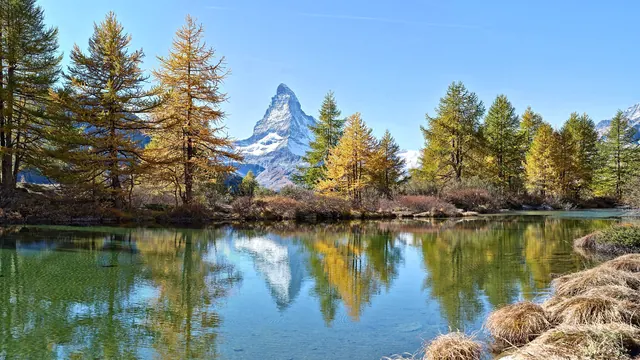
The Swiss Alps are on another scale altogether. The Jungfrau massif above Lauterbrunnen, the Matterhorn, the Aletsch glacier and ibex in the Swiss National Park are reached by lifts that put high trails within a morning, and winter brings some of the finest ski areas in the world. For walkers and climbers there is no contest.
Day trips
From Elba, every outing starts with an hour's ferry to Piombino. That opens up the Etruscan tombs at Populonia, Campiglia Marittima, Suvereto and the Bolgheri wine country, plus boat trips to Pianosa and Capraia, but Pisa and Siena are too far, so most people do only one or two.
The Alps make day trips far simpler. From the Bernese Oberland, trains reach Bern's arcaded old town in under an hour and Lucerne on the Brünig line, while Gruyères, the Lavaux terraces and Chillon lie to the west and Lugano and Bellinzona to the south. The network makes it easy to fill several days.
Good for families
Both suit children well, with the Alps a little ahead for variety. Elba's strength is the classic beach week: shallow sandy bays at Marina di Campo, Lacona and Procchio, family campsites, and restaurants happy with children late in the evening. Beyond the small aquarium and the open lift up Monte Capanne there is little else, and the winding roads can be hard on car-sick children.
In the Alps, the journey itself entertains: cogwheel trains, cable cars and lake steamers, then summer toboggan runs, adventure playgrounds and ski schools with gentle slopes in winter. Car-free Wengen and Zermatt let children roam safely, though altitude and changeable weather need watching with toddlers.
Getting around
Elba is small but slow to cross. Buses are too sparse to rely on, so most visitors need a car or scooter on narrow hill roads, and in August that means queues into Portoferraio and full car parks at the beaches. Getting there means a ferry booked ahead, or one of the few flights.
The Alps are among the easiest mountains anywhere to manage without a car. Trains, postbuses, steamers and lifts connect on one timetable, and car-free resorts like Mürren and Saas-Fee are compact on foot. The drawback is distance between regions, so moving from the Oberland to the Engadine takes a long day. Pick a base or two.
Shopping & style
Neither is a reason to go, though the Alps have more to browse. St Moritz and Gstaad have short streets of luxury fashion and jewellery, and Zermatt and Interlaken sell watches and serious mountain gear, alongside cheese from the dairy, Brienz woodcarving and cowbells.
Elba's shopping is an evening walk through Capoliveri, Porto Azzurro and old Portoferraio, past linen, beachwear and summer markets. What's worth bringing home is local: Aleatico wine, honey, schiaccia briaca, and minerals from the old mines.
Affordability
Elba is far cheaper. August is costly once you add the car ferry, hire car, parking and sunbeds, but campsites and apartments are everywhere, inland trattorias are fair, and June or September bring the same sea for noticeably less.
The Swiss Alps are among the most expensive places in the world to travel. Hotels in Zermatt or Verbier, simple mountain lunches and especially the lifts and railways add up quickly. Travel passes, self-catering, Interlaken hostels and quieter valleys like Goms or the Ticino side soften the cost without making it cheap.
Live music & performing arts
Elba is not a place to plan around music. Apart from one long-standing classical festival of chamber concerts in late summer, live performance means the odd open-air evening in July and August, in a piazza, a church or one of Portoferraio's forts. For the rest of the year there is no stage to speak of.
The Alps have a much fuller summer programme, made up of several major festivals rather than a single small one. In July, Verbier turns a ski resort into a gathering of leading soloists and young orchestras, and Gstaad's Menuhin Festival brings orchestral and chamber music to the small churches of the surrounding valleys. Davos, Zermatt and the Engadine add smaller series of their own. Outside summer it comes down to brass bands and alphorns, and neither destination has opera or theatre, so for a play or an opera you would head down to a city.
Wellness & relaxation
The Alps are one of the best places anywhere to slow down. Leukerbad's open-air hot pools beneath the cliffs, the stone baths at Vals, the old springs of Bad Ragaz and Scuol in the Lower Engadine are joined by serious hotel spas and the calm of car-free villages.
Elba has one genuine tradition, the mud and seawater treatments at San Giovanni across the bay from Portoferraio, plus resort spas around Biodola and Procchio. Its restfulness depends on the season: a hill village or vineyard farmhouse in June or September is peaceful, while August is simply busy.
When should you go?
Pick your month. The climate figures are measured averages, not a forecast.
Elba in July
Swiss Alps in July
Daytime high, °C
Rainfall in the month, mm
Where the figures come from
Elba's temperatures are measured 62 km from the centre, at Grosseto.
Elba has no rain gauge within 25 km of the centre, so its rainfall comes from a gridded climate dataset read at the destination rather than from a gauge further away.
Swiss Alps has no rain gauge within 25 km of the centre, so its rainfall comes from a gridded climate dataset read at the destination rather than from a gauge further away.
Swiss Alps's sunshine is measured 66 km from the centre, at Sion.
Temperature and rainfall are climate normals, averaged over the years shown. Elba: 1991-2020 (sunshine 1961-1990) normals, Grosseto (61.7 km from centre). Swiss Alps: 2005-2020 (sunshine 1961-1990, rainfall 1991-2020) normals, Meiringen / Unterbach (19.5 km from centre).
Elba is a summer island. The sea is warm enough to swim from June, and late July and August are the warmest weeks, with water around 25°C and almost no rain. Days in August reach about 32°C, though, which is hot for walking the open slopes or the streets of Portoferraio. June and September give you the same swimming in gentler heat, and May and October suit hiking and cycling. From October the rain picks up and peaks at about 92mm in November, and winter days are mild but grey, with beach life over.
The Swiss Alps run on two seasons. In summer, from late June to September, highs in the valleys reach about 24°C, which is ideal walking weather. It is also the wettest part of the year, with around 127mm a month in June and July, mostly as afternoon showers, so starting high walks early pays off. Winter is cold and short of sun, the right conditions for skiing and hot pools under snow. Spring and late autumn fall between the two seasons, when the high passes may still be closed or already shut. In midsummer Elba is hot and dry while the Alps are mild and showery.
Which traveller are you?
On a beach and sun trip, Elba wins clearly. Turquoise granite bays in the south-west, long sand at Marina di Campo and a sea warm through summer are what it does best, while the Alps offer only cool lidos and lakes.
For an outdoors trip, the Swiss Alps are in a different league. Glaciers, the Eiger and Matterhorn, marked trails starting at cable-car stations, via ferratas and world-class skiing outweigh Elba's good but smaller ridge walks, mountain-bike tracks and snorkelling coves.
On a trip on a tight budget, Elba is much easier. Campsites, self-catering apartments, inland trattorias and the cheaper months of June and September go a long way, whereas the Alps stay costly even with picnics and hostels.
Before you go
| Measure | Elba | Swiss Alps |
|---|---|---|
| Official language | Italian | French, German, Italian, Romansh |
| Currency | Euro (EUR) | Swiss Franc (CHF) |
| Sockets | CFL230 V, 50 Hz | CJ230 V, 50 Hz |
| Driving side | Right | Right |
| Time zone | UTC+1, UTC+2 in summer | UTC+1, UTC+2 in summer |
| Emergency number | 112 | 112 |
| Main airport | Pisa International Airport (PSA)82 non-stop destinations | Zürich Airport (ZRH)226 non-stop destinations |
| Public holidays this year | 13 days | 10 days |
By the numbers
| Measure | Elba | Swiss Alps |
|---|---|---|
| Population | 32,000 | - |
| People per km² | 143 | - |
| Swim season, months above 21 °C | 4 months | - |
Where else could you go?
Every comparison below shares a destination with this one, so you can follow Elba or Swiss Alps somewhere new.
- Lake Maggiorevs Swiss Alps
- French Alpsvs Swiss Alps
- Tuscanyvs Elba
- Lake Comovs Swiss Alps
- Black Forestvs Swiss Alps
- Cinque Terrevs Elba