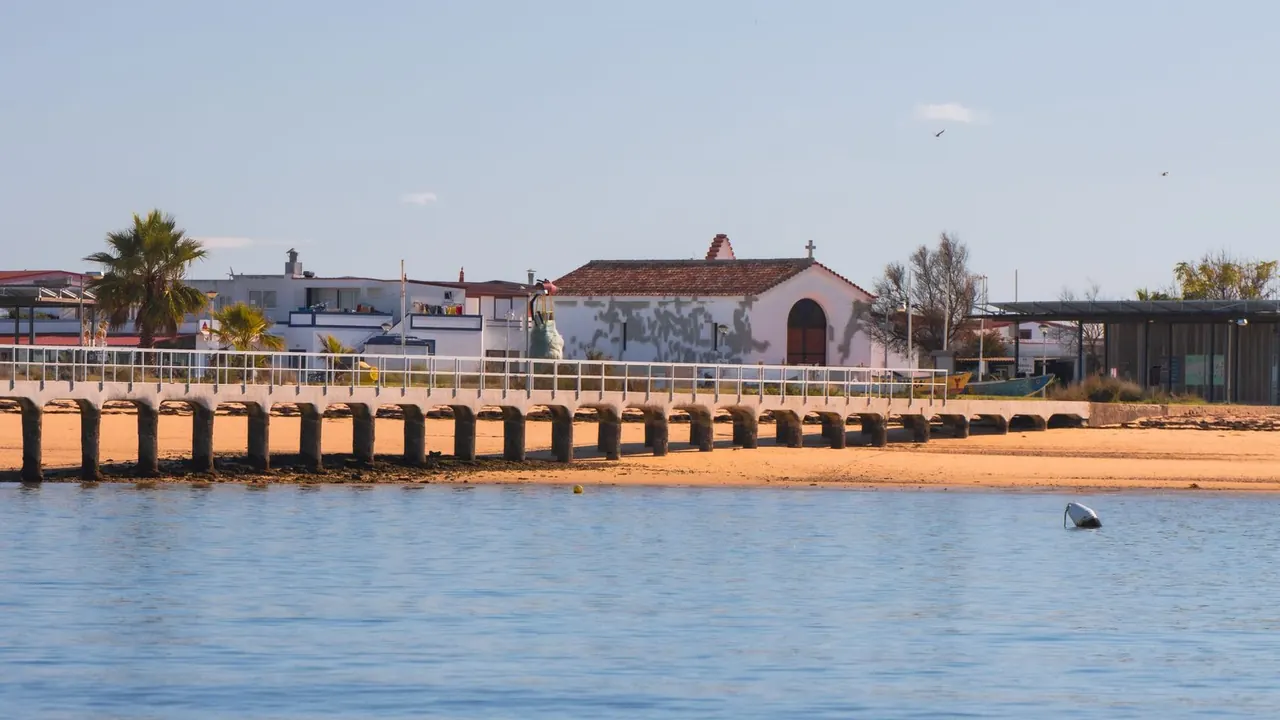
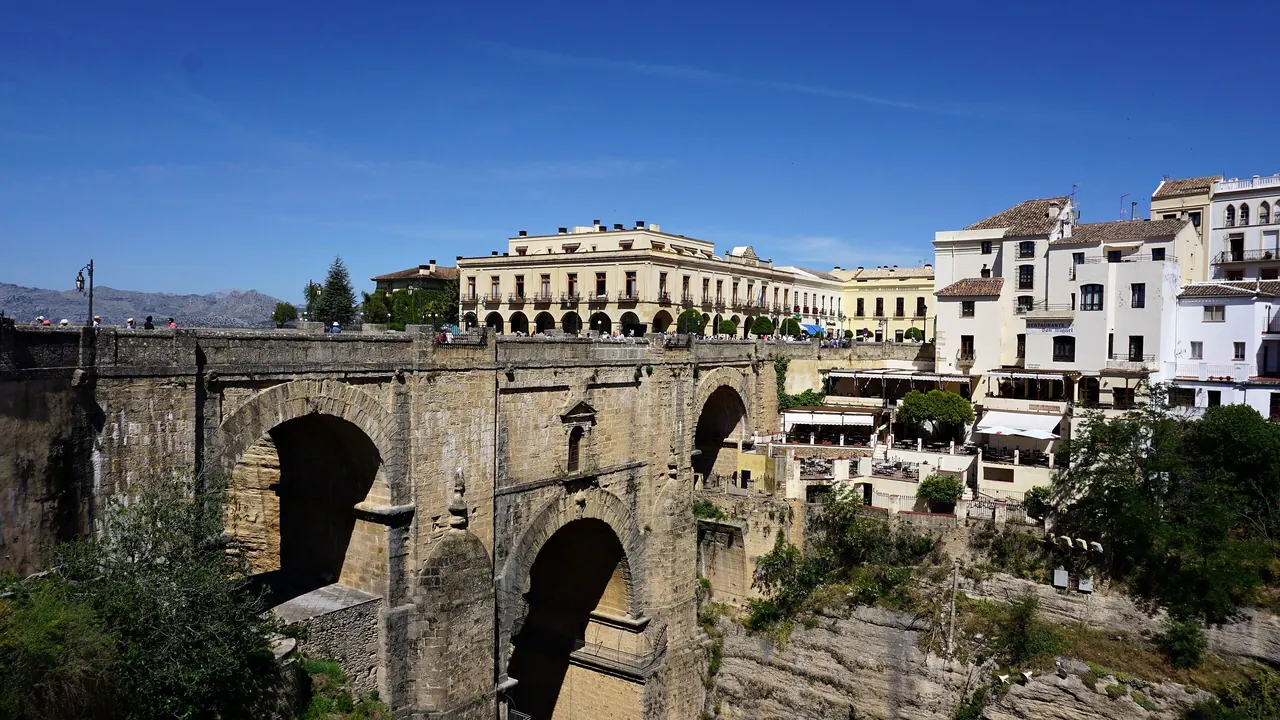
Photos: Faro by Vitor Oliveira, CC BY-SA 2.0, cropped; Ronda by Julia Kostecka, CC BY 2.0, cropped.
Faro or Ronda?
Our verdict in twelve categories, each scored against the same fixed benchmark cities, and the climate month by month, so you can choose for your trip.
Choose Faro for
- beaches
- families
- nightlife
Faro suits an easy sun vacation with the sea close at hand. The long sandy barrier islands of the Ria Formosa are a short bus or ferry ride away, the water is calm, and the flat, compact town works well with children. It also has more to do after dark and a better seafood table, though by Algarve standards it stays a quiet provincial town.
Choose Ronda for
- culture and sights
- nature and the outdoors
- day trips
Walkers and sightseers will get more from Ronda. The town sits on the edge of El Tajo gorge, and the Puente Nuevo, the old bullring and the Arab baths are a few minutes apart on foot. The limestone sierras around it give far better walking than the gentle country near Faro, and the white villages make the stronger day trips. Come for landscape and history, preferably with a car, and not for beach days or late nights.
Scoreboard
Twelve categories on one fixed scale from 0 to 100. The shaded stretch is the gap between the two.
Your match
Pick a travel style or drag the sliders, and both match scores follow your weighting.
Wins on beaches and families with your weighting.
Wins on culture and sights and nature and the outdoors with your weighting.
What matters to you?
Category by category
What the scores mean for a trip.
Beaches & swimming
This is where the two differ most. Faro is backed by the Ria Formosa lagoon, and its long sandy barrier islands are a twenty-minute bus ride or a summer ferry away. Praia de Faro, Ilha Deserta and Culatra offer calm water and dunes, and the coves near Albufeira and Tavira's island beach are also within reach.
Ronda is a mountain town, roughly 50km from the built-up sandy beaches around Estepona, down a road full of hairpin bends. In practice, a swim there means a hotel pool, and the sea takes up a whole day.
Food & drink
Faro eats better, mainly because of the lagoon. Clams, oysters and cockles from the Ria Formosa, grilled sardines and cataplana are served in simple grill houses around the old town and marina, and Olhão's fish markets are a short train ride away.
Ronda's cooking is heartier mountain food: oxtail stew, lamb and game, cured hams and autumn chestnuts and mushrooms, with Sierras de Málaga wine from nearby wineries. Its best meals are in the Mercadillo tapas bars rather than on the gorge-view terraces. Neither town offers much fine dining or international food.
Culture & sights
Ronda has more to see, and its setting is a sight in itself. The Puente Nuevo spans a gorge over 100m deep between the Moorish old town and the Mercadillo, and the Real Maestranza bullring, the Arab baths, the Mondragón palace and the rock-cut stairway at the Casa del Rey Moro all lie within walking distance.
Faro's heritage fits into a relaxed day: the walled Cidade Velha entered through the Arco da Vila, the cathedral tower over the lagoon, a Roman mosaic in the convent museum and the bone chapel of the Igreja do Carmo. It is pleasant, but it is not why people choose the town.
Nightlife
Neither is a party town, but Faro gives you more of an evening. Bar terraces on Rua do Prior and near the marina, along with a few small clubs, fill up on weekends and during university term, and Albufeira's big clubs are about forty minutes away.
In Ronda the night is a late tapas dinner around the Plaza del Socorro and perhaps one more drink. The town goes quiet in the early hours, except during the September fair.
Nature & outdoors
Ronda wins for anyone who wants real hiking. The crags and green slopes of the Sierra de Grazalema, the Spanish fir forests of the Sierra de las Nieves, climbing on the Tajo cliffs and the Caminito del Rey within an hour all give walkers far more to do than anything near Faro.
Faro's nature is flat and watery: kayaking and paddleboarding in the Ria Formosa channels, flamingos and spoonbills on the salt pans at Ludo, and easy cycling along the lagoon. The cork-oak hills of the Serra do Caldeirão add quiet walking, but the landscape stays gentle.
Day trips
Both are good bases, and Ronda has the more striking range. Setenil de las Bodegas, built under overhanging rock, is twenty minutes away, with Grazalema, Zahara de la Sierra and Arcos de la Frontera beyond. The Palaeolithic paintings in the Cueva de la Pileta, Antequera's dolmens and full days in Seville, Málaga or Gibraltar are also within reach, though almost all of it calls for a car.
Faro's outings are easier to manage without one. Tavira and Olhão are short train rides away, and Loulé, the Roman villa at Milreu, Silves castle and the cliffs of Lagos and Sagres round out a gentler Algarve circuit, with Seville as a long day across the border.
Good for families
Faro is much easier with children. The sandy lagoon beaches are gentle, the boat rides to the islands are an outing in themselves, there is a hands-on science centre by the water, and the old town is flat enough for pushchairs. The water parks and marine park near Albufeira are within reach by car.
Ronda appeals mostly to older children, who will enjoy the bridge, the walk down into the gorge and the nearby caves. Its steep cobbles, exposed viewpoints and lack of zoos or parks make it hard going with toddlers.
Getting around
In both towns you can walk to everything, but the walking is different. Faro's centre is flat, the airport is a short bus ride away, and ferries to the islands leave from below the old town walls. Ronda's lanes drop steeply into La Ciudad and towards the gorge, and parking in the old town is tight.
Further afield, both depend on a car. Faro's slow coastal railway at least links Tavira, Olhão and Lagos, while Ronda's few trains and buses get you there but are little use for the villages and natural parks.
Shopping & style
Faro offers a bit more. Rua de Santo António has Portuguese chains, cork goods and painted ceramics, there is a large shopping centre for mainstream brands, and Loulé's market is close by. Ronda has Carrera Espinel and the souvenir and leather shops near the bridge, and little else. In both, the best things to take home are edible: lagoon salt flower and fig sweets from Faro, and wine, cured meats and convent sweets from Ronda.
Affordability
Day-to-day costs are similar in both, and moderate. In Faro, fish lunches, coffee and buses are cheap, but rooms in July and August are priced for the beach crowds. In Ronda, tapas and set menus in the Mercadillo are good value, and the expensive times are the gorge-view hotels, Easter and the September fair. In either town, a hire car is the largest extra.
Live music & performing arts
Faro has more to offer, though neither town is a reason to travel for live performance. The ornate Teatro Lethes stages chamber music and plays, and the Teatro das Figuras brings in touring concerts, dance and the regional orchestra. Fado turns up only in occasional restaurant evenings.
Ronda's offer is mostly flamenco in small venues for visitors and a modest municipal theatre. Its one great spectacle is the Corrida Goyesca at the September fair.
Wellness & relaxation
Neither has a bathing culture, so relaxing in both comes down to pace and where you stay. Faro has resort spas along the golf coast to the west, sunset walks by the lagoon, quiet winters and the old spa at Caldas de Monchique over an hour away. Ronda's Arab baths are a monument rather than a place to bathe, and its best rest comes from the farmhouses and country hotels in the hills, with pools, olive groves and wide views.
When should you go?
Pick your month. The climate figures are measured averages, not a forecast.
Faro in July
Ronda in July
Daytime high, °C
Rainfall in the month, mm
Where the figures come from
Ronda has no weather station within reach, so its figures come from a gridded climate model rather than a measured record, and read a broad area rather than the city itself.
Temperature and rainfall are climate normals, averaged over the years shown. Faro: 1991-2020 normals, Faro / Aeroporto (2.8 km from centre). Ronda: 1991-2020 normals, TerraClimate 4 km grid at the town, no weather station within 90 km.
Faro has the gentler climate. Winters are mild and bright, summers are long, dry and very sunny with highs around 29°C, and the sea warms to about 22°C by August. That makes June to September the beach months, with swimming weather often lasting into October. The rain arrives from October and is heaviest in late autumn and early winter, though winter days stay pleasant enough for walking around the old town and the lagoon.
Ronda, high on its plateau, has bigger swings. July and August reach about 32°C, too hot for long afternoon walks, while winter highs drop to around 13°C and the wet months bring a lot more rain than Faro, up to about 120mm in December, with a wet March as well. Its best weeks are April, May and late September into October, when it is warm enough for the sierras without being too hot. The coast an hour south warms up much as Faro's sea does, but it is a full day out from Ronda.
Which traveller are you?
On a beach and sun trip, Faro is the obvious pick. Praia de Faro, Ilha Deserta and Culatra offer kilometres of sand with calm, warm water a short bus or ferry ride from town, while Ronda's nearest sea is a winding hour's drive away.
For a culture and arts trip, choose Ronda. The gorge, the Puente Nuevo, one of Spain's oldest bullrings, well-preserved Arab baths and the Moorish old town fill two rich days, whereas Faro's walled Cidade Velha and its cathedral take about one.
On a family trip with children, Faro is easier. Gentle lagoon beaches, island boat trips, a science centre and a flat, quiet centre suit small legs and pushchairs, while Ronda's steep cobbled lanes and exposed viewpoints suit older children far better.
Before you go
| Measure | Faro | Ronda |
|---|---|---|
| Official language | Portuguese | Spanish |
| Currency | Euro (EUR) | Euro (EUR) |
| Sockets | CF230 V, 50 Hz | CF230 V, 50 Hz |
| Driving side | Right | Right |
| Time zone | UTC, UTC+1 in summer | UTC+1, UTC+2 in summer |
| Emergency number | 112 | 112 |
| Elevation | 10 m | 724 m |
| Main airport | Faro - Gago Coutinho International Airport (FAO)3 km from centre91 non-stop destinations | Málaga-Costa del Sol Airport (AGP)60 km from centre166 non-stop destinations |
| Public holidays this year | 14 days | 12 days |
By the numbers
| Measure | Faro | Ronda |
|---|---|---|
| City population | 64,560 | 33,671 |
| People per km² | 319 | 87 |
| Museums within 10 km | 2 | 5 |
| UNESCO World Heritage sites within 50 km | 0 | 0 |
| Swim season, months above 21 °C | 3 months | 1 month |
Where else could you go?
Every comparison below shares a destination with this one, so you can follow Faro or Ronda somewhere new.