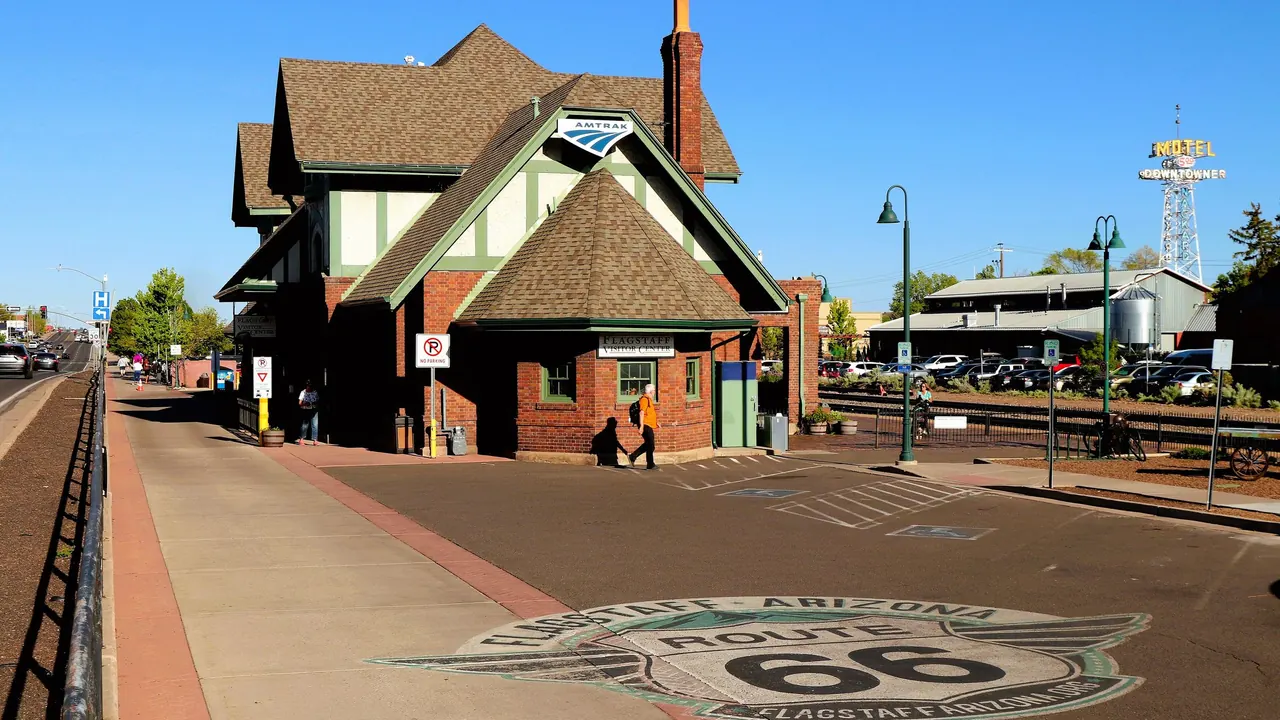
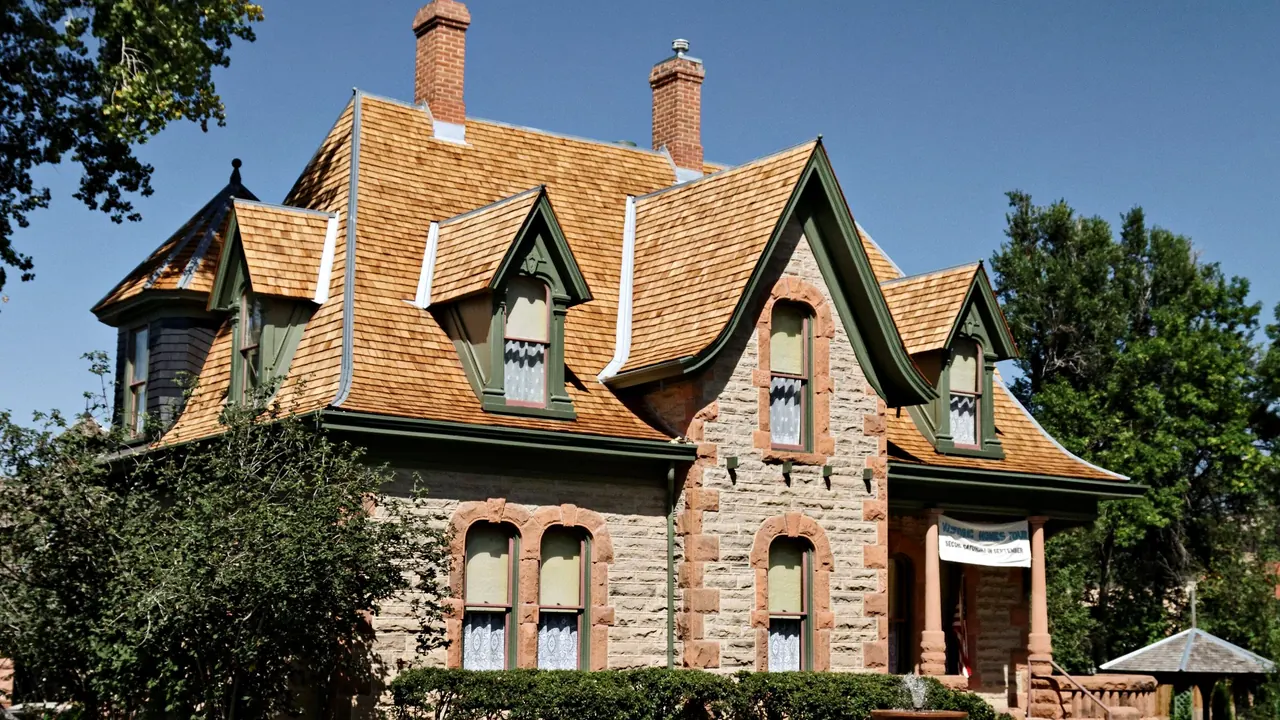
Photos: Flagstaff by Thank You (25 Millions) views, CC BY 2.0, cropped; Fort Collins by Gribeco, CC BY-SA 3.0, cropped.
Flagstaff or Fort Collins?
Our verdict in twelve categories, each scored against the same fixed benchmark cities, and the climate month by month, so you can choose for your trip.
Choose Flagstaff for
- culture and sights
- nature and the outdoors
- families
Flagstaff suits the traveller who wants big landscapes on the doorstep and is happy to drive to them. The Grand Canyon, Sedona's red rock, the San Francisco Peaks and ancient pueblo ruins all lie within easy range, and the town itself adds Lowell Observatory and a serious museum of Native American art. Evenings are quiet and the food is plain, but that matters little if you are up at dawn for a trail.
Choose Fort Collins for
- getting around
- food and drink
- nightlife
Fort Collins is the better pick for a relaxed few days in a friendly town where the beer and the bikes do most of the work. Old Town is flat and easy to cycle, the breweries are among the best known in the country, and the foothills and the Poudre Canyon start just west of the streets. Its scenery is gentler and its sights fewer, but its evenings are livelier, and Denver and Boulder are close by when you want a bigger city.
Scoreboard
Twelve categories on one fixed scale from 0 to 100. The shaded stretch is the gap between the two.
Your match
Pick a travel style or drag the sliders, and both match scores follow your weighting.
Too close to call, 1 point apart
Wins on culture and sights and nature and the outdoors with your weighting.
Wins on getting around and food and drink with your weighting.
What matters to you?
Category by category
What the scores mean for a trip.
Beaches & swimming
Neither town is anywhere near a coast, and both offer only summer swimming of very different kinds. In Flagstaff it means the cold, slippery creek pools of Oak Creek Canyon, such as Slide Rock, where you scramble over rocks among crowds of families.
In Fort Collins you swim in Horsetooth Reservoir, which has a proper swim beach, coves for paddleboarding and water that gets fairly warm in July and August. Fort Collins is the easier choice for a lazy afternoon by the water, and Oak Creek is the more scenic.
Food & drink
Both towns are mainly about beer, but Fort Collins does it on a bigger scale. It has large, long-established breweries that run tours, taprooms across the city with food trucks outside, a few farm-to-table kitchens in Old Town and summer farmers' markets selling Colorado produce.
Flagstaff's breweries cluster around downtown and the Southside, and the rest of its food is diners, Mexican cooking and barbecue. Navajo frybread and green chile give it some regional flavour that Fort Collins lacks. Neither town has much fine dining.
Culture & sights
Flagstaff's few sights carry real weight. Lowell Observatory, where Pluto was discovered, holds night viewings, and the Museum of Northern Arizona takes Native American art seriously. The Sinagua and pueblo ruins nearby add depth that Fort Collins cannot match.
The best sight in Fort Collins is Old Town itself, with its red-brick streets and tree-lined square. Add the Museum of Discovery, the Victorian Avery House and the university galleries, and you have a single pleasant day of wandering rather than a list of landmarks.
Nightlife
Fort Collins has more going on after dark. A large student population fills the pubs, sports bars and rooftop patios around the Old Town square at weekends, and there are even a few dance clubs.
Flagstaff's evenings are a short circuit of taprooms, cocktail bars and old Route 66 saloons, and most of them quieten well before late. Neither town is for serious clubbing, but in Fort Collins a night out lasts longer.
Nature & outdoors
Both are outdoor bases, but Flagstaff's setting is bigger and stranger. You get Humphreys Peak at 3,850m with a ski area on its slopes, a huge ponderosa pine forest, black lava fields at Sunset Crater, and the Grand Canyon and Sedona within reach. Its dark skies make stargazing part of the trip.
Fort Collins has the foothills of Horsetooth and Lory State Park right on its edge and the wild Cache la Poudre Canyon for rafting and fly fishing. Rocky Mountain National Park is an hour and a half away. Its winters bring snowshoeing and cross-country skiing rather than downhill runs.
Day trips
Flagstaff's outings take you back in time and into dramatic landscape: cliff dwellings and pueblos in the Verde Valley, the hillside mining town of Jerome, the Hopi mesas and the historic railway from Williams to the Grand Canyon rim. The places themselves are small and spread out, and the long drives are part of the day.
From Fort Collins the outings are mostly towns and cities. Boulder's Pearl Street and Denver's big museums give you a proper urban day, Cheyenne adds a frontier museum and its summer rodeo, and Estes Park leads into the Rockies. In both towns you will need a car for almost all of this.
Good for families
Flagstaff has more that children will remember. They can look through telescopes at the observatory, see dinosaurs at the museum, ride the steam-era train to the Grand Canyon and play in the snow on the mountain in winter. The altitude and the long drives between outings are the trade-off.
Fort Collins is the easier place to spend a day with children, with flat river paths, playgrounds everywhere, a children's farm at Lee Martinez Park and the dome theatre at the Museum of Discovery. For bigger attractions such as a zoo or amusement park, families have to drive to Denver.
Getting around
Fort Collins is much easier to get around without a car. Old Town is flat, a frequent rapid-bus line runs north to south, and with protected bike lanes and a bike-share scheme, cycling between the breweries, the campus and the parks is a pleasure.
You can walk Flagstaff's downtown and cycle its urban trails, but the motels are strung out along Route 66, and the mountain, the monuments and the canyon all need a car or a tour. Winter ice can make the mountain roads slow.
Shopping & style
Both towns are small places for shopping, but they sell different things. In Flagstaff the draw is Native American craft: Navajo rugs, Hopi kachina carvings and turquoise jewellery from downtown galleries and roadside trading posts. Buy from established dealers if you want to be sure the work is genuine.
Fort Collins has no craft tradition like that. Instead it offers relaxed browsing through Old Town's independent boutiques, vintage clothing, bike shops and Colorado-made gifts.
Affordability
The two cost about the same, which by American standards means mid-priced, and both are fairly expensive for visitors from abroad. In Flagstaff, room rates jump on summer weekends because the town is the main place to stay for the Grand Canyon, and national park entry fees add to the bill.
In Fort Collins, rates rise on university graduation and football weekends instead. Its foothills trails and river paths cost nothing to enjoy. In both towns, the hire car is the largest extra cost.
Live music & performing arts
Flagstaff's best stage is the restored Orpheum Theater downtown, which books folk and indie acts, and in summer there are concerts outdoors among the pines. Add the symphony and the university music school, and the town has enough for an evening, but not much more.
Fort Collins has a slightly fuller programme indoors. The Lincoln Center hosts touring Broadway shows, dance and the symphony, Colorado State's arts centre adds opera and theatre, and the bar stages in Old Town book bluegrass and rock. For big-name acts, people still drive to Denver.
Wellness & relaxation
Neither town has hot springs or a bathing culture, so in both places relaxing means slowing down. In Flagstaff that means cool pine-scented evenings and very bright stars, and resort spas and yoga retreats are about an hour away in Sedona. The altitude may disturb your sleep for the first night or two.
Fort Collins offers sunny days and shaded river paths, but it has no spa town nearby to match Sedona. The closest mineral soak is at Idaho Springs, close to two hours' drive away.
When should you go?
Pick your month. The climate figures are measured averages, not a forecast.
Flagstaff in July
Fort Collins in July
Daytime high, °C
Rainfall in the month, mm
Where the figures come from
Flagstaff has no rain gauge within 25 km of the centre, so its rainfall comes from a gridded climate dataset read at the destination rather than from a gauge further away.
Fort Collins has no rain gauge within 25 km of the centre, so its rainfall comes from a gridded climate dataset read at the destination rather than from a gauge further away.
Temperature and rainfall are climate normals, averaged over the years shown. Flagstaff: 1991-2020 normals, Flagstaff / Fort Tuthill (7.4 km from centre). Fort Collins: 2006-2020 (rainfall 1991-2020) normals, Fort Collins / Redmond (16.1 km from centre).
Winter is cold in both, with January highs of about 5°C, but Flagstaff's cold comes with steady snow and rain while Fort Collins stays very dry from November to February. Spring reverses this. Flagstaff dries out through May and into June, its driest month and a good one for the trails, while Fort Collins gets its wettest weather in May.
High summer is hotter in Fort Collins, reaching about 32°C in July, which makes midday walks around town hard going. Flagstaff stays in the mid-20s because of its altitude, but July and August bring afternoon monsoon storms and the year's heaviest rain, so it is best to get out early. September is pleasant in both, with warm days, less rain and autumn colour coming to the high country. Neither town is suited to a beach trip in any month.
Which traveller are you?
On an outdoors trip, Flagstaff has the edge. It sits beneath a volcanic range with its own ski area, inside a vast pine forest, and the Grand Canyon, Sedona and Sunset Crater are all within a short drive. Fort Collins has good foothills and river country but nothing on that scale.
For a food and nightlife trip, Fort Collins is the clear choice. Its brewery scene is famous enough to fill several days, Old Town has more places to eat and drink, and the university keeps the bars and rooftop patios lively at weekends. Flagstaff's evenings wind down early.
On a culture and arts trip, Flagstaff has more to see. You can visit the observatory where Pluto was found and a museum of Hopi, Navajo and Zuni art, and the cliff dwellings and Hopi mesas are a drive away. Fort Collins offers a slightly fuller concert programme but few sights.
Before you go
| Measure | Flagstaff | Fort Collins |
|---|---|---|
| Currency | US Dollar (USD) | US Dollar (USD) |
| Sockets | AB120 V, 60 Hz | AB120 V, 60 Hz |
| Driving side | Right | Right |
| Time zone | UTC-7 | UTC-7, UTC-6 in summer |
| Emergency number | 911 | 911 |
| Elevation | 2,106 m | 1,525 m |
| Main airport | Flagstaff Pulliam Airport (FLG)7 km from centre2 non-stop destinations | Denver International Airport (DEN)88 km from centre231 non-stop destinations |
| Public holidays this year | 12 days | 12 days |
By the numbers
| Measure | Flagstaff | Fort Collins |
|---|---|---|
| Population | 76,831 | 169,810 |
| People per km² | 464 | 1,181 |
| Museums within 10 km | 1 | 2 |
| UNESCO World Heritage sites within 50 km | 0 | 0 |
Where else could you go?
Every comparison below shares a destination with this one, so you can follow Flagstaff or Fort Collins somewhere new.
- Sedonavs Flagstaff
- Estes Parkvs Fort Collins
- Bouldervs Fort Collins
- Denvervs Fort Collins
- Winter Park, Coloradovs Fort Collins
- Keystonevs Fort Collins