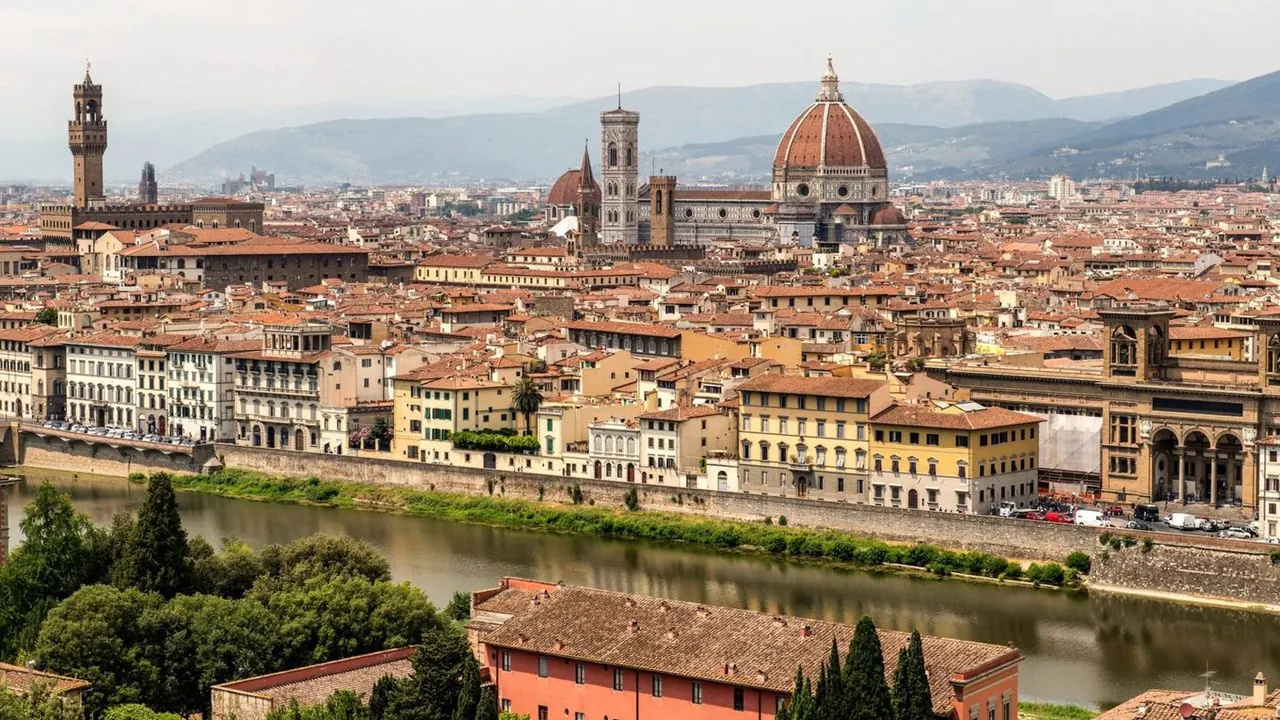
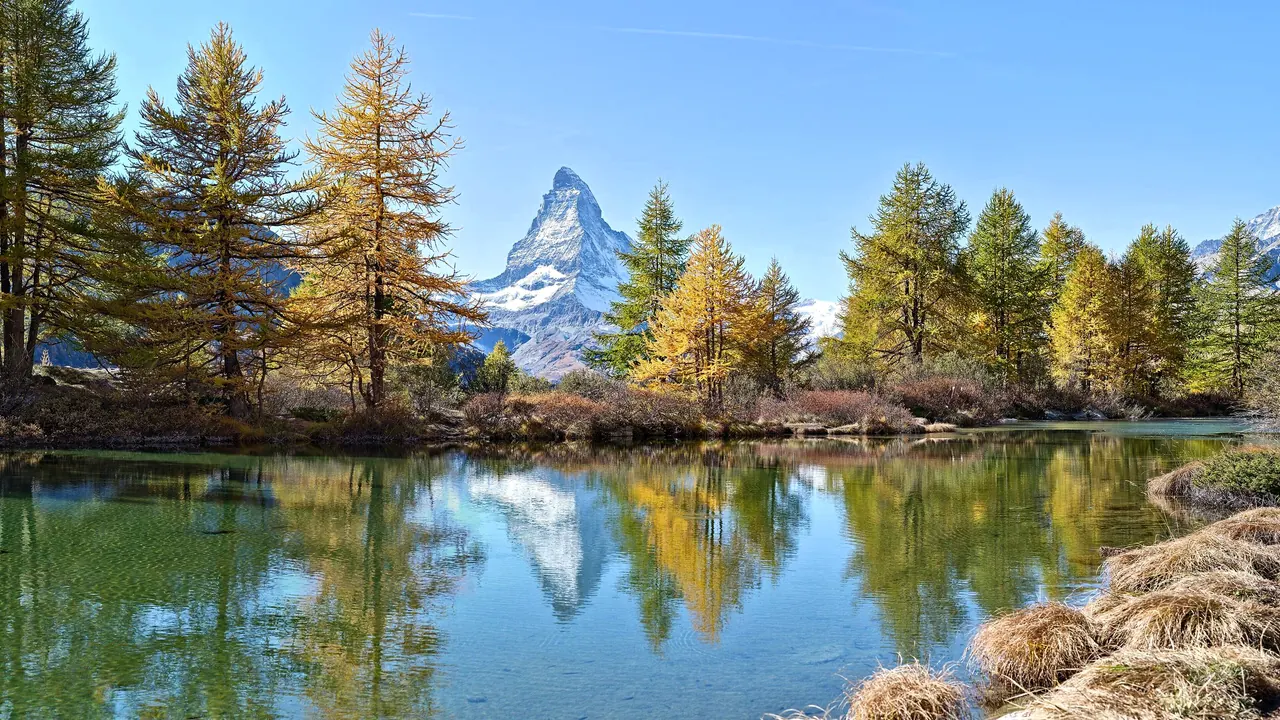
Photos: Florence by Wolfgang Weiser, Pexels License; Zermatt by Roy Egloff, CC BY-SA 4.0, cropped.
Florence or Zermatt?
Our verdict in twelve categories, each scored against the same fixed benchmark cities, and the climate month by month, so you can choose for your trip.
Choose Florence for
- culture and sights
- day trips
- shopping
Florence suits a traveller who wants the trip built around art, architecture and eating well. Its compact centre holds the Uffizi, the Duomo and the Accademia within a short walk of each other, and Siena, Pisa, Lucca and the Chianti vineyards are all easy day trips. It is the clear choice for a city break with long trattoria dinners, craft shopping and a different Tuscan town every other day, and it is the less punishing of the two on the wallet.
Choose Zermatt for
- nature and the outdoors
- wellness
- families
Zermatt is for people who come for the mountains themselves. The Matterhorn stands right above a car-free village, and lifts and cog railways carry you to glaciers, high trails and some of the highest skiing in Europe. Choose it for a ski week, a summer of hut walks and four-thousand-metre ascents, or a quiet stay in a spa hotel with an Alpine view. Don't come for museums, nightlife or a modest bill.
Scoreboard
Twelve categories on one fixed scale from 0 to 100. The shaded stretch is the gap between the two.
Your match
Pick a travel style or drag the sliders, and both match scores follow your weighting.
Wins on culture and sights and day trips with your weighting.
Wins on nature and the outdoors and wellness with your weighting.
What matters to you?
Category by category
What the scores mean for a trip.
Beaches & swimming
Neither place is for swimming, but Florence at least has a sea within reach. The sandy, umbrella-lined beaches of the Versilia around Viareggio take about an hour and a half by train, which makes a full day out.
Zermatt has no sea and no lake you can bathe in. Its mountain tarns are for photographing the Matterhorn, not for swimming, so a hotel pool is the only option.
Food & drink
Florence is the far better place to eat. It has bistecca, ribollita, tripe rolls from street carts, the Sant'Ambrogio and San Lorenzo markets, and Chianti poured by the glass, with the best meals in Oltrarno trattorie rather than around the Duomo.
Zermatt's high point is a long lunch at a chalet in Findeln or Zum See, reached on skis or on foot. Otherwise there is raclette, fondue and good Valais wine, a few expensive fine-dining kitchens, and not much choice once the seasons end.
Culture & sights
This is the widest gap between the two. Florence is where the Renaissance took shape, and Brunelleschi's dome, Botticelli at the Uffizi, Michelangelo's David and the Pitti Palace are only the start of a list that keeps going.
Zermatt's heritage is the story of climbing: the Matterhorn Museum on the 1865 first ascent, the mountaineers' graves by the church, and the old Hinterdorf granaries standing on their stone slabs. It is interesting, but it is a morning's sightseeing, not the reason to go.
Nightlife
Neither is a party town, and Florence's evenings are the fuller of the two. Aperitivo leads into wine bars, crowds gather with drinks in hand around Piazza Santo Spirito, and in summer there are bars along the Arno, although the clubs are few.
Zermatt's night out is winter après-ski: noisy slope-side bars at dusk, then a handful of late spots on the main street. In summer the hikers are in bed early.
Nature & outdoors
Zermatt is one of the great Alpine bases. The Matterhorn, the Gorner Glacier and a ring of four-thousand-metre peaks are reached by lift. There is skiing across the Italian border, summer glacier pistes, the Five Lakes walk and the Europaweg bridge, all with marmots and ibex along the way.
Florence's countryside is gentle and cultivated: olive terraces at Fiesole, cypress-lined lanes in Chianti, and the Casentino forests further out. It is lovely in spring and autumn, but it is a backdrop to the city rather than the main event.
Day trips
Florence may be the best base in Italy for day trips. Siena, Pisa and Lucca are easy by train or bus, San Gimignano and the Chianti villages by car, and Bologna is under forty minutes by high-speed train.
From Zermatt, every outing starts with the long train ride down the valley. Sion's castle hills and Brig's Stockalper Palace are pleasant, but most visitors would rather spend a spare day higher up the mountain.
Good for families
The two are about as good as each other for children, in very different ways. Florence suits older children who will enjoy climbing the dome, Palazzo Vecchio's secret passages and the Boboli Gardens, but summer heat and crowded narrow pavements are hard on small ones.
Zermatt's car-free streets feel safe and easy. It works best for families who ski or hike together, with nursery slopes at Sunnegga and marmots in summer, though rainy days are hard to fill and the highest viewpoints are too cold and too high for toddlers.
Getting around
Both are places you explore on foot, and neither needs a car. In Florence the Duomo, the Uffizi and the Pitti Palace are all within about twenty minutes' walk, there are trams to the airport, and Santa Maria Novella station is the hub for rail day trips.
In Zermatt the effort goes upwards. Cars stop at Täsch, electric taxis cover the village, and the cog railway, the funicular and the gondolas carry you into the mountains.
Shopping & style
Florence has much more to buy. There is leather from San Lorenzo stalls and workshops, marbled paper, goldsmiths on the Ponte Vecchio, artisans in the Oltrarno and the fashion houses of Via de' Tornabuoni.
Zermatt is a single main street of watch boutiques, souvenir cowbells and very good mountain outfitters. It is useful if you need gear, but there is little to browse beyond that.
Affordability
Florence is not cheap, with expensive central hotels and museum tickets that add up quickly. Still, it gives you real ways to save: street food, market counters, house wine and walking everywhere.
Zermatt is expensive on a different scale. Plain hotel rooms, terrace meals and the lifts every visitor uses all cost well above most of Europe, and self-catering or staying down in Täsch only softens the bill.
Live music & performing arts
Florence has a real musical life. Opera was more or less born here, the Teatro del Maggio has its own orchestra, and the spring Maggio Musicale festival is one of Europe's oldest, even if most visitors only catch the church concerts staged for tourists.
Zermatt has no theatre or concert hall. Its evenings of music come from two festivals: Zermatt Unplugged in spring and a late-summer chamber series in the village church.
Wellness & relaxation
Zermatt is the more restful of the two. It has excellent hotel spas, some of them open to day visitors, along with clean air and streets without traffic, although the mood in the main seasons is active rather than lazy.
Florence's centre is crowded and has few spas, so finding calm means early mornings in the Bardini or Boboli gardens. Its real bathing culture lies outside the city, at Montecatini Terme or the sulphur pools of Saturnia.
When should you go?
Pick your month. The climate figures are measured averages, not a forecast.
Florence in July
Zermatt in July
Daytime high, °C
Rainfall in the month, mm
Where the figures come from
Florence has no rain gauge within 25 km of the centre, so its rainfall comes from a gridded climate dataset read at the city rather than from a gauge further away.
Florence's sunshine is measured 71 km from the centre, at Pisa / S. Giusto.
Zermatt has no weather station within reach, so its figures come from a gridded climate model rather than a measured record, and read a broad area rather than the city itself.
Temperature and rainfall are climate normals, averaged over the years shown. Florence: 1995-2020 (sunshine 1991-2020, rainfall 1991-2020) normals, Firenze / Peretola (5.6 km from centre). Zermatt: 1991-2020 normals, TerraClimate 4 km grid at the town, no weather station within 90 km.
The two places peak in different seasons. Florence is at its best in April, May, late September and October, when days are warm enough for long walks and outdoor tables. July and August are the sunniest months, but they reach about 33°C, which is too hot for comfortable sightseeing on stone streets. Rain picks up in autumn, and November is the wettest month at about 124mm. Winter is mild at around 11°C, with the shortest sunshine in December and January, but the streets are quieter.
Zermatt follows the Alpine year. From December to March daytime highs stay around freezing, which is what the ski season needs. June to September is the walking season, with highs of no more than 14°C, cool enough for hard climbs, and summer is no drier than the rest of the year. November is the wettest month here too, at about 130mm, so it is a poor time to visit either place.
Which traveller are you?
On a culture and arts trip, Florence wins easily. The Uffizi, the Bargello, San Marco and the Brancacci Chapel could fill a week, while Zermatt's mountaineering museum and old larch barns take up a single morning.
For an outdoors trip, Zermatt is in a different league. Cable cars and cog railways climb to glaciers and trails above 3,000m, with skiing in winter and hut walks in summer. Florence offers only gentle walks through olive groves at Fiesole and in the Chianti hills.
On a tight budget, Florence is the only realistic choice of the two. Street lampredotto, market lunches, cheap house wine and a centre you can walk make it manageable, whereas Zermatt's rooms, lift passes and mountain terraces are expensive whatever you do.
Before you go
| Measure | Florence | Zermatt |
|---|---|---|
| Official language | Italian | French, German, Italian, Romansh |
| Currency | Euro (EUR) | Swiss Franc (CHF) |
| Sockets | CFL230 V, 50 Hz | CJ230 V, 50 Hz |
| Driving side | Right | Right |
| Time zone | UTC+1, UTC+2 in summer | UTC+1, UTC+2 in summer |
| Emergency number | 112 | 112 |
| Elevation | 50 m | 1,624 m |
| Main airport | Florence Airport, Peretola (FLR)6 km from centre46 non-stop destinations | Geneva International Airport (GVA)128 km from centre150 non-stop destinations |
| Public holidays this year | 13 days | 9 days |
By the numbers
| Measure | Florence | Zermatt |
|---|---|---|
| City population | 360,930 | 6,023 |
| People per km² | 3,528 | 25 |
| Museums within 10 km | 141 | 2 |
| UNESCO World Heritage sites within 50 km | 6 | 2 |
Where else could you go?
Every comparison below shares a destination with this one, so you can follow Florence or Zermatt somewhere new.
- Sienavs Florence
- Luccavs Florence
- Chamonixvs Zermatt
- Pisavs Florence
- Interlakenvs Zermatt
- Bolognavs Florence