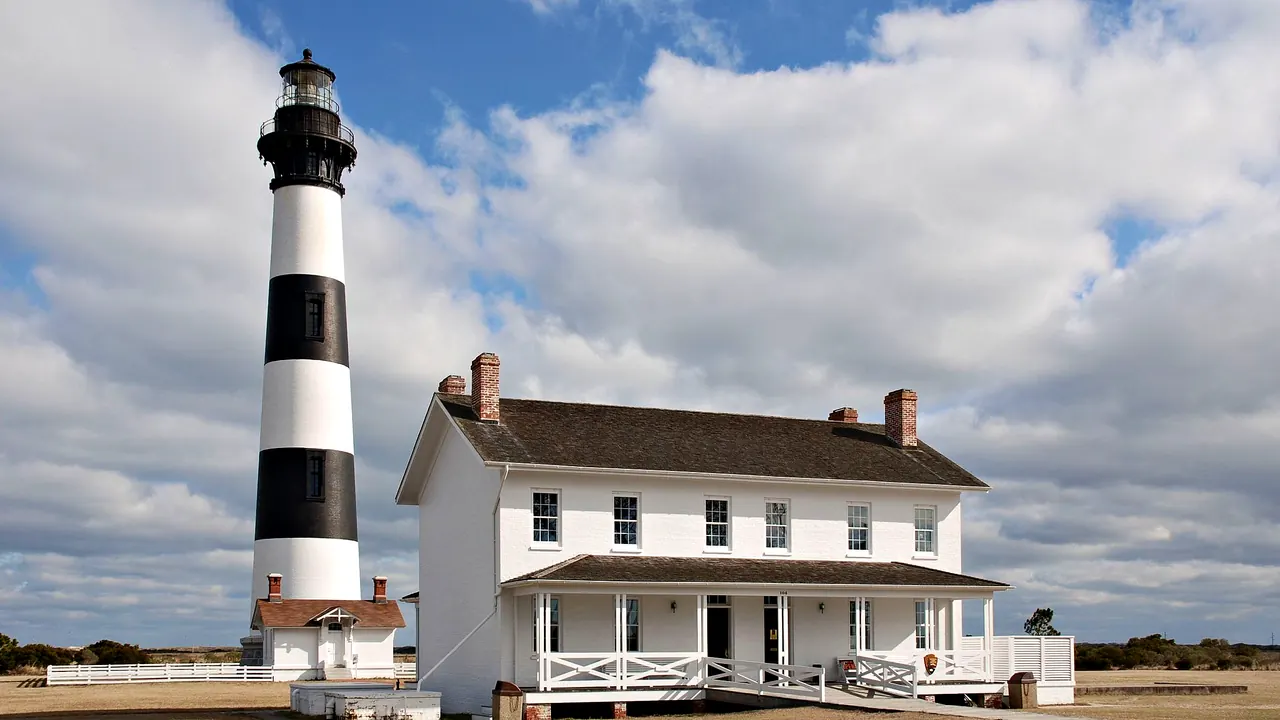
Photos: Outer Banks by Jarek Tuszyński, CC BY-SA 3.0, cropped.
Florida or Outer Banks?
Our verdict in twelve categories, each scored against the same fixed benchmark cities, and the climate month by month, so you can choose for your trip.
Choose Florida for
- nightlife
- shopping
- families
Florida suits a trip that wants range: Miami's clubs and Cuban and Latin American cooking, the Orlando parks for children, calm Gulf water over white sand, and the Everglades and the Keys reef for wildlife. The weather is kindest in winter and spring. In return you get long drives between bases, and crowds and high prices in the places most people want to see.
Choose Outer Banks for
Outer Banks does not lead in any category we score.
The Outer Banks are a narrower choice, and that is why people go. You rent a beach house for a summer week on a thin chain of barrier islands, with miles of open surf, lighthouses, wild horses at Corolla and the empty seashore of Hatteras and Ocracoke. Expect simple seafood, early nights and a swimming season that really runs only from June to September.
Scoreboard
Twelve categories on one fixed scale from 0 to 100. The shaded stretch is the gap between the two.
Your match
Pick a travel style or drag the sliders, and both match scores follow your weighting.
Wins on nightlife and shopping with your weighting.
Has no clear advantage with the weighting you have chosen.
What matters to you?
Category by category
What the scores mean for a trip.
Beaches & swimming
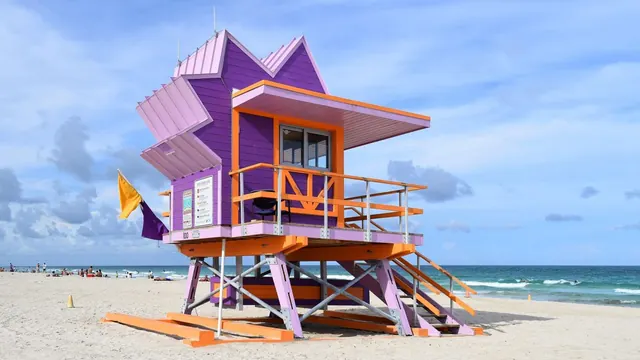
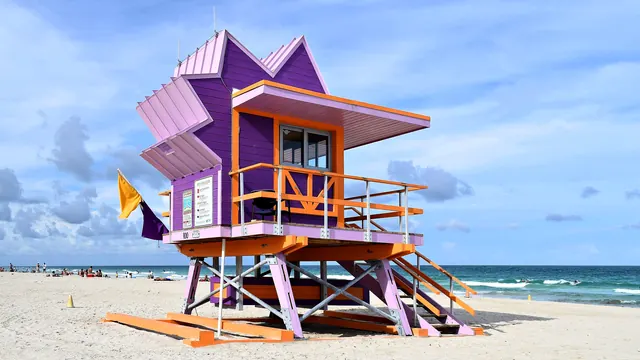
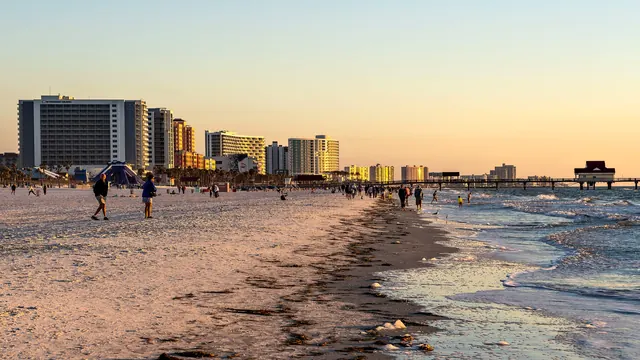
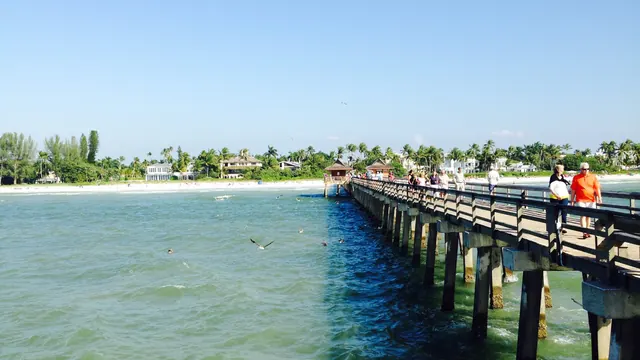
Florida lets you choose your water. There is broad Atlantic surf at Miami Beach, calm and clear Gulf water over white quartz sand at Siesta Key and Clearwater, green water off the Panhandle and small tropical coves in the Keys. In the south you can swim all year.
The Outer Banks offer one kind of beach, but a great deal of it: open Atlantic sand backed by dunes, often empty along Cape Hatteras National Seashore. This is surf with real rip currents. There is no sheltered or turquoise water, and swimming is for summer only.
Food & drink
Florida's best eating is in Miami. Little Havana's Cuban bakeries and coffee windows sit alongside Peruvian, Haitian and Colombian cooking, and Tampa's Ybor City gave the state the Cuban sandwich. Stone crab, conch fritters and key lime pie give the Keys and the Gulf a seafood tradition of their own.
The Outer Banks keep to seafood shacks and dockside plates: steamed shrimp, soft-shell crab and hushpuppies, or fish from the Wanchese and Hatteras markets cooked in the rental house. Beyond that the choice is thin, with nothing like Miami's range of cuisines.
Culture & sights
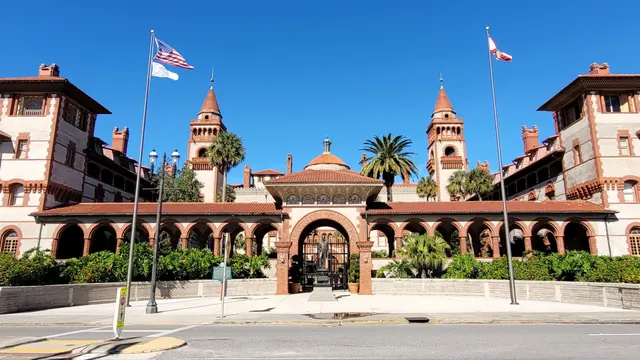
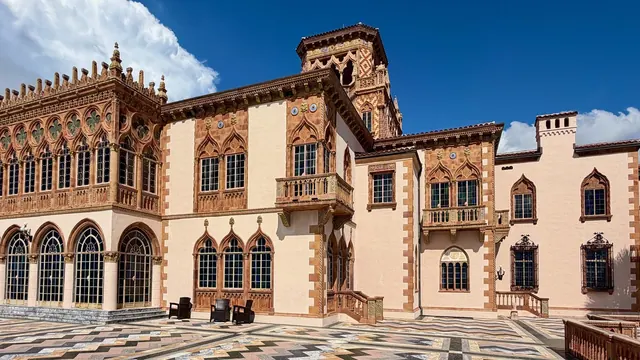
Neither has old heritage packed close together, but Florida has more of it and of greater weight. It has St Augustine's Spanish stone fort and colonial lanes, Miami Beach's Art Deco district, the Dalí Museum in St Petersburg and the Apollo and Shuttle rockets at Kennedy Space Center.
The Outer Banks have two sites that matter in American history: the Wright Brothers memorial at Kill Devil Hills and the Lost Colony site on Roanoke Island. Add a string of lighthouses, including the striped Cape Hatteras tower. Each makes a good morning out, but there are no art collections to match Florida's.
Nightlife
This is the widest gap between the two. Miami's clubs and rooftop bars in South Beach run until dawn, and Wynwood and Little Havana add Latin dance floors. Key West's Duval Street and Tampa's Ybor City give you other strips to choose from.
On the Outer Banks a night out means a sunset drink on a sound-side deck or a brewery taproom in Nags Head. There are almost no clubs, and most evenings end on the porch of the rental house.
Nature & outdoors
Florida has more to offer outdoors, and its wildlife is more exotic. Alligators and roseate spoonbills are easy to see from the boardwalks and airboats of the Everglades, the coral reef along the Keys is good for snorkelling and diving, and manatees gather in the winter springs at Crystal River. Its outdoor season is the cooler half of the year.
The Outer Banks give you a smaller, wind-swept version of the outdoors: dunes, marsh and birds. Jockey's Ridge has the tallest living dunes on the East Coast, wild mustangs roam the sand north of Corolla, Pea Island draws large flocks of migrating birds and turtles nest in summer. The flat sounds around Rodanthe are among the best places in the world for kiteboarding.
Day trips
With a base in Orlando or Miami, Florida puts St Augustine's old town, Tampa and St Petersburg, Palm Beach or Key Largo within an easy day. Most of the driving is on highways.
The Outer Banks have one standout: the free ferry from Hatteras, about an hour to the sandy lanes of Ocracoke. Beyond that there are small inland towns such as colonial Edenton, or the drive to Norfolk's naval base and museums. That gives far fewer outings than Florida.
Good for families
Both are classic American family vacations, but on very different scales. Florida has the theme-park district around Orlando, Kennedy Space Center, and calm, warm shallows for toddlers at Clearwater and Anna Maria Island, with airboats and manatee springs for a change of pace.
The Outer Banks offer a beach-house week for several generations: crab-catching, mini-golf, the dunes at Jockey's Ridge, the aquarium on Roanoke Island and lighthouse climbs. The surf needs watching, there is no large attraction, and a wet day soon runs out of things to do.
Getting around
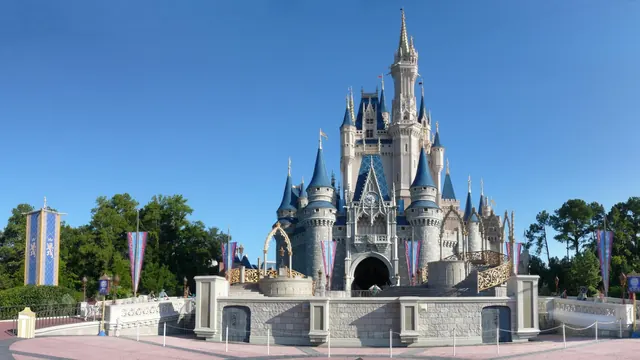
Both need a car, and neither has public transport you can rely on. The difference is scale. Florida's distances are long, with Miami to Orlando about three and a half hours on busy interstates, although a fast rail line links Miami with Orlando airport and Disney runs its own buses, boats and monorail.
The Outer Banks are a single narrow strip with a couple of roads. The central towns are close enough to cycle between on paths, but Saturday changeovers in summer block the bridges, and Ocracoke can only be reached by ferry.
Shopping & style
Florida shops for luxury and volume. Miami's Design District and Bal Harbour have designer flagships, Worth Avenue in Palm Beach has old-money boutiques, and the large outlet centres in Orlando fill whole days.
The Outer Banks have surf and kite shops, souvenir stores and one small outlet centre. Nobody comes for the shopping, but the galleries in Duck, Manteo and Ocracoke sell local pottery and decoys, which are good for a browse.
Affordability
Neither is cheap in high season, but the expensive months differ. Florida's costs peak in winter in Miami Beach, Palm Beach and the Keys, and in theme-park tickets around Orlando, with resort fees and car hire on top. Chain hotels off the Orlando highways and the quieter Gulf beaches keep a trip in check.
The Outer Banks are dearest in summer, when oceanfront houses often rent only by the full week. You save by sharing a house as a big group and cooking fish from the docks. The beaches, the national seashore and the Ocracoke ferry cost little or nothing.
Live music & performing arts
Florida's stages are mostly in Miami. There is opera and ballet at the Arsht Center, the New World Symphony in Miami Beach, Miami City Ballet and salsa and Cuban son in Little Havana, with Sarasota's small opera house in winter.
The Outer Banks have one real tradition, The Lost Colony. This outdoor drama has been staged on summer nights on Roanoke Island since 1937. Apart from that, there are bands on bar decks and community festivals.
Wellness & relaxation
Florida has large resort spas in Miami Beach, Palm Beach and Naples, plus Warm Mineral Springs, a spring-fed pool that stays warm all year. For a slower pace, go to Sanibel, Anna Maria Island or the Keys.
The Outer Banks have only a few day spas and yoga studios. The rest comes from an unplanned beach-house week and the quiet villages of Hatteras Island and Ocracoke, best in late spring and autumn.
When should you go?
Pick your month. The climate figures are measured averages, not a forecast.
Florida in July
Outer Banks in July
Daytime high, °C
Rainfall in the month, mm
Where the figures come from
Outer Banks has no rain gauge within 25 km of the centre, so its rainfall comes from a gridded climate dataset read at the destination rather than from a gauge further away.
Outer Banks's sunshine is measured 77 km from the centre, at Cape Hatteras.
Temperature and rainfall are climate normals, averaged over the years shown. Florida: 1991-2020 normals, Orlando Airport (14.4 km from centre). Outer Banks: 2009-2025 (sunshine 1981-2010, rainfall 1991-2020) normals, Manteo / Sunny Side (7.7 km from centre).
Florida's climate figures are measured where most visitors stay, and there the best months run from November to April. January highs of about 22°C suit the theme parks, city streets and the Everglades. Winter beach days belong to the south, around Miami and the Keys. The Panhandle is a late spring to autumn coast and too cool for the beach in winter. From June to September highs sit near 33°C, and afternoon storms bring close to 200mm of rain a month from June to August, which makes walking and queueing hard work. The rain eases in September and is light again by November.
The Outer Banks follow a different calendar. Winter highs of about 10°C make this a cold coast from November to March. The sea is warm enough to swim from June to September and reaches 26°C in July and August. June and July are the sunniest months. Rain falls all year and is heaviest from late summer into September. May and October are mild enough for walking the dunes, but the water is still too cool for most swimmers.
Which traveller are you?
For a food and nightlife trip, choose Florida and stay in Miami. You get Cuban coffee windows, Peruvian and Haitian cooking and South Beach clubs that run until dawn, with Ybor City and Duval Street as other nights out. The Outer Banks offer seafood shacks and early nights.
On a family trip with children, Florida is the stronger choice. It has the Orlando theme parks, Kennedy Space Center's rockets and calm, shallow Gulf water for toddlers. The Outer Banks suit a quiet beach-house week, but the surf needs watching and rainy days soon run out of things to do.
On a tight budget with a big group, the Outer Banks work well. A shared beach house divides the cost, fish from the docks feeds everyone, and the beaches, seashore and Ocracoke ferry are free. Florida's savings mean chain hotels off Orlando's highways.
Before you go
| Measure | Florida | Outer Banks |
|---|---|---|
| Currency | US Dollar (USD) | US Dollar (USD) |
| Sockets | AB120 V, 60 Hz | AB120 V, 60 Hz |
| Driving side | Right | Right |
| Time zone | UTC-5, UTC-4 in summer | UTC-5, UTC-4 in summer |
| Emergency number | 911 | 911 |
| Main airport | Orlando International Airport (MCO)170 non-stop destinations | Norfolk International Airport (ORF)44 non-stop destinations |
| Public holidays this year | 11 days | 14 days |
By the numbers
| Measure | Florida | Outer Banks |
|---|---|---|
| Population | 21,538,187 | - |
| Swim season, months above 21 °C | - | 4 months |
Where else could you go?
Every comparison below shares a destination with this one, so you can follow Florida or Outer Banks somewhere new.
- Virginia Beachvs Outer Banks
- Myrtle Beachvs Outer Banks
- Hilton Headvs Florida
- Poconosvs Outer Banks
- Hilton Headvs Outer Banks
- The Hamptonsvs Outer Banks