United States
Miami
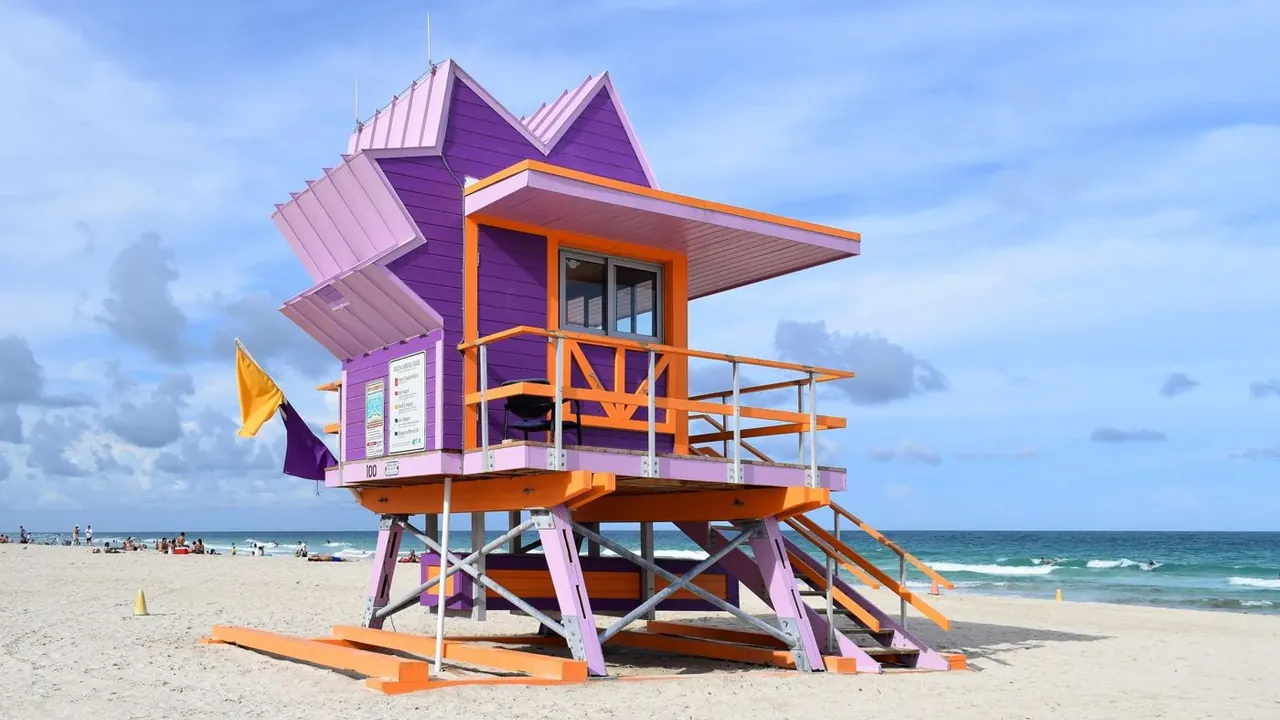
A lifeguard stand on South Beach
- Beaches90
- Nightlife82
- Food & drink72
Photo: Radomianin, CC BY-SA 4.0, cropped
Match
59
Every category weighted equally
- Beach & sun61
- Culture & arts55
- Food & nightlife60
- Family trip57
- Outdoors56
- Relax & unwind58
- Shopping & style59
- On a budget55
Miami in twelve categories
Our verdict on each, scored 0 to 100 against the same fixed benchmark cities, so a score means the same thing on every page.
Beaches & swimming. Scores 90 out of 100.
Food & drink. Scores 72 out of 100.
Culture & sights. Scores 57 out of 100.
Nightlife. Scores 82 out of 100.
Nature & outdoors. Scores 64 out of 100.
Day trips. Scores 42 out of 100.
Good for families. Scores 64 out of 100.
Getting around. Scores 35 out of 100.
Shopping & style. Scores 71 out of 100.
Affordability. Scores 27 out of 100.
Live music & performing arts. Scores 55 out of 100.
Wellness & relaxation. Scores 44 out of 100.
Miami category by category
Beaches & swimming
90The beach is the reason most people come. Miami Beach runs as one long strip of pale sand along the barrier island, from the Art Deco stretch of South Beach past Mid-Beach to the quieter, family-heavy shore around North Beach and Surfside. The Atlantic here is warm and gentle: around 29°C in late summer and rarely much below 23°C in winter, so swimming is realistic in every month.
Beyond the main strip, Key Biscayne has calmer, shallower water at Crandon Park and the lighthouse beach at Bill Baggs, and Haulover is broader and less groomed. The setting is flat and built-up rather than dramatic, sargassum seaweed can wash in during the warmer months, and summer brings heat, afternoon storms and hurricane season.
Food & drink
72Miami eats like a Caribbean and Latin American capital. Cuban food is the backbone: ventanita windows serving tiny, sweet cafecito and cortaditos, pastelitos and croquetas, Cuban sandwiches and slow-cooked lechon, with Calle Ocho in Little Havana the obvious place to start. Venezuelan arepas, Colombian bakeries, Peruvian ceviche, Haitian griot in Little Haiti and Nicaraguan fritangas fill out the picture across the city.
Seafood is the local speciality, from stone crab claws in winter to grilled grouper sandwiches and conch fritters. Brickell, the Design District and Miami Beach hold a serious upscale tier with chef-led restaurants and steakhouses, while South Beach's main strips are full of overpriced tourist tables. It is a city for lunch counters and late dinners more than for markets or a wine culture.
Culture & sights
57Miami's great sight is its architecture of the 1930s. The Art Deco Historic District in South Beach holds hundreds of pastel hotels and apartment blocks with porthole windows, neon and streamlined corners, best seen on foot along Ocean Drive and Collins Avenue. Vizcaya, an Italianate villa with formal gardens on Biscayne Bay, is the other essential visit.
The museums are good rather than great: the Perez Art Museum on the bay, the Bass and the Wolfsonian in Miami Beach, and the HistoryMiami Museum. Wynwood's outdoor murals and the Design District's art galleries add contemporary interest, and Little Havana carries the city's Cuban exile history. There is little heritage older than a century, and a few days covers it.
Nightlife
82Miami is one of the world's best-known party cities, and it goes out late. The South Beach club scene is glossy and expensive, built around big rooms, international DJs, dress codes and bottle tables, and the downtown and Park West clubs keep going until dawn. In March the city's dance-music week and the festival around it fill every venue.
There is more to it than mega-clubs. Wynwood has a looser crowd of breweries, warehouse bars and late parties, Brickell has rooftop and cocktail bars for the after-work set, and Little Havana's Calle Ocho has salsa and Latin dance nights. It is a scene that rewards money and stamina more than spontaneity, and it is thinner outside these pockets.
Nature & outdoors
64The landscape is flat and watery, and its great asset is the Everglades on the city's western edge. Within an hour you can ride an airboat or walk the boardwalks of the Anhinga Trail among alligators, wading birds and turtles, or cycle the loop at Shark Valley. Biscayne National Park, mostly underwater, offers kayaking among mangroves and snorkelling on the reefs, and Key Largo's coral reefs are about an hour south.
In the city, boating, paddleboarding, kitesurfing and fishing on Biscayne Bay are easy to arrange, and the Rickenbacker Causeway is a popular cycling route. There are no hills at all, and from June to September heat, humidity, mosquitoes and storms make the outdoors hard going; winter is the season for it.
Day trips
42The places within easy reach are pleasant rather than memorable. Fort Lauderdale, under an hour north, offers canals and a beach promenade; Palm Beach, about an hour and a half, has grand Gilded Age mansions, the Flagler Museum and the shops of Worth Avenue. Heading south, Key Largo and Islamorada in the Upper Keys make a good day of seafood shacks and waterfront towns.
Key West, the obvious draw, is a long drive of three to four hours each way and works better as an overnight. Beyond that, South Florida is suburbs and wetland, so most visitors spend their spare days at the beach or in the Everglades rather than visiting other towns.
Good for families
64Warm, calm water and wide sand make the beaches the main family attraction, and Key Biscayne and North Beach are quieter than South Beach. Zoo Miami is large and open-air, suited to the climate, and the Frost Science Museum downtown has a planetarium and a big aquarium. Jungle Island, the Everglades airboat rides and the Coral Gables Venetian Pool fill other days, and many beach hotels are built around pools and children.
What holds it back is effort. Distances are long, a car is needed for most outings, summer heat is punishing, and South Beach's party side is not the setting most parents want. The big theme parks are a long drive away in Orlando.
Getting around
35Miami is a car city with a few walkable pockets. South Beach is flat and easy on foot or by bike, and downtown and Brickell are linked by the free, elevated Metromover. The Metrorail runs from the airport through downtown towards Coral Gables, but it does not reach Miami Beach, and buses across the causeways are slow.
In practice most visitors staying on the beach walk locally and use ride-hailing for Wynwood, Little Havana or Coconut Grove. Anyone planning the Everglades, the Keys or Palm Beach will want to hire a car. Traffic on the main roads is heavy, and midday heat shortens how far anyone wants to walk.
Shopping & style
71Miami is a serious luxury shopping city, aimed partly at visitors from Latin America. The Design District gathers flagship stores of the major fashion houses among architect-designed buildings and public art, and Bal Harbour's open-air mall at the north end of Miami Beach is one of the most exclusive in the country. Aventura Mall is enormous, and large outlet malls on the western edge draw bargain hunters.
Lincoln Road in South Beach is a pedestrian street of mainstream brands and cafés, and Wynwood has some independent streetwear and gallery shops. For local character the offer is slim: a few Cuban cigar shops and guayabera makers in Little Havana, and little in the way of markets or crafts.
Affordability
27Miami is an expensive city to visit. Beachfront hotels charge high rates in the winter season and add resort fees and parking charges, restaurant and bar bills climb quickly once tax and tipping are included, and drinks in South Beach clubs are among the costliest anywhere. A hire car or regular ride-hailing adds to the bill.
There are ways to soften it. The beaches are free, Cuban lunch counters and bakeries are cheap and filling, the Metromover costs nothing, and summer brings lower room rates, at the price of heat and storm risk. Staying away from Miami Beach, in the mainland neighbourhoods, also helps.
Live music & performing arts
55The Adrienne Arsht Center downtown is the main stage, hosting Florida Grand Opera, touring Broadway shows and visiting orchestras, while Miami City Ballet is a company of real standing. In Miami Beach, the New World Symphony, a training orchestra for young musicians, plays in a Frank Gehry building with outdoor screenings on the lawn outside.
The most local thing to hear is Latin music: salsa, son and timba bands in the Little Havana clubs and cultural venues, and Afro-Cuban and Caribbean acts across the city. Jazz and theatre are modest, and the season is concentrated in the winter months.
Wellness & relaxation
44Wellness in Miami means resort spas. The big Miami Beach and Key Biscayne hotels have extensive spa floors with pools, treatment rooms and ocean views, and yoga classes on the sand are a common sight at sunrise. A long-established Russian and Turkish bath house in Miami Beach, with banya, steam rooms and cold plunges, is the one real nod to bathing culture.
The city's rhythm works against rest: South Beach is loud late into the night, traffic is heavy and the social scene is built on being seen. Those wanting calm do better on Key Biscayne or in the quieter stretches around Surfside, where days slow to pool and shade.
When should you go?
Pick a month to see what it is like. The climate figures are measured averages, not a forecast.
Miami in July
Daytime high, °C
Rainfall in the month, mm
The whole year
Shaded against this city’s own year: the deepest cell is its best month for that figure and the palest its weakest.
Temperature and rainfall are climate normals, averaged over the years shown. Miami: 1991-2020 normals, Miami International Airport (10 km from centre).
Before you go
| Measure | Miami |
|---|---|
| Currency | US Dollar (USD) |
| Sockets | AB120 V, 60 Hz |
| Driving side | Right |
| Time zone | UTC-5, UTC-4 in summer |
| Emergency number | 911 |
| Elevation | 2 m |
| Main airport | Miami International Airport (MIA)7 km from centre198 non-stop destinations |
| Public holidays this year | 11 days |
By the numbers
| Measure | Miami |
|---|---|
| City population | 442,241 |
| People per km² | 3,046 |
| Museums within 10 km | 17 |
| UNESCO World Heritage sites within 50 km | 0 |
| Swim season, months above 21 °C | 12 months |
Compare Miami with
Every comparison with a written verdict behind it.