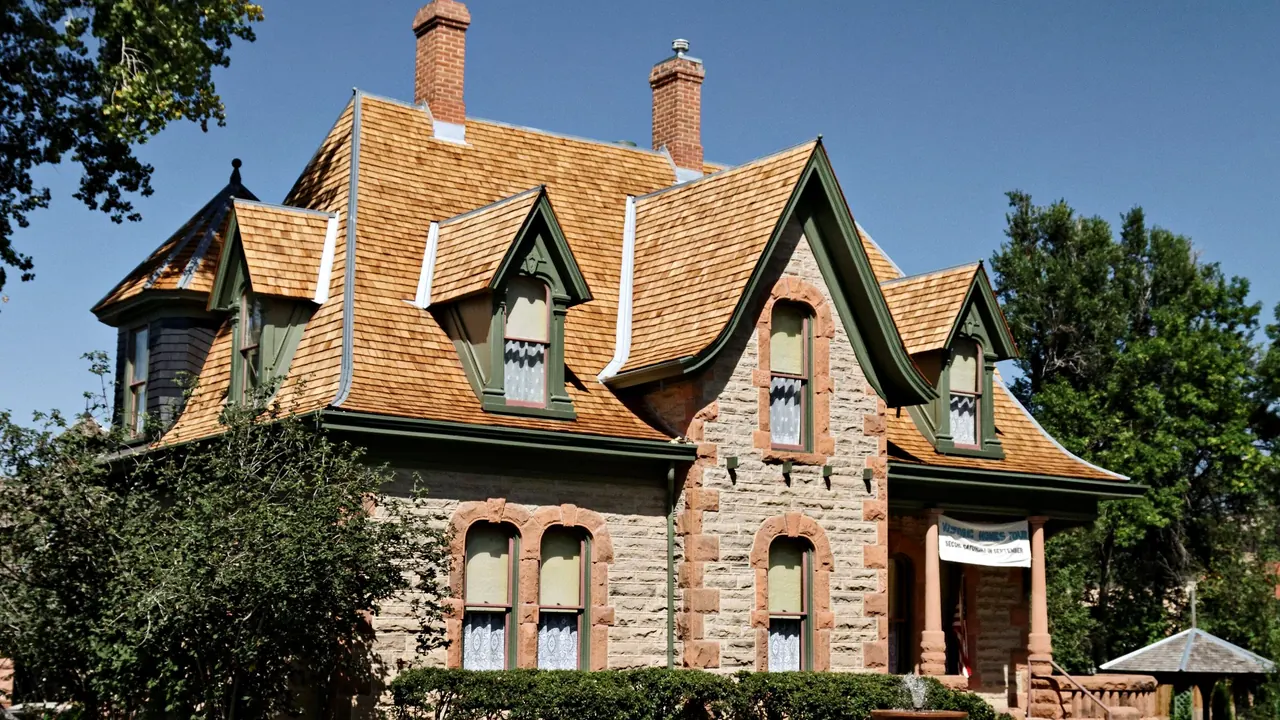
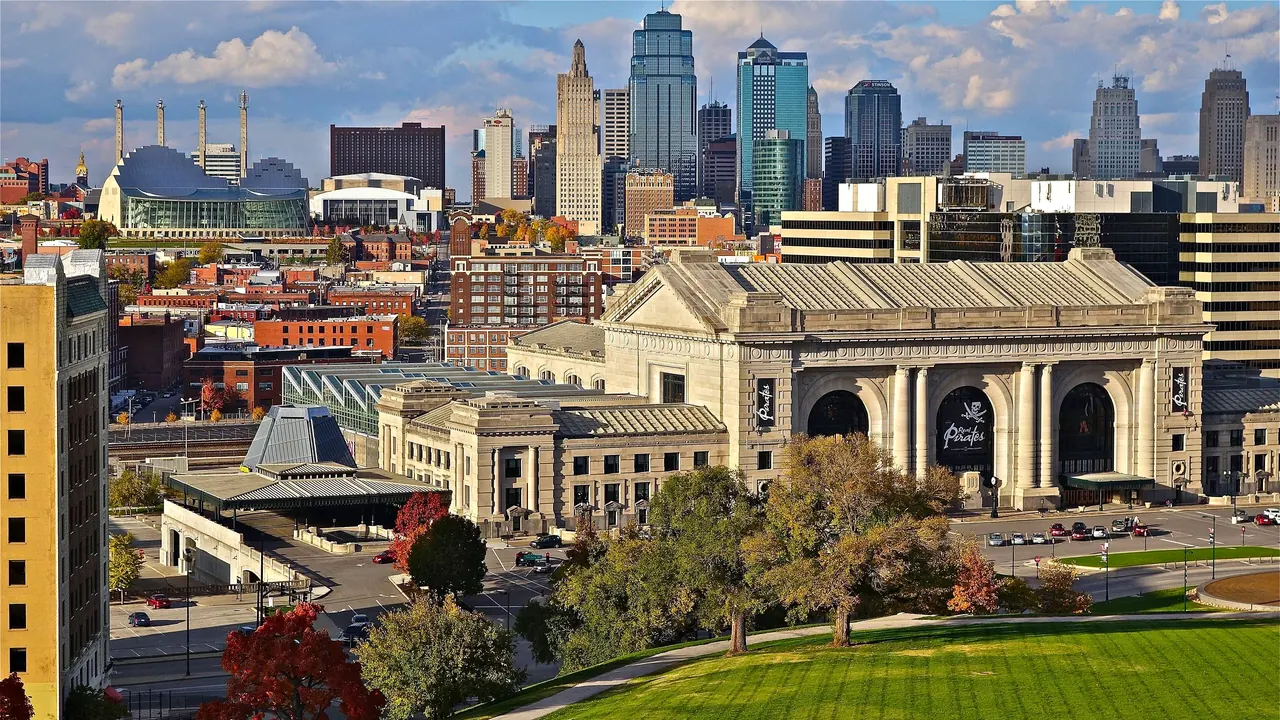
Photos: Fort Collins by Gribeco, CC BY-SA 3.0, cropped; Kansas City by Dean Hochman from Overland Park, Kansas, U.S., CC BY 2.0, cropped.
Fort Collins or Kansas City?
Our verdict in twelve categories, each scored against the same fixed benchmark cities, and the climate month by month, so you can choose for your trip.
Choose Fort Collins for
- nature and the outdoors
- day trips
- getting around
Fort Collins is for travellers who want the mountains close at hand. The foothills trails start a short drive from town, the Poudre canyon offers rafting and fly fishing, and Rocky Mountain National Park is within reach for a day. Evenings are spent cycling between taprooms in a compact, easygoing Old Town. Pick it for active days outdoors with a relaxed town to come back to, not for sightseeing.
Choose Kansas City for
- culture and sights
- live music and the arts
- food and drink
Choose Kansas City for a city trip built around museums, music and food. The Nelson-Atkins, the WWI museum, jazz clubs around 18th and Vine and serious barbecue give it far more to do indoors and after dark, and families get a zoo, an amusement park and an aquarium that Fort Collins leaves to Denver. The trade-off is time in the car, because the sights are spread across a sprawling metro area.
Scoreboard
Twelve categories on one fixed scale from 0 to 100. The shaded stretch is the gap between the two.
Your match
Pick a travel style or drag the sliders, and both match scores follow your weighting.
Too close to call, 2 points apart
Wins on nature and the outdoors and day trips with your weighting.
Wins on culture and sights and live music and the arts with your weighting.
What matters to you?
Category by category
What the scores mean for a trip.
Beaches & swimming
Neither city has a coast, so swimming in both means fresh water in summer. Fort Collins has the more appealing spot in Horsetooth Reservoir, with a swim beach and coves full of paddleboards against the foothills. Kansas City offers sandy lake beaches in county parks on the edge of the metro area, plus public and hotel pools. In either city it is an afternoon out, not a reason to come.
Food & drink
Kansas City has the stronger food scene and an identity Fort Collins lacks. Hickory-smoked barbecue, burnt ends and sweet molasses sauce make comparing smokehouses a reason to visit in itself, and the steakhouses, the River Market's international counters and the Westside's Mexican kitchens add some range.
Fort Collins does better with the glass than the plate. Its long-established breweries and many taprooms can fill several days for beer lovers, but the cooking in Old Town is gastropubs, tacos and the occasional farm-to-table kitchen, and nothing you would plan a trip around.
Culture & sights
There is a wide gap here. Kansas City has real institutions: the Nelson-Atkins with its Chinese collection and Oldenburg shuttlecocks, the WWI museum under the Liberty Memorial, and the jazz and Negro Leagues museums at 18th and Vine. Union Station and the Spanish-style Country Club Plaza add architecture worth seeing.
In Fort Collins, the red-brick Old Town square is the main sight, supported by the Museum of Discovery, the Victorian Avery House and the university galleries. It is pleasant for a stroll, but it is done in a day, while Kansas City needs two or three.
Nightlife
Kansas City has more going on at night, spread across several districts with different moods. There are the sports bars of Power and Light, the student strip in Westport and the cocktail bars of the Crossroads, though you will need a ride between them.
Fort Collins keeps everything within a few walkable blocks of Old Town: patios, pubs and taprooms busy with students at weekends. It is easier to get around but thinner, especially when the university is on its summer break. Neither has much of a club scene.
Nature & outdoors
This is Fort Collins's biggest advantage. The plains meet the foothills at the edge of town. Horsetooth Mountain and Lory State Park have trails to rocky summits, and the protected Cache la Poudre canyon offers rafting, fly fishing and camping. Rocky Mountain National Park's alpine lakes and elk are about an hour and a half away.
Kansas City's surroundings are rolling prairie and farmland. Swope Park, the Loose Park rose garden and the reservoirs on the metro's edge are pleasant, but the nearest serious hiking, in the Ozarks, is several hours away.
Day trips
Fort Collins has the better range of outings. Boulder beneath the Flatirons, the museums of Denver, the mountain town of Estes Park and Cheyenne's frontier museum across the Wyoming line all make a full day out.
Kansas City's options are quieter half days: Truman's home and library in Independence, the main street in Lawrence, the antebellum river town of Weston and the Pony Express museum in St Joseph. You need a car for almost all of them, as you do from Fort Collins.
Good for families
Kansas City gives children more to look forward to. Worlds of Fun with its water park, the large zoo, Science City inside Union Station, and the aquarium and Legoland Discovery Centre at Crown Center make several busy days. The cost is a lot of driving between them.
Fort Collins is smaller and gentler: playgrounds in every neighbourhood, the hands-on Museum of Discovery, the farm at Lee Martinez Park and tubing on quiet stretches of the river. For a zoo or theme park, families there drive to Denver.
Getting around
Fort Collins is easier to get around without a car. Old Town is flat and compact, a rapid-bus line runs north to south, and protected lanes and long riverside trails make cycling the obvious way to reach campus, breweries and parks. You only need to drive for the foothills and day trips.
Kansas City is built around the car. The free-flowing highways and easy parking help, and the Main Street streetcar between the River Market, Union Station and Crown Center allows a car-free day or two. Beyond that, buses are sparse, pavements run out and the main sights are far apart.
Shopping & style
Kansas City has more to browse. The Country Club Plaza puts upmarket and national stores in 1920s Spanish-style courtyards, and the Crossroads, Westport and 39th Street add galleries, record shops and thrift stores.
Fort Collins keeps it small: a few blocks of independent boutiques, bookshops, cycling and outdoor gear and Colorado-made gifts in Old Town, then chain stores along the highways.
Affordability
The two cost about the same, typical of an ordinary American city, and in both the hire car is the extra most visitors cannot avoid. The savings come from different places. In Fort Collins they are the free trails, river paths and Old Town, though rooms jump on graduation and football weekends.
Kansas City's downtown hotels are moderate, and the Nelson-Atkins does not charge for general entry. Paid attractions such as the theme park, the zoo and ball games add up quickly for families.
Live music & performing arts
Kansas City is well ahead because it has its own music. Hard-swinging jazz, the style of Count Basie and Charlie Parker, still plays most nights in clubs around 18th and Vine, often with late jam sessions. The Kauffman Center is home to the symphony, opera and ballet, and Starlight Theatre stages musicals outdoors in summer.
Fort Collins offers touring Broadway shows and the local symphony at the Lincoln Center, university concerts and indie or bluegrass bands on small Old Town stages. It is enjoyable but regional in scale.
Wellness & relaxation
Neither city has a bathing tradition, and both offer only ordinary day spas. Fort Collins is the easier place to unwind, with shaded river paths, quiet streets and dry sunny days, though its nearest hot-spring soak is at Idaho Springs, well over an hour away. Kansas City has a closer spa trip in the historic mineral-water resort of Excelsior Springs, and slow mornings in the Loose Park rose garden or the Nelson-Atkins sculpture park.
When should you go?
Pick your month. The climate figures are measured averages, not a forecast.
Fort Collins in July
Kansas City in July
Daytime high, °C
Rainfall in the month, mm
Where the figures come from
Fort Collins has no rain gauge within 25 km of the centre, so its rainfall comes from a gridded climate dataset read at the destination rather than from a gauge further away.
Kansas City has no rain gauge within 25 km of the centre, so its rainfall comes from a gridded climate dataset read at the destination rather than from a gauge further away.
Kansas City's sunshine is measured 30 km from the centre, at Kansas City International Airport.
Temperature and rainfall are climate normals, averaged over the years shown. Fort Collins: 2006-2020 (rainfall 1991-2020) normals, Fort Collins / Redmond (16.1 km from centre). Kansas City: 1991-2020 (sunshine 1981-2010) normals, Kansas City / Harlem (8.2 km from centre).
Both cities warm up at about the same pace. July highs reach 32°C in each, late spring and early autumn are mild, and midwinter days are cold. The big difference is moisture. Fort Collins stays dry all year, with winter months seeing barely 9mm of rain. Its best months for trails and cycling are late May, June and September, and July and August are the time for swimming in the reservoir.
Kansas City is far wetter. Rain builds through spring to a peak of around 142mm in May and stays heavy through the summer, which is also humid. Its sunniest weather comes in midsummer, but the heat makes long walks between sights tiring. April and late September into October are the most comfortable months for exploring on foot.
Which traveller are you?
On an outdoors trip, choose Fort Collins without hesitation. Summit trails at Horsetooth and Lory, whitewater in the Poudre canyon and alpine lakes in Rocky Mountain National Park are all close by. Kansas City has gentle prairie parks and no real hiking country.
For a culture and arts trip, Kansas City is the clear choice. It has a major encyclopaedic art museum, the country's main First World War museum, the jazz and Negro Leagues museums, and live jazz most nights. Fort Collins has a pleasant Old Town that a single day covers.
On a family trip with children, Kansas City has the bigger attractions: Worlds of Fun and its water park, a large zoo, Science City and an aquarium at Crown Center. Fort Collins is calm and safe but lacks headline draws.
Before you go
| Measure | Fort Collins | Kansas City |
|---|---|---|
| Currency | US Dollar (USD) | US Dollar (USD) |
| Sockets | AB120 V, 60 Hz | AB120 V, 60 Hz |
| Driving side | Right | Right |
| Time zone | UTC-7, UTC-6 in summer | UTC-6, UTC-5 in summer |
| Emergency number | 911 | 911 |
| Elevation | 1,525 m | 277 m |
| Main airport | Denver International Airport (DEN)88 km from centre231 non-stop destinations | Kansas City International Airport (MCI)30 km from centre57 non-stop destinations |
| Public holidays this year | 12 days | 14 days |
By the numbers
| Measure | Fort Collins | Kansas City |
|---|---|---|
| Population | 169,810 | 508,090 |
| People per km² | 1,181 | 615 |
| Museums within 10 km | 2 | 12 |
| UNESCO World Heritage sites within 50 km | 0 | 0 |
Where else could you go?
Every comparison below shares a destination with this one, so you can follow Fort Collins or Kansas City somewhere new.
- Estes Parkvs Fort Collins
- Bouldervs Fort Collins
- Denvervs Fort Collins
- Winter Park, Coloradovs Fort Collins
- Keystonevs Fort Collins
- Breckenridgevs Fort Collins