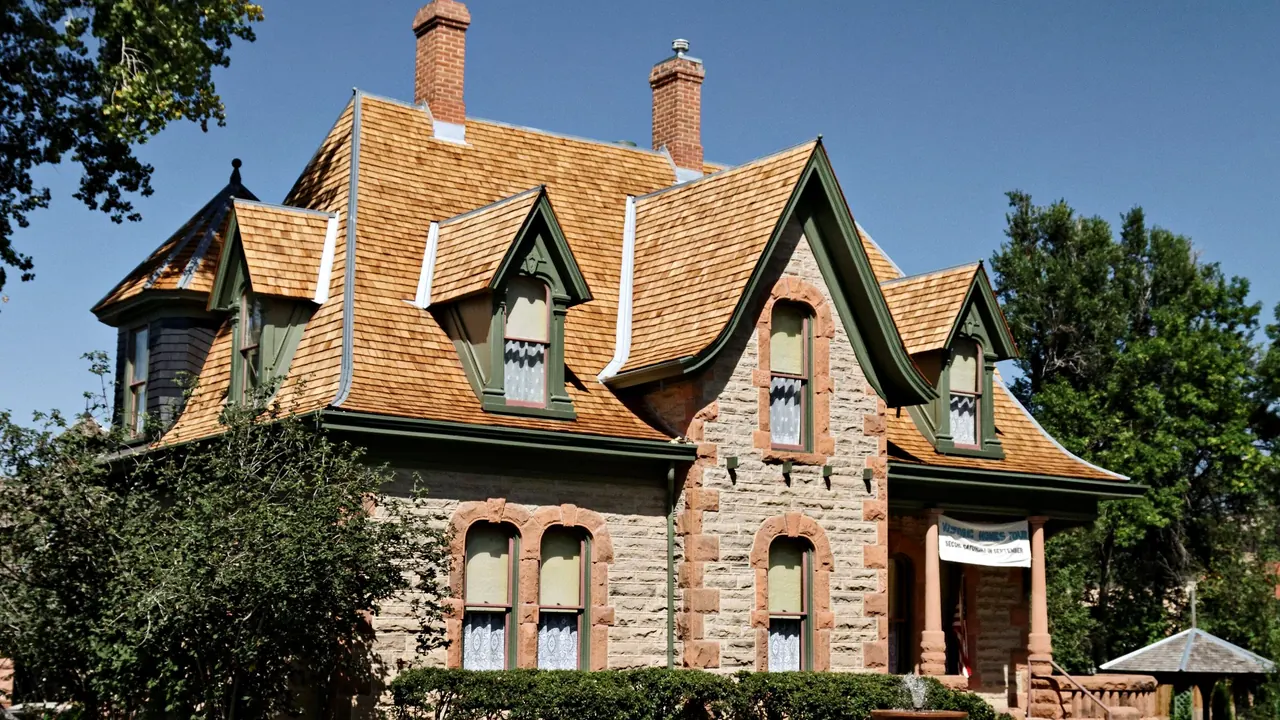
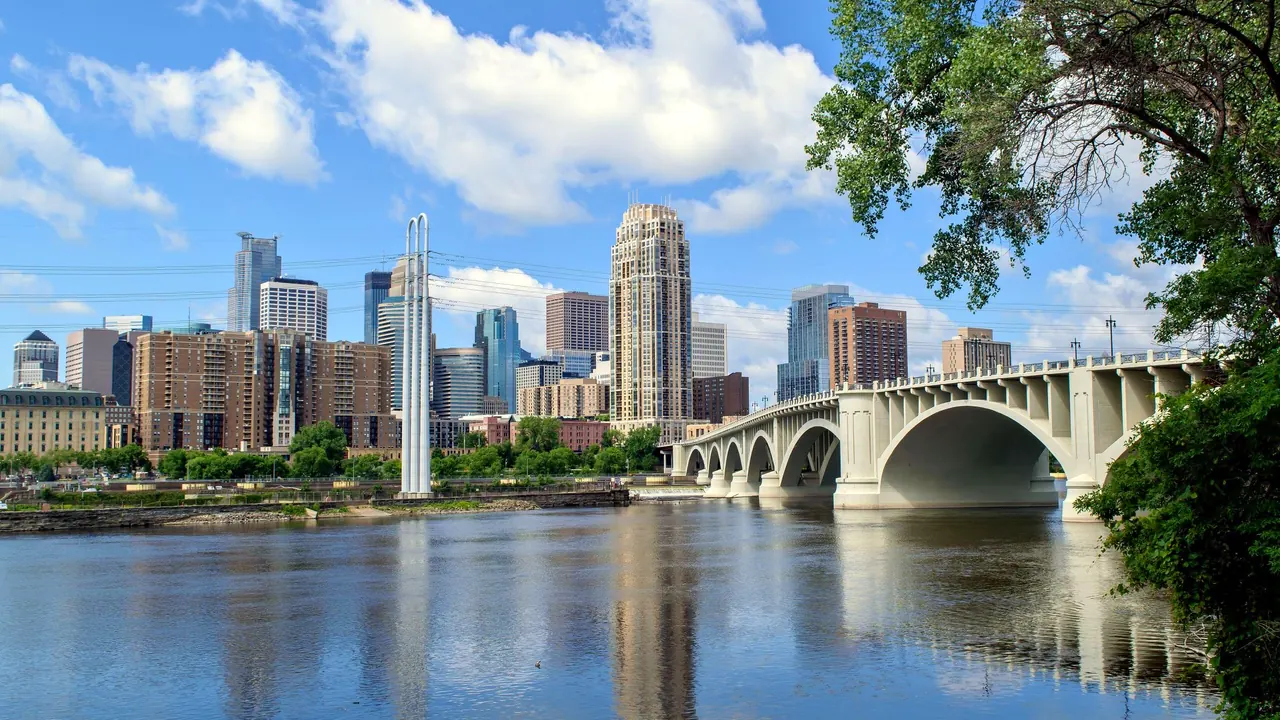
Photos: Fort Collins by Gribeco, CC BY-SA 3.0, cropped; Minneapolis by Thomas Parker, Pexels License.
Fort Collins or Minneapolis?
Our verdict in twelve categories, each scored against the same fixed benchmark cities, and the climate month by month, so you can choose for your trip.
Choose Fort Collins for
- nature and the outdoors
- day trips
Fort Collins is for travellers who want the mountains on the doorstep and a laid-back town to come back to in the evening. The foothills trails, the Poudre Canyon and Rocky Mountain National Park are all within easy driving distance, and Boulder and Denver are close by. The brewery scene adds a lot to an active trip. If your days are for hiking, rafting or cycling and your evenings are for a taproom, this is the better base.
Choose Minneapolis for
- live music and the arts
- culture and sights
- beaches
Minneapolis is the better choice for a city trip in the full sense. The Guthrie, the orchestras and First Avenue give it a stage scene Fort Collins can't match, and its art museums, immigrant food corridors and the Mall of America add depth. Families do better here too. In summer the city lakes make up for the lack of mountains, so long as you avoid the hard winter.
Scoreboard
Twelve categories on one fixed scale from 0 to 100. The shaded stretch is the gap between the two.
Your match
Pick a travel style or drag the sliders, and both match scores follow your weighting.
Wins on nature and the outdoors and day trips with your weighting.
Wins on live music and the arts and culture and sights with your weighting.
What matters to you?
Category by category
What the scores mean for a trip.
Beaches & swimming
Neither city has a coast, but Minneapolis does far more with its lakes. Lake Harriet, Bde Maka Ska and Lake Nokomis are inside the city, with sandy strips and lifeguards in summer, and many people bike over after work for a swim.
In Fort Collins, swimming means driving out to Horsetooth Reservoir in the foothills. It has a swim beach and coves busy with boats and paddleboards. In both places the season is short and swimming is a side activity, but Minneapolis makes it part of an ordinary summer evening.
Food & drink
Both cities run on brewery taprooms. Fort Collins has the stronger beer reputation, with long-established breweries offering tours on the north side of Old Town. Its eating, though, stops at gastropubs, tacos and a few farm-to-table kitchens, and there is little fine dining.
Minneapolis has the more interesting food. Lake Street and Eat Street have Somali, Ethiopian, Vietnamese and Mexican kitchens, and there are Hmong markets and the Midtown Global Market. The chef-driven restaurants of the North Loop and Northeast give it a dining tier that Fort Collins sends people to Denver for.
Culture & sights
Fort Collins can be seen in a day. Its red-brick and sandstone Old Town around the tree-lined pedestrian square is the main sight, with the Museum of Discovery, the Victorian Avery House and the university's art museum to round it out. It is a pleasant wander rather than a sightseeing programme.
Minneapolis gives you far more to see. The encyclopedic Minneapolis Institute of Art, free to enter, and the Walker's contemporary galleries, with the Sculpture Garden beside them, are serious collections. On the riverfront, the Mill City Museum sits in the ruins of a flour mill near the Stone Arch Bridge and St Anthony Falls. Taken together, the city's main sights fill two or three days.
Nightlife
Fort Collins keeps its nights within a few blocks of the Old Town square. There are pubs, sports bars, rooftop patios and busy taprooms, with a largely student crowd at weekends. Only a handful of dance clubs exist, and the summer break makes it quieter.
Minneapolis offers a bit more choice, spread over several districts. Northeast has brewery taprooms and old neighbourhood bars, the North Loop's warehouses hold cocktail bars, and Uptown and the Warehouse District fill with a younger crowd at weekends. Summer patios are the best of it, and winter empties the streets. In both cities, a night out means going to bars rather than clubbing.
Nature & outdoors
This is the category where Fort Collins wins clearly. The plains meet the mountains at the edge of town. Horsetooth Mountain and Lory State Park are a short drive away, the wild and scenic Cache la Poudre carves its canyon to the north-west, and Rocky Mountain National Park's alpine trails are about an hour and a half away.
Minneapolis has a different kind of outdoors, built into the city. The Grand Rounds loop of about 80km links the lakes, Minnehaha Falls and the Mississippi gorge, and winter adds skating and groomed ski trails in Theodore Wirth Park. It is excellent for cycling and paddling, but the land is flat.
Day trips
Fort Collins has the stronger list. Boulder beneath the Flatirons, Denver's museums, Estes Park at the national park gate and the frontier sights of Cheyenne are all within about an hour or so, though you need a car for almost all of them.
The best outing from Minneapolis is St Paul, a light-rail ride away, with its Capitol, cathedral and Summit Avenue mansions. Beyond that come Stillwater on the St Croix and the river towns around Lake Pepin. After those, the choice is mostly farmland.
Good for families
Fort Collins is an easy, gentle place to bring children. The city farm at Lee Martinez Park, the children's garden at Spring Creek, the Museum of Discovery and tubing on calm stretches of the river fill a few relaxed days, but for a zoo or an amusement park you have to drive to Denver.
Minneapolis has much more to fill a family stay. The Mall of America, reachable by light rail, holds an indoor amusement park and an aquarium. St Paul adds the Science Museum and the Children's Museum, and there are two zoos. All that indoor choice matters in a city with long winters.
Getting around
Both cities are good for cycling, with protected lanes, bike-share and long off-road trails, and in both you need a car once you leave the centre. The difference is in public transport. Fort Collins relies on a single rapid-bus corridor plus a compact, flat Old Town.
Minneapolis has two light-rail lines that link the airport, the Mall of America, the university and St Paul. Its skyways let you cross downtown indoors in winter, though in deep cold walking outdoors is hard going.
Shopping & style
Minneapolis is the better place to shop. The Mall of America has hundreds of stores, Minnesota charges no sales tax on clothing, and the North Loop boutiques and Northeast makers' studios add independent shopping.
Fort Collins offers a few walkable Old Town blocks of bookshops, vintage clothing, Colorado-made gifts and outdoor gear, which is good for an hour's browsing, plus chain retail along the highways.
Affordability
Costs are much the same in both, with mid-range American prices and tax and a tip on every meal. The difference is where the money goes. In Fort Collins the hire car is the biggest extra, although the trails and river paths themselves are free, and rooms get dearer on graduation and football weekends.
Minneapolis lets you skip the car for much of a stay thanks to inexpensive light rail. Its free art museum and the free lakes and parks keep sightseeing costs down, while conventions and big sporting events push hotel rates up.
Live music & performing arts
Minneapolis has one of the country's strongest stage scenes. The Guthrie Theater sits above the Mississippi, the restored Hennepin Avenue theatres host Broadway tours, and the Minnesota Orchestra, the St Paul Chamber Orchestra and the Minnesota Opera are all based in the Twin Cities. First Avenue, where Prince filmed Purple Rain, anchors the rock scene.
Fort Collins is respectable for a town of its size. The Lincoln Center and the university's arts centre stage symphony concerts, opera and touring shows, Old Town bars book bluegrass and indie bands, and summer brings free outdoor concerts. Bigger acts play Denver instead.
Wellness & relaxation
Fort Collins has no bathing tradition and no hot springs nearby, just standard day spas, massage studios and yoga classes. The nearest mineral soak is at Idaho Springs, a long drive away, although the quiet river paths and sunny days are a calm way to unwind.
Minneapolis has a little more to offer thanks to its Nordic heritage. In winter, public saunas are set up on frozen lakes, and people alternate the heat with a cold plunge or a roll in the snow. Apart from that, it has ordinary day and hotel spas, and many people unwind with a walk round a lake at dusk.
When should you go?
Pick your month. The climate figures are measured averages, not a forecast.
Fort Collins in July
Minneapolis in July
Daytime high, °C
Rainfall in the month, mm
Where the figures come from
Fort Collins has no rain gauge within 25 km of the centre, so its rainfall comes from a gridded climate dataset read at the destination rather than from a gauge further away.
Temperature and rainfall are climate normals, averaged over the years shown. Fort Collins: 2006-2020 (rainfall 1991-2020) normals, Fort Collins / Redmond (16.1 km from centre). Minneapolis: 1991-2020 (sunshine 1981-2010) normals, Minneapolis-St Paul International (21.5 km from centre).
Fort Collins has a dry, sunny climate with big swings between seasons. Summer is hot, peaking around 32°C in July, which suits reservoir swimming and early starts on the trails but makes midday walking tiring. Rain is light all year and heaviest in late spring, at around 60mm in May. Winter days are cold but usually above freezing. September and early autumn are the most comfortable time for walking and hiking.
Minneapolis has a much harsher winter, with January highs around -5°C and frozen lakes, so a winter visit means spending most of your time indoors. Summer is milder than in Fort Collins, at about 29°C in July, but far wetter, with June the rainiest month at around 116mm. Summer is also very sunny. Late June to early September is the window for lake swimming, and late May and September are the best months for walking the city.
Which traveller are you?
On an outdoors trip, Fort Collins is the clear pick. It has trails to rocky summits, rafting and fly fishing in the Poudre Canyon, and Rocky Mountain National Park within reach. The parkways and lakes of Minneapolis are pleasant, but the land there is flat.
For a culture and arts trip, Minneapolis wins easily. You get the Guthrie Theater, the Minnesota Orchestra and live music at First Avenue, plus the Walker and the free Minneapolis Institute of Art. Fort Collins has a pleasant Old Town and regional stages, and that is about it.
On a family trip with children, Minneapolis has much more to offer. The Mall of America has an indoor amusement park and an aquarium, and there are two zoos, a science museum and safe city lake beaches. Fort Collins is easy and safe with children, but for big attractions families drive to Denver.
Before you go
| Measure | Fort Collins | Minneapolis |
|---|---|---|
| Currency | US Dollar (USD) | US Dollar (USD) |
| Sockets | AB120 V, 60 Hz | AB120 V, 60 Hz |
| Driving side | Right | Right |
| Time zone | UTC-7, UTC-6 in summer | UTC-6, UTC-5 in summer |
| Emergency number | 911 | 911 |
| Elevation | 1,525 m | 264 m |
| Main airport | Denver International Airport (DEN)88 km from centre231 non-stop destinations | Minneapolis–Saint Paul International Airport / Wold–Chamberlain Field (MSP)12 km from centre163 non-stop destinations |
| Public holidays this year | 12 days | 12 days |
By the numbers
| Measure | Fort Collins | Minneapolis |
|---|---|---|
| Population | 169,810 | 429,954 |
| People per km² | 1,181 | 2,889 |
| Museums within 10 km | 2 | 22 |
| UNESCO World Heritage sites within 50 km | 0 | 0 |
Where else could you go?
Every comparison below shares a destination with this one, so you can follow Fort Collins or Minneapolis somewhere new.
- Estes Parkvs Fort Collins
- Bouldervs Fort Collins
- Denvervs Fort Collins
- Winter Park, Coloradovs Fort Collins
- Keystonevs Fort Collins
- Breckenridgevs Fort Collins