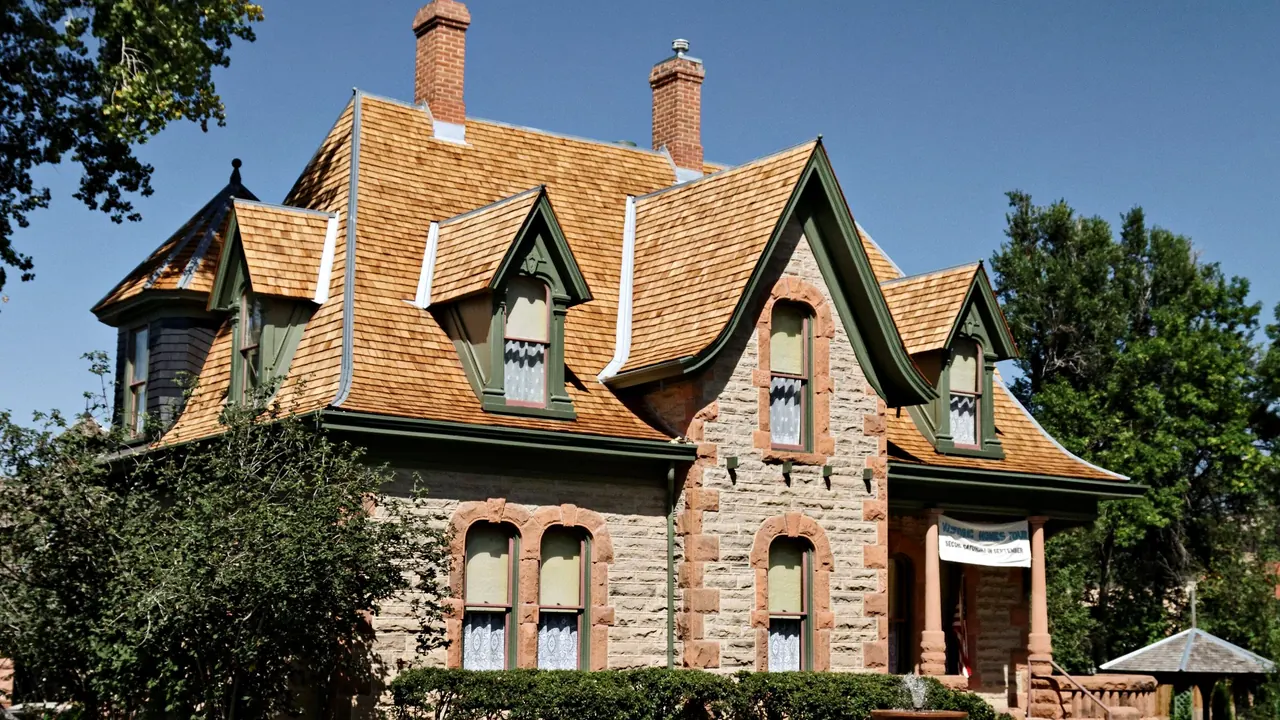
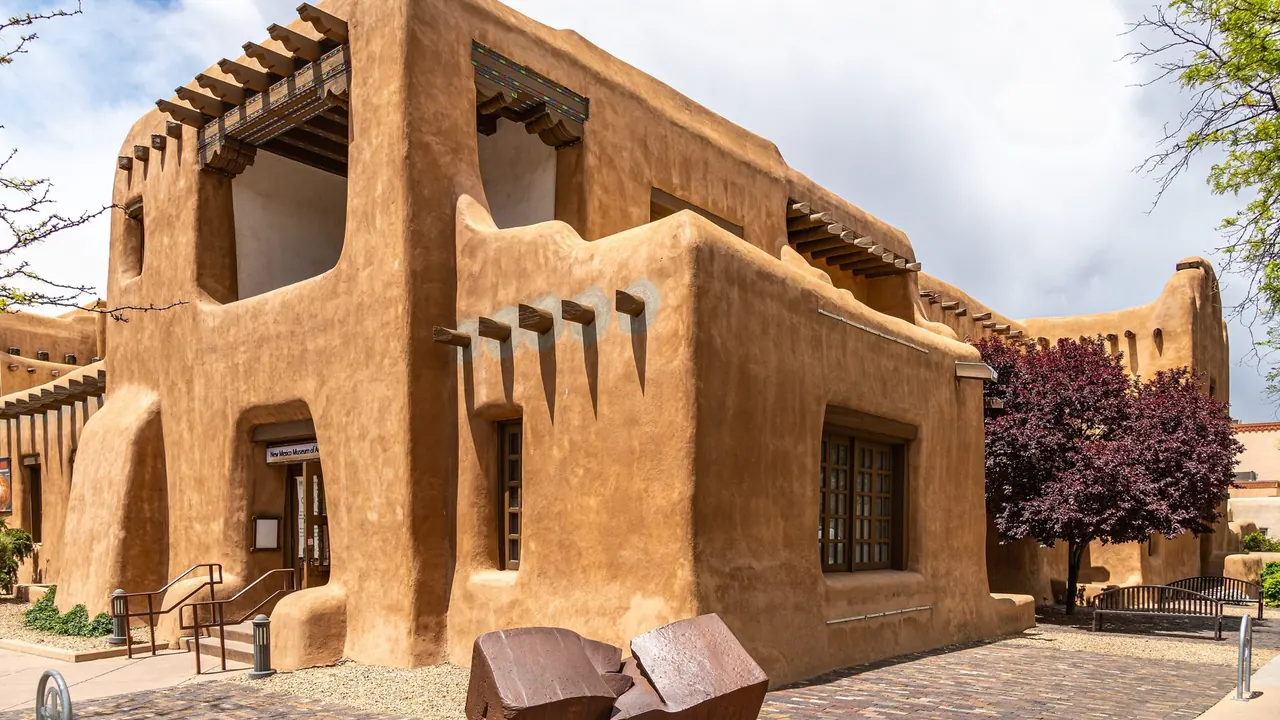
Photos: Fort Collins by Gribeco, CC BY-SA 3.0, cropped; Santa Fe by dconvertini, CC BY-SA 2.0, cropped.
Fort Collins or Santa Fe?
Our verdict in twelve categories, each scored against the same fixed benchmark cities, and the climate month by month, so you can choose for your trip.
Choose Fort Collins for
- nightlife
- prices
- beaches
Fort Collins suits an active, unfussy trip built around the outdoors and beer. You spend the days on foothill trails, in the Poudre canyon or cycling the river paths, then ride between taprooms and finish with a casual night in Old Town. It is the cheaper of the two and the livelier after dark, though its sights take only a day.
Choose Santa Fe for
- culture and sights
- shopping
- wellness
Travellers who want the place itself to be the point should pick Santa Fe. Four centuries of adobe history, strong museums, a cuisine of its own, serious art shopping and a summer opera give it far more depth. Its landscape is every bit as good, and there are more pueblos and old villages within a drive. Expect to pay more and to be in bed early.
Scoreboard
Twelve categories on one fixed scale from 0 to 100. The shaded stretch is the gap between the two.
Your match
Pick a travel style or drag the sliders, and both match scores follow your weighting.
Wins on nightlife and prices with your weighting.
Wins on culture and sights and shopping with your weighting.
What matters to you?
Category by category
What the scores mean for a trip.
Beaches & swimming
Neither city is a beach destination, so this should not decide the trip. Fort Collins makes swimming a little easier, with Horsetooth Reservoir's swim beach and paddleboarding coves just west of town. In Santa Fe the nearest real swim is Abiquiu Lake, about an hour away, or a float on the Rio Grande, and most visitors make do with the hotel pool.
Food & drink
Fort Collins wins on drink. Its large breweries and dense spread of taprooms can fill several days for beer lovers, but the food alongside is gastropub fare, burgers and tacos, and a serious dinner usually means a drive to Denver.
Santa Fe is the better place to eat because it has something Fort Collins lacks: a cuisine of its own. Red or green chile, blue corn, posole and sopaipillas served in old adobe dining rooms near the Plaza give meals a strong sense of place. There is also a fine-dining tier that is unusual for a town its size, though you will find little variety beyond the regional cooking.
Culture & sights
Fort Collins has a pleasant red-brick Old Town, a museum of discovery and a Victorian house museum. Together they make one relaxed day of sightseeing rather than a reason to travel.
The two cities differ more on culture than anywhere else. Santa Fe was a Spanish colonial capital from 1610, and it has the Plaza with the Palace of the Governors, the cathedral and old chapels, Museum Hill, the O'Keeffe Museum and the galleries of Canyon Road. Seeing them properly takes two or three days.
Nightlife
After dark, Fort Collins has more going on, thanks to its university. The pubs, sports bars, rooftop patios and taprooms around Old Town stay busy at weekends, although there are few clubs and the crowd is young.
Santa Fe winds down after a long dinner and a margarita on a rooftop at sunset, and its streets are quiet well before midnight. For proper clubbing, visitors to Fort Collins head to Denver and visitors to Santa Fe go to Albuquerque.
Nature & outdoors
Both are excellent bases for the outdoors, but the landscapes differ. Fort Collins sits where the plains meet the foothills, with Horsetooth Mountain and Lory State Park on the doorstep and rafting and fly fishing in the Poudre canyon. The alpine lakes and elk of Rocky Mountain National Park are within reach, and the paved river trails in town are made for cycling.
Santa Fe combines mountain and desert. It has piñon foothills and the Sangre de Cristo high country above the town, red mesas towards Abiquiu, and the grasslands of Valles Caldera. It also offers the downhill skiing that Fort Collins lacks, less than an hour from the Plaza, while winter near Fort Collins means snowshoes and cross-country skis.
Day trips
From Fort Collins the outings are pleasant rather than memorable: Boulder beneath the Flatirons, the museums of Denver, Estes Park and frontier Cheyenne.
Santa Fe has much the stronger set of day trips, with history at almost every turn. You can take the High Road through Chimayo and Truchas to Taos Pueblo, or visit the cliff dwellings at Bandelier, Pecos, Los Alamos and the old mining villages on the Turquoise Trail. Nearly all of these need a car, though the train does run to Albuquerque.
Good for families
Both cities are safe and relaxed with children, and neither has big headline attractions. Fort Collins is the easier fit for young children, with playgrounds, flat cycle paths along the river, a city farm and days at the reservoir, all at a lower altitude.
Santa Fe is aimed more at adults, but older children who enjoy history and hiking will be happy there. They can climb the ladders at Bandelier, look at the toys in the folk art collection and take lessons at the small ski area.
Getting around
In both cities the centre works on foot, and almost everything beyond it needs a car. The real difference is the bicycle. Fort Collins is flat, with protected lanes, a bike-share scheme and a rapid bus line, so cycling between campus, breweries and parks comes naturally.
Santa Fe's Plaza, Canyon Road and Railyard are a short walk apart, but the altitude makes uphill stretches tiring. Local buses are infrequent, so Museum Hill and the trailheads are reached by car or taxi.
Shopping & style
Fort Collins has a few blocks of independent boutiques, bookshops, outdoor gear shops and vintage clothing in Old Town, plus a regional mall and the chain stores along the highways. It is enjoyable for an hour but not a reason to come.
Santa Fe is a real shopping destination for art and craft. Native American artists sell silver, turquoise and pottery under the portal of the Palace of the Governors, and there are dense clusters of galleries on Canyon Road and in the Railyard. Summer brings markets such as Indian Market, which draw collectors from far away, and gallery prices match a serious art market.
Affordability
Fort Collins is easier on the wallet. Its hotels are mostly mid-range chains, taproom meals are reasonable and the trails and river paths cost nothing, although room prices jump on graduation and football weekends.
Santa Fe charges resort prices around the Plaza, especially during the summer markets, the opera season and Christmas, and its restaurants are aimed at well-off visitors. Staying out along Cerrillos Road helps. In both cities a hire car is a significant extra cost.
Live music & performing arts
Fort Collins keeps a steady programme through the academic year, with the Lincoln Center, the university's concerts and theatre, and indie and bluegrass bands on small stages in Old Town. All of it is regional in scale.
Santa Fe has more to offer, especially in summer. The Santa Fe Opera performs at sunset in its open-sided theatre north of town, a chamber music festival runs at the same time, and the city has a long tradition of flamenco. In winter the programme shrinks to the Lensic theatre and concerts in the old churches.
Wellness & relaxation
Fort Collins has the usual university-town mix of day spas and yoga classes, and the nearest hot-spring soak is at Idaho Springs, almost two hours away by car. Its calm comes from shaded river paths and quiet neighbourhoods rather than from anything built for relaxation.
Santa Fe is the place to unwind. It has outdoor soaking tubs among the pines on the road to the ski area, a large number of spas and healers for a town its size, and the historic mineral pools at Ojo Caliente about an hour north.
When should you go?
Pick your month. The climate figures are measured averages, not a forecast.
Fort Collins in July
Santa Fe in July
Daytime high, °C
Rainfall in the month, mm
Where the figures come from
Fort Collins has no rain gauge within 25 km of the centre, so its rainfall comes from a gridded climate dataset read at the destination rather than from a gauge further away.
Santa Fe's station stands 199 m below the city centre, so the centre is likely a little cooler than the figures say.
Santa Fe has no rain gauge within 25 km of the centre, so its rainfall comes from a gridded climate dataset read at the destination rather than from a gauge further away.
Temperature and rainfall are climate normals, averaged over the years shown. Fort Collins: 2006-2020 (rainfall 1991-2020) normals, Fort Collins / Redmond (16.1 km from centre). Santa Fe: 1991-2020 normals, Santa Fe / Cieneguilla (12.4 km from centre).
Both cities sit high and inland, with cold winters and hot midsummers, so late spring and early autumn are the most comfortable times for walking. In Fort Collins the wettest stretch runs from April to July and peaks in May at around 60mm. That makes early summer hot, with regular showers, and by July highs reach about 32°C. Those weeks suit a swim at the reservoir more than a walk through the streets. August turns drier, and September, still warm but easing off, is the best month for trails and cycling. From December to February daytime highs stay around 5°C.
Santa Fe's year runs the other way round. Spring is very dry, so May is a fine time to visit, and June is already hot at around 31°C. The summer storms arrive in July and August, bringing about as much rain as Fort Collins gets in its wettest month. Winters are a little milder, and September and October are the best months for exploring the town and the hills.
Which traveller are you?
For a culture and arts trip, Santa Fe is the clear choice. Its adobe Plaza, Museum Hill, the O'Keeffe Museum, the Canyon Road galleries and the summer opera fill several days, while the modest sights of Fort Collins take a single unhurried day.
On a trip on a tight budget, Fort Collins makes the money go further. Mid-range chain hotels, reasonably priced taprooms and free foothill trails keep costs down, whereas Santa Fe's hotels and restaurants near the Plaza are priced for a well-off clientele.
For a relaxing and wellness trip, Santa Fe has the edge. Outdoor soaking tubs among the pines, the mineral pools at Ojo Caliente and plenty of spas make it easy to slow down, while Fort Collins has only ordinary day spas and no hot springs nearby.
Before you go
| Measure | Fort Collins | Santa Fe |
|---|---|---|
| Currency | US Dollar (USD) | US Dollar (USD) |
| Sockets | AB120 V, 60 Hz | AB120 V, 60 Hz |
| Driving side | Right | Right |
| Time zone | UTC-7, UTC-6 in summer | UTC-7, UTC-6 in summer |
| Emergency number | 911 | 911 |
| Elevation | 1,525 m | 2,134 m |
| Main airport | Denver International Airport (DEN)88 km from centre231 non-stop destinations | Santa Fe Municipal Airport (SAF)12 km from centre5 non-stop destinations |
| Public holidays this year | 12 days | 13 days |
By the numbers
| Measure | Fort Collins | Santa Fe |
|---|---|---|
| Population | 169,810 | 87,505 |
| People per km² | 1,181 | 645 |
| Museums within 10 km | 2 | 10 |
| UNESCO World Heritage sites within 50 km | 0 | 0 |
Where else could you go?
Every comparison below shares a destination with this one, so you can follow Fort Collins or Santa Fe somewhere new.
- Estes Parkvs Fort Collins
- Bouldervs Fort Collins
- Taosvs Santa Fe
- Albuquerquevs Santa Fe
- Denvervs Fort Collins
- Winter Park, Coloradovs Fort Collins