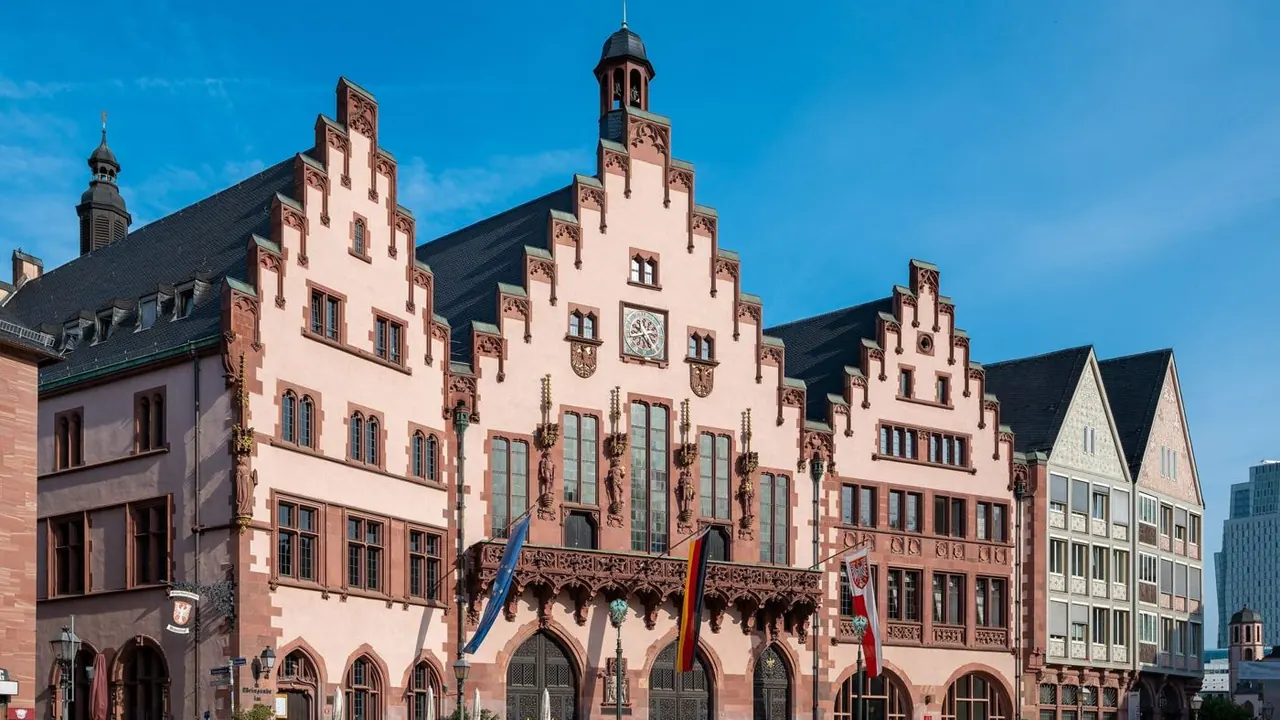
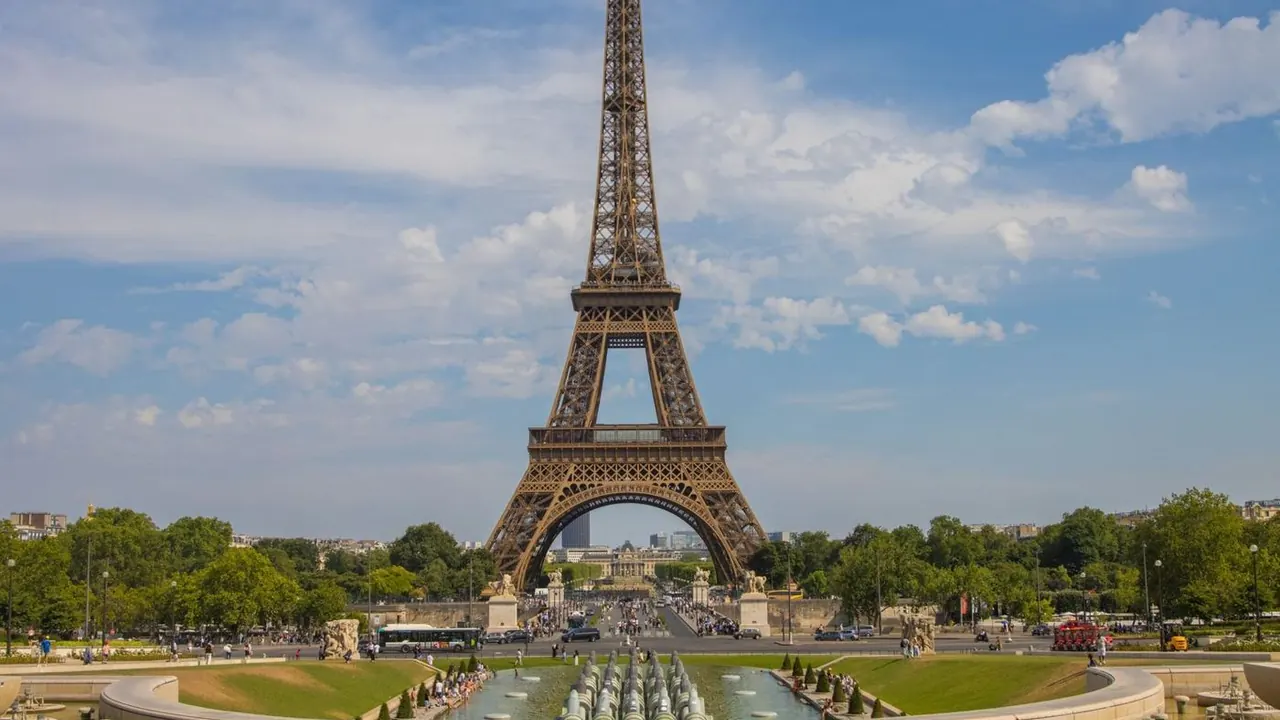
Photos: Frankfurt by Thomas Wolf, CC BY-SA 3.0 DE, cropped; Paris by Efrem Efre, Pexels License.
Frankfurt or Paris?
Our verdict in twelve categories, each scored against the same fixed benchmark cities, and the climate month by month, so you can choose for your trip.
Choose Frankfurt for
- prices
- wellness
- nature and the outdoors
Frankfurt suits a traveller who wants a calmer, cheaper base with Germany's rail network on the doorstep. Spend a couple of days on the Museumsufer and in the apple-wine taverns of Sachsenhausen, then take trains to Heidelberg, the Rhine Gorge and the hot-spring baths of Wiesbaden. It also suits walkers and cyclists heading into the Taunus, and anyone who would rather skip the queues.
Choose Paris for
- food and drink
- shopping
- culture and sights
For almost everything a city break is usually built around, Paris is the stronger choice. Its museums, its food from bakery to haute cuisine, its shopping, its opera and the late bars of the east all go far deeper than Frankfurt's, and a week barely covers them. Expect to pay more for it and to share it with much bigger crowds.
Scoreboard
Twelve categories on one fixed scale from 0 to 100. The shaded stretch is the gap between the two.
Your match
Pick a travel style or drag the sliders, and both match scores follow your weighting.
Wins on prices and wellness with your weighting.
Wins on food and drink and shopping with your weighting.
What matters to you?
Category by category
What the scores mean for a trip.
Beaches & swimming
Neither city is a beach destination, and they differ only in how they make up for it. Frankfurt's swimmers go out to gravel-pit lakes such as the Langener Waldsee, which have real sandy shores and warm water in high summer. The Main is for sitting beside, not for swimming.
Paris brings the beach into town instead, with sand and deckchairs laid out on the riverbanks, swimming spots in the Bassin de la Villette and the Seine, and handsome Art Deco pools. The Normandy coast is about two hours away by train, but the Channel is cool.
Food & drink
Paris is one of the world's great eating cities, and the gap here is wide. What sets it apart is how good everyday eating is. Every quarter has a boulangerie and a cheese shop, and there are morning markets such as Aligre, zinc-counter bistros, natural-wine bars, inventive neo-bistros in the eastern arrondissements and immigrant kitchens serving everything from Belleville couscous to pho in the 13th.
Frankfurt eats well but over a narrower range. The meal to remember is an evening at a Sachsenhausen apple-wine tavern with Grüne Soße and Handkäs, along with a browse through the Kleinmarkthalle. Beyond that, you are mostly choosing between good Turkish, Italian and Asian cooking.
Culture & sights
Frankfurt fills two or three solid days. It has the Städel and the rest of the Museumsufer along the Main, the Römer and the rebuilt old-town lanes, Goethe's birthplace and a skyline of towers unlike anything else in Germany. Much of what looks old was rebuilt after the destruction of 1944.
Paris works on a different scale. The Louvre, the Orsay, the Pompidou, the Orangerie and the Sainte-Chapelle are only the start, and Haussmann's boulevards make the whole city part of the visit. A week still leaves major museums unseen. The cost is queues, so booking ahead matters far more than it does in Frankfurt.
Nightlife
Paris has the fuller and later night out. Bars spill onto the streets of Oberkampf, the Canal Saint-Martin and Belleville, South Pigalle has the cocktail bars and the Marais has its gay scene. The clubs and the summer barges run until dawn, though doors can be selective.
Frankfurt is quieter and only really busy on Friday and Saturday. Where it stands out is techno and house, a tradition it shares with Offenbach, and the rough-edged character of the Bahnhofsviertel. Otherwise, evenings mean cider taverns and the neighbourhood bars of Berger Straße.
Nature & outdoors
Frankfurt has more varied country close at hand. The Taunus starts at the edge of the suburbs, with beech forest, Roman frontier trails and the Großer Feldberg at about 880m. The Rheingau vineyards and the Rhine Gorge add some real scenery.
Paris is more a city of parks: the Luxembourg, the cliffs of the Buttes-Chaumont and the large woods of Boulogne and Vincennes. Its best outing is Fontainebleau, whose sandstone boulders draw climbers, but the country around the city stays flat.
Day trips
Both are excellent bases, and Paris comes out slightly ahead. Versailles, Chartres, Giverny, the Champagne houses of Reims and the Loire châteaux by way of Tours could keep you busy for as many days as the city itself.
Frankfurt's trips are different in kind. Instead of palaces close by, it relies on fast trains: Heidelberg, the castle-lined Rhine Gorge, Cologne cathedral and Würzburg's Residenz, with Mainz, Wiesbaden and the Rheingau closer in. It is especially good for river and wine country.
Good for families
Paris gives children much more to do. Disneyland and Parc Astérix are within easy reach, the Cité des Sciences is hands-on, and there are the Jardin d'Acclimatation and the carousels and toy boats of the Luxembourg. The catch is getting through the day, with stair-only metro stations, small hotel rooms and long queues.
Frankfurt has fewer big draws, mainly the Senckenberg dinosaurs and the zoo, but it is easier with small children. The centre is compact, the trams take pushchairs and the riverside paths suit scooters.
Getting around
Paris is the better city to get around, mainly because its centre is a pleasure to walk from one end to the other and the metro puts a station within a few minutes almost everywhere. The downsides are stairs, packed trains at rush hour and pickpockets on the tourist lines.
Frankfurt is smaller and simpler on foot, with the Römer, the Zeil and the Museumsufer a few minutes apart. Its strengths are regional: one ticket network reaches as far as the Taunus and Mainz, and the airport is about a quarter of an hour from the centre by train.
Shopping & style
Paris is worth the trip for shopping alone. It has the couture houses on Avenue Montaigne, the glass dome of Galeries Lafayette, the Marais designers, the covered passages, the Saint-Ouen flea market and the bouquinistes along the Seine. Even its specialist food shops, selling chocolate, cheese and mustard, are worth seeking out.
Frankfurt handles practical shopping well on the Zeil and in the luxury streets around Goethestraße. Berger Straße and Schweizer Straße have independent shops, but apart from the apple-wine jugs there is little that is particular to the city.
Affordability
Neither city is cheap, but Frankfurt is easier on the wallet, provided you avoid the trade-fair weeks when its business hotels fill up. Rooms get cheaper at weekends and in summer, and cider taverns, Turkish grills and the Museumsufer pass keep daily spending moderate.
Paris costs more at almost every turn, with small, expensive rooms, pricey drinks on café terraces and full admission at the big museums. Bakeries, markets, set lunches, the free collections of the city's own museums and a picnic by the river make it more manageable.
Live music & performing arts
Paris has the larger and grander stage. There is ballet at the Palais Garnier, opera at the Bastille, the Philharmonie, concerts in the Sainte-Chapelle, jazz cellars in Saint-Germain and cabaret in Pigalle, though most of the theatre is in French.
Frankfurt holds its own on a smaller scale. Its opera company is respected for adventurous productions, the Alte Oper hosts concerts, a few jazz cellars carry on a tradition from the post-war years, and there is an English-language theatre. Its season goes quiet in summer.
Wellness & relaxation
Frankfurt has a ring of spa towns within easy reach, while Paris has to make do with steam rooms. From Frankfurt, a day of taking the waters is easy to arrange: Wiesbaden's Art Nouveau Kaiser-Friedrich-Therme, the thermal baths of Bad Homburg, and the old spa towns of Bad Nauheim and Bad Soden.
In Paris the choice is the hammams, above all the tiled steam rooms of the Grande Mosquée, plus hotel day spas. Beyond those, rest comes in short spells, such as a chair in the Luxembourg gardens or a slow walk along the Seine.
When should you go?
Pick your month. The climate figures are measured averages, not a forecast.
Frankfurt in July
Paris in July
Daytime high, °C
Rainfall in the month, mm
Temperature and rainfall are climate normals, averaged over the years shown. Frankfurt: 1991-2020 normals, Frankfurt Westend (2 km from centre). Paris: 1991-2020 normals, Paris-Montsouris (4.6 km from centre).
The two have almost the same summer, with highs around 26°C in July and August. That is warm enough to sit outside late, and warm enough for Frankfurt's forest lakes to be pleasant for a swim, though neither city has a sea. Winter is where they part. Frankfurt drops to about 5°C in January and is grey, with only about 37 hours of sunshine in December, while Paris stays a few degrees milder through the cold months.
For walking the streets, May, June and September are the best months in both cities, warm without being hot. In each city the rain is spread fairly evenly through the year. Frankfurt's wettest month is July and Paris gets its heaviest rain in May, so pack an umbrella whenever you go.
Which traveller are you?
On a culture and arts trip, Paris is the clear choice. Frankfurt's Städel and its adventurous opera fill a good weekend, but the Louvre, the Orsay, the Palais Garnier and the Philharmonie give Paris enough for a week of days and evenings.
For a relaxing and wellness trip, Frankfurt works better. Wiesbaden's hot-spring baths and Bad Homburg's spa park are a short train ride away, and the Palmengarten offers calm afternoons. Paris has a few hammams, but its streets are crowded and noisy.
For a trip on a tight budget, Frankfurt asks you to give up less. One regional ticket reaches the Taunus trails and Mainz, and evenings on the Main cost little. In Paris, saving money means sleeping far out and walking the Seine rather than paying for museums.
Before you go
| Measure | Frankfurt | Paris |
|---|---|---|
| Official language | German | French |
| Currency | Euro (EUR) | Euro (EUR) |
| Sockets | CF230 V, 50 Hz | CE230 V, 50 Hz |
| Driving side | Right | Right |
| Time zone | UTC+1, UTC+2 in summer | UTC+1, UTC+2 in summer |
| Emergency number | 112 | 112 |
| Elevation | 101 m | 27 m |
| Main airport | Frankfurt Main Airport (FRA)13 km from centre281 non-stop destinations | Charles de Gaulle International Airport (CDG)22 km from centre277 non-stop destinations |
| Public holidays this year | 10 days | 11 days |
By the numbers
| Measure | Frankfurt | Paris |
|---|---|---|
| City population | 760,656 | 2,103,778 |
| People per km² | 3,063 | 19,960 |
| Museums within 10 km | 53 | 251 |
| UNESCO World Heritage sites within 50 km | 4 | 4 |
Where else could you go?
Every comparison below shares a destination with this one, so you can follow Frankfurt or Paris somewhere new.