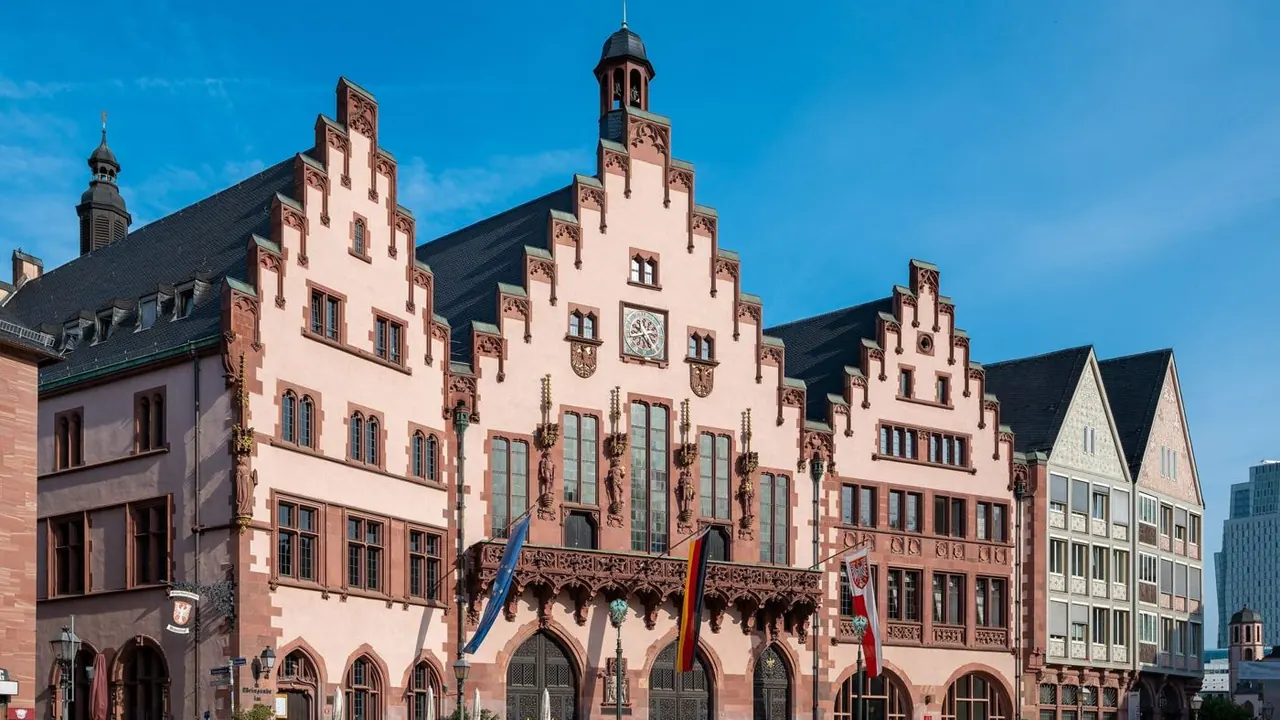
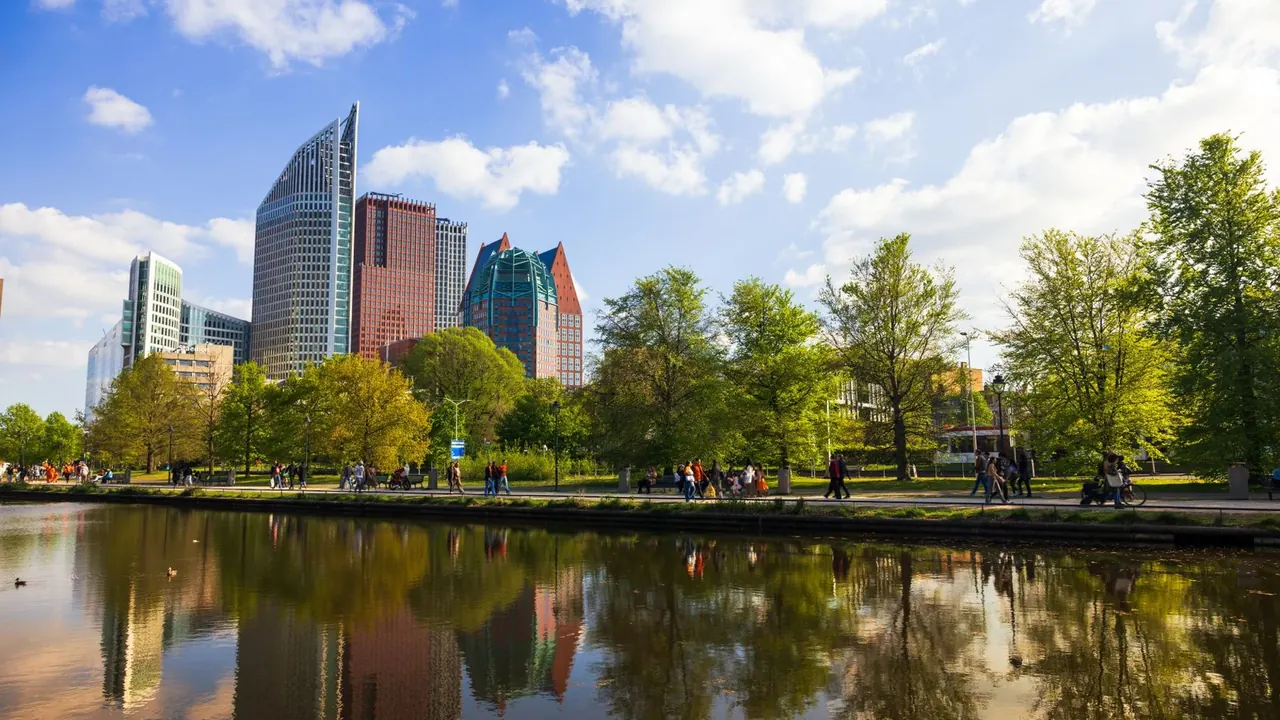
Photos: Frankfurt by Thomas Wolf, CC BY-SA 3.0 DE, cropped; The Hague by Bráulio jardim, Pexels License.
Frankfurt or The Hague?
Our verdict in twelve categories, each scored against the same fixed benchmark cities, and the climate month by month, so you can choose for your trip.
Choose Frankfurt for
- nightlife
- live music and the arts
- wellness
Frankfurt suits travellers who want more going on in the evening: an opera company with a serious reputation, a small but committed techno and house club scene, and long tables in the Sachsenhausen apple-wine taverns. Its surroundings are hills and forest, with the Taunus close by and spa towns such as Wiesbaden for slow afternoons. The high-speed rail hub also puts Heidelberg, the Rhine Gorge and Cologne about an hour away.
Choose The Hague for
- beaches
- families
- culture and sights
Pick The Hague if you want the sea at the end of a tram line and a city that is easy with children. Scheveningen's sand, Madurodam and the sea aquarium make it the better family base, and the Mauritshuis and Binnenhof give it the edge for paintings and stately sights. Evenings are quieter and the water is cold, but Delft, Leiden and Amsterdam are all a short train ride away.
Scoreboard
Twelve categories on one fixed scale from 0 to 100. The shaded stretch is the gap between the two.
Your match
Pick a travel style or drag the sliders, and both match scores follow your weighting.
Too close to call, level with your weighting
Wins on nightlife and live music and the arts with your weighting.
Wins on beaches and families with your weighting.
What matters to you?
Category by category
What the scores mean for a trip.
Beaches & swimming
This is the clearest gap between the two. The Hague has a proper seaside inside the city: Scheveningen's long sandy beach and pier are a quarter of an hour away by tram, and quieter Kijkduin, backed by dunes, lies to the south.
Frankfurt has no coast at all, and summer swimming means outdoor pools or gravel-pit lakes such as the Langener Waldsee in the southern forest. The Hague's weak point is the North Sea itself, which is too cold and choppy for long swims, so it wins on sand and sea air rather than on bathing.
Food & drink
The two eat about equally well, but in different directions. Frankfurt's strength is its own Hessian tradition: Grüne Soße and Handkäs at the shared tables of the Sachsenhausen apple-wine taverns, the Kleinmarkthalle for regional produce, and cheap Turkish and global food in the Bahnhofsviertel.
The Hague's best cooking comes from the former Dutch East Indies, and a rijsttafel or a plate of rendang here is among the best outside Indonesia. Add herring from street carts and seafood by Scheveningen harbour, and it suits travellers who would rather have Asian flavours and fish than sausages and cider.
Culture & sights
The Hague has the edge for great sights. The Mauritshuis is small, but Vermeer's Girl with a Pearl Earring and Rembrandt's Anatomy Lesson make it worth a trip on their own. The Binnenhof, the Peace Palace, the Mondrian collection and the Panorama Mesdag add a stately, governmental character.
Frankfurt offers breadth rather than masterpieces: more than a dozen museums along the Museumsufer, led by the Städel, with Goethe's birthplace, the Römer and the Paulskirche close together. Much of its old town is a post-war reconstruction, set against the most striking skyline of towers in Germany.
Nightlife
Frankfurt is the better night out. Together with Offenbach it has deep roots in techno and house, and a small club scene still keeps that going at weekends, while the Bahnhofsviertel's cocktail bars and late kiosks give evenings an edge.
The Hague is more about terraces than dance floors: after-work drinks on the Plein, student bars at the Grote Markt and, in summer, sundowners at the Scheveningen beach pavilions. Anyone who wants clubs usually takes the train to Rotterdam or Amsterdam.
Nature & outdoors
Frankfurt has more varied ground to explore. The Taunus hills rise just beyond the northern suburbs, with beech forest and Roman frontier trails climbing to the Großer Feldberg at about 880m. The Stadtwald and the Rheingau vineyards add woodland and wine-country walks.
The Hague is completely flat, but its outdoors has a coastal character that Frankfurt cannot match: the sand hills and ponds of Meijendel, the Haagse Bos reaching almost into the centre, and dune cycle paths towards the bulb fields. The wind is good for kitesurfing but makes cycling hard work.
Day trips
Both are outstanding bases, and the difference lies in distance and in the kind of place you reach. Frankfurt's high-speed rail covers a wider area: Heidelberg's castle, the castles and wine villages of the Rhine Gorge, and Cologne Cathedral are each about an hour away.
From The Hague everything is closer and more urban. Delft and Leiden are about fifteen minutes away, Rotterdam under half an hour, and Amsterdam, Utrecht and Haarlem within the hour, with Kinderdijk's windmills and the Keukenhof bulb fields for spring.
Good for families
The Hague is the easier city for families. Madurodam's miniature Netherlands is a real highlight, and the beach, pier and sea aquarium at Scheveningen, Museon and Duinrell's water park fill several more days. Rainy weather is the main limit.
Frankfurt does well for a shorter stay, with dinosaur skeletons at the Senckenberg, a central zoo, the Palmengarten glasshouses and boat trips past the skyline. None of it pulls children in the way Madurodam and the seaside do.
Getting around
Both are easy without a car, and both have a walkable centre. Frankfurt relies on an integrated U-Bahn, S-Bahn and tram system that reaches the Taunus and Mainz on one network, and its airport is a quarter of an hour from the centre by train, though the zones take some learning.
The Hague runs on trams and bicycles. The beach and the Peace Palace are well away from the Binnenhof, but frequent trams link them, and the cycle lanes and dune paths make a hired bike the most pleasant way to get around.
Shopping & style
Neither is a shopping destination and they are evenly matched, but the feel differs. Frankfurt is bigger and more practical, with the Zeil's department stores and malls, luxury houses on Goethestraße and independent shops along Berger Straße.
The Hague is smaller and more refined, with antique dealers and galleries on the Denneweg and Noordeinde and the glass-roofed Passage from the 1880s. Its Haagse Markt, a huge open-air market of fabrics and spices, is the more memorable stop of the two cities.
Affordability
Both are expensive, and in both the hotels set the price. Business or government travellers fill rooms on weekdays, so a weekend stay helps in either city. In Frankfurt the trade fairs are the time to avoid, when rooms become scarce, while in The Hague the seafront hotels charge most in summer.
Eating cheaply is easy in each: cider taverns and Turkish grills in Frankfurt, and Indonesian and Surinamese plates and the Haagse Markt in The Hague, where a bicycle also keeps transport costs down.
Live music & performing arts
Frankfurt has the fuller stage. Its opera company is among the most respected in Germany, the Alte Oper hosts the radio symphony orchestra, and jazz cellars keep a post-war tradition alive, though summer is quiet.
The Hague's great strength is Nederlands Dans Theater, a world-class contemporary dance company seen on home ground, alongside the Residentie Orkest. With no resident opera company and theatre mostly in Dutch, it has less to offer visitors overall.
Wellness & relaxation
Frankfurt comes out ahead because of its surroundings rather than the city itself. Real spa towns lie within an hour: Wiesbaden with its Art Nouveau Kaiser-Friedrich-Therme fed by hot springs, Bad Homburg with thermal baths in a spa park, and Bad Nauheim and Bad Soden.
The Hague offers the Dutch whole-day sauna complex, with steam rooms, cold plunges and gardens, where nudity is usually expected. Its real asset is calm streets and early nights, and Scheveningen's past as a bathing resort survives only in the Kurhaus building.
When should you go?
Pick your month. The climate figures are measured averages, not a forecast.
Frankfurt in July
The Hague in July
Daytime high, °C
Rainfall in the month, mm
Where the figures come from
The Hague has no rain gauge within 25 km of the centre, so its rainfall comes from a gridded climate dataset read at the city rather than from a gauge further away.
The Hague's sunshine is measured 60 km from the centre, at De Bilt.
Temperature and rainfall are climate normals, averaged over the years shown. Frankfurt: 1991-2020 normals, Frankfurt Westend (2 km from centre). The Hague: 1991-2020 normals, Valkenburg (13.6 km from centre).
Frankfurt has the warmer, sunnier summer. From May to September the days are comfortable for walking, and July and August reach about 26°C. That is warm enough for the forest lakes south of the city without being too hot for the streets. Winters are grey and cold, with very little sunshine in December, and rain is spread fairly evenly through the year, a little heavier in summer.
The Hague stays cooler. Summer highs peak around 21°C and the sea only reaches about 19°C in August, so beach days mean sunbathing and quick dips, best from late June to early September. Spring is its driest spell, and April is good for cycling the dunes. From July the rain builds and stays at around 78mm a month through autumn and winter. Both cities are chilly in winter, though The Hague gets a little more sun in the darkest months.
Which traveller are you?
On a beach and sun trip, Frankfurt has the warmer summer but nowhere to swim beyond pools and lakes. The Hague is the clear choice, because you can see a museum in the morning and lie on the sand by afternoon. The sea there is only for a quick dip.
On a family trip with young children, Frankfurt is fine for a long weekend, but its outings soon run out. The Hague makes the better base for a week. It is flat, safe and calm, with playgrounds in almost every park, and wet days are the only real problem.
For a food and nightlife trip, Frankfurt gives you more to do once dinner is over. Friday and Saturday nights spread across several districts, from neighbourhood bars to summer drinking on the Main banks. In The Hague the Indonesian dinner is the best part, and most evenings finish early.
Before you go
| Measure | Frankfurt | The Hague |
|---|---|---|
| Official language | German | Dutch |
| Currency | Euro (EUR) | Euro (EUR) |
| Sockets | CF230 V, 50 Hz | CF230 V, 50 Hz |
| Driving side | Right | Right |
| Time zone | UTC+1, UTC+2 in summer | UTC+1, UTC+2 in summer |
| Emergency number | 112 | 112 |
| Elevation | 101 m | 1 m |
| Main airport | Frankfurt Main Airport (FRA)13 km from centre281 non-stop destinations | Rotterdam The Hague Airport (RTM)16 km from centre53 non-stop destinations |
| Public holidays this year | 10 days | 11 days |
By the numbers
| Measure | Frankfurt | The Hague |
|---|---|---|
| City population | 760,656 | 548,320 |
| People per km² | 3,063 | 5,589 |
| Museums within 10 km | 53 | 54 |
| UNESCO World Heritage sites within 50 km | 4 | 4 |
| Swim season, months above 21 °C | - | None |
Where else could you go?
Every comparison below shares a destination with this one, so you can follow Frankfurt or The Hague somewhere new.