French Alps or Loire Valley?
Our verdict in twelve categories, each scored against the same fixed benchmark cities, and the climate month by month, so you can choose for your trip.
Choose French Alps for
- nature and the outdoors
- beaches
- wellness
Pick the French Alps if the landscape is the trip. That could mean skiing the huge linked areas of the Tarentaise in winter, or walking below Mont Blanc and paragliding over Lake Annecy in summer, with spa towns such as Aix-les-Bains and Évian for slower days. It costs more, especially in the big winter resorts, and the towns are pleasant extras rather than the reason to go.
Choose Loire Valley for
- culture and sights
- prices
- day trips
The Loire Valley suits travellers who want history, wine and an easy pace. Its Renaissance châteaux and medieval abbeys are the main event, and from a base in Tours you can reach a different town each day. The flat riverside cycle route links one cellar door to the next. Expect quiet evenings and gentle countryside rather than drama, at noticeably lower cost.
Scoreboard
Twelve categories on one fixed scale from 0 to 100. The shaded stretch is the gap between the two.
Your match
Pick a travel style or drag the sliders, and both match scores follow your weighting.
Wins on nature and the outdoors and beaches with your weighting.
Wins on culture and sights and prices with your weighting.
What matters to you?
Category by category
What the scores mean for a trip.
Beaches & swimming
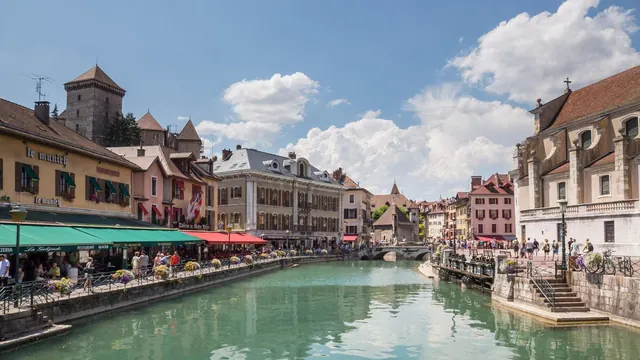
Neither destination has a coast, but the Alps have real lake swimming. Lake Annecy has clear water and grassy beaches at Sévrier and Talloires, and there is more at Lac du Bourget and the pebbly lidos on Lake Geneva, all from late June to early September.
The Loire itself is dangerous to swim in. In the valley that leaves roped-off lakes such as the Lac de Maine near Angers or, more often, the pool at your gîte. If swimming matters on a summer trip, the Alpine lakes win easily.
Food & drink
Both regions eat well, but in different ways. The Alps cook rich mountain food built on Reblochon and Beaufort, with lake perch, Savoie whites and some of France's most decorated kitchens around Annecy, Megève and Courchevel, though resort menus soon start to repeat themselves.
In the Loire, wine leads. You can taste Vouvray, Chinon and sparkling Saumur in cellars cut into the tufa, and eat rillettes, fish in beurre blanc and goat cheese from the markets of Tours and Saumur. It makes for a lighter, more varied week of eating, though villages have little choice.
Culture & sights
Here the Loire is in another league. Chambord and Chenonceau, royal Blois and Amboise, Leonardo's last home at Clos Lucé, the Plantagenet tombs at Fontevraud and the Apocalypse Tapestry in Angers make sightseeing the point of the whole trip.
The Alps offer good half days instead: Annecy's old town and its canals, the ducal château in Chambéry, Grenoble's fine-arts museum and Vauban's star-shaped walls at Briançon. They fill a rainy afternoon rather than an itinerary.
Nightlife
The Alps have a real party scene, but only in the ski season. Après-ski starts on the slopes at Val Thorens, Val d'Isère and Méribel and carries on into resort bars and late clubs. In summer it shrinks to Annecy's lakeside terraces and Grenoble's student bars.
Loire evenings mean dinner and a bottle of Chinon, and the student café terraces around Place Plumereau in Tours are the one lively spot. Stay in the countryside and the nights are silent.
Nature & outdoors
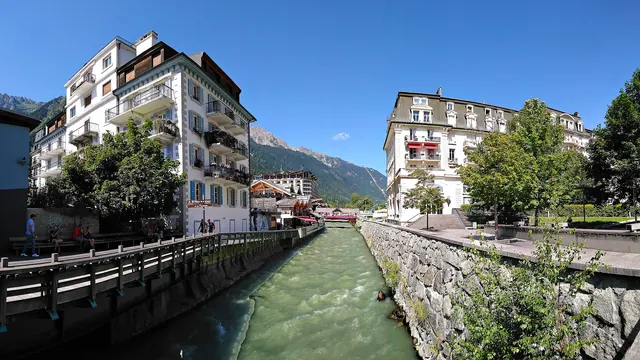
This is the widest gap between the two. The Alps give you Mont Blanc seen up close from the Aiguille du Midi, the Tour du Mont Blanc, chamois and marmots in the Écrins and some of the world's largest linked ski areas, plus road cycling over the Galibier and rafting on the Isère.
The Loire's outdoors is gentle. There are willow-lined sandbanks, troglodyte cliffs, canoe trips among the river islands and the flat Loire à Vélo route, with heath and ponds in the Sologne. It is lovely for a slow ride, but there are no hills to climb and no wild country.
Day trips
The Loire is made for day outings. From Tours you can rotate between Amboise, Chinon, Loches, the caves around Saumur and Angers, then add Chartres, or Paris about an hour away by high-speed train. The only risk is seeing too many château interiors in a row.
The Alps reward the right base. From Annecy or the Lake Geneva shore, Geneva, Yvoire and the ferries to Lausanne are easy, and Chamonix reaches Aosta through the Mont Blanc tunnel. From the deep Tarentaise valleys, though, most of the day goes on the road.
Good for families
Both work well with children, in different ways. The Alps have ski schools with snow gardens, car-free resorts like Avoriaz and Flaine, the rack railway to the Mer de Glace and shallow lake beaches near Annecy, though altitude, cold mornings and heavy gear tire small children.
In the Loire, the highlights are a full day at the ZooParc de Beauval, Leonardo's full-size machines at Clos Lucé and the magic museum facing Blois château. Flat cycling and gîte pools fill the days in between, and the thing to avoid is too many formal rooms in a row.
Getting around
The Loire is simpler to cover. Traffic is light, the main sights are rarely more than an hour apart, a rail line follows the river from Orléans to Angers and a cycle route links the towns, though Chambord and the wine villages are easier by car.
The Alps are easy once you are in a resort, where lifts link whole valleys. Getting there means a transfer from Geneva, Lyon or Grenoble, Saturday queues up the Tarentaise and snow chains on many roads. In summer the lakes and passes lie in separate valleys, so a car is close to essential.
Shopping & style
The Alps give you more to shop for. Chamonix's mountaineering and ski shops are among the best places in Europe for technical gear, Megève and Courchevel 1850 have luxury boutiques, and Opinel knives and wheels of Beaufort make good things to take home.
In the Loire, shopping is mostly cellar-door wine, goat cheese and Orléans quince paste, with Gien faience and Saumur leather as the local crafts. Tours has ordinary provincial shopping streets and little more.
Affordability
The Loire is easier on the budget. Gîtes and town hotels in Tours or Saumur are moderately priced, set lunches and cellar-door wine are good value, and the main expense is château entrance fees adding up.
The Alps in winter are expensive. Lift passes, equipment hire, ski school and mountain lunches add up quickly, and Courchevel and Megève are among Europe's costliest places to stay. Summer stays, January weeks and bases like Grenoble or Chambéry bring prices back to ordinary French levels.
Live music & performing arts
Neither region is somewhere to go for the stage, but the Loire has a little more. Summer brings sound-and-light shows at Blois and Amboise, chamber music in the medieval barn at Meslay and the street-arts festival in Angers in September, with opera in Tours and Angers through the year.
In the Alps, Grenoble's arts centre and chamber orchestra carry the year-round programme, and summer adds the Évian chamber music gatherings and concerts in mountain churches. In the ski season, the music is mostly bands in après-ski bars.
Wellness & relaxation
In the Alps the spa can be the reason for the trip. Smaller towns such as Brides-les-Bains, La Léchère and Uriage are built around a course of thermal treatment. In winter you can finish a ski day in a hotel hot tub with the snow outside or in Chamonix's baths facing the peaks. The thing to watch is the season: a big resort in full swing is lively rather than restful, so a quiet high village suits a restful stay better.
The Loire has fewer treatments and more calm. Its spas are in converted châteaux and manor hotels, so they are an extra on a sightseeing trip rather than a reason to come. What helps you unwind is the setting: an afternoon in the gardens at Villandry or Chaumont, then an evening in an Anjou village well away from the busiest châteaux.
When should you go?
Pick your month. The climate figures are measured averages, not a forecast.
French Alps in July
Loire Valley in July
Daytime high, °C
Rainfall in the month, mm
Where the figures come from
French Alps's temperatures are measured 35 km from the centre, at Bourg-St-Maurice.
French Alps's station stands 179 m below the place it is measured for, so that place is likely a little cooler than the figures say.
French Alps has no rain gauge within 25 km of the centre, so its rainfall comes from a gridded climate dataset read at the destination rather than from a gauge further away.
Temperature and rainfall are climate normals, averaged over the years shown. French Alps: 1999-2020 (rainfall 1991-2020) normals, Bourg-St-Maurice (35.1 km from centre). Loire Valley: 1991-2020 normals, Tours (20.4 km from centre).
The French Alps have two clear seasons. Winter, from December to April, is for skiing, and daytime highs in the lower valleys where most visitors stay are around 5°C in January. Summer, from late June to early September, is lake-swimming weather, with highs of about 27°C in July. It is wet all year, with often more than 150mm of rain a month in winter and again in May, so plan mountain days with some slack. May, October and November fall between the two seasons, when you get neither snow nor warm lakes.
The Loire Valley is milder in winter and much drier, with less than about 70mm of rain in every month and the sunniest weather from May to September. Summer highs near 26°C are warm enough for cycling and visiting châteaux without being too hot for walking around towns, and late spring and early autumn are just as pleasant. Winter is cool and grey, which makes it a quiet season for indoor sightseeing rather than days outside.
Which traveller are you?
On an outdoors trip, the French Alps are the clear choice. You get glaciers seen from the Aiguille du Midi, the Tour du Mont Blanc, ibex in the Vanoise, vast linked ski areas in winter and paragliding over Lake Annecy in summer. The Loire offers gentle cycling, not mountains.
For a culture and arts trip, choose the Loire Valley. Chambord, Chenonceau, Fontevraud Abbey and the Apocalypse Tapestry in Angers can fill a week, and summer adds sound-and-light shows and chamber concerts. In the Alps, the museums and old towns make good half days at most.
On a relaxing and wellness trip, the French Alps have the edge. Aix-les-Bains, Évian and Saint-Gervais have proper thermal spas, and you can spend unhurried days on the shore of Lake Annecy. The Loire relaxes you through its slow pace and long lunches, but it has no spa-town tradition.
Before you go
| Measure | French Alps | Loire Valley |
|---|---|---|
| Official language | French | French |
| Currency | Euro (EUR) | Euro (EUR) |
| Sockets | CE230 V, 50 Hz | CE230 V, 50 Hz |
| Driving side | Right | Right |
| Time zone | UTC+1, UTC+2 in summer | UTC+1, UTC+2 in summer |
| Emergency number | 112 | 112 |
| Main airport | Geneva International Airport (GVA)150 non-stop destinations | Tours Val de Loire Airport (TUF)5 non-stop destinations |
| Public holidays this year | 11 days | 11 days |
Where else could you go?
Every comparison below shares a destination with this one, so you can follow French Alps or Loire Valley somewhere new.
- Swiss Alpsvs French Alps
- Lake Comovs French Alps
- Normandyvs Loire Valley
- Black Forestvs French Alps
- French Rivieravs French Alps
- Provencevs French Alps