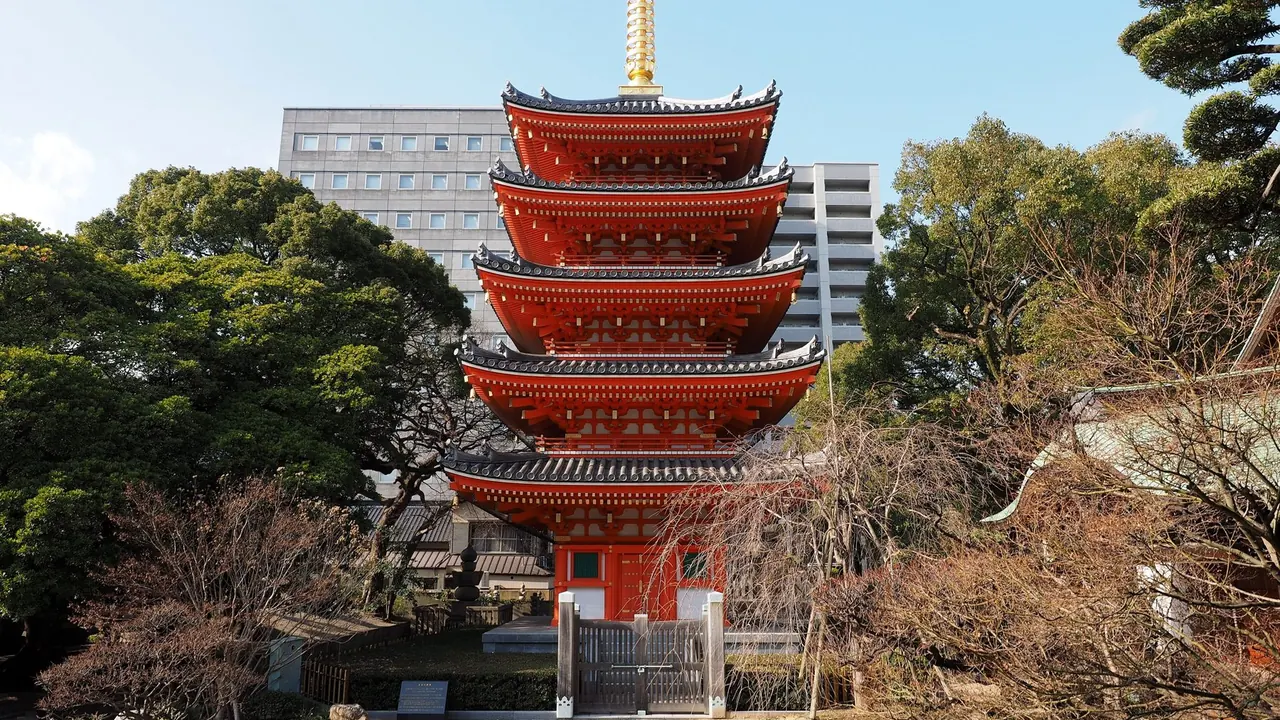
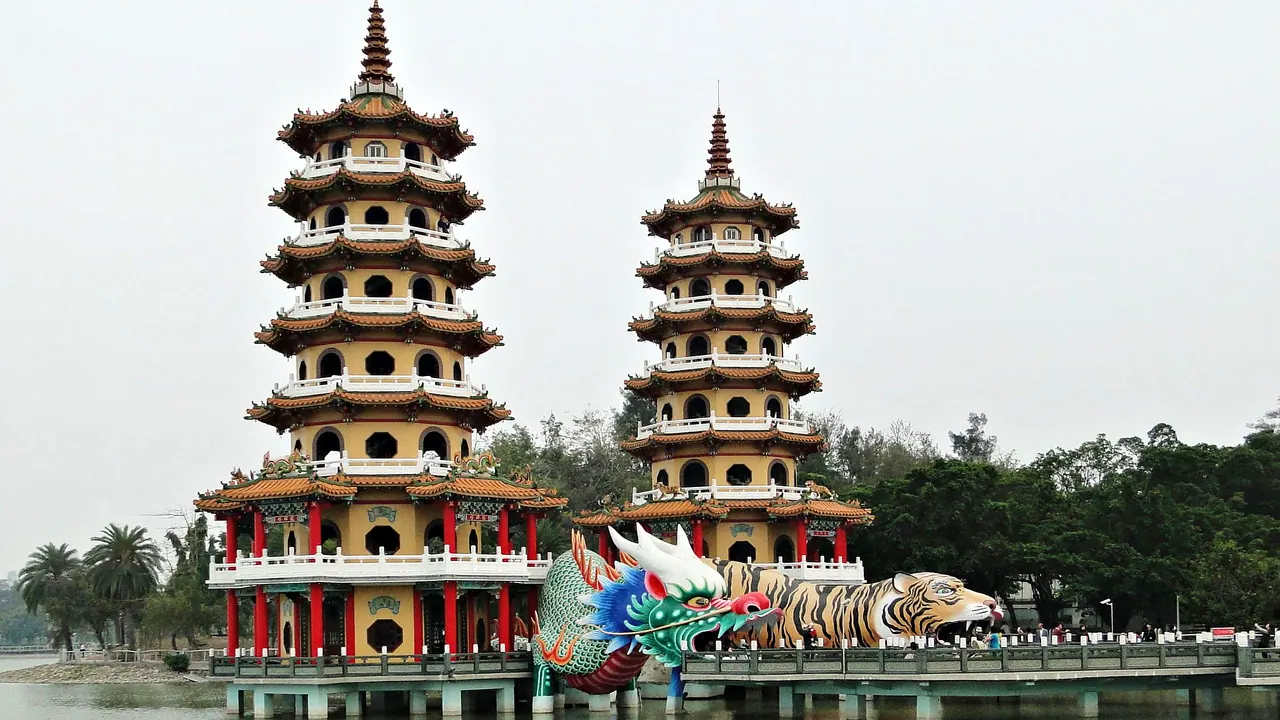
Photos: Fukuoka by Nick-D, CC BY-SA 4.0, cropped; Kaohsiung by Bernard Gagnon, CC BY-SA 3.0, cropped.
Fukuoka or Kaohsiung?
Our verdict in twelve categories, each scored against the same fixed benchmark cities, and the climate month by month, so you can choose for your trip.
Choose Fukuoka for
- nightlife
- wellness
- getting around
Fukuoka is the better all-round choice for most trips. It eats better, drinks later, and it is easier to arrive in and walk around. It also makes a stronger base: the shinkansen reaches Hiroshima, Nagasaki and Kumamoto, and Japan's bathing culture is close at hand. Families, food lovers and anyone who wants a calm, well-organised city with plenty of excursions will find it the easier vacation.
Choose Kaohsiung for
- prices
- live music and the arts
- culture and sights
Kaohsiung makes the most sense on a tight budget, or in the cooler months when Fukuoka is cold. Its pleasures are cheap and informal: night-market suppers, seafood on Cijin, a beer by the Love River and an evening at the Weiwuying arts centre. Tainan is close by for history. It suits travellers who want warm, dry winter weather and a slower port city, and who don't mind a thinner transport network or a quiet club scene.
Scoreboard
Twelve categories on one fixed scale from 0 to 100. The shaded stretch is the gap between the two.
Your match
Pick a travel style or drag the sliders, and both match scores follow your weighting.
Wins on nightlife and wellness with your weighting.
Wins on prices and live music and the arts with your weighting.
What matters to you?
Category by category
What the scores mean for a trip.
Beaches & swimming
Neither city is a beach destination, but Fukuoka is the better one for a summer swim. Momochi is fine for a paddle at the end of the day, and Itoshima's white sand and clear water lie under an hour west. The bathing season, though, runs only through July and August.
Kaohsiung's sea is warm for far longer, yet the city makes little use of it. Cijin's dark sand is for kites and sunsets, and Sizihwan's small swimming area opens only in season, with currents and typhoon swell limiting when you can go in. The real draw is snorkelling with turtles off Xiaoliuqiu, which takes a road-and-ferry journey.
Food & drink
Fukuoka is one of Japan's great food cities and has the deeper range. It is the home of tonkotsu ramen, and you can eat it on a stool at a riverside yatai. It also has mentaiko, mizutaki and motsunabe hotpots, and very fresh Genkai Sea fish, with options from cheap noodle counters up to serious sushi.
Kaohsiung is about cheap, informal southern Taiwanese eating. Try milkfish congee at morning stalls, oyster omelettes in the Ruifeng night market, catch-of-the-day seafood on Cijin and mango shaved ice in summer. It is generous and fun, but the top end is thin.
Culture & sights
Each city fills two or three days, and neither is a major heritage stop, but the character differs. Fukuoka's sights are quiet and contemplative. In old Hakata you can see what is said to be Japan's first Zen temple and a great wooden Buddha. There are also castle walls above Ohori Park and the ancient gold seal in the City Museum.
Kaohsiung's sights are more colourful and grow out of its port history. The Dragon and Tiger Pagodas stand on Lotus Pond, and the red-brick former British Consulate overlooks the harbour mouth. Pier-2 turns old warehouses into galleries, and the Dome of Light makes even a metro station worth a visit.
Nightlife
Fukuoka goes out more and stays out later. Nakasu's neon and riverside stalls start the evening. The real choice for visitors is in the backstreets of Tenjin and Daimyo, with whisky and craft beer bars, small standing counters and the student strip of Oyafuko-dori. Its club scene is modest, though.
In Kaohsiung a night out usually means a stir-fry hall: shared plates of seafood and crates of Taiwan Beer around a table. You can follow it with a cocktail near Pier-2 or a drink on a Love River terrace. The few clubs in Sinsing and Lingya come alive only at weekends.
Nature & outdoors
The two cities are evenly matched outdoors, but the landscapes are very different. Fukuoka's nature is gentle and coastal: short ferry rides to the flower slopes of Nokonoshima, cycling on the Uminonakamichi sandbar, and Itoshima's rocky capes and rice terraces. The Sefuri hills offer longer hikes.
Kaohsiung is wilder and stranger. Shoushan's forest, full of macaques, rises straight from the container port. Further out are the grey badlands of Moon World, the mud volcanoes of Yanchao, the butterfly valleys of Maolin and the coral reefs of Xiaoliuqiu.
Day trips
Fukuoka is the stronger base by some distance, because it is the rail gateway to all of Kyushu and beyond. Dazaifu is half an hour away, and the shinkansen reaches Kumamoto castle and Hiroshima with Miyajima in about an hour. Nagasaki's harbour, Karatsu and the porcelain villages of Arita add more.
Kaohsiung has one excellent outing and a handful of good ones. Tainan, with its Dutch-era forts and its many temples, is a quick high-speed train ride away. Fo Guang Shan's giant Buddha and the umbrella town of Meinong make gentler days out.
Good for families
Fukuoka is the easier city with children. It is compact and spotless, with nursing rooms in stations and an airport only minutes from the centre. Marine World's dolphin show, the Anpanman Children's Museum and the Nokonoshima ferry fill the days without long transfers.
Kaohsiung is warm towards children and has the hands-on science museum, the Cijin ferry and a big theme park in Dashu, which Fukuoka lacks. The day-to-day effort is greater, though. Scooters block the pavements and busy junctions need watching, so walks with a pushchair take more care.
Getting around
Fukuoka is unusually effortless. The subway runs from the airport to Hakata Station in minutes, and the flat centre links Hakata, Nakasu and Tenjin within short walks. Three subway lines and a dense bus network cover the rest.
Kaohsiung's two metro lines and harbour light rail are clean and well signed, but they leave gaps in a spread-out city. Many places are a long walk or a bus ride from the nearest station, and pavements taken over by scooters make walking slower, so taxis and bike-share end up doing a lot of the work.
Shopping & style
Fukuoka is the better shopping city. Tenjin's department stores sit above a long underground arcade, while Daimyo and Imaizumi have independent and vintage shops. It also has crafts worth carrying home, such as Hakata-ori silk, Hakata dolls and porcelain from Arita.
In Kaohsiung, shopping mostly means malls. Xinjuegang adds youth fashion and sneakers, and the night markets sell cheap clothes and gadgets. Tea, pineapple cakes and dried mullet roe are the gifts to look for, but there is no local craft to seek out.
Affordability
Kaohsiung is the cheaper of the two. Market breakfasts and night-market snacks cost very little, transport fares are low, and the temples, parks and Pier-2 are free. Costs rise mainly with imported drinks and Western food.
Fukuoka is affordable by Japanese standards. Its business hotels are good value, and ramen and set lunches are cheap. Spending climbs faster, though, once sushi, kaiseki dinners or evenings in Nakasu enter the plan.
Live music & performing arts
Kaohsiung has the bigger stage. Weiwuying, the wave-roofed arts centre, houses an opera house, a concert hall and a playhouse, which host touring orchestras, dance companies and the city's own symphony orchestra. The harbourside Music Center adds pop concerts, mostly by Mandarin-language acts.
Fukuoka has a respectable regional stage, with touring kabuki at Hakataza and the Kyushu Symphony Orchestra at Acros. It does better on small-venue jazz and local bands in Tenjin. Its most memorable spectacle is the dawn float race of the Hakata Gion Yamakasa in July.
Wellness & relaxation
Fukuoka offers far more for a restful trip. You can use neighbourhood sento and hot-spring complexes on the city's edge, and Futsukaichi Onsen is half an hour away near Dazaifu. Beppu and Yufuin are within a long day out. Ohori Park and the temple gardens of Hakata are also calm places to slow down.
Kaohsiung has no thermal baths of its own. What it does well is massage: cheap, skilled foot reflexology on ordinary streets. Its hot springs at Baolai need an overnight stay.
When should you go?
Pick your month. The climate figures are measured averages, not a forecast.
Fukuoka in July
Kaohsiung in July
Daytime high, °C
Rainfall in the month, mm
Where the figures come from
Kaohsiung has no rain gauge within 25 km of the centre, so its rainfall comes from a gridded climate dataset read at the city rather than from a gauge further away.
Temperature and rainfall are climate normals, averaged over the years shown. Fukuoka: 1991-2020 normals, Fukuoka (1.9 km from centre). Kaohsiung: 1991-2020 normals, Kaohsiung International Airport (6.4 km from centre).
Fukuoka has four clear seasons, and spring and autumn are its best. April, May and October are mild and sunny, good weather for temple walks and hikes in the hills. The rainy season builds through June and peaks in July at about 300mm. July and August are also hot and humid enough to make long walks hard work. August is the month for swimming, when the sea reaches about 27°C. Winter is cool and fairly dry, with January highs near 10°C. That is fine for temples and hot baths, but not for the beach.
Kaohsiung's year runs almost the other way. From November to April it is warm and very dry, with January days around 24°C, and the sea stays warm enough to swim all year. From May the heat and humidity set in, and the summer rains are much heavier than Fukuoka's, peaking at about 480mm in August, so hikes need an early start. Go to Fukuoka in spring or autumn and to Kaohsiung in winter.
Which traveller are you?
For a food and nightlife trip, pick Fukuoka. Stay in Tenjin, keep sightseeing to the mornings and let each dinner run on into a string of bars, all a short walk from bed. Kaohsiung's evenings tend to end when the meal does.
On a tight budget, Fukuoka is manageable with a compact room near Hakata and one special dinner, but Kaohsiung stretches the money further. Book a business hotel by a metro station, avoid long weekends and take the slower ordinary train to Tainan.
For a relaxing and wellness trip, choose Fukuoka in late autumn or winter, when a hot soak feels earned. Stay near Ohori Park and end quiet days at a bathhouse. Kaohsiung offers slow evenings by the water, but no baths in town.
Before you go
| Measure | Fukuoka | Kaohsiung |
|---|---|---|
| Official language | Japanese | Taiwanese Sign Language, Amis, Taiwanese Hokkien, Rukai, Bunun, Kanakanavu, Standard Taiwanese Mandarin, Paiwan, Yami, Atayal, Saaroa, Kavalan, Tsou, Seediq, Puyuma, Saisiyat, Sakizaya, Taiwanese Hakka, Truku, Matsu dialect, Kinmen dialect, Wuqiu dialect |
| Currency | Yen (JPY) | New Taiwan Dollar (TWD) |
| Sockets | AB100 V, 50 and 60 Hz depending on the region | AB110 V, 60 Hz |
| Driving side | Left | Right |
| Time zone | UTC+9 | UTC+8 |
| Emergency number | Police 110, fire 119 | 110 or 112 or 119 |
| Elevation | 8 m | 9 m |
| Main airport | Fukuoka Airport (FUK)5 km from centre46 non-stop destinations | Kaohsiung International Airport (KHH)7 km from centre35 non-stop destinations |
| Public holidays this year | 16 days | - |
By the numbers
| Measure | Fukuoka | Kaohsiung |
|---|---|---|
| City population | 1,603,043 | 2,713,032 |
| People per km² | 4,715 | 919 |
| Museums within 10 km | 23 | 20 |
| UNESCO World Heritage sites within 50 km | 2 | 0 |
| Swim season, months above 21 °C | 4 months | 12 months |
Where else could you go?
Every comparison below shares a destination with this one, so you can follow Fukuoka or Kaohsiung somewhere new.
- Tainanvs Kaohsiung
- Nagasakivs Fukuoka
- Hiroshimavs Fukuoka
- Busanvs Fukuoka
- Gyeongjuvs Fukuoka
- Taipeivs Kaohsiung