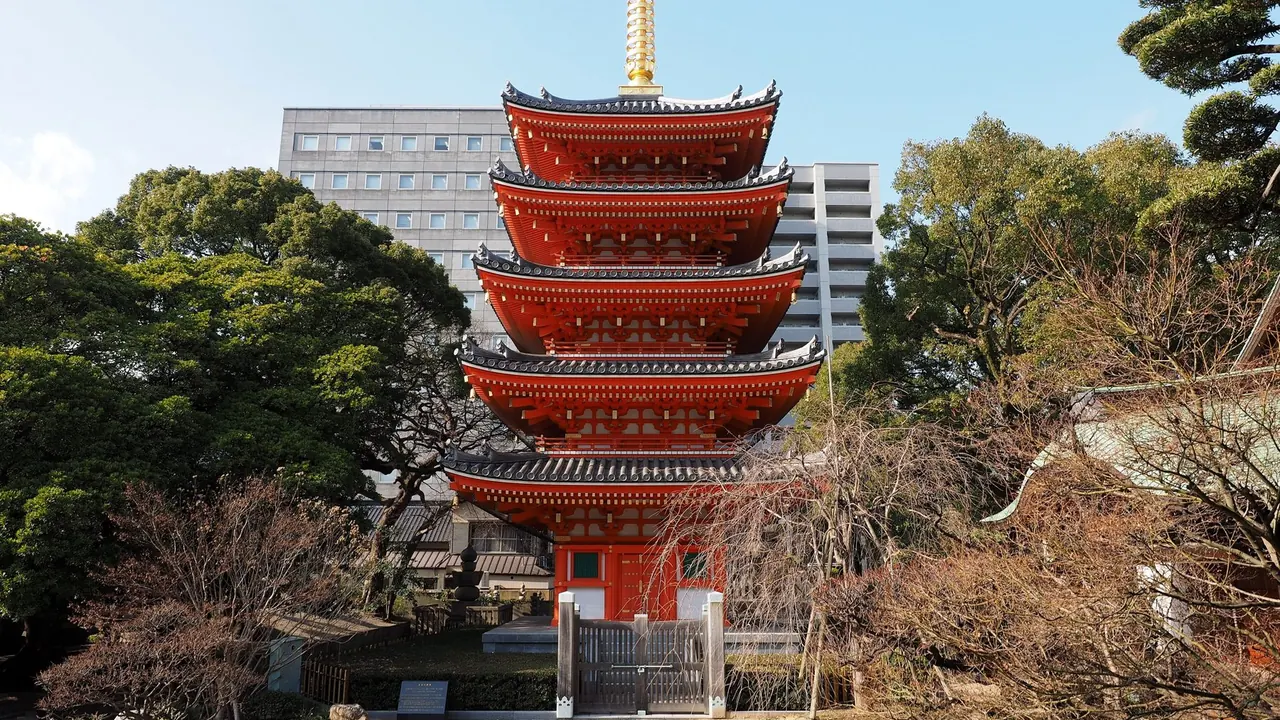
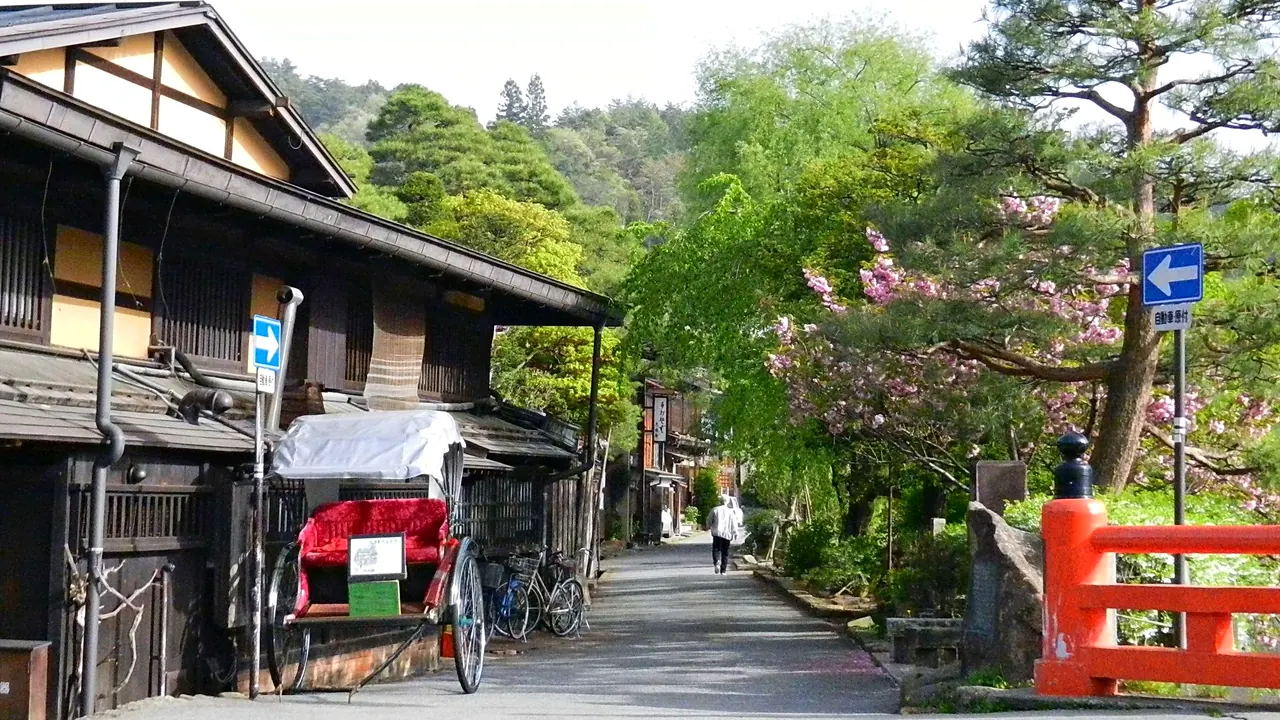
Photos: Fukuoka by Nick-D, CC BY-SA 4.0, cropped; Takayama by lienyuan lee, CC BY 3.0, cropped.
Fukuoka or Takayama?
Our verdict in twelve categories, each scored against the same fixed benchmark cities, and the climate month by month, so you can choose for your trip.
Choose Fukuoka for
- nightlife
- beaches
- food and drink
Fukuoka is the better choice for a traveller who wants a full city to live in for a few days. It has some of Japan's best everyday eating, from tonkotsu ramen to the riverside yatai stalls, a lively bar scene in Tenjin and Daimyo, and easy days out to Nagasaki, Hiroshima and the rest of Kyushu. Families will find it easier too, and in high summer there are beaches nearby.
Choose Takayama for
- wellness
- nature and the outdoors
- culture and sights
Takayama suits a slower trip built around old Japan and the mountains. Its preserved Edo-period merchant lanes give it more atmosphere than anything in rebuilt Fukuoka. It is close to the Northern Alps and Shirakawa-go, and an evening here means a hot-spring bath in a ryokan rather than a bar. Treat it as a quiet stop of two or three days within a wider route, not as a base for nightlife or shopping.
Scoreboard
Twelve categories on one fixed scale from 0 to 100. The shaded stretch is the gap between the two.
Your match
Pick a travel style or drag the sliders, and both match scores follow your weighting.
Wins on nightlife and beaches with your weighting.
Wins on wellness and nature and the outdoors with your weighting.
What matters to you?
Category by category
What the scores mean for a trip.
Beaches & swimming
Fukuoka is a coastal city with beaches you can actually use in July and August. Momochi Seaside Park is good for an evening paddle, and the clearer water and white sand of Itoshima are under an hour away. The bathing season is short and jellyfish arrive towards its end.
Takayama has no beach at all. It sits in a mountain basin about two hours from Toyama Bay, so if you want to swim on the same trip, plan a separate stop by the sea.
Food & drink
Fukuoka is one of Japan's great food cities and Takayama is a good town for a few local specialities. Fukuoka offers Hakata tonkotsu ramen, the yatai street stalls, mentaiko, mizutaki and very fresh fish from the Genkai Sea, at every level from noodle counter to serious sushi.
Takayama's table is built around Hida beef, soy-glazed dango, market pickles and tastings at the sake breweries in the merchant quarter. These are excellent for two or three days, but the choice is narrow and dinner ends early.
Culture & sights
Takayama has the more memorable sense of history. The dark-timbered lanes of Sanmachi Suji, the surviving Takayama Jinya government office and the thatched houses of Hida Folk Village make a whole Edo-period townscape that you can walk through in a day or two.
Fukuoka was largely rebuilt, so its history comes in pockets: the Zen temples of old Hakata, the castle walls above Ohori Park, and the ancient gold seal in the City Museum. It does have more museums, including the Asian Art Museum, but no townscape to match Takayama's.
Nightlife
After dark the two places are very different. Fukuoka is a city that likes to drink. Nakasu's neon and riverside stalls, the standing bars and whisky bars of Daimyo and Tenjin, and the student strip on Oyafuko-dori keep going late, though there are few clubs for dancing.
In Takayama, most people eat dinner at their ryokan and the old town is quiet by nightfall. A few izakaya near the station are good for a sake, and that is about all.
Nature & outdoors
Takayama has the bigger landscapes. Within reach by bus are the Shin-Hotaka ropeway to peaks of nearly 3,000m, the riverside trails of Kamikochi and summer walking on Norikura, with skiing in winter. Getting there takes planning around bus timetables, and Kamikochi closes for the cold months.
Fukuoka's outdoors is gentler and on the coast. There are cycling paths at Uminonakamichi, flower slopes on Nokonoshima, the rocky capes of Itoshima and half-day hikes on Mount Homan. The volcanoes of Aso are a long day away.
Day trips
Both towns are good bases, but Fukuoka's rail links reach further. Dazaifu is about half an hour away, Kumamoto Castle is well under an hour by shinkansen, Hiroshima and Miyajima take about an hour and Nagasaki is under two. That puts much of western Japan within a day.
Takayama has fewer trips, but the best of them are special: the UNESCO-listed gassho villages of Shirakawa-go and Gokayama, the canal town of Hida-Furukawa and Gero Onsen. Kanazawa works better as your next stop than as a return trip in a day.
Good for families
Fukuoka is much easier with children. Marine World has a dolphin show and a seaside park next door, and there are the zoo, the Anpanman museum and the science museum for wet days, plus nursing rooms in the stations. Midsummer heat is the main thing to watch.
Takayama is safe and compact, and children usually enjoy the morning markets, the thatched houses and the festival floats. With no zoo, aquarium or theme park, though, it works best as a day or two within a longer family trip.
Getting around
Both centres are small and flat enough to walk. Fukuoka also has an airport on the subway a few minutes from Hakata Station, three subway lines, a dense bus network and the shinkansen hub for Kyushu.
Takayama's old town, Jinya and markets are all within a quarter of an hour on foot from the station. Beyond the town you depend on regional buses, which need planning around connections and fill up in the busy seasons.
Shopping & style
Fukuoka is a real shopping city. Tenjin has department stores such as Iwataya above a long underground arcade, Daimyo has independent fashion and vintage shops, and Canal City sits near Hakata Station. Hakata-ori silk and boxed mentaiko make good gifts.
Takayama is all about craft. It sells amber Shunkei lacquerware, yew carvings, bentwood furniture and brewery sake, mixed in with plenty of sarubobo souvenirs. It is good for one well-made object, but there is no fashion shopping.
Affordability
Neither place is expensive by Japanese standards. Fukuoka is a little easier on a budget, with compact business hotels, cheap ramen and set lunches, and a cheap subway ride from the airport.
In Takayama, everyday eating and the sights cost little. The money goes on what most people come for: a ryokan night with a full dinner, a proper Hida beef meal, and rooms during festival weeks.
Live music & performing arts
Fukuoka has a modest regular stage. The Hakataza theatre puts on touring kabuki and musicals, the Kyushu Symphony Orchestra plays in the Acros building, and small live houses in Tenjin host jazz and local bands. The Hakata Gion Yamakasa float race in July is its most dramatic street spectacle.
Takayama's performances come almost entirely from its spring and autumn festival, with karakuri puppets and lantern-lit processions. Outside those days there is nothing to see on stage.
Wellness & relaxation
Takayama is the place to slow down. Hot-spring water flows into many ryokan baths, so a soak and an evening in a yukata come with the room. The riverside pools of Okuhida and the famous baths of Gero Onsen are about an hour away.
Fukuoka has neighbourhood sento, large bath complexes on the edge of the city and the old spa town of Futsukaichi near Dazaifu. Ohori Park and the temple gardens of Hakata are calm places, but Beppu and Yufuin are a long day's trip.
When should you go?
Pick your month. The climate figures are measured averages, not a forecast.
Fukuoka in July
Takayama in July
Daytime high, °C
Rainfall in the month, mm
Where the figures come from
Takayama's sunshine is measured 65 km from the centre, at Matsumoto.
Temperature and rainfall are climate normals, averaged over the years shown. Fukuoka: 1991-2020 normals, Fukuoka (1.9 km from centre). Takayama: 1971-2000 (sunshine 1991-2020, rainfall 1981-2010) normals, Takayama (0.5 km from centre).
Fukuoka is mild in winter, around 10°C at midday in January, so its streets can be walked all year. The best months are April, May, October and November. The rainy season begins in June and peaks in July at 301mm, and July and August are hot and humid, reaching 32°C. Those same two months are the beach season, when the sea warms to 27°C in August.
Takayama has far colder winters, with January highs of about 3°C and snow across the region. It still gets more winter sunshine than Fukuoka, which suits snowy visits to Shirakawa-go. Late spring and October are the most comfortable months for walking the old town and the mountain trails. Summer is warm rather than stifling, but July and September are both very wet, so autumn colour is best caught once the September rain has passed.
Which traveller are you?
For a food and nightlife trip, Fukuoka wins easily. You can start at the yatai stalls by the river in Nakasu, move on to ramen, motsunabe and fresh Genkai Sea fish, and finish in the bars of Daimyo. Takayama's restaurants have mostly closed by late evening.
On a family trip with children, Fukuoka is the more practical base. The Marine World aquarium, the city zoo, the Anpanman Children's Museum and the ferry to Nokonoshima fill the days. Takayama has snow and street snacks, but nothing built with children in mind.
For a relaxing and wellness trip, Takayama is the place. Ryokan pipe hot-spring water into their own baths, open-air pools sit beside the rivers of Okuhida and Gero Onsen is close by, all in a quiet mountain town. Fukuoka's best onsen are a long day away.
Before you go
| Measure | Fukuoka | Takayama |
|---|---|---|
| Official language | Japanese | Japanese |
| Currency | Yen (JPY) | Yen (JPY) |
| Sockets | AB100 V, 50 and 60 Hz depending on the region | AB100 V, 50 and 60 Hz depending on the region |
| Driving side | Left | Left |
| Time zone | UTC+9 | UTC+9 |
| Emergency number | Police 110, fire 119 | Police 110, fire 119 |
| Elevation | 8 m | 573 m |
| Main airport | Fukuoka Airport (FUK)5 km from centre46 non-stop destinations | Chubu Centrair International Airport (NGO)149 km from centre43 non-stop destinations |
| Public holidays this year | 16 days | 16 days |
By the numbers
| Measure | Fukuoka | Takayama |
|---|---|---|
| City population | 1,603,043 | 85,199 |
| People per km² | 4,715 | 39 |
| Museums within 10 km | 23 | 14 |
| UNESCO World Heritage sites within 50 km | 2 | 1 |
| Swim season, months above 21 °C | 4 months | - |
Where else could you go?
Every comparison below shares a destination with this one, so you can follow Fukuoka or Takayama somewhere new.
- Kanazawavs Takayama
- Nagasakivs Fukuoka
- Kyotovs Takayama
- Hakonevs Takayama
- Naravs Takayama
- Hiroshimavs Fukuoka