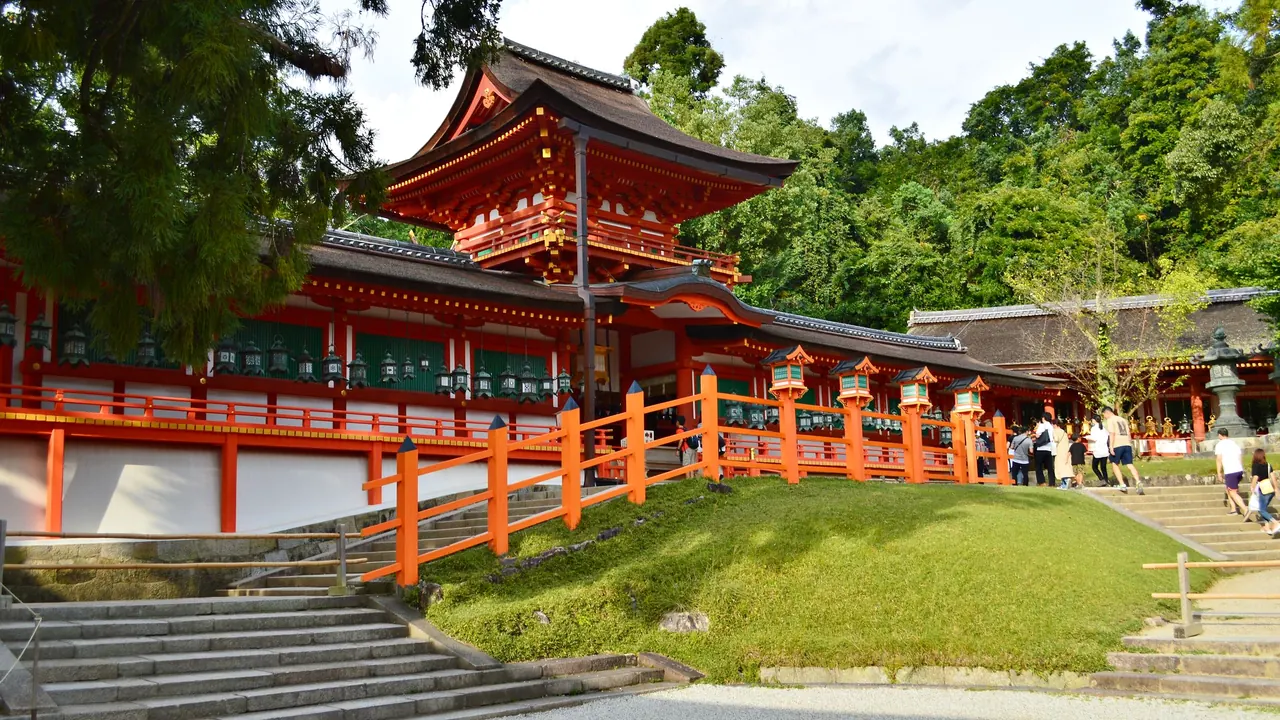
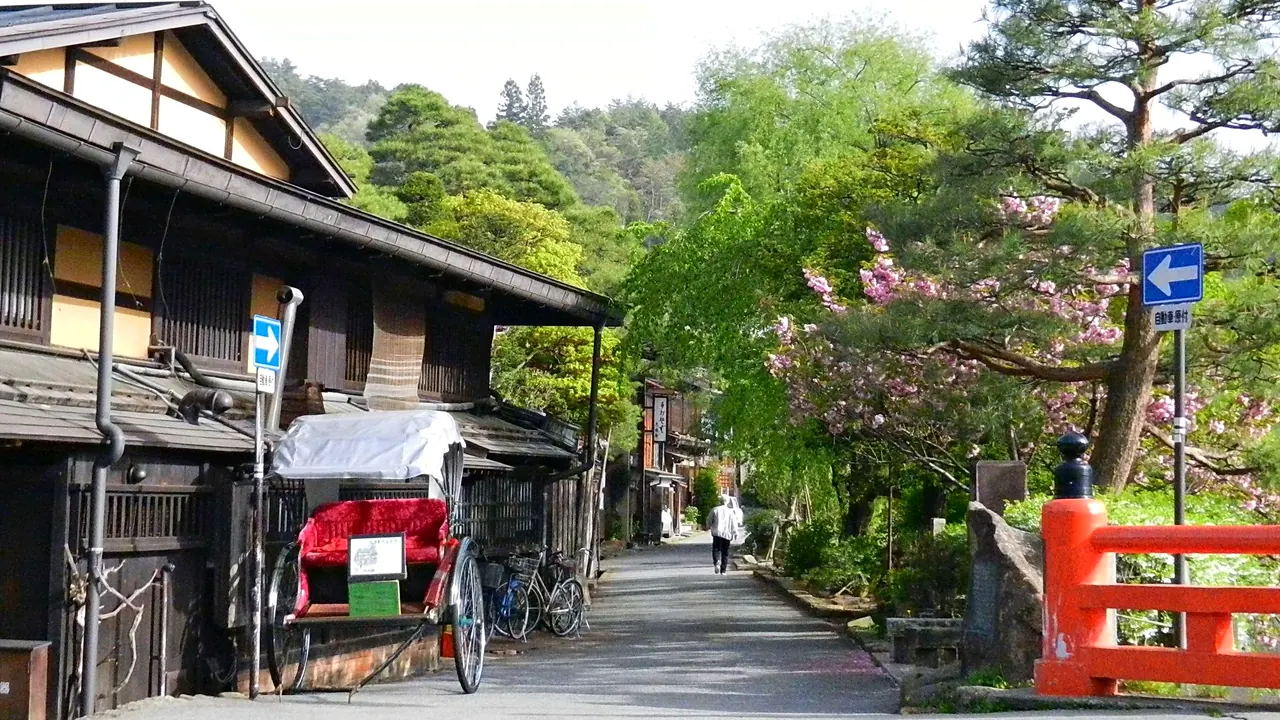
Photos: Nara by Saigen Jiro, CC0; Takayama by lienyuan lee, CC BY 3.0, cropped.
Nara or Takayama?
Our verdict in twelve categories, each scored against the same fixed benchmark cities, and the climate month by month, so you can choose for your trip.
Choose Nara for
- culture and sights
- day trips
- live music and the arts
Nara is the stronger choice for travellers who come to Japan for its early history. The eighth-century capital's temples, the Great Buddha and the Buddhist sculpture of the National Museum are all within walking distance, and Kyoto and Osaka are close enough to fill your other days. It also works well as a cheaper base for a first trip to the Kansai region.
Choose Takayama for
- wellness
- nature and the outdoors
- food and drink
Takayama rewards a slower, more rural stay. The draw is an Edo-period merchant town with hot-spring ryokan, the Northern Alps an hour or two away and the thatched villages of Shirakawa-go nearby. It suits walkers and anyone who wants long soaks and quiet mountain evenings more than a long list of sights.
Scoreboard
Twelve categories on one fixed scale from 0 to 100. The shaded stretch is the gap between the two.
Your match
Pick a travel style or drag the sliders, and both match scores follow your weighting.
Too close to call, 2 points apart
Wins on culture and sights and day trips with your weighting.
Wins on wellness and nature and the outdoors with your weighting.
What matters to you?
Category by category
What the scores mean for a trip.
Beaches & swimming
Neither city is anywhere near the coast, so plan beach days for another part of the trip. From Nara, the industrial shore of Osaka Bay is the nearest sea and the Kii Peninsula is better. From Takayama, it's about two hours to Toyama Bay, and the local way to get into water is a hot-spring bath.
Food & drink
The two are about level, and each has a small, distinctive set of local dishes. Nara's food is delicate: persimmon-leaf sushi, vegetables pickled in sake lees and Miwa somen noodles, with sake from a region that claims a founding role in brewing. Takayama's is heartier: Hida beef grilled on magnolia leaves or sold on skewers, soy-glazed dango and pickles from the riverside morning markets.
Both are limited for a long stay. In Nara, Osaka and Kyoto are close enough for a serious dinner. Takayama has nothing like that nearby, so a week of meals there starts to feel repetitive.
Culture & sights
Nara has far more to see. As Japan's eighth-century capital, it has the Great Buddha in its huge wooden hall at Todai-ji, Kofuku-ji's pagoda, the lantern-lined paths to Kasuga Taisha and a museum of Buddhist sculpture as good as any in the country. West of the centre are Toshodai-ji, Yakushiji and the grounds of the Heijo Palace, which together easily fill two or three days.
Takayama's appeal is a well-preserved townscape rather than a set of major monuments. Its strengths are the dark-timbered lanes of Sanmachi Suji, the old government office at Takayama Jinya and the thatched farmhouses of Hida Folk Village. A day or two covers it.
Nightlife
Neither town has clubs or much life late in the evening, so the real difference is what an evening is built around. Nara empties once the day visitors leave, and a night out there is usually dinner and one more drink near the station before an early night. Its advantage is Osaka, close enough by train for a night in its bar districts, as long as you keep an eye on the last train back.
In Takayama, the evening tends to happen at the ryokan: a long dinner, a hot-spring bath and a yukata, then perhaps a sake in one of the few small bars before they close. The surrounding mountains put every larger city too far away to go there and get back in one night, so it's best to accept the quiet as part of the stay.
Nature & outdoors
Takayama is the gateway to the Northern Alps. Kamikochi's riverside trails below the Hotaka range, the Okuhida ropeway, summer walking on Norikura and skiing in winter are all within reach, although reaching them means planning around bus timetables.
Nara's green space is gentler and closer at hand. The deer park, the protected Kasugayama forest and the easy climb up Mount Wakakusa are all at the edge of the centre. Further afield there's cycling across the flat basin and the cherry and maple hills of Yoshino.
Day trips
Nara has an exceptional choice of day trips. Kyoto, Osaka, Horyu-ji, the burial mounds of Asuka and the tea town of Uji are all close, and Himeji and Kobe are possible in a longer day.
Takayama has one standout trip: the UNESCO-listed thatched villages of Shirakawa-go, about fifty minutes away. Hida-Furukawa and Gero Onsen are also easy. Beyond those it's mostly mountains, and Kanazawa is better treated as your next stop than as a day out.
Good for families
Both are safe, clean and easy with children, and both lack a zoo, aquarium or theme park. In Nara the big draw is feeding the deer, along with squeezing through the pillar at Todai-ji, although small children need watching when the deer get pushy. In Takayama, children tend to like the street snacks, the giant festival floats, the folk village and winter snow. Either works for a day or two, and from Nara the aquariums and theme parks of Osaka are close.
Getting around
Both have walkable centres and neither needs a car, though Nara is a little easier. Its main sights are a gentle walk from Kintetsu Nara station, and local trains, buses and rental bicycles cover the western temples. Takayama's old town is just as easy on foot, but trips into the mountains and to Shirakawa-go depend on regional buses, which need some planning and can fill up in busy seasons.
Shopping & style
Shopping in both is about traditional crafts rather than fashion. Nara is known for sumi ink and brushes, hand-woven linen and Akahada pottery, sold in Naramachi and the covered arcades. Takayama's lanes sell amber-toned Shunkei lacquer, yew carvings and bentwood furniture, and the morning markets add pickles and miso. In both, the craft shops sit alongside plenty of souvenirs. If you want a department-store day, it's easy from Nara because Osaka is close.
Affordability
Nara is the cheaper stay. Plenty of business hotels near its two stations serve day-trippers, and the park and deer cost nothing. The main expense is rail fares if you use it as a base, so check regional rail passes before you go.
Takayama's everyday costs are fair, but much of the reason to go costs more: a ryokan night with a multi-course dinner, a proper Hida beef meal, and rooms during the spring and autumn festivals, which book out.
Live music & performing arts
Nara has more performance, almost all of it tied to ritual. Kasuga Taisha keeps alive gagaku court music and bugaku dance, the city has a claim to the birth of Noh, and there are the fire rites of Omizutori at Todai-ji. For regular theatre, Osaka is close.
Takayama's one great occasion is its spring and autumn festival, with karakuri puppets on the floats and evening lantern processions. On other days there's nothing to attend.
Wellness & relaxation
For a restful stay, Takayama is the better choice. Many ryokan pipe in spring water for indoor and open-air baths, the Okuhida villages have open-air pools beside mountain rivers, and Gero Onsen, one of Japan's most famous spa towns, is under an hour by train.
Nara has no hot springs of note. A Japanese soak there means an old bathhouse or a bathing complex on the edge of town. What Nara offers instead is a slow pace: the park in the early morning and the quiet old town once the day visitors leave.
When should you go?
Pick your month. The climate figures are measured averages, not a forecast.
Nara in July
Takayama in July
Daytime high, °C
Rainfall in the month, mm
Where the figures come from
Nara's sunshine is measured 26 km from the centre, at Osaka.
Takayama's sunshine is measured 65 km from the centre, at Matsumoto.
Temperature and rainfall are climate normals, averaged over the years shown. Nara: 1971-2000 (sunshine 1991-2020, rainfall 1991-2020) normals, Nara (2.6 km from centre). Takayama: 1971-2000 (sunshine 1991-2020, rainfall 1981-2010) normals, Takayama (0.5 km from centre).
The two cities have different climates. Nara lies low in a basin and is mild for much of the year, but summers there are oppressive, reaching about 32°C in August with heavy rain in June and July. Spring and late autumn are the times for walking between temples. Takayama sits higher in the mountains and is much colder in winter, with daytime highs around 3°C and snow from December to February. That's a reason to go if you want to see Shirakawa-go under snow, and a drawback if you don't.
Takayama is also the wetter of the two, with about 273mm in July and almost as much in September, the months when Nara gets around 200mm at its wettest. Late spring and October suit Takayama best, with comfortable temperatures, good sunshine and the mountain trails open. Neither city is a beach destination in any month.
Which traveller are you?
On a culture and arts trip, Nara is the clear choice. It has Todai-ji, Kofuku-ji, Kasuga Taisha and the National Museum's Buddhist sculpture, plus Horyu-ji and Kyoto a short train ride away. Takayama's well-kept merchant lanes are lovely, but you'll see them in about a day.
For an outdoors trip, Takayama is better. Kamikochi, the Shin-Hotaka ropeway and Norikura put you among peaks near 3,000m. Nara offers gentler pleasures: the deer park, the old forest behind it and the Yamanobe-no-michi trail along the foothills.
On a relaxing and wellness trip, choose Takayama. Many of its ryokan have their own hot-spring baths, and Okuhida's riverside open-air pools and Gero Onsen are both about an hour away. Nara is calm, but you'll be soaking in bathhouses rather than natural hot springs.
Before you go
| Measure | Nara | Takayama |
|---|---|---|
| Official language | Japanese | Japanese |
| Currency | Yen (JPY) | Yen (JPY) |
| Sockets | AB100 V, 50 and 60 Hz depending on the region | AB100 V, 50 and 60 Hz depending on the region |
| Driving side | Left | Left |
| Time zone | UTC+9 | UTC+9 |
| Emergency number | Police 110, fire 119 | Police 110, fire 119 |
| Elevation | 70 m | 573 m |
| Main airport | Kansai International Airport (KIX)59 km from centre62 non-stop destinations | Chubu Centrair International Airport (NGO)149 km from centre43 non-stop destinations |
| Public holidays this year | 16 days | 16 days |
By the numbers
| Measure | Nara | Takayama |
|---|---|---|
| City population | 352,377 | 85,199 |
| People per km² | 1,273 | 39 |
| Museums within 10 km | 31 | 14 |
| UNESCO World Heritage sites within 50 km | 6 | 1 |
| Swim season, months above 21 °C | 5 months | - |
Where else could you go?
Every comparison below shares a destination with this one, so you can follow Nara or Takayama somewhere new.