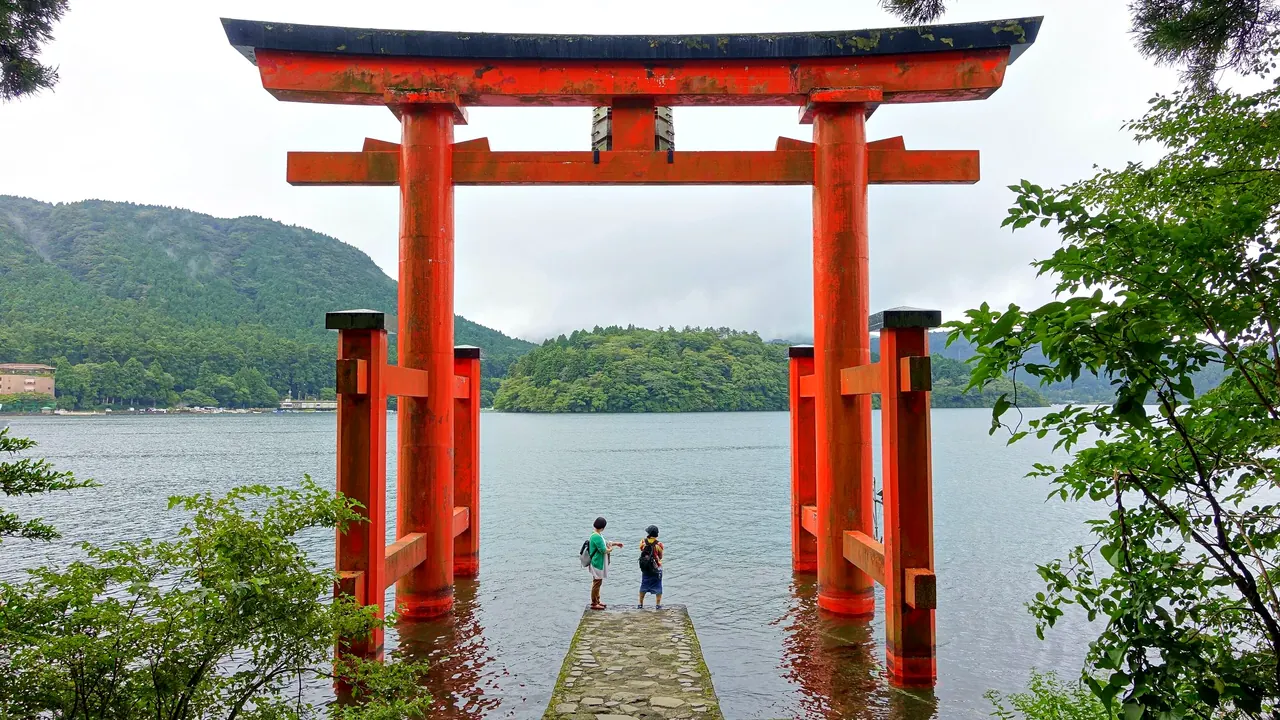
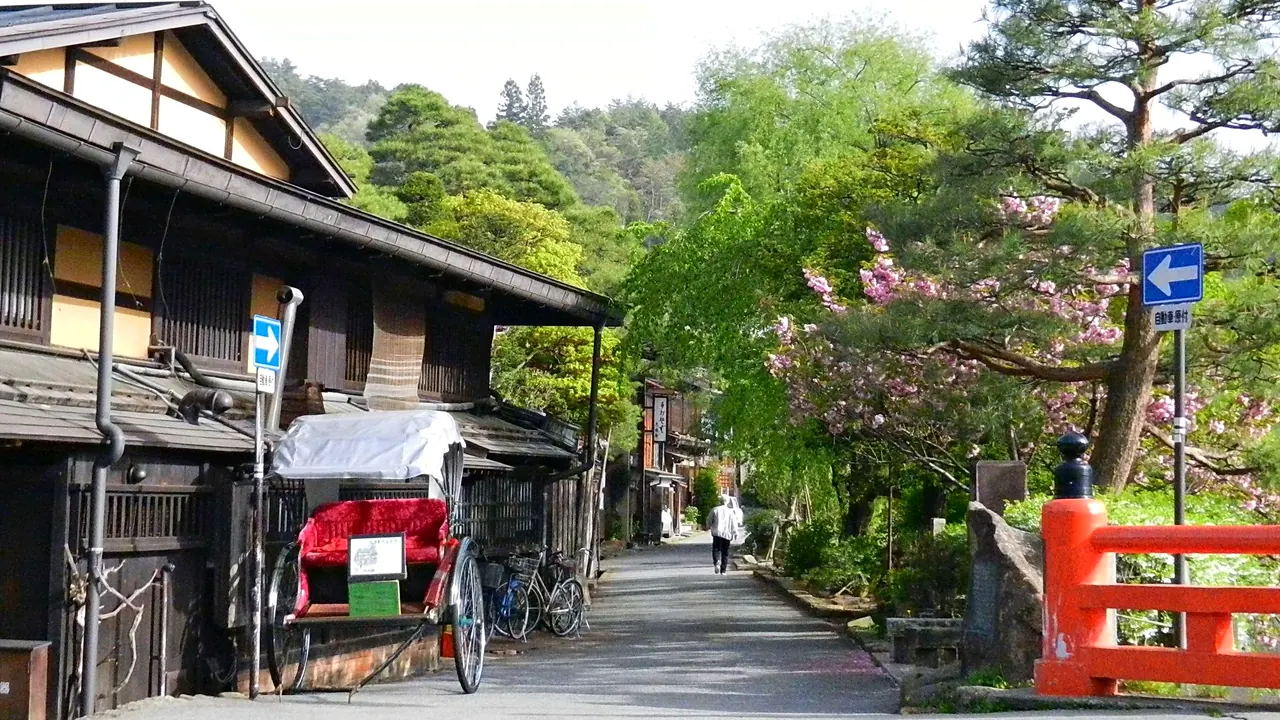
Photos: Hakone by Daderot, CC0; Takayama by lienyuan lee, CC BY 3.0, cropped.
Hakone or Takayama?
Our verdict in twelve categories, each scored against the same fixed benchmark cities, and the climate month by month, so you can choose for your trip.
Choose Hakone for
- wellness
- families
- beaches
Hakone is the choice when the bath is the point of the trip. Its hot-spring areas are spread right across a volcanic caldera, so the steaming slopes of Owakudani, Lake Ashi and, on clear days, Mount Fuji are all on your doorstep. The ride round the caldera by mountain railway, ropeway and boat keeps children happy, and Tokyo, Kamakura and Yokohama are near enough for days out. It is the dearer and sleepier of the two, and it suits travellers who want to stay put and unwind.
Choose Takayama for
- culture and sights
- prices
- food and drink
Takayama gives more to anyone who wants a town to explore on foot. The dark-timbered merchant lanes, the old government office and the folk village make a more complete historic setting than Hakone's scattered sights. Hida beef, sake breweries and morning markets give you more to eat outside your inn, and lacquer and carvings give you more to buy. It costs a little less too, and it makes an easy base for Shirakawa-go and the Northern Alps.
Scoreboard
Twelve categories on one fixed scale from 0 to 100. The shaded stretch is the gap between the two.
Your match
Pick a travel style or drag the sliders, and both match scores follow your weighting.
Too close to call, 1 point apart
Wins on wellness and families with your weighting.
Wins on culture and sights and prices with your weighting.
What matters to you?
Category by category
What the scores mean for a trip.
Beaches & swimming
Neither town is a place to swim, but Hakone has the sea within reach. Atami, under an hour away, has a sheltered stretch of sand, and the water is warm in high summer. That makes a beach afternoon possible on a summer stay.
Takayama sits deep in the mountains, about two hours from Toyama Bay, so the sea needs its own stop on another part of the trip. In both towns the water you will actually get into comes hot from the ground.
Food & drink
Takayama gives you more to eat away from your inn. Hida beef comes grilled on a magnolia leaf or seared on skewers at old-town stalls. There is soy-glazed dango, local ramen and pickles from the riverside markets, and the breweries with cedar balls over the door pour sake for tasting.
In Hakone the eating happens mainly at the inn, with a long kaiseki dinner of mountain vegetables and river fish. Beyond that there are soba and tofu shops in Yumoto and the black eggs at Owakudani, and most places close by early evening.
Culture & sights
The two offer different kinds of sightseeing. Hakone's strength is art in the landscape: sculpture on the lawns of the Open-Air Museum, Impressionist paintings at the Pola in the beech forest, and pieces of the old Tokaido road and its checkpoint, all spread around the caldera.
Takayama's history is close together and easier to take in. Sanmachi Suji's preserved merchant houses, Takayama Jinya and the Kusakabe and Yoshijima houses are all within a short walk, and the thatched farmhouses of Hida Folk Village are just up the hill. The result is a more complete sense of old Japan than Hakone gives.
Nightlife
Both towns go quiet after dinner, but Takayama keeps going a little longer. A few izakaya and small bars near the station and east of the river are good for a sake or a beer. In Hakone, only Yumoto has anything open late, and the villages up the mountain are dark soon after the meal. Neither has clubs.
Nature & outdoors
Hakone puts you right inside the landscape. The sulphur vents of Owakudani, the crater lake and the view to Fuji are all part of a normal day, and you can set off on the cedar-lined Old Tokaido Road or the ridge to Mount Kintoki straight from your inn.
Takayama's mountains are higher and wilder: Kamikochi beneath the Hotaka range, and the Shin-Hotaka ropeway up among peaks near 3,000m. They are an hour and a half away by bus, though, and Kamikochi closes in the cold months. In return, Takayama has skiing within reach in winter.
Day trips
Hakone has the wider choice of days out. Tokyo is under two hours away on the Romancecar, and Kamakura's Great Buddha and the port of Yokohama are both easy trips. Odawara castle, Atami and the Izu Peninsula are closer still, so you can mix city, temples and coast.
Takayama has one outstanding trip, the UNESCO-listed thatched village of Shirakawa-go, under an hour away. Hida-Furukawa and Gero Onsen are close by, and Kanazawa is better treated as your next stop than as a day out. Beyond those, the country around Takayama is mostly mountains.
Good for families
Hakone has more for children. In Hakone, getting around is the fun: a zigzag railway, a cable car, a ropeway over the steam and a replica pirate ship. There are also Baikal seals at the lakeshore aquarium, net sculptures to climb inside, and a large onsen park where families bathe together in swimsuits. Steep paths and weekend crowds are the downside.
Takayama is flat, safe and easy with a pushchair. Children will enjoy the market snacks, the festival floats and the winter snow, but nothing in town is made for them, and a day or two is usually enough.
Getting around
Neither town needs a car, but they work in different ways. Takayama is a compact, flat place where the old town, the Jinya and the markets are all a short walk from the station. A single bus centre next to the station covers the trips into the mountains.
In Hakone, the transport is part of the sightseeing. One pass covers the railway, cable car, ropeway, lake boats and buses, but the villages are kilometres apart. Weekend queues at the ropeway and slow buses can take up much of the day.
Shopping & style
Takayama is the better place for well-made craft. You will find amber-toned Shunkei lacquer, carvings in yew, Hida bentwood furniture and sake from the breweries, with miso and pickles at the morning markets.
Hakone's one craft is yosegi wood marquetry, made in the workshops at Hatajuku. Add the sweet shops in Yumoto and some good museum bookshops, and that is about all. For fashion, Hakone at least has the outlet mall at Gotemba over the ridge.
Affordability
Takayama is the easier of the two on a budget. Business hotels and guesthouses near the station are fair value, and ramen, street snacks and market food keep lunches cheap. The costs mount for a ryokan with dinner, a proper Hida beef meal, or a room during the festival weeks.
In Hakone the expensive part is the main reason most people come: a ryokan night with dinner and a hot-spring bath, which costs most at weekends and in autumn. A simple room in Yumoto, lunches at soba shops and the public bathhouses bring the cost down.
Live music & performing arts
Takayama has the one real spectacle between them. At the spring and autumn festivals, ornate floats parade through town, karakuri puppets perform on some of them, and lantern-lit processions fill the evening streets. On other days there is no theatre or live music.
Hakone has nothing comparable, beyond the odd concert at a museum or a performance put on at an inn. For kabuki or concerts, plan an evening in Tokyo.
Wellness & relaxation
Hakone is built around bathing. It has seventeen hot-spring areas, from riverside Yumoto to the milky sulphur water of Sengokuhara. Many rooms have their own outdoor bath, and day-bathhouses in the woods let you try several springs in a day. A midweek stay avoids the Tokyo crowds.
Takayama's ryokan have good spring-fed baths and the evenings are calm, but the famous bathing is further out. The riverside pools of Okuhida and the spa town of Gero are each about an hour away.
When should you go?
Pick your month. The climate figures are measured averages, not a forecast.
Hakone in July
Takayama in July
Daytime high, °C
Rainfall in the month, mm
Where the figures come from
Hakone's temperatures are measured 43 km from the centre, at Kawaguchiko.
Hakone has no rain gauge within 25 km of the centre, so its rainfall comes from a gridded climate dataset read at the city rather than from a gauge further away.
Takayama's sunshine is measured 65 km from the centre, at Matsumoto.
Temperature and rainfall are climate normals, averaged over the years shown. Hakone: 1971-2000 (rainfall 1991-2020) normals, Kawaguchiko (42.9 km from centre). Takayama: 1971-2000 (sunshine 1991-2020, rainfall 1981-2010) normals, Takayama (0.5 km from centre).
Hakone has the gentler climate of the two. Winter days are cold but rarely bitter, and this is when Fuji shows itself most clearly. The rain builds from June and keeps going right through October, with about 214mm in October alone, so November is often the better month for the autumn colours. In August the sea down at Atami reaches about 26°C, which makes a swim on a day out down the valley possible.
Takayama swings further each way. January highs are around 3°C, with snow over the old town, and August reaches about 30°C, so long walks through the lanes in summer are hot work. July is the wettest month at around 273mm, and September is nearly as wet. October is far drier, and its mild days are very good for walking, even if they are not the sunniest of the year. Late April and May are good in both towns.
Which traveller are you?
On a relaxing and wellness trip, Hakone lets you unpack once and stop. Soaking fits into every part of the day, so you can spend it on a bath, dinner and another bath without going anywhere. To bathe at Takayama's best-known springs, you have to travel.
On a family trip with children, Hakone wins because getting from one sight to the next is half the entertainment. That keeps restless children happy, and two or three days fill themselves. Takayama is calm and easy to manage, but most children are ready to move on after a day.
For a culture and arts trip focused on history, Takayama is the better choice, because the whole old town works as one walkable piece of the past rather than a set of separate stops. Hakone's fine art in the forest appeals too, but you spend more time travelling between the sites.
Before you go
| Measure | Hakone | Takayama |
|---|---|---|
| Official language | Japanese | Japanese |
| Currency | Yen (JPY) | Yen (JPY) |
| Sockets | AB100 V, 50 and 60 Hz depending on the region | AB100 V, 50 and 60 Hz depending on the region |
| Driving side | Left | Left |
| Time zone | UTC+9 | UTC+9 |
| Emergency number | Police 110, fire 119 | Police 110, fire 119 |
| Elevation | 734 m | 573 m |
| Main airport | Tokyo Haneda International Airport (HND)71 km from centre98 non-stop destinations | Chubu Centrair International Airport (NGO)149 km from centre43 non-stop destinations |
| Public holidays this year | 16 days | 16 days |
By the numbers
| Measure | Hakone | Takayama |
|---|---|---|
| City population | 10,925 | 85,199 |
| People per km² | 118 | 39 |
| Museums within 10 km | 16 | 14 |
| UNESCO World Heritage sites within 50 km | 2 | 1 |
| Swim season, months above 21 °C | 5 months | - |
Where else could you go?
Every comparison below shares a destination with this one, so you can follow Hakone or Takayama somewhere new.