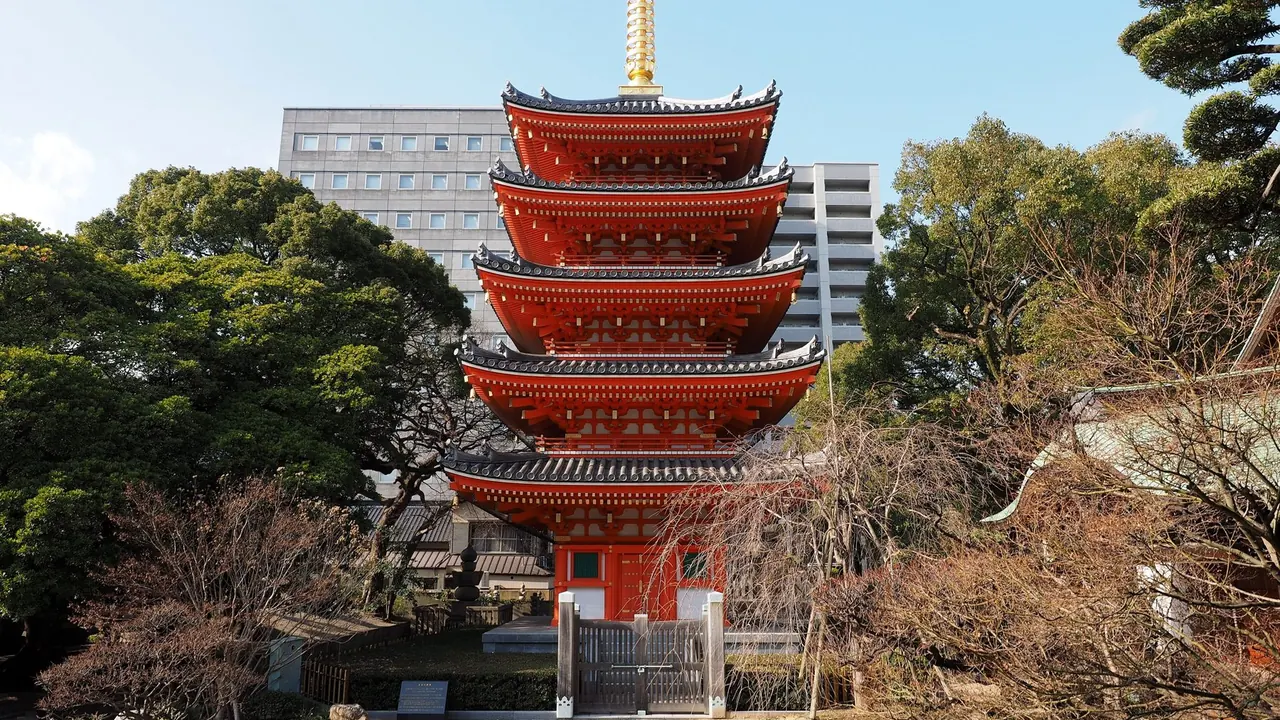
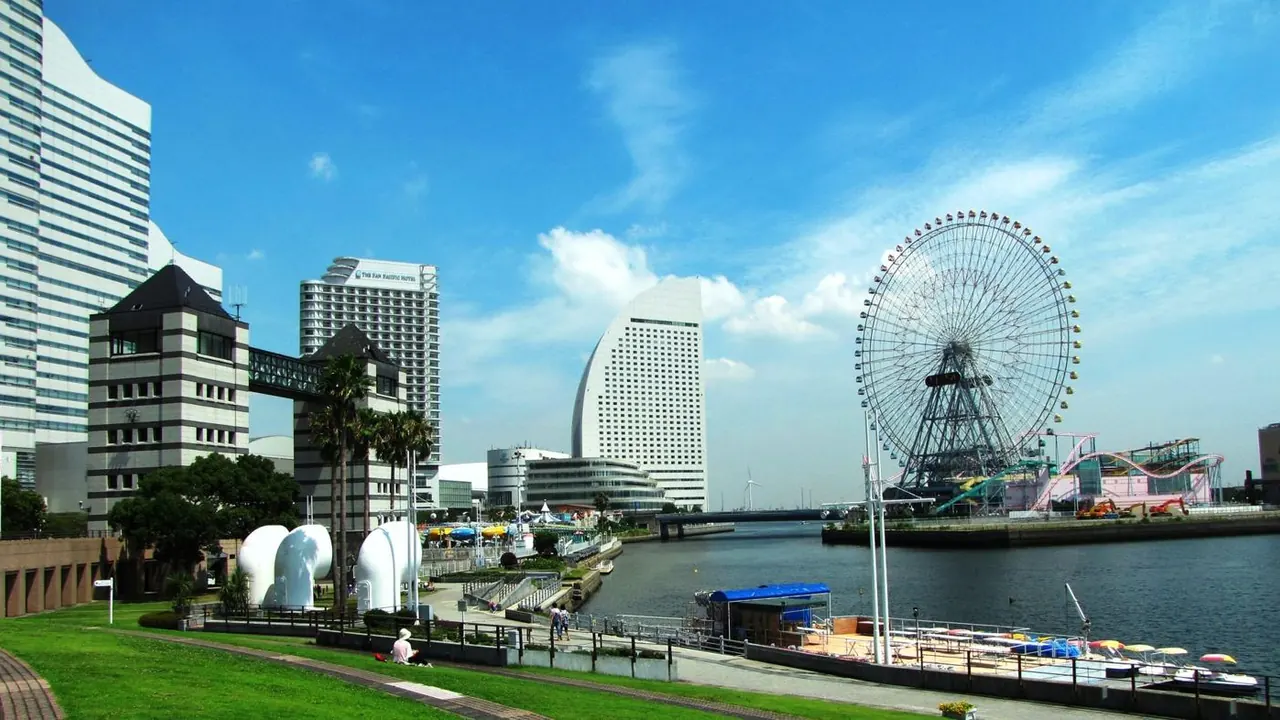
Photos: Fukuoka by Nick-D, CC BY-SA 4.0, cropped; Yokohama by Yoshio Kohara, CC BY 3.0, cropped.
Fukuoka or Yokohama?
Our verdict in twelve categories, each scored against the same fixed benchmark cities, and the climate month by month, so you can choose for your trip.
Choose Fukuoka for
- nightlife
- food and drink
- shopping
Fukuoka is for travellers who plan their days around the table and their evenings around the bar. Tonkotsu ramen in Hakata, riverside yatai in Nakasu, fresh fish from the Genkai Sea and late nights in the backstreets of Daimyo give it a food and drink culture that Yokohama can't match. It also suits anyone who wants to see Kyushu, with Nagasaki, Kumamoto and Hiroshima all a short train ride away and the airport only minutes from the centre by subway.
Choose Yokohama for
- live music and the arts
- families
- culture and sights
Choose Yokohama if you're bringing children, or if you want Tokyo and Kamakura close by while sleeping somewhere calmer. It has more attractions built for families, a deeper stage of concert halls and port-city jazz, and an unusual heritage of Western merchant houses and harbour buildings. The easy rail links mean the capital is effectively part of the trip.
Scoreboard
Twelve categories on one fixed scale from 0 to 100. The shaded stretch is the gap between the two.
Your match
Pick a travel style or drag the sliders, and both match scores follow your weighting.
Too close to call, 1 point apart
Wins on nightlife and food and drink with your weighting.
Wins on live music and the arts and families with your weighting.
What matters to you?
Category by category
What the scores mean for a trip.
Beaches & swimming
Neither is a beach city, and both have a short season from July to August, with jellyfish arriving late in summer. The difference is in where you go to swim. From Fukuoka the best trip is to Itoshima, under an hour west, for clear water and white sand, with the islands of Shikanoshima and Nokonoshima as quieter options.
From Yokohama, swimmers take the train south to Zushi, Kamakura, Enoshima and the Miura Peninsula. The beaches there are broader but have grey-brown sand and get crowded with beach huts and families at weekends. Yokohama's Umi no Koen and Fukuoka's Momochi strand are both man-made and best for a paddle.
Food & drink
Fukuoka is the better city to eat in, because its cooking comes from its own region. Tonkotsu ramen was born here, and mentaiko, motsunabe and mizutaki are Kyushu dishes with deep local roots, while the Genkai Sea supplies sashimi and squid straight from the boat. Yokohama's food came in through its port. Street eating in Yokohama means steamed buns from a Chinatown stall. In Fukuoka it means an evening seat at a riverside yatai.
Where Yokohama wins is Chinese food. Its Cantonese restaurants and dim sum halls have no match in Fukuoka. Its own iekei ramen, a heavier pork-and-soy bowl, makes an interesting contrast with Hakata's cloudy broth, and the ramen museum at Shin-Yokohama lets you compare styles from all over Japan in one visit. For a special dinner, Fukuoka has serious sushi counters close to your hotel. In Yokohama, people tend to take the train to Tokyo.
Culture & sights
Neither city is a major heritage destination, and two days covers either one. Fukuoka's past is older and more religious. It has the temple quarter of Hakata with Shofukuji, the great wooden Buddha at Tochoji and the Kushida Shrine, the castle walls above Ohori Park, and a gold seal nearly two thousand years old in the City Museum.
Yokohama's story begins in the 1850s, when it opened to foreign trade. Its sights are the Western merchant houses on the Yamate Bluff, the stone customs buildings of Kannai and an ocean liner moored off Yamashita Park. Sankeien, a garden of temple buildings and teahouses moved from Kyoto and Kamakura, is the single best sight in either city.
Nightlife
Fukuoka is the better city for a night out. Its reputation for drinking comes from the backstreets of Daimyo and Tenjin, with standing bars, craft beer and whisky bars, a few clubs and the student strip of Oyafuko-dori, and evenings there go on late. The riverside yatai in Nakasu are an easy place to start, even though much of that district is hostess clubs aimed at locals.
Yokohama winds down earlier, and locals who want a big night take the train to Tokyo. The izakaya and counter bars of Noge are good for a long evening of yakitori and beer, and the bars at Minato Mirai look out over the lit-up harbour. Neither city is a place for dancing until dawn.
Nature & outdoors
There is little between them, and in both spring and autumn are the seasons for walking because summers are humid. Fukuoka's outdoors is coastal and gentle: the loop around Ohori Park, the flower fields and cycle paths of Uminonakamichi, the flower slopes of Nokonoshima, and the rocky capes and rice terraces of Itoshima, with Mount Homan and the Sefuri range for hikes.
Yokohama has more mountains within reach. The temple trails on the ridges around Kamakura, the Miura coast, the Tanzawa range and the volcanic valleys and crater lake of Hakone are all about an hour or so away, and in clear winter weather Fuji appears on the horizon. Fukuoka's own volcanic country at Aso and Kuju is a long day out.
Day trips
Both cities are excellent bases, and the difference is where the trains take you. From Fukuoka the shinkansen opens up Kyushu and western Honshu. You can reach the Tenmangu shrine and national museum at Dazaifu, Kumamoto's castle, Hiroshima and Miyajima in about an hour, and Nagasaki in under two, as well as the porcelain villages of Arita and Imari.
Yokohama's great advantage is Tokyo, under half an hour away, so you can visit the capital day after day. Kamakura's Great Buddha and Zen temples are about 25 minutes away, and Enoshima, Hakone and the Edo-period streets of Kawagoe are easy trips too.
Good for families
Yokohama is the better city for children, mainly because so many of its attractions are made for them. Children can design their own instant noodles at the Cup Noodles Museum in Minato Mirai, ride the Ferris wheel on the seafront, and visit the aquarium and rides at Hakkeijima or the spacious Zoorasia, and Tokyo Disneyland is about an hour away.
Fukuoka is still easy and calm with children. It has the dolphin show at Marine World on Uminonakamichi, the hilltop zoo, its own Anpanman museum and the ferry to Nokonoshima, but no theme-park resort. In both cities the summer heat is hard on small children.
Getting around
Both cities are very easy to get around, with IC cards that work everywhere and no need for a car in town. Fukuoka is easier to arrive in: the airport is a few minutes by subway from Hakata Station, and the centre is compact and flat enough to walk from Hakata through Nakasu to Tenjin and Daimyo.
Yokohama has the denser network, with the Minatomirai Line, JR, subways and private railways, water buses across the bay, and fast lines to Tokyo, Kamakura and Haneda. The harbour walk to Chinatown is flat, but the Bluff is a steep climb and Sankeien needs a bus.
Shopping & style
Shopping is on a similar scale in both cities. Fukuoka's Tenjin is slightly better for browsing, with department stores above a long underground arcade and independent fashion, vintage and select shops in Daimyo and Imaizumi. It also has real crafts to take home, such as Hakata-ori silk, Hakata dolls and Arita porcelain.
Yokohama is more about malls, plus one smart old street. Motomachi, below the Bluff, is known for leather goods and a Western-influenced style, and Chinatown sells teas and tableware. For boutiques, people take the train to Tokyo.
Affordability
Costs are much the same in both cities, and a careful traveller can live well in either on business hotels, ramen counters, set lunches and cheap trains. Fukuoka saves a little on arrival thanks to the subway from the airport, and its temples and parks are mostly free. The money goes on nights out in Nakasu and serious sushi.
In Yokohama the harbour-view hotels of Minato Mirai are the expensive end, and rooms cost more on summer weekends and when big concerts are on. The Bluff, Yamashita Park and the promenades are free, but Sankeien, the museums and the family attractions charge admission, which adds up with children.
Live music & performing arts
Yokohama has the deeper stage. It has Minato Mirai Hall with its large pipe organ, the Kanagawa Arts Theatre for opera and dance, and arenas by the harbour for touring bands. Its jazz tradition dates from its port years and lives on in the old record cafés of Noge and Kannai and in an autumn festival, and Tokyo's kabuki and big musicals are half an hour away.
Fukuoka has touring kabuki and musicals at Hakataza, the Kyushu Symphony Orchestra in the Acros building and small live music venues in Tenjin. Its most memorable spectacle happens in the streets rather than on a stage: the Yamakasa float race at dawn in July and the Dontaku parade in May.
Wellness & relaxation
Neither city is a spa destination, and both have neighbourhood sento and large bath complexes with saunas, including one in Yokohama on the Minato Mirai waterfront. The difference is in the hot springs further out. From Fukuoka, the historic Futsukaichi Onsen is half an hour away, with Beppu and Yufuin as a long day trip, while from Yokohama you go to a mountain inn in Hakone, about an hour or so away.
For slowing down in town, Fukuoka has Ohori Park and the temple gardens of old Hakata, and Yokohama has the ponds and teahouses of Sankeien and the rose gardens on the Bluff.
When should you go?
Pick your month. The climate figures are measured averages, not a forecast.
Fukuoka in July
Yokohama in July
Daytime high, °C
Rainfall in the month, mm
Where the figures come from
Yokohama's sunshine is measured 29 km from the centre, at Tokyo.
Temperature and rainfall are climate normals, averaged over the years shown. Fukuoka: 1991-2020 normals, Fukuoka (1.9 km from centre). Yokohama: 1971-2000 (sunshine 1991-2020) normals, Yokohama (1.6 km from centre).
Fukuoka has the hotter and wetter summer. The rainy season starts in June and peaks in July at about 301mm, and August reaches 32°C, too hot for walking the streets in the middle of the day. The same heat brings the sea up to 27°C in August. May is the sunniest month and, together with April, the most comfortable for walking. October and early November are pleasant again.
Yokohama's summer is a little milder, but its heaviest rain comes later, at about 219mm in September, and October stays damp. That makes April, May and November its best months on foot. Winter is cool in both cities, but Yokohama's is noticeably sunnier and drier, which means clear views of Fuji from the coast. In both cities the sea is warm enough for swimming from July into September, when it is still about 25°C, although the official bathing season ends with August.
Which traveller are you?
For a food and nightlife trip, Fukuoka is the clear choice. An evening can start on a yatai stool in Nakasu with tonkotsu ramen and beer among strangers, then move on to the whisky and craft-beer bars of Daimyo and run late. Yokohama winds down earlier.
On a family trip with children, Yokohama is the easier choice. More of its outings are built for children rather than adapted for them, so each day can be planned around what they enjoy, with short hops between places. Fukuoka is calm and pleasant with children, but there are fewer big days out.
For a culture and arts trip, Yokohama is slightly ahead. Its port history on the Bluff and the relocated temple buildings at Sankeien go well with its concert halls, opera and jazz cafés, and the museums of Tokyo and the temples of Kamakura are each under half an hour away.
Before you go
| Measure | Fukuoka | Yokohama |
|---|---|---|
| Official language | Japanese | Japanese |
| Currency | Yen (JPY) | Yen (JPY) |
| Sockets | AB100 V, 50 and 60 Hz depending on the region | AB100 V, 50 and 60 Hz depending on the region |
| Driving side | Left | Left |
| Time zone | UTC+9 | UTC+9 |
| Emergency number | Police 110, fire 119 | Police 110, fire 119 |
| Elevation | 8 m | 24 m |
| Main airport | Fukuoka Airport (FUK)5 km from centre46 non-stop destinations | Tokyo Haneda International Airport (HND)18 km from centre98 non-stop destinations |
| Public holidays this year | 16 days | 16 days |
By the numbers
| Measure | Fukuoka | Yokohama |
|---|---|---|
| City population | 1,603,043 | 3,757,630 |
| People per km² | 4,715 | 8,585 |
| Museums within 10 km | 23 | 38 |
| UNESCO World Heritage sites within 50 km | 2 | 1 |
| Swim season, months above 21 °C | 4 months | 5 months |
Where else could you go?
Every comparison below shares a destination with this one, so you can follow Fukuoka or Yokohama somewhere new.