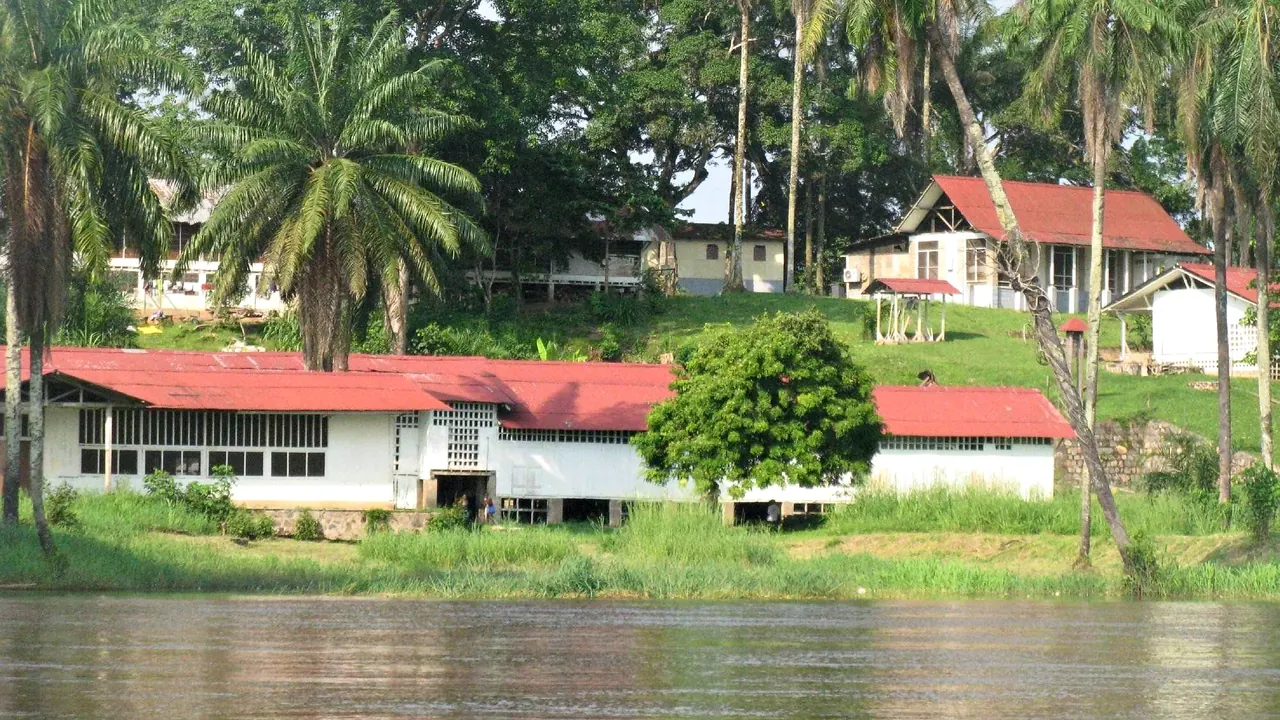
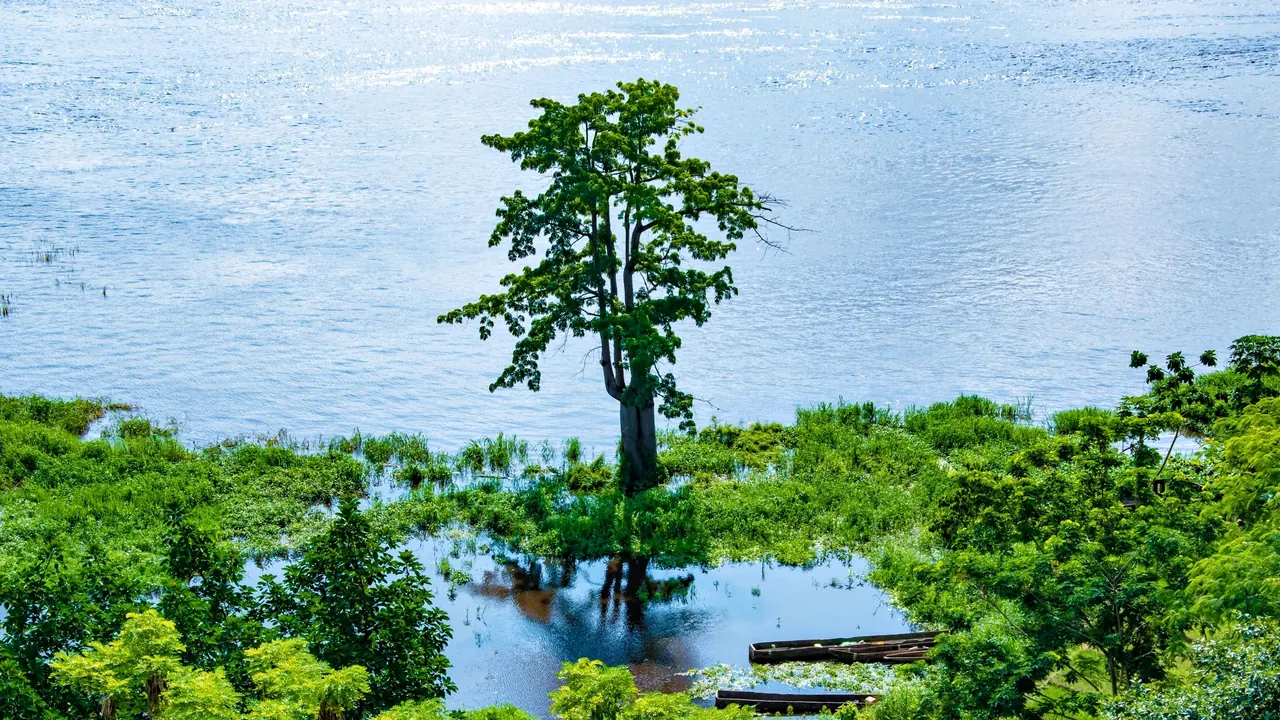
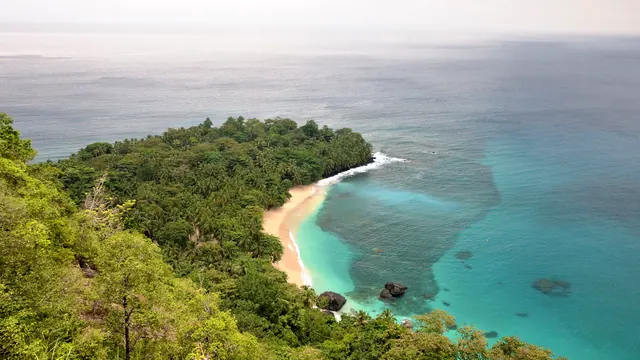
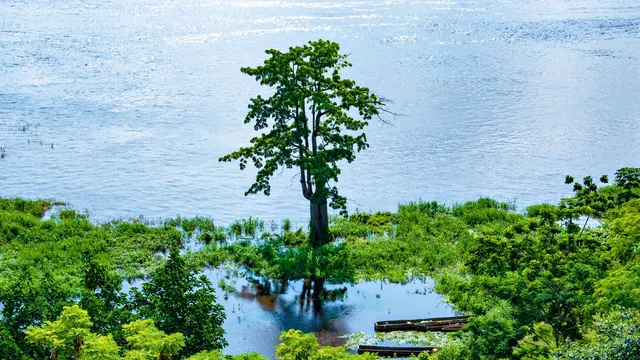
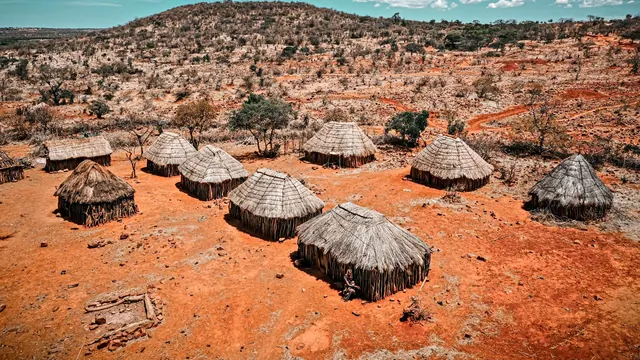
Photos: Gabon by Patrice H, CC0; Republic of the Congo by Gis photography, Pexels License.
Gabon or Republic of the Congo?
Our verdict in twelve categories, each scored against the same fixed benchmark cities, and the climate month by month, so you can choose for your trip.
Choose Gabon for
- nature and the outdoors
- beaches
- families
Gabon is the better choice for a wildlife trip built around one or two great parks. Loango, where forest elephants and hippos walk out onto empty Atlantic beaches and whales pass offshore in the dry season, has no real match across the border. Lopé adds mandrill troops reached by train from Libreville, and Pointe Denis and Cap Esterias give a more usable weekend by the sea.
Choose Republic of the Congo for
- live music and the arts
- shopping
- prices
Travellers who want gorillas and some city life on the same trip will do better in the Republic of the Congo. Odzala-Kokoua is a superb place to track western lowland gorillas, and Brazzaville gives the evenings something Gabon can't: live rumba in the open-air bars of Bacongo and Poto-Poto, the sapeurs out on parade, and paintings and cloth worth taking home. Moving between its two cities is simpler, and although the country is still costly, the bill comes out somewhat lower.
Scoreboard
Twelve categories on one fixed scale from 0 to 100. The shaded stretch is the gap between the two.
Your match
Pick a travel style or drag the sliders, and both match scores follow your weighting.
Wins on nature and the outdoors and beaches with your weighting.
Wins on live music and the arts and shopping with your weighting.
What matters to you?
Category by category
What the scores mean for a trip.
Beaches & swimming
Neither country is worth choosing for its beaches, but Gabon gives you the easier swim. Pointe Denis, a long spit of sand a short boat ride across the Komo estuary from Libreville, has the gentlest water on either coast, though river silt often clouds it. Cap Esterias, just north of the city, is the other weekend beach. It lies on the open coast, where swell and currents call for more care. Far to the south, Mayumba and the Loango shore have kilometres of empty sand, but they suit turtle watching and long walks better than swimming.
In the Republic of the Congo, a beach day means Pointe-Noire, which faces the open Atlantic and has no sheltered inlet to fall back on. Heavy surf and strong currents often keep even confident swimmers on the sand, and the town beaches have weekend bars with the port and oil platforms in view. For something wilder and less industrial, head out to the Côte Sauvage or north towards Loango Bay.
Where in Gabon: Pointe Denis, Cap Esterias, Mayumba
Where in Republic of the Congo: Pointe-Noire, Côte Sauvage, Loango Bay
Food & drink
The two kitchens rest on the same base of cassava, palm oil and river fish, and neither has much of a restaurant scene, so the difference is in the dishes. Gabon's signatures are nyembwe, the palm-nut sauce, and leaf stews flavoured with odika. Libreville has the widest choice, and Port-Gentil adds prawns from the Ogooué delta.
In the Republic of the Congo, look for saka-saka, maboké steamed in leaves, chikwangue and grilled capitaine from the Congo River. These are eaten at the open-air grills of Brazzaville and Pointe-Noire, with palm wine sold along the roads.
Where in Gabon: Libreville, Port-Gentil
Where in Republic of the Congo: Brazzaville, Pointe-Noire
Culture & sights
Neither country has enough to fill a culture trip, and in both it works as an extra to the wildlife. Gabon's strengths are its objects: Fang reliquary figures and Punu masks in Libreville's small museum, the carved wooden columns of Saint-Michel in Nkembo, and Schweitzer's hospital and house at Lambaréné.
The Republic of the Congo's sights tell more of its history. Brazzaville has the green-roofed Basilica of Sainte-Anne, the de Brazza memorial and the Poto-Poto painting school. On the coast are the slave-trade memorial at Loango and the royal museum at Diosso.
Where in Gabon: Libreville, Lambaréné, Lopé National Park
Where in Republic of the Congo: Brazzaville, Loango, Pointe-Noire
Nightlife
The style is much the same in both, open-air bars, cold beer and Congolese rumba, but Gabon's version is concentrated in Libreville's Quartier Louis. There are some lounge bars on the seafront and a smaller scene in Port-Gentil.
The Republic of the Congo goes out harder and in more places. Brazzaville has three districts, Bacongo, Poto-Poto and Moungali, where the bars become ndombolo dance floors past midnight, with the sapeurs on show in Bacongo. Pointe-Noire adds a seafront strip of clubs.
Where in Gabon: Libreville, Port-Gentil
Where in Republic of the Congo: Brazzaville, Pointe-Noire
Nature & outdoors
Both are great rainforest countries, but Gabon has more variety. Loango combines lagoon, savanna and beach, with elephants and hippos on the sand, whales offshore and leatherbacks nesting. Lopé's grassy hills and mandrills, Ivindo's Kongou falls and the mangroves of Pongara near Libreville add very different landscapes.
The Republic of the Congo's case rests on its northern forests. Odzala-Kokoua offers gorilla tracking on foot and the bais where elephants and sitatunga feed, and Nouabalé-Ndoki is remoter still. Lésio-Louna's orphaned gorillas and the river rapids are easier outings from Brazzaville, and Conkouati-Douli has turtle beaches.
Where in Gabon: Loango National Park, Lopé National Park, Ivindo National Park, Pongara National Park
Where in Republic of the Congo: Odzala-Kokoua National Park, Nouabalé-Ndoki National Park, Conkouati-Douli National Park, Lésio-Louna Reserve
Day trips
Day trips are scarce in both countries. Gabon's outings from Libreville are boat rides to Pointe Denis or into the Pongara and Akanda mangroves, and Lambaréné is too far for a day. The Republic of the Congo has the pair's one easy heritage outing: Loango and Diosso, about half an hour up the coast from Pointe-Noire. Kinshasa lies just across the river from Brazzaville, but the slow border crossing rules it out as a day trip.
Where in Gabon: Lambaréné
Where in Republic of the Congo: Loango, Diosso
Good for families
Neither country makes sense with young children. Malaria, long hot transfers and a lack of anything built for children apply to both.
The difference is for older children. At Gabon's Loango lodges, animal-loving children can watch elephants on the beach or whales from a boat, and Pointe Denis makes an easy weekend. In the Republic of the Congo the main draw, gorilla tracking, has a minimum age, so it really only works for older teenagers on a fully organised safari.
Where in Gabon: Loango National Park, Pointe Denis
Getting around
Both are hard going, and Gabon is the harder of the two. The Transgabonais railway through Lopé is the one dependable route inland. Loango is reached by small plane, boat or a long four-wheel-drive transfer, and Libreville's long coastal spread means taxis everywhere.
The Republic of the Congo is more manageable. Its two main cities are linked by a short flight and a paved highway over the Mayombe hills, and Pointe-Noire's centre and seafront are compact enough to handle. Odzala and the other northern parks still mean a lodge charter from Brazzaville.
Where in Gabon: Libreville, Lopé National Park
Where in Republic of the Congo: Brazzaville, Pointe-Noire, Odzala-Kokoua National Park
Shopping & style
Gabon has less on offer. Libreville's Mont-Bouët market is more to look at than to shop in, though the Mbigou soapstone carvings and Fang-style figures are distinctive, and wax-print cloth made up by a tailor is the practical buy.
The Republic of the Congo has more worth carrying home. You can buy canvases in the Poto-Poto style from the district's own studios, carved masks, and wax print from Marché Total in Bacongo. Brazzaville takes dressing up seriously, so its tailors are worth the visit.
Where in Gabon: Libreville
Where in Republic of the Congo: Brazzaville, Pointe-Noire
Affordability
Both are expensive, but Gabon is harder on a budget. Libreville's hotels charge well above their quality, there is little good budget lodging, and the Loango lodges with plane or boat transfers add a great deal.
The Republic of the Congo is also priced for oil and diplomatic visitors, and an Odzala gorilla trip comes at a high-end safari price. Even so, it has basic cheaper options in the cities, and the overall cost of a trip tends to be lower. In both countries, street grills, local beer and shared taxis are the only cheap things.
Where in Gabon: Libreville
Where in Republic of the Congo: Brazzaville
Live music & performing arts
This is where the two differ most. Gabon has bar bands playing Central African dance music in Libreville and an occasional programme at the French cultural centre. The harp and drum music of Bwiti belongs to ritual life and is heard in villages by chance or by arrangement.
The Republic of the Congo has music at its core. Brazzaville shares Congolese rumba, a UNESCO-recognised tradition, with Kinshasa, and on weekend nights live bands play in Bacongo, Poto-Poto and Moungali. The city also hosts FESPAM, the pan-African music festival, and Pointe-Noire has rumba bands of its own. Neither country has opera, an orchestra or a theatre season.
Where in Gabon: Libreville
Where in Republic of the Congo: Brazzaville, Pointe-Noire
Wellness & relaxation
Neither country is a place for spas, and a few business-hotel pools are all either offers. What rest there is comes from remote lodges: a lagoon or forest lodge at Loango in Gabon, or a rainforest camp in the Congo's northern parks. In both, the heat and the early wildlife starts take the edge off the calm.
When should you go?
Pick your month, and for a country the place in it. The climate figures are measured averages, not a forecast.
Where in Gabon
Where in Republic of the Congo
Libreville (Gabon) in July
Brazzaville (Republic of the Congo) in July
Daytime high, °C
Rainfall in the month, mm
Temperature and rainfall are climate normals, averaged over the years shown. Libreville (Gabon): 1991-2020 normals, Libreville (5.4 km from centre). Brazzaville (Republic of the Congo): 1991-2020 normals, Brazzaville / Maya-Maya (3.2 km from centre).
Both countries follow the same pattern. There is a long dry season from June to August or September, with heavy rain on either side that is worst in October and November. Libreville gets around 506mm of rain in November and almost none in July. At Loango the dry weather lasts into September, which is also whale season. The dry months are cooler and greyer rather than sunnier, and the sea off Loango drops to about 23°C in July and August. From January to April it is close to 29°C, the warmest for swimming but in the middle of the rains.
Brazzaville is the hottest place in either country, reaching 33°C in March and April, which makes getting about its spread-out streets tiring. June to August is far more comfortable there. Pointe-Noire's sea is cooler than Gabon's in the dry months, and its skies are dullest in September and October. In both countries June to September is the time for the forest parks. The Congo's short dry spell around January gives a second window for Odzala.
Which traveller are you?
On an outdoors trip, Gabon has the edge. At Loango you can see forest elephants, hippos and buffalo on the beach, with whales and nesting leatherbacks in season. Lopé has huge mandrill troops, and Pongara's mangroves are a short boat ride from Libreville.
For a food and nightlife trip, the Republic of the Congo wins once the sun goes down. In Brazzaville, Bacongo, Poto-Poto and Moungali fill up at weekends with grills, crates of beer and rumba dance floors. Gabon's nightlife is mostly Libreville's Quartier Louis.
On a culture and arts trip, the Republic of the Congo is the better pick, mainly for its music: live rumba bands and the FESPAM festival. It also has the Poto-Poto painting school and the slave-trade memorial at Loango. Gabon's best is Fang and Punu art in one small museum.
More comparisons
Each shares a side with Gabon or Republic of the Congo.
Where else could you go?
Set Gabon or Republic of the Congo against any other country.