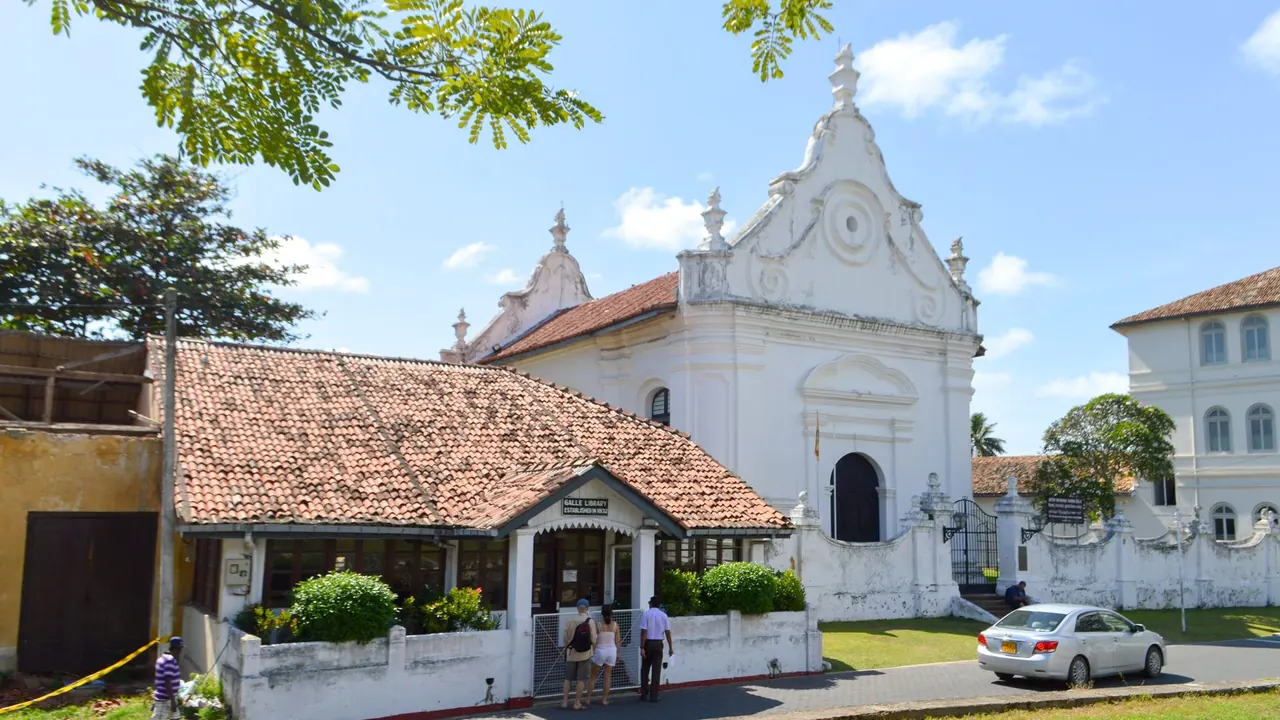
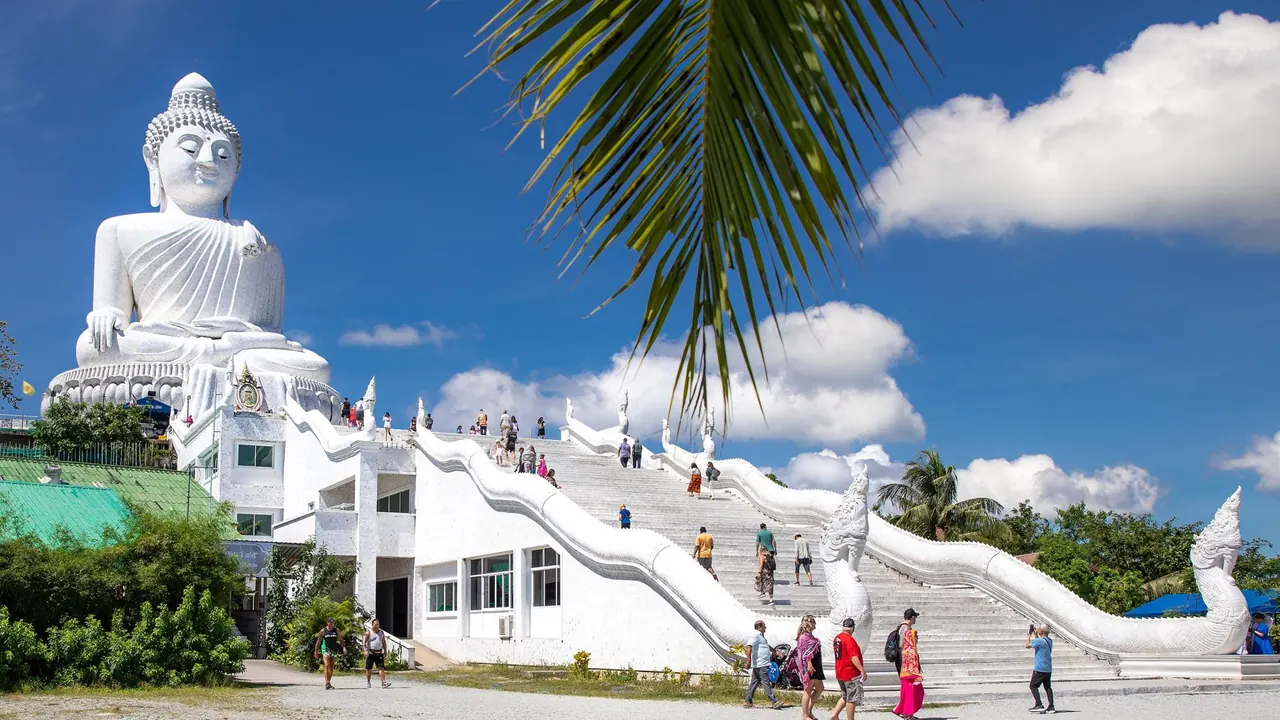
Photos: Galle by Francisco Anzola, CC BY 2.0, cropped; Phuket by Mussi Katz, CC0.
Galle or Phuket?
Our verdict in twelve categories, each scored against the same fixed benchmark cities, and the climate month by month, so you can choose for your trip.
Choose Galle for
- culture and sights
- getting around
- day trips
Galle suits travellers who want a small, slow place with real history. You can walk the whole of the walled Dutch fort, sandy bays are a short tuk-tuk ride away, and Ayurveda is offered all along the coast. It is the better pick for couples or for a culture-minded beach stay, as long as you are happy for evenings to end with dinner on a veranda.
Choose Phuket for
- nightlife
- families
- food and drink
Phuket is the bigger, louder island, with much more to do on the water. It has a long run of west-coast beaches, boat trips through Phang Nga Bay and out to the Similans, resort pools and kids' clubs, and late nights in Patong for those who want them. It works best for families and groups who base themselves at one resort and accept that most outings mean a taxi.
Scoreboard
Twelve categories on one fixed scale from 0 to 100. The shaded stretch is the gap between the two.
Your match
Pick a travel style or drag the sliders, and both match scores follow your weighting.
Wins on culture and sights and getting around with your weighting.
Wins on nightlife and families with your weighting.
What matters to you?
Category by category
What the scores mean for a trip.
Beaches & swimming
Galle's own shoreline is rock and harbour, so a beach day means a short tuk-tuk ride to the sheltered curve of Unawatuna or down to Jungle Beach below the Rumassala headland. Its strength is how close the reef pools at Dalawella and Thalpe are, where you can wade in and snorkel among turtles without booking a boat.
Phuket still has the better beaches, and far more of them. Its west coast runs from crowded Patong past broad Karon and Kata to Nai Harn between green headlands, then north to the open sands of Bang Tao and Mai Khao, and the clearest water is a longtail ride out to the islands. On both coasts the calm, safe months are roughly winter to spring.
Food & drink
Galle feeds you well on Sri Lankan cooking: rice and curry with many small dishes, hoppers at breakfast, kottu from the griddle and fish sharpened with goraka. The fort's courtyard cafés add good coffee, but a few days covers the range.
Phuket has more to explore. Its Hokkien and Peranakan heritage gives Phuket Town dishes you will not find elsewhere, such as peppery moo hong and morning dim sum. Around them are fiery southern curries, night markets and a layer of upmarket resort dining.
Culture & sights
Both have a colonial-era old town, but only Galle's is a reason to make the journey. The walled fort, rebuilt by the Dutch in the 17th century, keeps its grid of veranda houses, the Dutch Reformed Church with its gravestone floor, the Maritime Museum in the old warehouses and the lighthouse, all best seen on a sunset walk along the bastions.
Phuket's history is in Phuket Town's pastel shophouses on Thalang Road, its Chinese clan houses and the tin barons' mansions. Add Wat Chalong and the Big Buddha and you have a pleasant day or two, not the main event.
Nightlife
The two are far apart here. Patong gives Phuket a full-scale party scene, with Bangla Road closed to traffic and lined with clubs, beer bars and cabaret until dawn, and calmer beach clubs at Bang Tao and Kamala for sunset drinks.
Galle has nothing like it. A night out means a long dinner and a drink on a rooftop or veranda inside the fort, or a few beach bars at Unawatuna in high season.
Nature & outdoors
Phuket is the stronger choice outdoors, mainly for its sea and islands. Galle has a quieter list of its own: boats from Mirissa to see blue whales, beginner-friendly surf at Weligama, mangrove trips among the cinnamon islands of Koggala Lake, the Kanneliya rainforest about an hour inland and Sinharaja's endemic birds on a long day out.
From Phuket you can paddle a sea kayak into the hidden lagoons among Phang Nga Bay's limestone towers, and in the dry season boats reach the Similan Islands for some of Thailand's best diving. On land the choice is smaller, with short rainforest trails, waterfalls and a gibbon project at Khao Phra Thaeo, and in both places the heat keeps walks short.
Day trips
The two are broadly level, but the outings feel quite different. From Galle you travel by road or the coastal train to towns and sites: mask workshops at Ambalangoda, Dutch Matara, the cliff shrines of Mulkirigala, or a day in Colombo.
From Phuket nearly every outing goes by boat, to busy Phi Phi or the quiet fishing villages of the Koh Yao islands, with Krabi and Ao Nang on the mainland. Either way, a lot of what is within reach is more coast.
Good for families
Galle is gentle with children inside the fort, where the lanes are quiet and largely free of heavy traffic and the ramparts are a good place to roam and explore. Outside the walls it gets harder: pavements are patchy, the coast road is fast, and the steady heat and humidity tire small children quickly. During the southwest monsoon, roughly May to September, the seas are too dangerous for them to swim, so Galle suits a slow beach-and-villa stay in the dry months.\n\nPhuket is the easier family vacation, provided you pick one calm bay such as Kata, Karon or Nai Harn, with gentle shallows in the dry season, and stay put.
Its hilly roads have few pavements, so every outing means a taxi, and families tend to avoid Patong's main strip after dark. From about May to October, rip currents on the west coast make those same beaches unsafe for children, and the hotel pool or a sheltered east-coast bay becomes the place to swim.
Getting around
Neither is easy, but Galle is simpler. The fort's flat, quiet lanes can be covered on foot, tuk-tuks reach the nearby beaches in minutes, and a coastal train runs to Colombo.
Phuket is a large, hilly island with its beaches spread along a winding road. The west-coast bus is infrequent and stops early, and songthaews do not link one beach to the next, so you end up paying for taxis or taking a chance on a scooter.
Shopping & style
Phuket has more shopping. There are air-conditioned malls with international brands, a big weekend night market, tailors in the beach towns and a Sunday walking-street market on Thalang Road.
Galle's shopping is a few fort lanes of linen, handloom textiles, beeralu lace, tea and spices. It is charming and easy to browse, and the gem dealers selling sapphires and moonstones call for real caution.
Affordability
Both offer good value and both have two price levels, cheap local food and transport alongside resorts that cost far more. In Galle, what you spend depends mostly on where you sleep. Guesthouses outside the walls cost little, and the restored villas inside the fort do not.
In Phuket, what you spend depends more on how much you move about, because taxis are the biggest drain. Room rates at the main beaches also rise sharply in peak season and fall in the monsoon.
Live music & performing arts
Neither is a place to plan a trip around live performance. Phuket at least fills its evenings with ladyboy cabaret revues, staged Thai cultural shows and cover bands in beach bars.
Galle offers occasional Kandyan dance and drumming shows put on in hotels, and the coast's mask-dance tradition is better seen in Ambalangoda. Anything more serious means a trip to Colombo.
Wellness & relaxation
Both are places to slow down, and neither has a bathing tradition. Phuket has more choice: Thai massage on every beach road, resort spas with jungle pavilions, detox and yoga retreats, and the Muay Thai camps in Chalong for anyone who would rather train hard.
Galle's draw is Ayurveda. Residential retreats offer doctors' consultations, herbal treatments and set diets over a week or more, and there are yoga studios around Unawatuna and Thalpe.
When should you go?
Pick your month. The climate figures are measured averages, not a forecast.
Galle in July
Phuket in July
Daytime high, °C
Rainfall in the month, mm
Where the figures come from
Galle has no weather station within reach, so its figures come from a gridded climate model rather than a measured record, and read a broad area rather than the city itself.
Phuket's temperatures are measured 27 km from the centre, at Phuket Airport.
Temperature and rainfall are climate normals, averaged over the years shown. Galle: 2001-2020 normals, NASA POWER reanalysis grid, no weather station within 90 km. Phuket: 1991-2020 (rainfall 1961-1990) normals, Phuket Airport (26.9 km from centre).
Galle's daytime warmth barely moves, staying around 28°C all year, so heat is rarely the problem, though the humidity is. The best months are January to March, when the sea is calm and rainfall is lowest. Rain picks up in April and May, the southwest monsoon makes many beaches unsafe for swimming from May to September, and October and November are the wettest of all, with around 334mm in November.
Phuket follows a similar pattern but runs hotter, reaching about 34°C in March, which makes midday walking hard work. December to March is the clear, dry window, and February sees only about 22mm of rain. From May to October the monsoon brings heavy rain and rough seas to the west coast, peaking at around 399mm in September. In both places the sea is warm enough to swim in all year, and the weather decides whether it is safe.
Which traveller are you?
For a food and nightlife trip, Phuket is the clear choice. Phuket Town has Hokkien noodles and shophouse dim sum, and the waterfront sells seafood by weight. After dinner, Patong's Bangla Road runs until dawn, while Galle's fort lanes go quiet early.
On a culture and arts trip, Galle is the better base. Its UNESCO-listed fort is a complete colonial townscape of ramparts, churches, warehouses and temples that you can explore on foot. Phuket's Sino-Portuguese old quarter is attractive, but it fills a day rather than a trip.
On a family trip with children, Phuket gives you more to do. Resorts have kids' clubs and big pools, and outings include water parks, the aquarium at Cape Panwa and gentle boat trips. Galle offers turtle hatcheries and paddling at Unawatuna, but no organised attractions.
Before you go
| Measure | Galle | Phuket |
|---|---|---|
| Official language | Tamil, Sinhala | Thai |
| Currency | Sri Lanka Rupee (LKR) | Baht (THB) |
| Sockets | GM230 V, 50 Hz | ABCF220 V, 50 Hz |
| Driving side | Left | Left |
| Time zone | UTC+5:30 | UTC+7 |
| Emergency number | Police 119, ambulance 110, fire 110 | Police 191, ambulance 1669, fire 199 |
| Elevation | 0 m | 19 m |
| Main airport | Bandaranaike International Colombo Airport (CMB)133 km from centre56 non-stop destinations | Phuket International Airport (HKT)27 km from centre85 non-stop destinations |
By the numbers
| Measure | Galle | Phuket |
|---|---|---|
| City population | 93,118 | 77,610 |
| People per km² | - | 6,468 |
| Museums within 10 km | 2 | 2 |
| UNESCO World Heritage sites within 50 km | 2 | 0 |
| Swim season, months above 21 °C | 12 months | 12 months |
Where else could you go?
Every comparison below shares a destination with this one, so you can follow Galle or Phuket somewhere new.