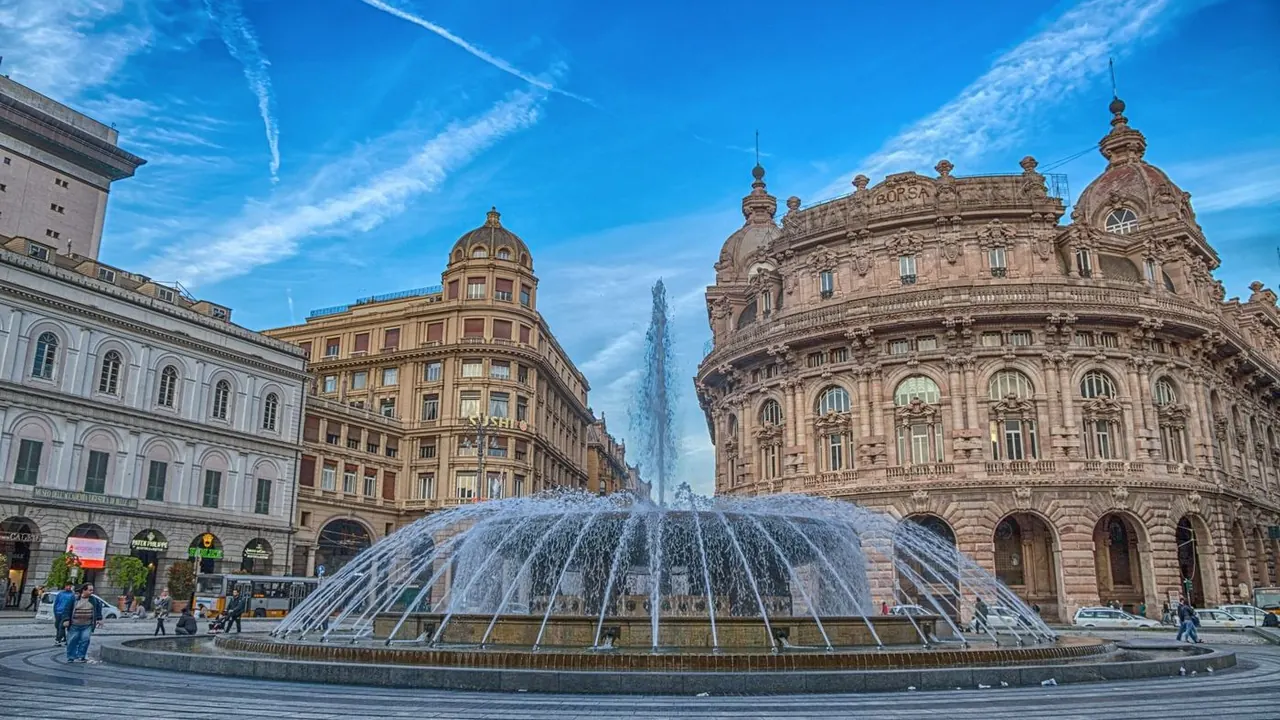
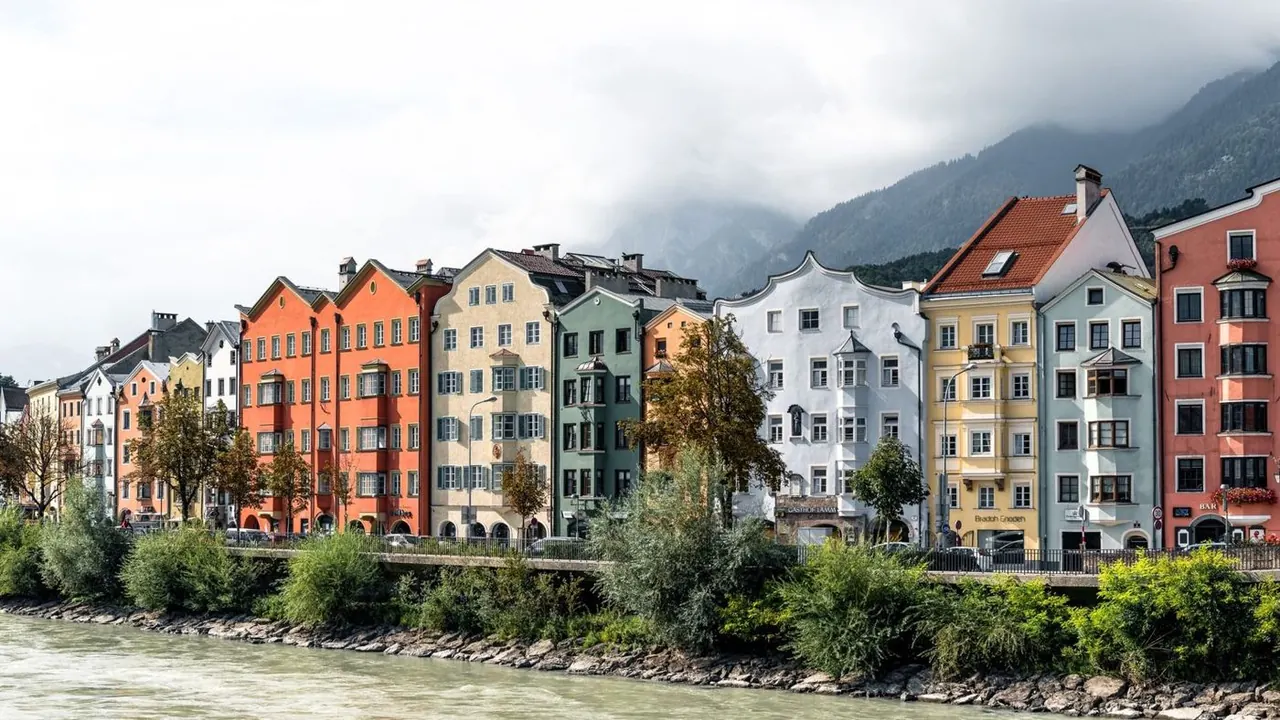
Photos: Genoa by Faber1893, CC BY-SA 4.0, cropped; Innsbruck by Wolfgang Weiser, Pexels License.
Genoa or Innsbruck?
Our verdict in twelve categories, each scored against the same fixed benchmark cities, and the climate month by month, so you can choose for your trip.
Choose Genoa for
- beaches
- food and drink
- culture and sights
Genoa is the choice for a trip that mixes a real city with the sea. Its medieval lanes and palace museums give you several days of sightseeing, and the cooking is some of the most local in Italy. You can swim off the rocks in the afternoon, and the Riviera villages are a short train ride away. It also costs less than Innsbruck, so it suits travellers who want to eat, wander and swim rather than climb.
Choose Innsbruck for
- nature and the outdoors
- getting around
- wellness
If the mountains are the point of the trip, pick Innsbruck. Cable cars run from the edge of a small, flat old town up to high Alpine ridges, so hikers, skiers and mountain bikers can spend all day on the peaks and still sleep in a city. The sights and the food are simpler than Genoa's, and it is the pricier stay of the two. In return you get a calm, easy base with the Alps on every side.
Scoreboard
Twelve categories on one fixed scale from 0 to 100. The shaded stretch is the gap between the two.
Your match
Pick a travel style or drag the sliders, and both match scores follow your weighting.
Wins on beaches and food and drink with your weighting.
Wins on nature and the outdoors and getting around with your weighting.
What matters to you?
Category by category
What the scores mean for a trip.
Beaches & swimming
Genoa is much stronger for swimming. Boccadasse's pebble cove, the bathing establishments on Corso Italia and the platforms below Nervi's promenade mean a swim is easy without leaving the city. Along the Riviera are Camogli, Santa Margherita and the sandier beaches at Varazze. Expect pebbles, rented loungers and busy summer weekends.
Innsbruck has no sea. Its swimming is in the shallow Lanser See and Natterer See on the plateaus, which are pleasant in high summer, or in the beautiful but cold Achensee. Treat it as an occasional afternoon out, not a reason to choose the city.
Food & drink
Genoa is the better place to eat by a wide margin. This is where pesto comes from, and the city has its own food at every level, from focaccia dipped in cappuccino and farinata eaten in the old-town lanes to pansoti in walnut sauce and fish in the harbour trattorias, all with a glass of Vermentino. The Mercato Orientale shows off the region's produce.
Innsbruck's cooking is filling Alpine food: Gröstl, Kaspressknödel and Kaiserschmarrn. It tastes best at a mountain hut after a walk. In town you will find traditional inns and coffee houses but no market culture or street food, and the places around the Golden Roof are aimed at tour groups.
Culture & sights
Genoa has much more to see. Its medieval centre is one of the largest in Europe, and the Rolli palaces on Via Garibaldi have painted halls with Van Dyck and Rubens. Add San Lorenzo, the Palazzo Ducale and the marble sculpture of Staglieno, and the city easily fills several days.
Innsbruck's Habsburg heritage is smaller and fits into a compact arcaded old town. Its best single sight is Maximilian's tomb in the Hofkirche with its ring of bronze figures, and Ambras Castle's cabinet of curiosities is worth the trip out. Two or three days are enough to cover it.
Nightlife
Neither city is built for big nights out, and they come out roughly level. In Genoa the evening is aperitivo and late wine in the small bars around Piazza delle Erbe, with seafront bars and beach clubs in summer. Weeknights are quiet in this fairly reserved city.
Innsbruck's evenings depend more on its students, who fill the bars and small clubs in the brick arches under the railway viaduct. In winter many visitors do their partying at après-ski in the nearby resorts instead of in town.
Nature & outdoors
Genoa has good walking: the ring of fortresses above Righi, the cliff paths of the Portofino promontory down to San Fruttuoso, the Cinque Terre trails, and whale-watching boats heading out into the Pelagos Sanctuary. Its strength is the meeting of hills and sea.
Innsbruck is in another class for the outdoors. The funicular and cable cars go from the old town up to the Nordkette ridge at about 2,300m, with the Karwendel nature park just behind it and glaciers in the Stubai valley. Skiing, hut-to-hut hiking, via ferratas, paragliding and rafting are all close to the city, so it suits anyone who wants to spend most days on the mountains.
Day trips
Both are fine bases, but Genoa's railway has the stronger set of trips. Portofino, Camogli and Sestri Levante are under an hour or so along the coast, the Cinque Terre a little further, and Milan and Turin are close enough for a museum day.
Innsbruck's trips are more varied and spread across three countries. It is ten minutes to medieval Hall in Tirol, under two hours to Munich or Salzburg, and over the Brenner to Bolzano and Ötzi the Iceman. The Bavarian castles at Füssen are best reached by car.
Good for families
Both cities work well with children, in different ways. Genoa puts everything in one place at the Porto Antico: the big aquarium, the science centre and the Galata museum's submarine. Away from the harbour, though, steep stairs and dark lanes make pushchairs hard work.
Innsbruck's flat, safe centre is easier to get around. Its appeal is the mountains: the Alpenzoo with its ibex and wolves, adventure trails, family swims in the lakes and ski schools in winter. It has fewer attractions built for children, so rainy days take more planning.
Getting around
Innsbruck is the easier city to get around. The centre is flat and compact, trams and buses reach Igls and the Stubai valley, and the funicular to the Nordkette starts at the edge of the old town.
Genoa takes more effort. You explore the old town on foot, but its lanes are a maze and the city climbs steeply from the harbour. The funiculars and public lifts help, and the coastal railway is the best link to Nervi and the Riviera. Buses are slow in the narrow, crowded streets.
Shopping & style
Genoa is a little better for shopping, mostly for food and crafts. The old town has long-established shops selling candied fruit, olive oil and pesto, plus workshops making silver filigree and coral, while Via XX Settembre and the Galleria Mazzini cover the main Italian labels.
Innsbruck's shopping is about the mountains: loden jackets, dirndls, Speck, schnapps and excellent specialist ski and outdoor shops. Neither city has a luxury district.
Affordability
Genoa is the cheaper stay. Focaccia and farinata make cheap meals, trattoria lunches are fairly priced, and central hotels cost less than in Italy's most visited cities. Costs rise mainly in the smart Riviera resorts and with lounger hire on beach days.
Innsbruck adds an Alpine resort premium to Western European prices, and hotels cost most in ski season and around the Christmas markets. Cable car tickets mount up on an active trip, though the city cards help, and spring and autumn are clearly cheaper.
Live music & performing arts
Genoa is slightly ahead here. The Teatro Carlo Felice on Piazza De Ferrari has a proper season of opera, ballet and symphony concerts, and the city of Paganini and the Italian singer-songwriters has small live-music clubs.
Innsbruck's Landestheater has a broad provincial programme. Its highlight is the summer Festival of Early Music, held in historic settings such as the Spanish Hall at Ambras Castle, and there are folk evenings with yodelling and brass. In neither city is the stage a reason to visit, but both have enough for an evening or two.
Wellness & relaxation
Innsbruck is the more restful choice. The town itself is calm, the hotel spas in Igls and on the plateaus come with mountain views, and the large thermal complexes in the Ötztal and Zillertal are about an hour away. A sauna after a day in the mountain air is the local idea of relaxing.
Genoa's centre, with its port, traffic and crowded lanes, is lively rather than relaxing, and spas are mostly in hotels. The calm is at Nervi's promenade and villa gardens or over a long lunch in a Riviera village. The nearest spa town with thermal waters is Acqui Terme.
When should you go?
Pick your month. The climate figures are measured averages, not a forecast.
Genoa in July
Innsbruck in July
Daytime high, °C
Rainfall in the month, mm
Where the figures come from
Genoa has no rain gauge within 25 km of the centre, so its rainfall comes from a gridded climate dataset read at the city rather than from a gauge further away.
Genoa's sunshine is measured 80 km from the centre, at Capo Mele.
Temperature and rainfall are climate normals, averaged over the years shown. Genoa: 1991-2020 normals, Genova / Sestri (6.7 km from centre). Innsbruck: 1991-2020 normals, Innsbruck-Flughafen (3.3 km from centre).
Genoa has a long, dry, sunny summer. From June to September the days are hot, July is almost rainless, and the sea warms to about 25°C by August, so that is the time for swimming. The rain arrives in autumn and peaks in November at about 195mm. Winters are mild, around 12°C by day, which makes them good for walking the lanes and seeing the palaces without crowds. Spring and early autumn are the most comfortable seasons for coastal walks.
Innsbruck works almost the other way round. Its winter highs are around 4°C, cold enough for snow on the surrounding ski slopes, while Genoa stays mild. Summer is warm but also the wettest season, with August bringing about 144mm, so mountain days need some flexibility. Late spring and September are steadier for walking, with pleasant temperatures and less rain than midsummer.
Which traveller are you?
For a beach and sun trip, Genoa is the clear pick. It has a dry, sunny summer, warm clear sea, swimming platforms at Nervi and Corso Italia, and Riviera bays like Camogli and Sestri Levante a train ride away. Innsbruck only has small plateau lakes during a brief summer.
On an outdoors trip, choose Innsbruck. The Nordkette cable cars reach Alpine ridges from the old town in under half an hour, and the Karwendel, the Stubai Glacier, the via ferratas and the ski areas are all close by. Genoa's cliff paths are lovely but much smaller in scale.
For a food and nightlife trip, Genoa is the better choice. There is pesto, focaccia at breakfast, farinata shops in the caruggi and seafood by the harbour, followed by aperitivo in medieval squares. Innsbruck's hearty Tyrolean cooking and small bar scene under the viaduct can't match it.
Before you go
| Measure | Genoa | Innsbruck |
|---|---|---|
| Official language | Italian | German, Austrian Sign Language |
| Currency | Euro (EUR) | Euro (EUR) |
| Sockets | CFL230 V, 50 Hz | CF230 V, 50 Hz |
| Driving side | Right | Right |
| Time zone | UTC+1, UTC+2 in summer | UTC+1, UTC+2 in summer |
| Emergency number | 112 | 112 |
| Elevation | 20 m | 574 m |
| Main airport | Genoa Cristoforo Colombo Airport (GOA)7 km from centre25 non-stop destinations | Innsbruck Airport (INN)4 km from centre40 non-stop destinations |
| Public holidays this year | 13 days | 16 days |
By the numbers
| Measure | Genoa | Innsbruck |
|---|---|---|
| City population | 558,745 | 132,499 |
| People per km² | 2,325 | 1,263 |
| Museums within 10 km | 51 | 28 |
| UNESCO World Heritage sites within 50 km | 1 | 1 |
| Swim season, months above 21 °C | 4 months | - |
Where else could you go?
Every comparison below shares a destination with this one, so you can follow Genoa or Innsbruck somewhere new.