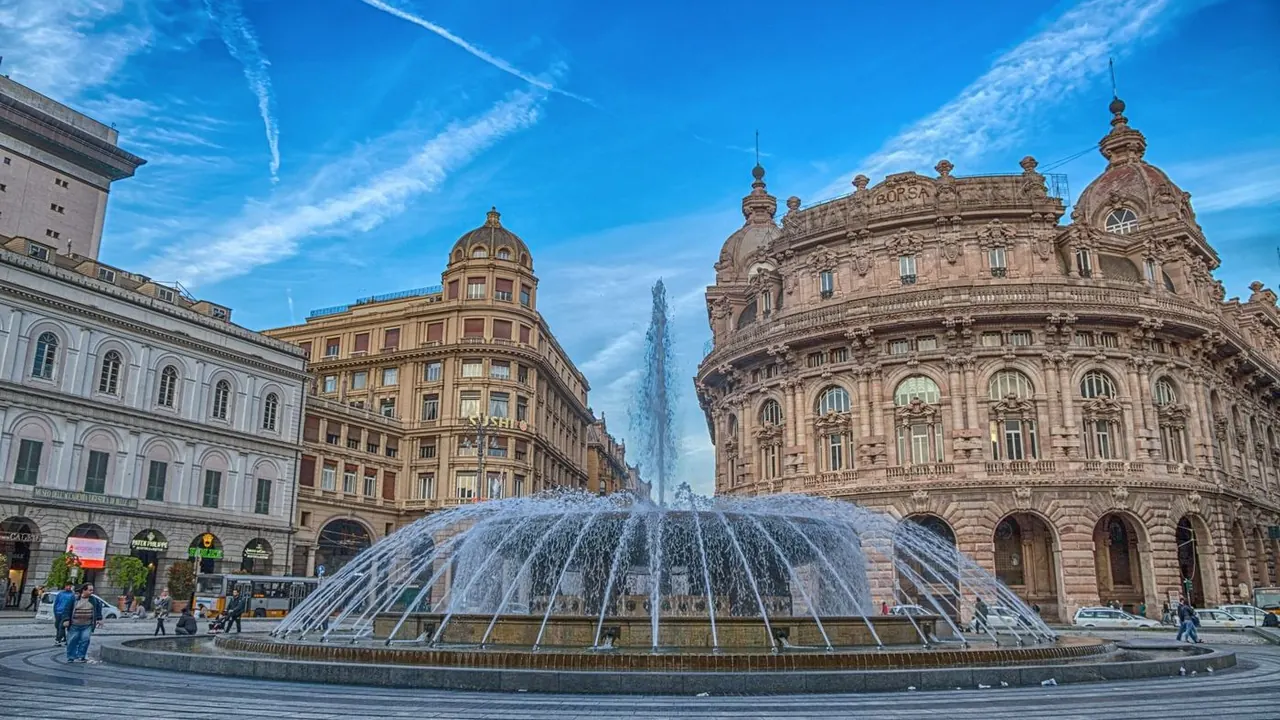
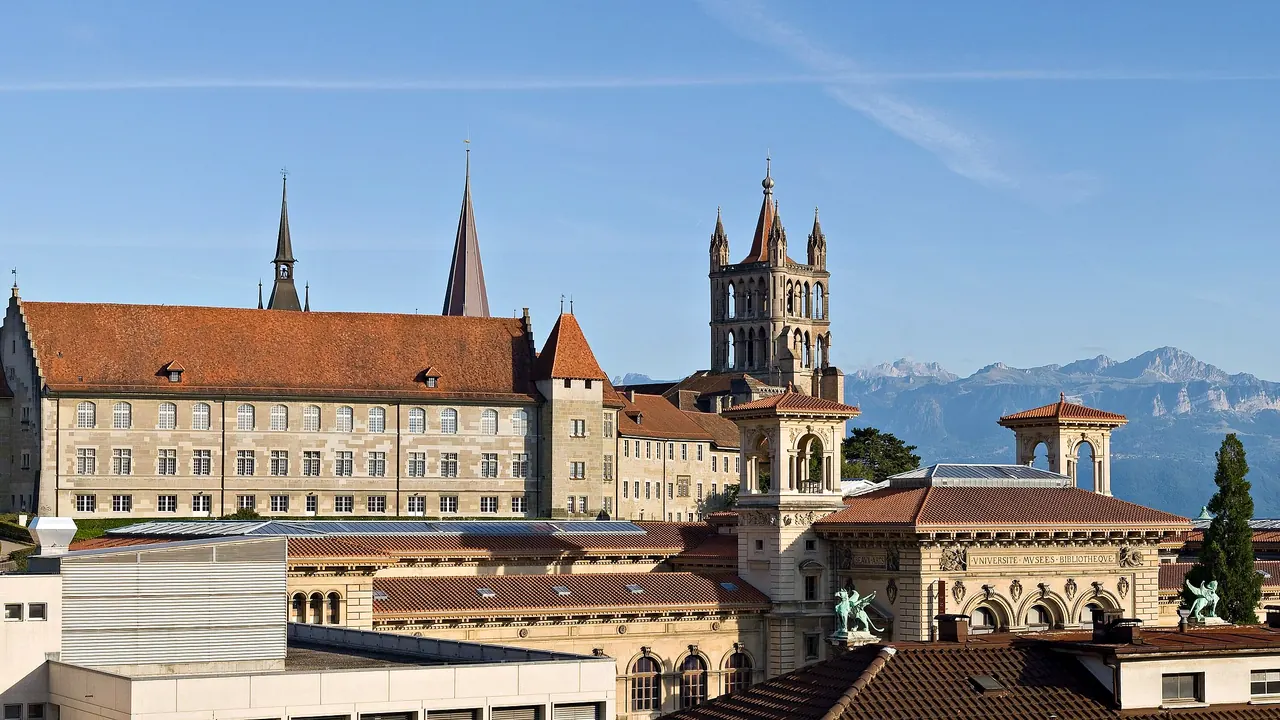
Photos: Genoa by Faber1893, CC BY-SA 4.0, cropped; Lausanne by Christian Mehlführer, CC BY-SA 3.0, cropped.
Genoa or Lausanne?
Our verdict in twelve categories, each scored against the same fixed benchmark cities, and the climate month by month, so you can choose for your trip.
Choose Genoa for
- prices
- beaches
- culture and sights
Genoa suits the traveller who wants a real Italian port city with the sea at its feet. You get a medieval maze of caruggi and palace museums to explore, pesto and focaccia on every corner, and Riviera coves a short train ride away for an afternoon swim. It also costs far less, so a longer stay is easier to manage.
Choose Lausanne for
- wellness
- getting around
- live music and the arts
Lausanne is the better pick for lake and mountain scenery, smooth Swiss transport and a slower pace. The Alps and the Lavaux vineyards are close at hand, spas and thermal springs are easy to reach, and dance and theatre give the evenings more weight. It fits travellers for whom the setting matters more than the sights, and who can live with Swiss prices.
Scoreboard
Twelve categories on one fixed scale from 0 to 100. The shaded stretch is the gap between the two.
Your match
Pick a travel style or drag the sliders, and both match scores follow your weighting.
Wins on prices and beaches with your weighting.
Wins on wellness and getting around with your weighting.
What matters to you?
Category by category
What the scores mean for a trip.
Beaches & swimming
Genoa has the sea, and that settles it. There is clear Mediterranean water at Boccadasse, the bathing establishments of Corso Italia and the swimming platforms below Nervi's promenade. Camogli, Sestri Levante and the sandier shore at Varazze are a train ride away. Expect pebbles, rented loungers and crowded summer weekends.
Lausanne swims in Lake Geneva instead, from lawns and piers at Vidy and the old lido at Bellerive. The water is cooler and the season shorter, so it makes a pleasant summer afternoon rather than a reason to come.
Food & drink
Genoa eats better from day to day. Pesto, focaccia, farinata and fried fish from the old friggitorie make cheap and very local meals, and the harbour trattorias cook seafood well. Lausanne's cooking is heartier and plainer: lake perch, papet vaudois and winter fondue. Its real strength is the Chasselas from the Lavaux terraces.
At the top end the order reverses. Lausanne has some of Switzerland's most celebrated tables nearby, while Genoa's fine dining is thin. For everything below that level, and street food above all, Genoa is the easier city to eat in.
Culture & sights
Genoa has far more to see. Its medieval quarter is one of the largest in Europe, and the Rolli palaces along Via Garibaldi hang Van Dyck and Rubens in painted halls. Add the striped cathedral of San Lorenzo and the marble sculpture at Staglieno, and there is enough for several days.
Lausanne is smaller and relies on its museums more than its streets. The Gothic cathedral with its night watchman, the Olympic Museum at Ouchy and the Collection de l'Art Brut are all worth a visit, but two or three days cover them.
Nightlife
Neither city is built for partying, but they go out in different ways. Genoa's evenings mean aperitivo and wine in medieval squares such as Piazza delle Erbe, with waterfront bars at the Porto Antico and beach clubs along Corso Italia in summer. Lausanne has the clubs, stacked in the old warehouses of the Flon and filled with students at weekends, though drinks there cost a good deal more.
Nature & outdoors
Lausanne has the edge, mostly because the Alps are so close. Villars, Leysin and Les Diablerets offer skiing and summer hiking within about an hour, the Jura has long ridge walks, and the vineyard path through Lavaux beside the lake is a classic. In the warmer months there is sailing and paddleboarding on the lake.
Genoa's outdoors is coastal and steep. There is the fortress trail above Righi, the cliff paths of Portofino down to San Fruttuoso, the Cinque Terre trails, and whale watching in the Pelagos Sanctuary. The walking is excellent, but there is nothing for skiers.
Day trips
Both make superb bases, and the difference is the kind of outing. Genoa's trips run along the coast to Portofino, Camogli and the Cinque Terre villages, with Milan or Turin for a city day. From Lausanne they head to lakes and mountains: the Château de Chillon, Gruyères, Bern's arcaded old town and Geneva, almost all reached by train without a car.
Good for families
Both cities work with children, but for different reasons. Genoa's Porto Antico puts a lot in one place: the large aquarium, the walk-through submarine at the Galata museum and funiculars to ride. Its dark, steep old town is hard work with a pushchair. Lausanne is calmer and greener, with the animal park and pedal boats at Sauvabelin and lakeside lawns in summer, but eating out as a family is costly.
Getting around
Lausanne is the easier city to get around. It is compact, and the m2 metro carries you from the lakeshore to the upper town, so the steep slopes rarely get in the way. Swiss trains and lake boats cover everything further out.
Genoa's old town and harbour are walkable, but the caruggi are a maze, the buses crawl through congested streets and there is only one short metro line. Funiculars and public lifts help with the hills, and the coastal railway is the link that matters most.
Shopping & style
Neither is a shopping destination, and the real difference is what you bring home. Genoa's best buys are edible or handmade: pesto, olive oil and candied fruit from long-established shops in the old town, and silver filigree from small workshops, with Via XX Settembre for mainstream fashion. Lausanne's Rue de Bourg is the place for a Swiss watch, jewellery or chocolate, and a bottle of Lavaux wine is easy to pack.
Affordability
The gap here is wide enough to shape the whole trip. In Genoa an ordinary day of sightseeing stays modest: a sit-down lunch, a funicular ride up to Righi and a glass of Vermentino at aperitivo add little to the bill, and a comfortable central room still leaves money for trains along the Riviera. Spending climbs mainly on summer days in Portofino or Santa Margherita, and wherever a lounger has to be paid for.
In Lausanne the same kind of day costs far more, and the difference shows most at dinner and on the hotel bill. The free pleasures, the lakeside at Ouchy and the walk through the Lavaux vines, keep some days cheap, and Swiss trains make every outing quick. Even so, a week in Lausanne needs a much bigger budget than a week in Genoa.
Live music & performing arts
For its size, Lausanne has the more serious stage life, and dance leads it. The city has the Béjart Ballet and the Prix de Lausanne, contemporary work at the Théâtre de Vidy, a full opera season and a respected chamber orchestra. In July the Montreux Jazz Festival is a short train ride away.
Genoa has opera, ballet and concerts at the Teatro Carlo Felice, concerts in honour of Paganini, and small clubs that keep its singer-songwriter tradition going. That makes a good evening or two rather than a reason to visit.
Wellness & relaxation
Lausanne is the more restful choice. The lakeside promenades and the paths through the Lavaux vines suit slow days, the grand lakeside hotels have large spas, and thermal water is close at Yverdon-les-Bains and Lavey-les-Bains.
Genoa's centre, with its port and traffic, is lively rather than calming. Its quiet side is the villa gardens at Nervi and the long lunches in the Riviera villages, and the nearest thermal springs are at Acqui Terme, more than an hour inland.
When should you go?
Pick your month. The climate figures are measured averages, not a forecast.
Genoa in July
Lausanne in July
Daytime high, °C
Rainfall in the month, mm
Where the figures come from
Genoa has no rain gauge within 25 km of the centre, so its rainfall comes from a gridded climate dataset read at the city rather than from a gauge further away.
Genoa's sunshine is measured 80 km from the centre, at Capo Mele.
Lausanne's temperatures are measured 40 km from the centre, at Payerne.
Lausanne has no rain gauge within 25 km of the centre, so its rainfall comes from a gridded climate dataset read at the city rather than from a gauge further away.
Temperature and rainfall are climate normals, averaged over the years shown. Genoa: 1991-2020 normals, Genova / Sestri (6.7 km from centre). Lausanne: 1991-2020 (sunshine 1961-1990) normals, Payerne (39.7 km from centre).
Genoa is the warmer and sunnier of the two for most of the year. The sea is warm enough for swimming from June to September and reaches 25°C in August. July and August are hot but still fine for walking the shaded caruggi, and April and May are pleasant for sightseeing on foot. Autumn brings heavy rain: September turns wet and October is the wettest month at 212mm. Winters are mild enough for exploring the city.
Lausanne is at its best from June to September, peaking around 26°C in July. That is the season for lake swimming and Alpine hikes. Rain falls all through the year and is in fact heaviest in summer. Winters are cold and grey, with highs near 4°C in January and very little sunshine in town, so a winter visit is really about the mountains.
Which traveller are you?
For a beach and sun trip, Genoa is the clear choice. The Mediterranean is on its doorstep, the water stays warm through summer and the coves of Camogli and Sestri Levante are a train ride away. Lausanne offers only a short season of lake bathing.
On a trip on a tight budget, Genoa goes much further. Focaccia, farinata and trattoria lunches keep meals cheap and hotels are fair for Italy. In Lausanne, Swiss prices make even a simple lunch out costly, and visitors end up picnicking from supermarkets.
For a relaxing and wellness trip, Lausanne is the better fit. It has lakeside hotel spas, quiet walks through the Lavaux vines and warm springs at Yverdon-les-Bains, under half an hour away, for slow days. Genoa's centre is noisy and its spas are few.
Before you go
| Measure | Genoa | Lausanne |
|---|---|---|
| Official language | Italian | French, German, Italian, Romansh |
| Currency | Euro (EUR) | Swiss Franc (CHF) |
| Sockets | CFL230 V, 50 Hz | CJ230 V, 50 Hz |
| Driving side | Right | Right |
| Time zone | UTC+1, UTC+2 in summer | UTC+1, UTC+2 in summer |
| Emergency number | 112 | 112 |
| Elevation | 20 m | 495 m |
| Main airport | Genoa Cristoforo Colombo Airport (GOA)7 km from centre25 non-stop destinations | Geneva International Airport (GVA)52 km from centre150 non-stop destinations |
| Public holidays this year | 13 days | 9 days |
By the numbers
| Measure | Genoa | Lausanne |
|---|---|---|
| City population | 558,745 | 144,873 |
| People per km² | 2,325 | 3,499 |
| Museums within 10 km | 51 | 31 |
| UNESCO World Heritage sites within 50 km | 1 | 3 |
| Swim season, months above 21 °C | 4 months | - |
Where else could you go?
Every comparison below shares a destination with this one, so you can follow Genoa or Lausanne somewhere new.
- Portofinovs Genoa
- Genevavs Lausanne
- Chamonixvs Lausanne
- Bernvs Lausanne
- La Speziavs Genoa
- Annecyvs Lausanne