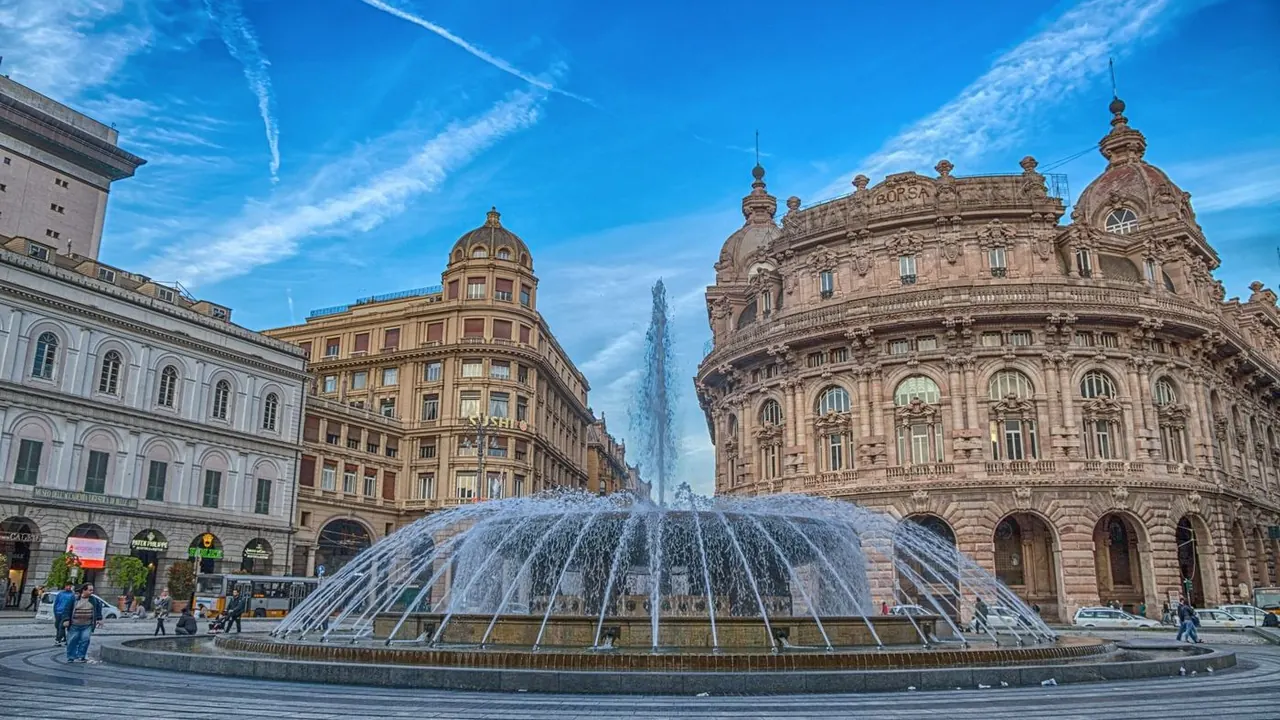
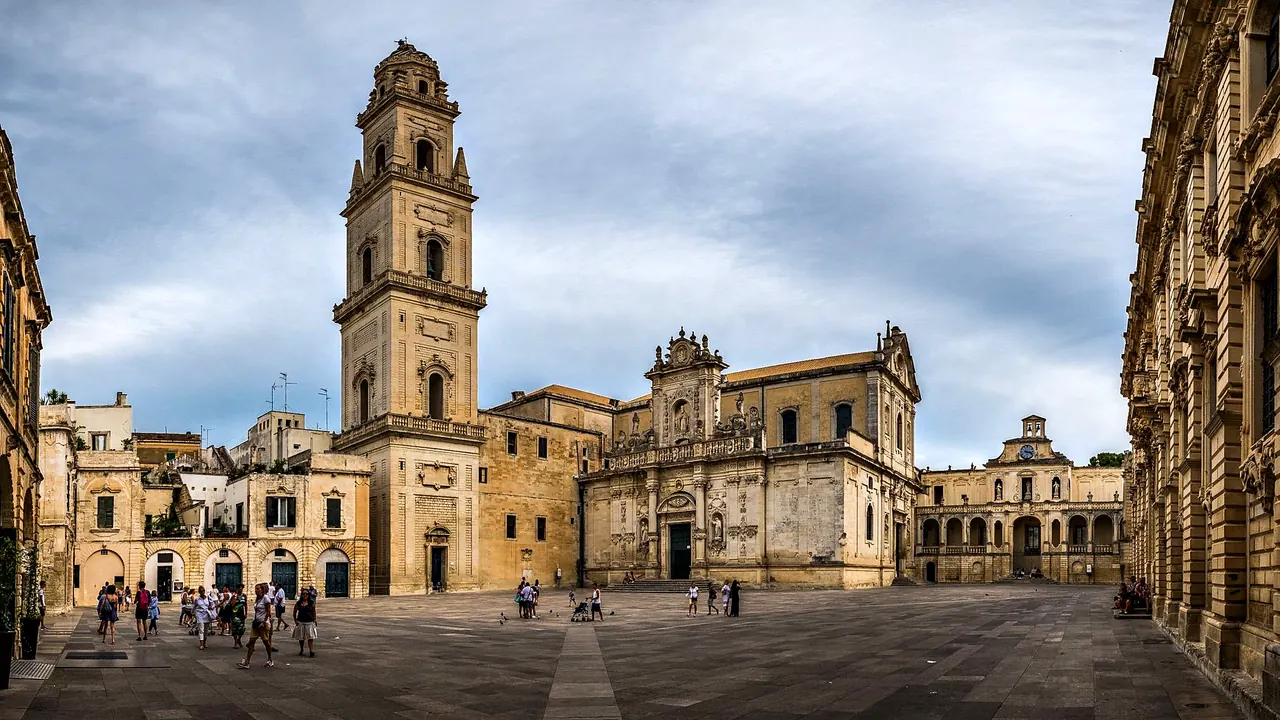
Photos: Genoa by Faber1893, CC BY-SA 4.0, cropped; Lecce by Giuseppe Milo, CC BY 3.0, cropped.
Genoa or Lecce?
Our verdict in twelve categories, each scored against the same fixed benchmark cities, and the climate month by month, so you can choose for your trip.
Choose Genoa for
- nature and the outdoors
- getting around
- families
Genoa is the better pick if you want a real city with plenty to do: a vast medieval old town, palace museums, an opera house, and hills and cliff paths starting from the edge of town. The railway along the Riviera puts Portofino, the Cinque Terre and even Milan within easy reach without a car, and families get the aquarium and the harbour attractions. Choose it for an active, varied trip where the sea is one part of the plan.
Choose Lecce for
- beaches
- wellness
- prices
Lecce suits travellers who want slow southern days built around the beach. The Salento has finer sand, warmer summers and a longer swimming season than the Ligurian coast. Its honey-coloured Baroque centre is flat and easy to stroll, and evenings in the piazzas are quietly sociable. It works best with a hire car and a relaxed pace, and for a summer of sea, stone towns and simple, cheap food it is hard to beat.
Scoreboard
Twelve categories on one fixed scale from 0 to 100. The shaded stretch is the gap between the two.
Your match
Pick a travel style or drag the sliders, and both match scores follow your weighting.
Wins on nature and the outdoors and getting around with your weighting.
Wins on beaches and wellness with your weighting.
What matters to you?
Category by category
What the scores mean for a trip.
Beaches & swimming
Lecce has the better beaches, though it sits inland and you need to get to them. Within about forty minutes there are long, shallow stretches of fine sand on the Ionian side and pale coves on the Adriatic, and in summer the whole day tends to be planned around the sea.
Genoa lets you swim inside the city, at Boccadasse's little cove, from the bathing platforms of Corso Italia or below Nervi's promenade. The shores along its Riviera are mostly pebble and coarse sand, packed with rented loungers. It works well for an afternoon swim between sights, but it is not really a beach destination.
Food & drink
Genoa eats a little better and with more variety. Pesto, pansoti in walnut sauce, harbour seafood and the old-town friggitorie selling farinata and fried fish give it a deeper table, with the Mercato Orientale showing off the region's produce.
Lecce's cooking is earthier and very much its own: pasticciotto and iced almond coffee for breakfast, ciceri e tria and orecchiette with turnip tops at the trattoria, and dark Negroamaro wine rather than Liguria's crisp whites. Both kitchens stay firmly regional, with few ambitious restaurants.
Culture & sights
Genoa has a little more to see. Its caruggi make up one of Europe's largest medieval quarters, and above them the Rolli palaces on Via Garibaldi hold Van Dyck and Rubens. Add the striped cathedral, the Lanterna and Staglieno's marble cemetery, and you have days of sightseeing.
Lecce is a smaller, more unified place: a whole townscape of carved Baroque limestone, with Santa Croce and the Piazza del Duomo at dusk as the highlights, plus a half-buried Roman amphitheatre. Here the pleasure is in wandering rather than in museums.
Nightlife
Neither is a party city, and evenings in both revolve around aperitivo. Genoa's happen among the student bars around Piazza delle Erbe and the waterfront at Porto Antico. Lecce starts with the passeggiata, then moves on to wine and cocktail bars in the old-town lanes. If you want to dance in summer, Lecce sends you on a drive to the open-air discos near Gallipoli, while Genoa's beach clubs line the Corso Italia within the city.
Nature & outdoors
Genoa is much the stronger choice for the outdoors. Steep green hills rise straight behind the port, with a fortress trail at Righi reached by funicular. Then there are the cliff paths of the Portofino promontory, the Cinque Terre terraces and the Apennine trails inland, plus boat trips to see whales and dolphins in the Pelagos Sanctuary.
Around Lecce the countryside is a flat plain of olive groves, better for gentle cycling than for hiking. The landscape that matters there is the coast: the sea caves and stacks from Roca Vecchia to Leuca, and wetlands for birdwatching at Le Cesine and the Alimini lakes.
Day trips
Genoa makes the easier base for day trips, mainly thanks to the railway. Camogli, Portofino, Sestri Levante and the Cinque Terre all lie on one coastal line, and Milan and Turin are close enough for a museum day.
Lecce offers rewarding outings too: Otranto's cathedral mosaic, Gallipoli on its island, Galatina's frescoes and, further north, Ostuni and the trulli of Alberobello. Most of these mean driving, though, so Lecce needs more planning to get the same out of a week.
Good for families
Genoa has far more for children, nearly all of it gathered around Porto Antico: one of Europe's largest aquariums, a science centre, the biosphere and a submarine you can walk through. Its steep, dim lanes and many stairs are hard going with a pushchair, though.
Lecce is gentler on parents. The old town is flat and largely free of traffic, and Porto Cesareo's shallow sand is ideal for small children. The catch is that there is almost nothing built for them, and the summer heat means planning every day around the beach and an afternoon rest.
Getting around
Genoa is easier to manage without a car. Funiculars, public lifts and a short metro line deal with the hills, and the coastal railway reaches Nervi and the Riviera towns in no time, even if the city buses are slow.
Lecce's centre is flatter and simpler to walk, but beyond the walls the trains are slow and infrequent and the beach buses run only in summer. Most visitors end up hiring a car to reach the coast.
Shopping & style
Genoa has the more useful shopping streets. The arcades of Via XX Settembre and the Galleria Mazzini cover the main Italian labels, and the old town adds silver filigree, coral, candied fruit and pesto.
Lecce's range is narrower, but its crafts are more particular to the place: cartapesta saints made in old-town workshops, small carvings in local stone and ceramics from Grottaglie. Neither city is worth a trip for shopping alone.
Affordability
Both cities are fair value by Italian standards, with cheap street food in each: focaccia and farinata in Genoa, rustico and pasticciotto in Lecce. Where they differ is in what pushes the bill up. In Genoa it is the smart Riviera resorts and paying for loungers. In Lecce it is August, when rooms jump in price, plus the cost of a hire car that most trips require.
Live music & performing arts
Genoa offers more on stage. The Teatro Carlo Felice runs a full season of opera, ballet and symphony concerts, and the city also has Paganini concerts and small clubs that keep its singer-songwriter tradition going.
Lecce's theatres have a modest programme, and much of the year is quiet. Its distinctive music is pizzica, the tambourine dance played at village festivals all summer, which peaks with the huge open-air Notte della Taranta at Melpignano in August.
Wellness & relaxation
Lecce is the more restful of the two. The long afternoon closure and evenings spent sitting in the piazzas slow the pace down, the sulphur grottoes of Santa Cesarea Terme are close by on the cliffs, and masserie in the countryside have been turned into quiet spa retreats.
Genoa's port, traffic and packed lanes make it lively rather than calming. Nervi's gardens are the main place to unwind, and the nearest thermal baths are inland at Acqui Terme.
When should you go?
Pick your month. The climate figures are measured averages, not a forecast.
Genoa in July
Lecce in July
Daytime high, °C
Rainfall in the month, mm
Where the figures come from
Genoa has no rain gauge within 25 km of the centre, so its rainfall comes from a gridded climate dataset read at the city rather than from a gauge further away.
Genoa's sunshine is measured 80 km from the centre, at Capo Mele.
Lecce's temperatures are measured 38 km from the centre, at Brindisi.
Lecce has no rain gauge within 25 km of the centre, so its rainfall comes from a gridded climate dataset read at the city rather than from a gauge further away.
Temperature and rainfall are climate normals, averaged over the years shown. Genoa: 1991-2020 normals, Genova / Sestri (6.7 km from centre). Lecce: 1991-2020 (sunshine 1981-2010) normals, Brindisi (38 km from centre).
Genoa's beach weather runs from June into early September. August afternoons reach about 28°C, the sea is at its warmest late in the summer, and July is the driest month. Lecce is hotter and sunnier. In July and August afternoons reach 30°C with very little rain, which is good for long days on the sand but makes midday sightseeing tiring. Its sea is a degree or so warmer and stays warm for longer, so you can still swim into early October even though autumn showers are starting by then.
The biggest difference is in autumn. Genoa's rain sets in during September and peaks in October at around 212mm. Its best months for walking the hills and the caruggi are May and June, after the cool spring and well before the wet season. In Lecce, September is still warm, sunny and fairly dry, and along with May and June it is the most comfortable time to walk its streets. October is noticeably wetter there, and November is the wettest month. Both cities have mild, quiet winters, and Lecce gets more sunshine from March to October.
Which traveller are you?
For a beach and sun trip, Lecce is the clear choice. The fine-sand beaches at Porto Cesareo and Punta Prosciutto and the coves of Torre dell'Orso beat Genoa's pebble shores and crowded lounger strips, and the season runs longer.
On an outdoors trip, Genoa wins comfortably. Trails start right above the city at Righi, the Portofino park and the Cinque Terre paths are a train ride away, and there are boats out to see whales. Around Lecce the land is a flat plain of olive groves.
On a family trip with children, Genoa has more to offer. The aquarium, the walk-through submarine and the funiculars fill several days. Lecce is easy-going and has shallow beaches, but it has very little built for children.
Before you go
| Measure | Genoa | Lecce |
|---|---|---|
| Official language | Italian | Italian |
| Currency | Euro (EUR) | Euro (EUR) |
| Sockets | CFL230 V, 50 Hz | CFL230 V, 50 Hz |
| Driving side | Right | Right |
| Time zone | UTC+1, UTC+2 in summer | UTC+1, UTC+2 in summer |
| Emergency number | 112 | 112 |
| Elevation | 20 m | 49 m |
| Main airport | Genoa Cristoforo Colombo Airport (GOA)7 km from centre25 non-stop destinations | Brindisi Airport (BDS)39 km from centre49 non-stop destinations |
| Public holidays this year | 13 days | 13 days |
By the numbers
| Measure | Genoa | Lecce |
|---|---|---|
| City population | 558,745 | 94,783 |
| People per km² | 2,325 | 393 |
| Museums within 10 km | 51 | 11 |
| UNESCO World Heritage sites within 50 km | 1 | 0 |
| Swim season, months above 21 °C | 4 months | 4 months |
Where else could you go?
Every comparison below shares a destination with this one, so you can follow Genoa or Lecce somewhere new.