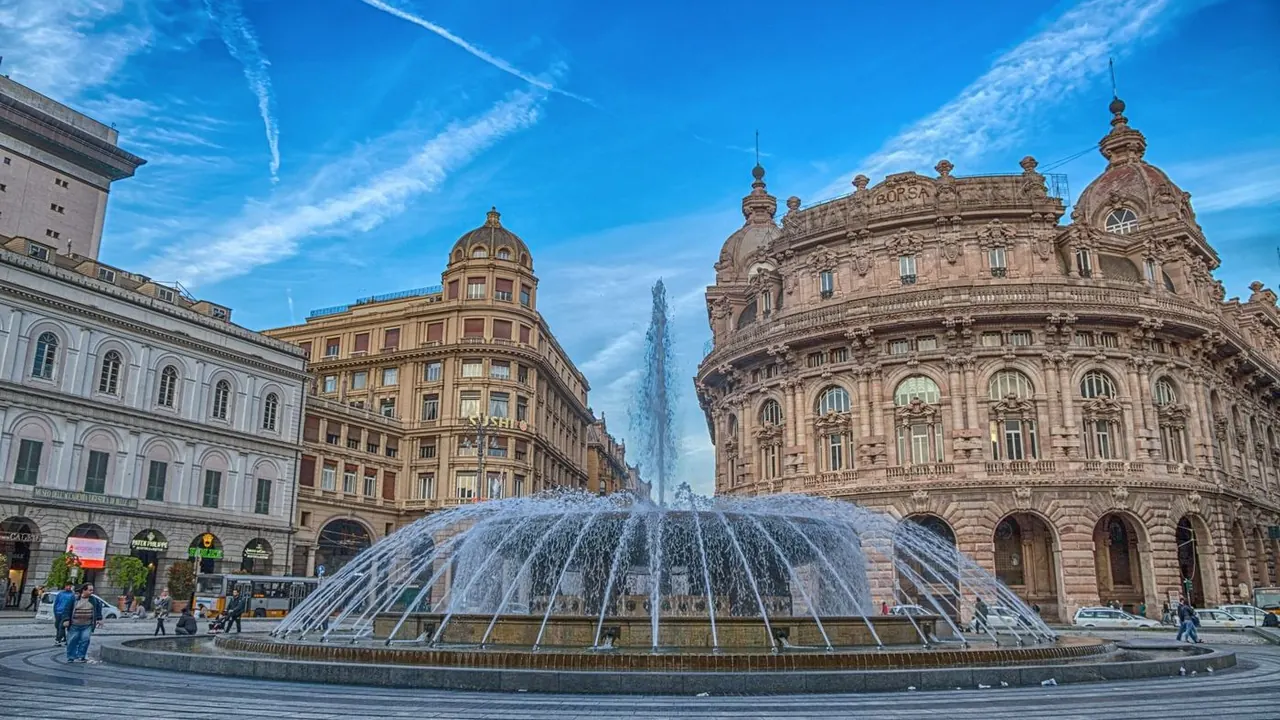
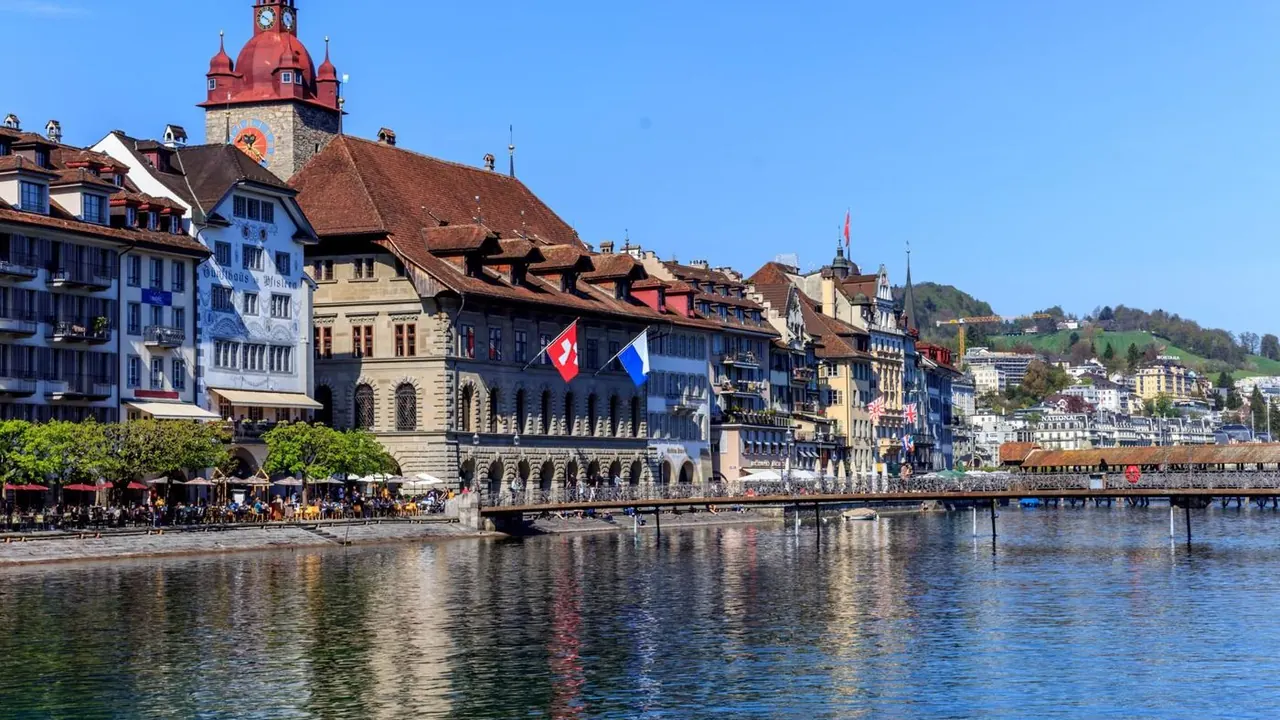
Photos: Genoa by Faber1893, CC BY-SA 4.0, cropped; Lucerne by ILOVESwitzerland, Pexels License.
Genoa or Lucerne?
Our verdict in twelve categories, each scored against the same fixed benchmark cities, and the climate month by month, so you can choose for your trip.
Choose Genoa for
- prices
- food and drink
- beaches
Genoa suits travellers who want an Italian port city with plenty to explore: a huge medieval old town and streets lined with palaces, cooking that gave the world pesto and focaccia, and the Riviera a short train ride away for an afternoon swim. It also costs far less than Lucerne, and its evenings, though modest, offer more to do.
Choose Lucerne for
- getting around
- nature and the outdoors
- live music and the arts
Choose Lucerne when the mountains are the point of the trip. Pilatus, Rigi and Titlis are reached by cogwheel railway, cable car and lake steamer straight from the station, and everything connects so well that you never need a car. It is a calm, compact base for walkers, classical music lovers and anyone who prefers a lake view to a late night, as long as the budget can stand Swiss prices.
Scoreboard
Twelve categories on one fixed scale from 0 to 100. The shaded stretch is the gap between the two.
Your match
Pick a travel style or drag the sliders, and both match scores follow your weighting.
Wins on prices and food and drink with your weighting.
Wins on getting around and nature and the outdoors with your weighting.
What matters to you?
Category by category
What the scores mean for a trip.
Beaches & swimming
Genoa has the real thing: the Mediterranean, warm enough by late summer for a daily swim. You can bathe at the little pebble cove of Boccadasse, from the platforms below Nervi's promenade or from the bathing establishments along Corso Italia, and the train reaches Camogli, Sestri Levante and the sandier shore at Varazze. Expect pebbles, rows of rented loungers and crowded summer weekends.
Lucerne offers lake swimming instead, from the Lido, the old wooden baths and the lawns at Ufschötti. The water is clean, calm and framed by mountains, but it is cooler, the season is short and the shore is mostly lawns and jetties rather than sand.
Food & drink
Food is one of Genoa's main attractions and a minor part of a stay in Lucerne. Genoa's cooking is tied to its own landscape: trofie with pesto, pansoti in walnut sauce, chickpea farinata and panissa from the old friggitorie, the produce stalls of the Mercato Orientale and fish in the harbour trattorias.
Lucerne eats well but narrowly. Chügelipastete, rösti, fondue and lake perch fill wood-panelled guild houses, and many places near the Chapel Bridge cater to coach parties. Meals are good but expensive, and after a few days the menus start to repeat.
Culture & sights
Genoa gives you far more to explore. Its caruggi form one of Europe's largest medieval quarters, and above them Via Garibaldi and Via Balbi hold the UNESCO-listed Rolli palaces with Van Dyck, Rubens and Paganini's violin. Add the striped cathedral and the marble sculpture of Staglieno, and you have several days of sightseeing.
Lucerne's sights are fewer but iconic: the Chapel Bridge and Water Tower, the towers of the Musegg Wall, the Lion Monument and a fine Picasso and Klee collection at the Rosengart. One or two days cover them comfortably.
Nightlife
Neither is a party city, but Genoa offers more after dark. Students and locals spill out of the small bars around Piazza delle Erbe late into weekend nights, and in summer the Corso Italia and the beach clubs keep the seafront going.
Lucerne goes quiet early, and its lakefront is mostly empty by midnight, apart from a few cocktail bars in the Neustadt. The exception is Fasnacht, when the whole town parties in costume until dawn.
Nature & outdoors
Lucerne's setting is in another league. Pilatus, Rigi and the Stanserhorn rise straight from the lake, Titlis keeps its glacier and snow all year, and steamers make it easy to combine a boat ride, a train and a ridge walk in one day. Winter brings skiing and sledging, though low cloud can hide the peaks for days at a time.
Genoa's outdoors is maritime rather than Alpine. There is a funicular to Righi and the fortress trail, cliff paths on the Portofino promontory down to San Fruttuoso, the Cinque Terre terraces, and boats out to watch whales and dolphins in the Pelagos Sanctuary.
Day trips
Both are excellent bases, and what differs is the kind of outing. From Genoa, one coastal railway strings together Camogli, Portofino, Sestri Levante and the Cinque Terre, with quieter Noli and Finale Ligure to the west, and Milan or Turin are within reach for a big-city museum day.
Lucerne's outings are mostly towns and the lake. Zurich, Bern and Basel are each under an hour by train, and the steamer itself makes a day out, calling at Weggis and Vitznau and continuing to the Rütli meadow, where the Swiss Confederation began.
Good for families
Both work about equally well with children, each with one big attraction. Genoa has its aquarium, along with the Galata museum's submarine and the funiculars at the Porto Antico, but the steep, dark lanes and many stairs are hard work with a pushchair.
Lucerne has the Swiss Museum of Transport, a centre that is flat, compact and very safe, and lakeside lawns for picnics. Its cogwheel trains and toboggan run depend on clear skies, and rainy days can run short of ideas.
Getting around
Lucerne is much easier to get around. The station, the boat piers and the Old Town sit side by side, most sights are a flat walk along the Reuss, and one integrated ticket system covers buses, steamers, trains and mountain railways.
Genoa takes more effort. The old town is a maze that climbs steeply from the water, buses crawl through congested streets and there is only one short metro line. Its funiculars and public lifts help, and the coastal train is the most useful link of all, for Nervi and the Riviera.
Shopping & style
Neither suits a serious shopping trip, but they sell very different things. In Genoa, the good buys are edible or handmade: candied fruit, olive oil and pesto from long-established old-town shops, and silver filigree, coral and ceramics from small workshops, with Via XX Settembre's arcades for familiar Italian labels.
Lucerne's shopping is mostly Swiss watches. Large watch houses line Schwanenplatz, next to shops selling army knives, chocolate and cuckoo clocks, and there is little fashion or design beyond them.
Affordability
The gap here is wide. Genoa is a mid-priced Italian city where a slab of focaccia or farinata makes a cheap meal, trattoria lunches are fair and the funiculars cost very little. The extra expenses are loungers at the bathing establishments and resort prices in Portofino and Santa Margherita.
Lucerne is very expensive. Central hotels, even simple meals and above all the mountain railways and cable cars cost a great deal. A Swiss travel pass and picnics from the supermarket soften the bill, but they cannot make it a cheap trip.
Live music & performing arts
Lucerne is the stronger choice for classical music. The Lucerne Festival brings the world's leading orchestras to Jean Nouvel's lakefront hall, whose acoustics are famous, and the hall has its own programme for the rest of the year. Outside the festival weeks, though, there is little live music on an ordinary night.
Genoa offers opera and ballet at the Teatro Carlo Felice, concerts in honour of Paganini and small clubs that keep alive its singer-songwriter tradition. That fills an evening or two, but the city's drama is in Italian.
Wellness & relaxation
Lucerne is the more restful of the two. Its evenings are quiet, the lakeside promenades and long steamer rides invite you to slow down, and the Mario Botta mineral bath high on the Rigi lets you soak with an Alpine view.
Genoa is a working port and feels lively rather than calm. The quiet corners are Nervi's villa gardens and the long lunches in the Riviera villages, and the nearest thermal waters are at Acqui Terme, a little over an hour inland.
When should you go?
Pick your month. The climate figures are measured averages, not a forecast.
Genoa in July
Lucerne in July
Daytime high, °C
Rainfall in the month, mm
Where the figures come from
Genoa has no rain gauge within 25 km of the centre, so its rainfall comes from a gridded climate dataset read at the city rather than from a gauge further away.
Genoa's sunshine is measured 80 km from the centre, at Capo Mele.
Lucerne has no rain gauge within 25 km of the centre, so its rainfall comes from a gridded climate dataset read at the city rather than from a gauge further away.
Lucerne's sunshine is measured 42 km from the centre, at Zurich Town / Ville..
Temperature and rainfall are climate normals, averaged over the years shown. Genoa: 1991-2020 normals, Genova / Sestri (6.7 km from centre). Lucerne: 2005-2025 (sunshine 1991-2020, rainfall 1991-2020) normals, Emmen (4.2 km from centre).
Genoa has the longer and warmer season. Highs reach about 28°C in August, the sea is warm enough for swimming from June to September, peaking near 25°C, and July is almost dry, with long sunny days. Spring and early autumn are the most comfortable months for climbing the old town's stairs. Autumn brings the rain, though, with October the wettest month at around 212mm. Winters are mild enough for walking, if often grey.
Lucerne is a summer and early autumn destination. Winter highs stay between 4°C and 7°C with little sun, which suits skiing more than sightseeing. Days are pleasantly warm from June to August and never hot. The catch is that early summer is also the wettest time, with about 124mm a month from May to July, so plan mountain days with some flexibility. September is often a good compromise, when the rain eases and walking is still comfortable.
Which traveller are you?
On a food and nightlife trip, Genoa is the clear choice. Focaccia at breakfast, farinata and fried fish from old-town counters and Vermentino with harbour seafood beat Lucerne's fondue and tourist menus, and its aperitivo squares stay busy for longer.
For an outdoors trip, Lucerne wins. Cogwheel railways and cable cars lift you straight onto Pilatus, Rigi and the Titlis glacier, steamers link the trailheads, and winter adds skiing. Genoa's fortress ridges and Portofino cliff paths are good, but they are coastal walks rather than Alpine ones.
On a tight budget, choose Genoa. If you stay in the city rather than the Riviera resorts, a modest budget stretches to a week of eating out and coastal train trips. In Lucerne the same money buys a few days, without the mountain excursions that are the reason to go.
Before you go
| Measure | Genoa | Lucerne |
|---|---|---|
| Official language | Italian | French, German, Italian, Romansh |
| Currency | Euro (EUR) | Swiss Franc (CHF) |
| Sockets | CFL230 V, 50 Hz | CJ230 V, 50 Hz |
| Driving side | Right | Right |
| Time zone | UTC+1, UTC+2 in summer | UTC+1, UTC+2 in summer |
| Emergency number | 112 | 112 |
| Elevation | 20 m | 436 m |
| Main airport | Genoa Cristoforo Colombo Airport (GOA)7 km from centre25 non-stop destinations | Zürich Airport (ZRH)49 km from centre226 non-stop destinations |
| Public holidays this year | 13 days | 12 days |
By the numbers
| Measure | Genoa | Lucerne |
|---|---|---|
| City population | 558,745 | 86,234 |
| People per km² | 2,325 | 2,963 |
| Museums within 10 km | 51 | 14 |
| UNESCO World Heritage sites within 50 km | 1 | 1 |
| Swim season, months above 21 °C | 4 months | - |
Where else could you go?
Every comparison below shares a destination with this one, so you can follow Genoa or Lucerne somewhere new.