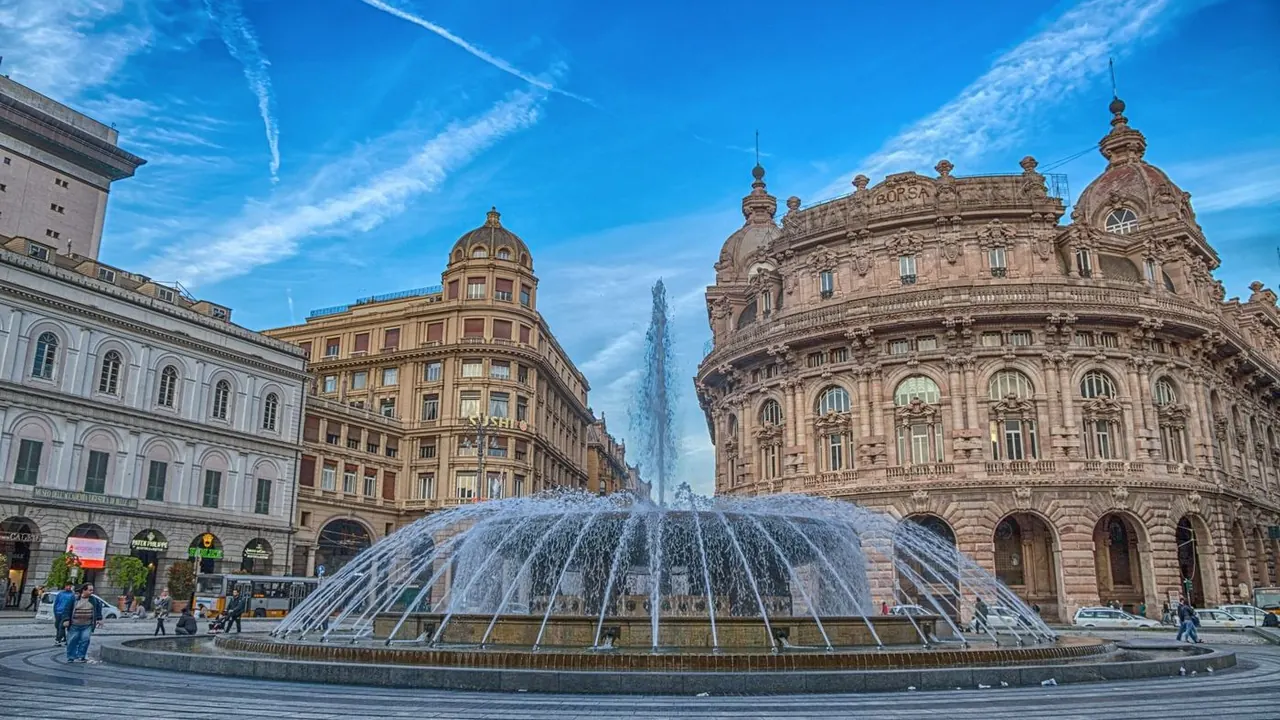
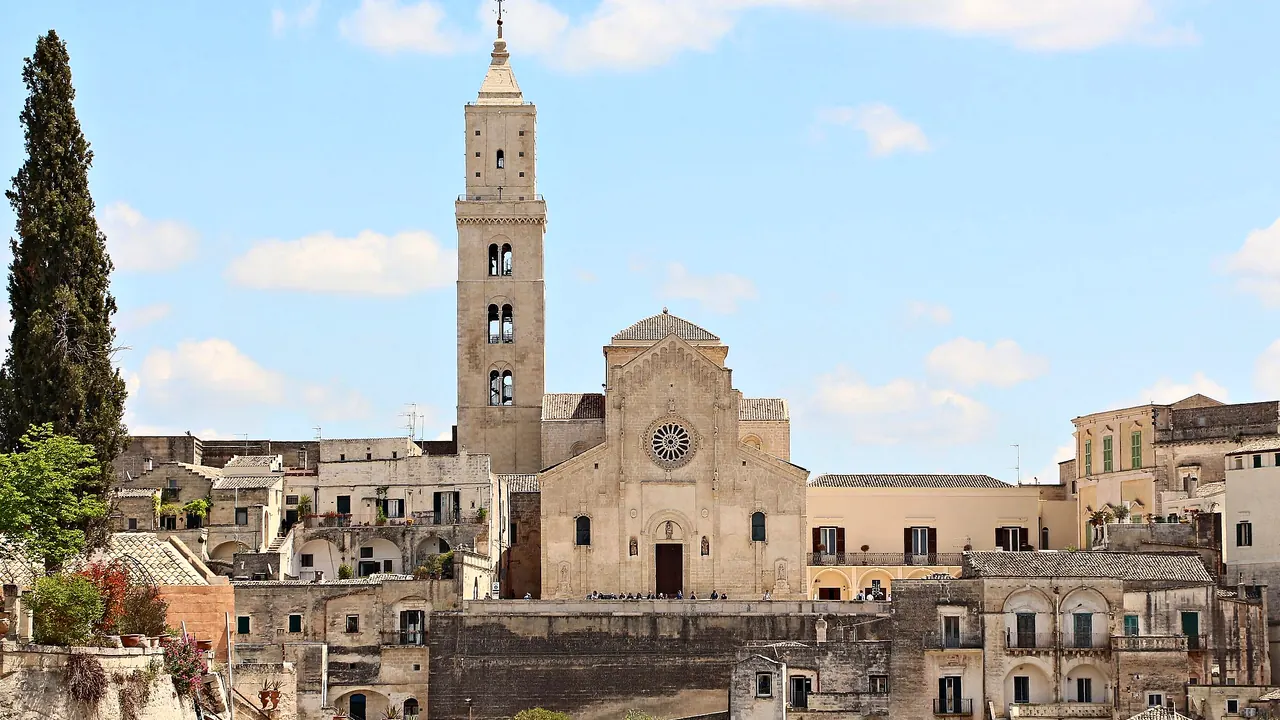
Photos: Genoa by Faber1893, CC BY-SA 4.0, cropped; Matera by Bernard Gagnon, CC BY 4.0, cropped.
Genoa or Matera?
Our verdict in twelve categories, each scored against the same fixed benchmark cities, and the climate month by month, so you can choose for your trip.
Choose Genoa for
- families
- live music and the arts
- shopping
Genoa is the fuller trip. It has a huge medieval old town and the palace museums of the Strade Nuove, pesto and focaccia, a swim most afternoons, and the Riviera and Cinque Terre along its railway line. It suits a week with plenty of variety, families with children and anyone travelling without a car.
Choose Matera for
Matera does not lead in any category we score.
Matera is for travellers who want one extraordinary place more than a long list of things to do. The cave districts of the Sassi, stacked above the Gravina gorge, look like nowhere else in Italy, and evenings are quiet dinners above the lit-up town. It works best as a short, slow stay for couples, or as a base with a hire car for the trulli, the white towns of Puglia and the peaks of Basilicata.
Scoreboard
Twelve categories on one fixed scale from 0 to 100. The shaded stretch is the gap between the two.
Your match
Pick a travel style or drag the sliders, and both match scores follow your weighting.
Wins on families and live music and the arts with your weighting.
Has no clear advantage with the weighting you have chosen.
What matters to you?
Category by category
What the scores mean for a trip.
Beaches & swimming
In Genoa a swim fits into an ordinary city day. The pebble cove at Boccadasse, the bathing establishments along Corso Italia and the platforms below Nervi are all inside the city, and the Riviera towns are a short train ride away. Expect pebbles, rented loungers and crowded summer weekends.
Matera has no sea of its own. The Ionian beaches at Metaponto and Policoro are about 45 minutes away by car and have the softer sand of the two, long, wide and shallow, which suits young children. Without a car, though, most visitors to Matera never reach the sea.
Food & drink
Genoa offers more to eat and more ways to eat it. There is oily focaccia at breakfast and trofie with pesto at lunch, farinata and fried fish by the slice from the old-town shops, seafood in the harbour trattorias, and the Mercato Orientale to browse.
Matera's food is the plainer peasant cooking of Basilicata, built around its horn-shaped durum loaf, pulses, hand-made pasta and crackling dried peppers, with Aglianico in the glass instead of Ligurian whites. It is honest and good, but a small town gives only a few meals' worth of variety, and there is no street food or market to explore.
Culture & sights
Genoa has more to see over several days. There is one of Europe's largest medieval quarters, the Rolli palaces of Via Garibaldi with their Van Dycks and Rubens, the striped cathedral, the maritime museum and the marble sculpture of Staglieno cemetery.
Matera has fewer sights, but they are unlike anything else: cave dwellings and rock churches with Byzantine frescoes stacked up the side of a gorge and lived in since prehistory, plus a cistern under the main piazza that you can walk through. Genoa rewards days of exploring, while the Sassi can be covered in a couple of slow walks, ideally at dusk.
Nightlife
Neither is a clubbing city, but Genoa has far more going on after dinner. Students fill the small bars around Piazza delle Erbe, the Porto Antico adds waterfront bars, and in summer the crowd moves to Corso Italia and the beach clubs. In Matera the evening means the passeggiata, a long dinner and a glass of wine on a terrace above the Sassi, and outside summer the town goes quiet soon after dinner.
Nature & outdoors
Genoa's outdoors is more varied because it has the sea as well as hills. There is the fortress trail above Righi, the cliff paths of the Portofino promontory down to San Fruttuoso, the Cinque Terre by train, and boats out into the Pelagos Sanctuary to see whales and dolphins.
Matera's landscape is the dramatic Gravina gorge and the stony Murgia plateau. Paths drop from the Sassi and climb to abandoned rock churches and Neolithic sites, and the Lucanian Dolomites and the Pollino are further off by car. It is wilder country, but bare and very hot in midsummer.
Day trips
Both make excellent bases, and the real difference is how you travel. From Genoa the trips follow one railway line: Camogli, Portofino, Sestri Levante and the Cinque Terre to the east, Finale Ligure and Noli to the west, and Milan or Turin for a city day, all without a car.
Matera's outings spread across two regions. They include the trulli of Alberobello, Ostuni and the Valle d'Itria, Castel del Monte, Polignano a Mare, the abandoned town of Craco and the mountain villages of Castelmezzano and Pietrapertosa. They are just as rewarding, but almost all of them need a hire car.
Good for families
Genoa is much easier with children. The aquarium at the Porto Antico can fill half a day, with the science centre, the biosphere and the walk-through submarine at the Galata museum next door, and the funiculars and public lifts are rides in themselves. The steep lanes of the old town are still hard going with a pushchair.
In Matera older children enjoy the caves and the underground cistern, but nothing in the town is built for them. The stone steps of the Sassi defeat a pushchair, and summer afternoons are hot with little shade.
Getting around
Genoa is hilly but well connected. Funiculars, a rack railway and public lifts climb the slopes, a short metro line runs through the centre, and the coastal railway reaches Nervi and the Riviera towns.
Matera is simpler within the town, with a flat upper town and the Sassi a short walk below, all on foot. Beyond the town it is harder: the narrow-gauge line to Bari is slow, buses are sparse, and a car becomes almost essential.
Shopping & style
Neither is a shopping destination, but Genoa has more of it: the arcades of Via XX Settembre, Italian labels on Via Roma and in the Galleria Mazzini, and old-town shops selling candied fruit, silver filigree and coral. Matera's shopping is small and aimed at visitors, mostly painted cuccù whistles and tufa carvings in the Sassi, and the best things to take home are dried peppers and Aglianico.
Affordability
The two cost about the same overall, but the money goes in different places. In Genoa, focaccia and farinata make cheap meals and central hotels are fair for northern Italy, while the Riviera resorts and paid loungers make beach days dearer. In Matera the upper-town trattorias are inexpensive and walking the Sassi and the Murgia costs nothing, but the cave hotels in the Sassi are priced as a speciality, so you save most by sleeping in the newer town.
Live music & performing arts
Genoa has a real if modest programme: opera, ballet and concerts at the Teatro Carlo Felice, plays in Italian from the Teatro Nazionale, Paganini concerts, and small clubs that keep the singer-songwriter tradition alive. Matera has little beyond conservatory concerts and summer events such as its jazz festival, and the Festa della Bruna is the one big night of the year.
Wellness & relaxation
Neither city has thermal baths or a bathing culture, so relaxing comes down to the setting. In Genoa the calm is in Nervi's promenade and villa gardens and in slow lunches along the Riviera, with the thermal waters of Acqui Terme a little over an hour away, but the centre itself is noisy. Matera is slower everywhere, and its hotel spas, set in candlelit cave rooms with pools cut into the rock, are an unusual place to unwind.
When should you go?
Pick your month. The climate figures are measured averages, not a forecast.
Genoa in July
Matera in July
Daytime high, °C
Rainfall in the month, mm
Where the figures come from
Genoa has no rain gauge within 25 km of the centre, so its rainfall comes from a gridded climate dataset read at the city rather than from a gauge further away.
Genoa's sunshine is measured 80 km from the centre, at Capo Mele.
Matera has no rain gauge within 25 km of the centre, so its rainfall comes from a gridded climate dataset read at the city rather than from a gauge further away.
Temperature and rainfall are climate normals, averaged over the years shown. Genoa: 1991-2020 normals, Genova / Sestri (6.7 km from centre). Matera: 2005-2025, 10 years observed (rainfall 1991-2020) normals, Matera / Martella (4.8 km from centre).
Genoa has the longer, steadier warm season. The sea is warm enough for swimming from June to September and is warmest in August, when daytime highs reach about 28°C. July is the sunniest month. Autumn is the weak point: the rain arrives in September, and October is very wet at over 200mm. Late spring and early summer are the safer times for walking the old town and the coast paths, and winters stay mild enough for sightseeing.
Matera swings more between the seasons. In July and August the bare plateau reaches about 32°C, too hot for walking the Sassi or the gorge in the middle of the day. Those months and September are when the Ionian sea is warm, at around 26°C, so beach days belong to late summer. For walking, May and September to October are the best months, with highs in the low to mid twenties. In May the sea is still too cool for most swimmers. Matera gets less rain than Genoa in every month, but its winters are colder.
Which traveller are you?
On a family trip with children, Genoa is the clear choice. The aquarium and the other harbour attractions fill whole mornings, the funiculars are a treat, and the city coves give an afternoon swim. Matera's steep steps and shadeless summer heat tire small children quickly.
For a food and nightlife trip, Genoa again comes out ahead. Focaccia, pesto, farinata and harbour seafood offer far more range than Matera's peasant cooking, and the student bars around Piazza delle Erbe stay busy long after Matera's quiet terraces have emptied.
On a relaxing and wellness trip, Matera is the better choice, even though the spa options are similar. Its slow pace, quiet early mornings in the Sassi, cave spas with rock-cut pools and evenings at dusk over the gorge feel calmer than Genoa's busy port and lanes.
Before you go
| Measure | Genoa | Matera |
|---|---|---|
| Official language | Italian | Italian |
| Currency | Euro (EUR) | Euro (EUR) |
| Sockets | CFL230 V, 50 Hz | CFL230 V, 50 Hz |
| Driving side | Right | Right |
| Time zone | UTC+1, UTC+2 in summer | UTC+1, UTC+2 in summer |
| Emergency number | 112 | 112 |
| Elevation | 20 m | 401 m |
| Main airport | Genoa Cristoforo Colombo Airport (GOA)7 km from centre25 non-stop destinations | Bari Karol Wojtyła International Airport (BRI)54 km from centre104 non-stop destinations |
| Public holidays this year | 13 days | 13 days |
By the numbers
| Measure | Genoa | Matera |
|---|---|---|
| City population | 558,745 | 59,685 |
| People per km² | 2,325 | 152 |
| Museums within 10 km | 51 | 8 |
| UNESCO World Heritage sites within 50 km | 1 | 1 |
| Swim season, months above 21 °C | 4 months | 5 months |
Where else could you go?
Every comparison below shares a destination with this one, so you can follow Genoa or Matera somewhere new.