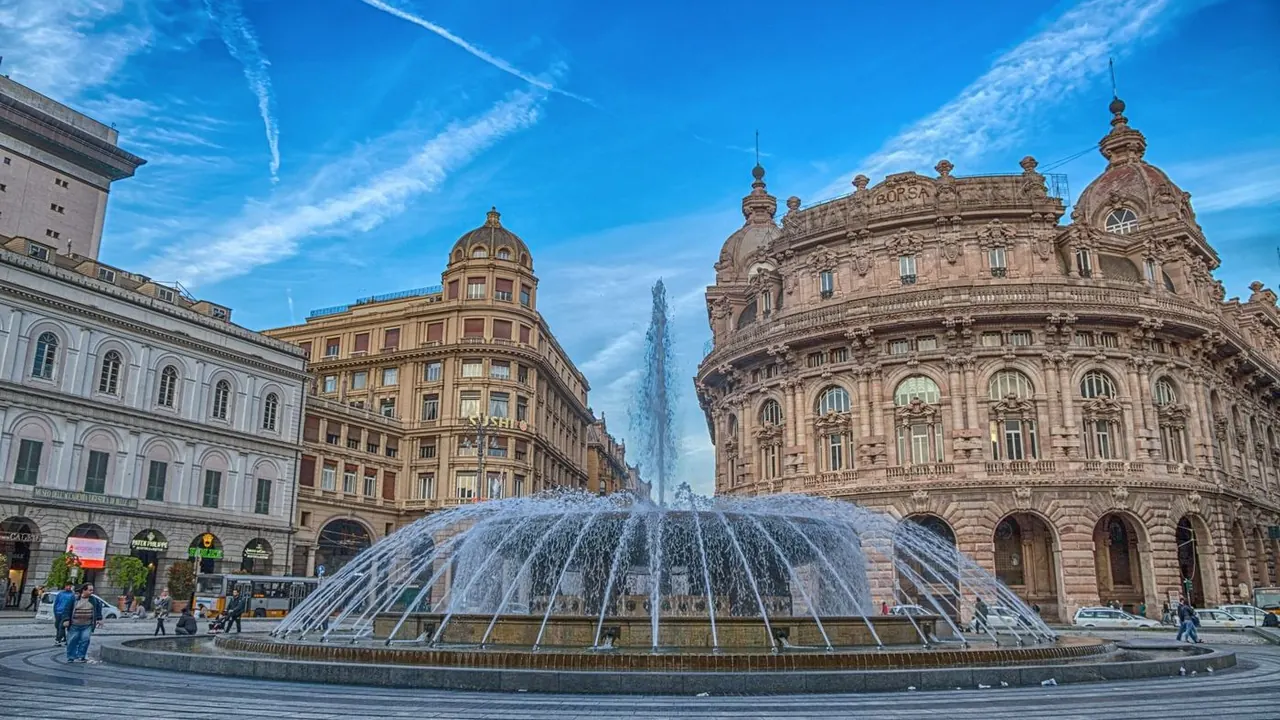
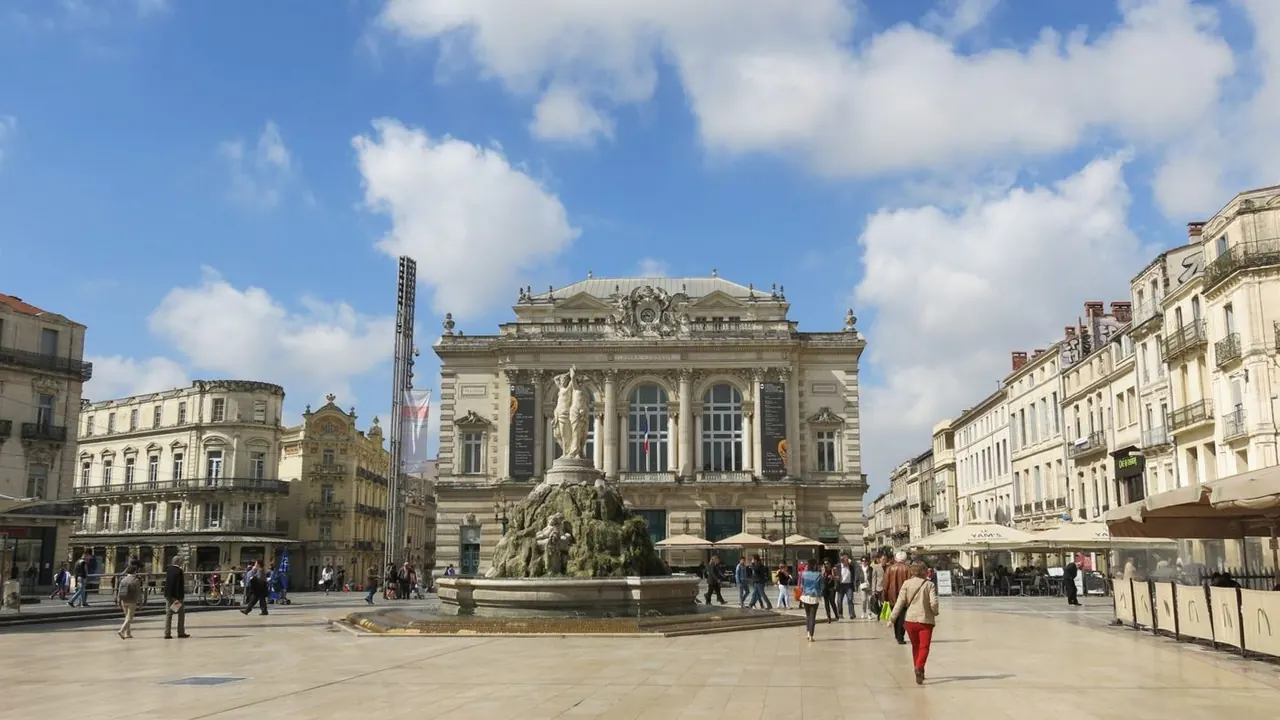
Photos: Genoa by Faber1893, CC BY-SA 4.0, cropped; Montpellier by Peter, CC BY 2.0, cropped.
Genoa or Montpellier?
Our verdict in twelve categories, each scored against the same fixed benchmark cities, and the climate month by month, so you can choose for your trip.
Choose Genoa for
- culture and sights
- food and drink
- nature and the outdoors
Genoa suits the traveller who likes a city that rewards getting lost. It has a vast medieval quarter of caruggi, palace museums along the Strade Nuove, and a kitchen built on pesto, focaccia and chickpea farinata. It is also the better base for walkers, with fortress trails above the port and the Portofino and Cinque Terre paths a train ride away. In return you accept quiet evenings and a great many stairs.
Choose Montpellier for
- nightlife
- live music and the arts
- getting around
Montpellier is the easier and younger trip. The car-free Écusson and the trams make it simple to get about, the student crowd keeps the bars full even midweek, and summer brings dance and music festivals of real standing. Its coast is wide open sand rather than rocky coves, and the Roman south of Nîmes, Arles and Avignon lies within an hour.
Scoreboard
Twelve categories on one fixed scale from 0 to 100. The shaded stretch is the gap between the two.
Your match
Pick a travel style or drag the sliders, and both match scores follow your weighting.
Too close to call, 1 point apart
Wins on culture and sights and food and drink with your weighting.
Wins on nightlife and live music and the arts with your weighting.
What matters to you?
Category by category
What the scores mean for a trip.
Beaches & swimming
Genoa has swimming on its doorstep. Within the city there is the little pebble cove at Boccadasse, bathing platforms built over the rocks along Corso Italia and below Nervi's promenade, and the Riviera bays of Camogli and Sestri Levante are a short train ride further. The water is clear, but the shores are pebble or coarse sand and rented loungers take up much of the space.
Montpellier's beaches need a short trip, by tram and bus or car to Palavas and Carnon, and from there open fine sand runs past La Grande-Motte to the dunes of l'Espiguette. The water is shallow and shelves gently, which is easier for children and weaker swimmers, but there are no coves and a northerly wind can chill it for a day or two.
Food & drink
Genoa has the more distinctive food. Pesto comes from here, and the friggitorie and farinata shops of the old town give it a genuine street food of chickpea flatbread, panissa and fried fish. Vermentino and Pigato go with the seafood in the harbour trattorias.
Montpellier eats well but more simply, and it leans on the Languedoc around it: Pic Saint-Loup wines, oysters from the Thau lagoon, tielle from Sète, and the market halls of Castellane and Laissac. It is a city of good bistros and cheap student counters rather than a cuisine of its own.
Culture & sights
Genoa offers far more to see. Its medieval centre is one of the largest in Europe, and above it the Strade Nuove are lined with the UNESCO-listed Rolli palaces, whose painted halls hold Van Dyck and Rubens. Add San Lorenzo, the Palazzo Ducale, the Lanterna and the sculpture at Staglieno, and a long stay still leaves plenty unseen.
Montpellier's Écusson is handsome and compact, with courtyard mansions, the Peyrou terrace and its aqueduct, and the oldest botanical garden in France. The Musée Fabre holds a serious collection and Bofill's Antigone is worth the walk, but the city is covered in two or three days.
Nightlife
Montpellier is the livelier place after dark. Its very large student population fills the bars around Place Jean-Jaurès and the Écusson squares on weeknights as well as weekends, and the late crowd moves on to clubs out towards Lattes and the coast.
Genoa is more reserved, with an older population and quiet midweek evenings. A night there means aperitivo around Piazza delle Erbe and a glass of wine in a medieval square, moving out to the Corso Italia in summer. Montpellier also goes quiet outside term time, so the difference is greatest during the university year.
Nature & outdoors
Both have walking country close by, but Genoa's is more dramatic and easier to reach without a car. A funicular takes you up to Righi and the ring of fortresses above the port. The Portofino promontory has cliff paths down to San Fruttuoso, the Cinque Terre trails are a train ride away, and boats leave the harbour to watch whales and dolphins in the Pelagos Sanctuary.
Montpellier has lagoons and garrigue instead of sea cliffs. There are flamingos on the étangs, the Camargue is about an hour south, and you can climb Pic Saint-Loup or canoe in the Hérault gorges. Its flat coast is better for cycling and kitesurfing, but more of its countryside needs a car.
Day trips
Both are excellent bases, and the real difference is what you go out to see. Genoa's trips are mostly coastal and follow one railway line: Camogli, Santa Margherita and the Cinque Terre to the east, with Portofino a short bus or boat ride on from Santa Margherita, and Finale Ligure and Noli to the west. Milan and Turin are about an hour and a half inland.
Montpellier's trips are to historic towns: the Roman arena at Nîmes half an hour away, then the Pont du Gard, Arles, Avignon and the citadel of Carcassonne. Fast trains reach the big names, but villages such as Saint-Guilhem-le-Désert and Uzès are far easier with a car, while almost all of Genoa's Riviera can be done without one.
Good for families
The two are much the same for families, but they suit children in different ways. Genoa puts its attractions together at the Porto Antico, where one of Europe's largest aquariums, the walk-through submarine at the Galata and the funiculars can fill a couple of days. Away from the harbour, the steep, dark lanes and endless stairs are hard work with a pushchair.
Montpellier is flatter and easier from day to day. The centre is mostly pedestrian, the trams take a buggy, there is the Lunaret zoo, and the sandy beaches shelve gently. The catch is the midsummer heat in its stone streets.
Getting around
Montpellier is the easier city to get around. Its centre is small and mostly closed to cars, and the tram network links the station, the old town, Antigone and the outer districts, with bike-share on the flatter stretches.
Genoa can be walked too, but it climbs steeply from the water and its old town is a maze. Funiculars, public lifts and a single metro line help, while the buses are slow. Its coastal railway is the real asset, reaching the Riviera towns far more directly than Montpellier's tram and bus route to the sand.
Shopping & style
Neither is a shopping destination, and in both the best things to take home are edible. Genoa is stronger on crafts, with old shops selling candied fruit and pesto, workshops making silver filigree, coral and ceramics, and the arcades of Via XX Settembre for fashion.
Montpellier has little in the way of local crafts but more mainstream retail. There is the Polygone mall beside the Comédie and the Odysseum, along with boutiques in the Écusson and wine from the surrounding appellations.
Affordability
Costs are much the same, and each is mid-range for its country. Genoa's cheap eating is focaccia and farinata by the slice, and its central hotels cost less than those in Italy's busiest cities. Beach days add up, though, once you pay for a lounger on the Riviera.
Montpellier stretches a budget through its student economy of casual counters, modest bars and lunch menus. In both, summer is when rooms on the coast cost more.
Live music & performing arts
Montpellier has the stronger stage for a city of its size. The Opéra Comédie and the Opéra Berlioz share a season of opera, ballet and concerts by the national orchestra. Contemporary dance is a real speciality, with the Montpellier Danse festival each summer, and the Radio France festival brings classical and jazz concerts, many of them free.
Genoa's Teatro Carlo Felice puts on a respectable season, and the city keeps the memory of Paganini and its singer-songwriter tradition alive in small clubs. Still, it is a programme for an evening or two rather than a reason to visit.
Wellness & relaxation
Neither city is restful at its centre, but Montpellier has real thermal water closer at hand. Balaruc-les-Bains on the Thau lagoon is about half an hour away and takes day visitors, and the shaded squares and long terrace lunches of the old town set a slow pace.
Genoa's nearest spa is at Acqui Terme, more than an hour inland. Its calm is found in Nervi's promenade and villa gardens rather than among the port and the crowded lanes.
When should you go?
Pick your month. The climate figures are measured averages, not a forecast.
Genoa in July
Montpellier in July
Daytime high, °C
Rainfall in the month, mm
Where the figures come from
Genoa has no rain gauge within 25 km of the centre, so its rainfall comes from a gridded climate dataset read at the city rather than from a gauge further away.
Genoa's sunshine is measured 80 km from the centre, at Capo Mele.
Temperature and rainfall are climate normals, averaged over the years shown. Genoa: 1991-2020 normals, Genova / Sestri (6.7 km from centre). Montpellier: 1991-2020 normals, Montpellier (7.8 km from centre).
Both cities have a Mediterranean year, but Genoa is the milder of the two and Montpellier the hotter and sunnier. In Genoa the sea is warm enough to swim from June to September and reaches about 25°C in August, and summer days stay pleasant enough for walking the lanes. Rain sets in from September and autumn is wet, with October the wettest month at 212mm, so late spring and early summer are the best time for the city and its coastal paths.
Montpellier gets hotter, reaching about 30°C in July, which makes the stone streets of the centre tiring at midday. Its sea is cooler and peaks at around 22°C in August, so the comfortable swimming season is shorter. Heavy autumn rain arrives in September and October here too, and the stretch from April to early June, sunny but not yet hot, is the best time for walking and day trips.
Which traveller are you?
For a culture and arts trip, Genoa has much more to see: one of Europe's largest medieval quarters, the Rolli palaces with their Van Dyck and Rubens, San Lorenzo and the marble of Staglieno. Montpellier's stage is stronger, but two or three days cover its sights.
On a relaxing and wellness trip, Montpellier is the better choice. Real thermal water at Balaruc-les-Bains is about half an hour away, shaded squares invite slow lunches, and the sandy coast is gentle. Genoa's port, traffic and steep lanes are harder places to unwind.
For a short city break, Montpellier is simpler. The centre is compact and mostly car-free, a tram runs from the station to the old town, and the terraces fill even on weeknights. Genoa repays a longer stay, because its maze of lanes and hills takes time to learn.
Before you go
| Measure | Genoa | Montpellier |
|---|---|---|
| Official language | Italian | French |
| Currency | Euro (EUR) | Euro (EUR) |
| Sockets | CFL230 V, 50 Hz | CE230 V, 50 Hz |
| Driving side | Right | Right |
| Time zone | UTC+1, UTC+2 in summer | UTC+1, UTC+2 in summer |
| Emergency number | 112 | 112 |
| Elevation | 20 m | 7 m |
| Main airport | Genoa Cristoforo Colombo Airport (GOA)7 km from centre25 non-stop destinations | Montpellier-Méditerranée Airport (MPL)8 km from centre41 non-stop destinations |
| Public holidays this year | 13 days | 11 days |
By the numbers
| Measure | Genoa | Montpellier |
|---|---|---|
| City population | 558,745 | 310,240 |
| People per km² | 2,325 | 5,452 |
| Museums within 10 km | 51 | 14 |
| UNESCO World Heritage sites within 50 km | 1 | 2 |
| Swim season, months above 21 °C | 4 months | 2 months |
Where else could you go?
Every comparison below shares a destination with this one, so you can follow Genoa or Montpellier somewhere new.