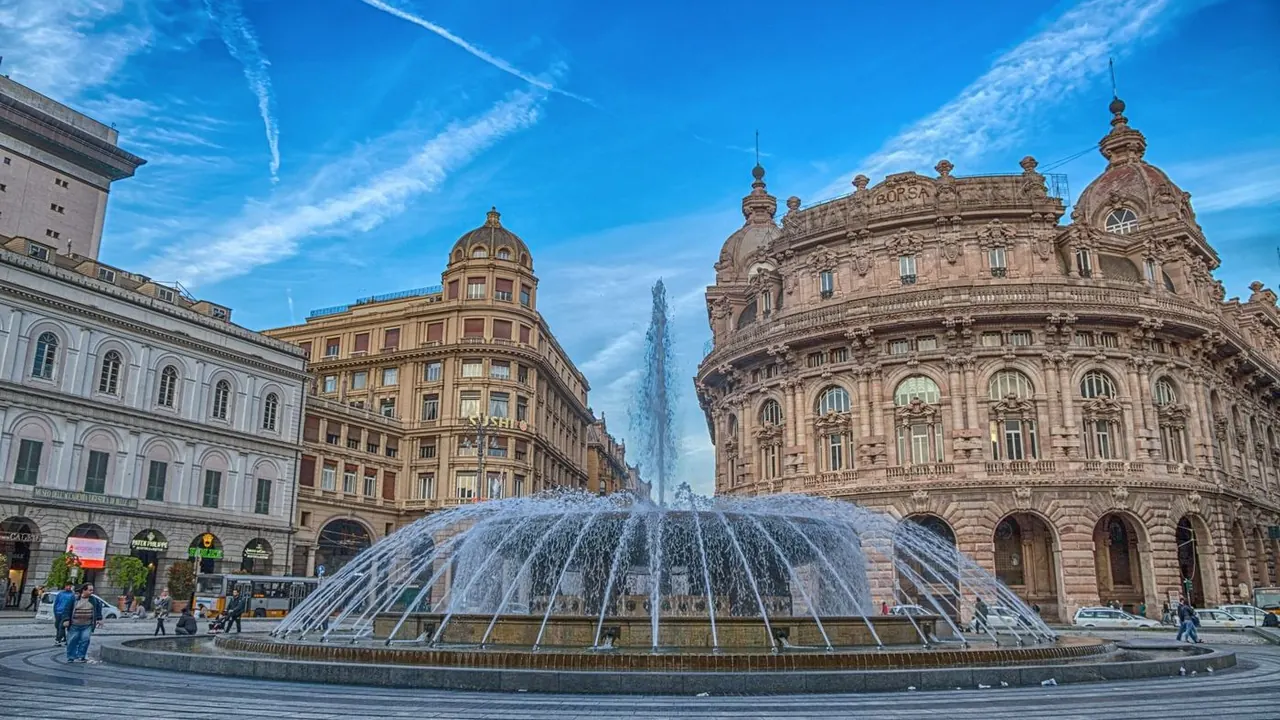
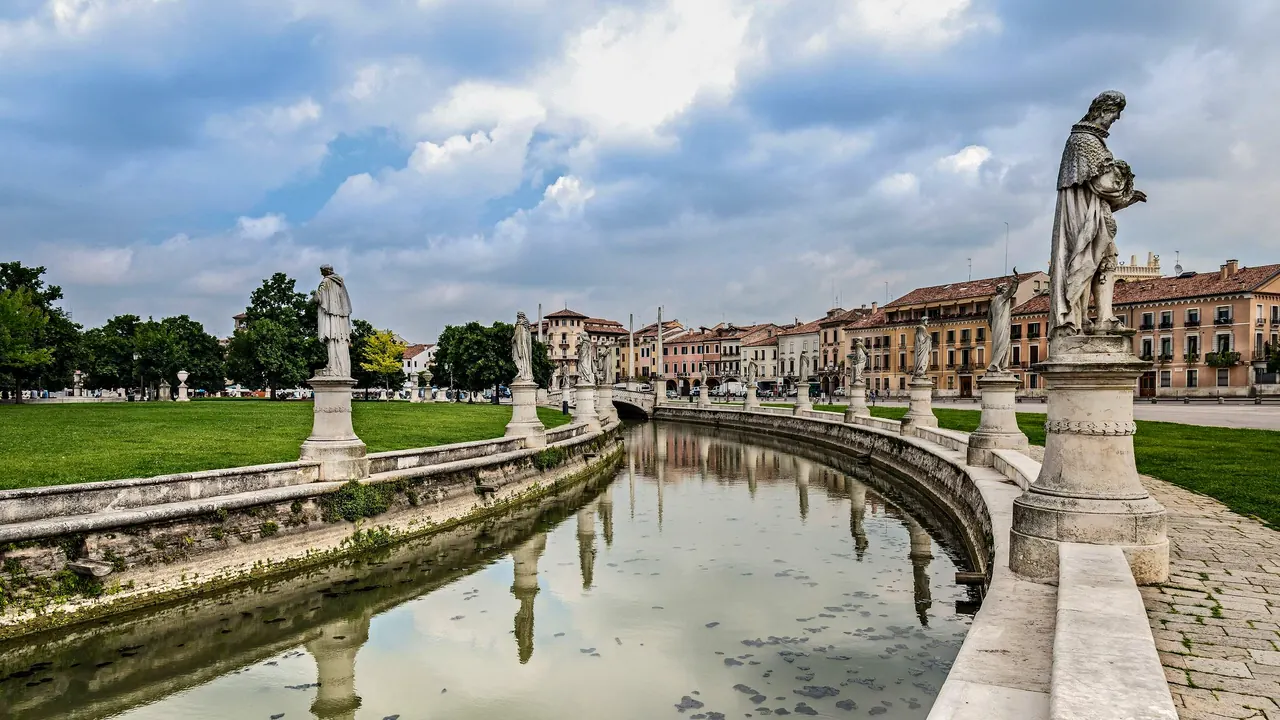
Photos: Genoa by Faber1893, CC BY-SA 4.0, cropped; Padua by Didier Descouens, CC BY-SA 4.0, cropped.
Genoa or Padua?
Our verdict in twelve categories, each scored against the same fixed benchmark cities, and the climate month by month, so you can choose for your trip.
Choose Genoa for
- beaches
- nature and the outdoors
- families
Genoa suits travellers who want the sea and the hills to be part of the city. You can swim off the rocks at Boccadasse or Nervi in the afternoon, walk the cliff paths of the Portofino promontory, and eat pesto and farinata in a medieval port quarter. It is also the better choice for families, because the aquarium and the old harbour give children a full day.
Choose Padua for
- wellness
- day trips
- getting around
Padua is the calmer, flatter choice and works as a base for seeing the Veneto by train. Venice, Vicenza and Verona are close enough for several day trips, Giotto's frescoes are a short walk from your bed, and the thermal pools of Abano and Montegrotto are just outside town for the end of the day. There is no beach worth the name, but for art, rail trips and restful evenings it is the better fit.
Scoreboard
Twelve categories on one fixed scale from 0 to 100. The shaded stretch is the gap between the two.
Your match
Pick a travel style or drag the sliders, and both match scores follow your weighting.
Wins on beaches and nature and the outdoors with your weighting.
Wins on wellness and day trips with your weighting.
What matters to you?
Category by category
What the scores mean for a trip.
Beaches & swimming
Genoa gives you real swimming within the city. There is the pebble cove at Boccadasse, bathing platforms along Corso Italia, and rocks below the Nervi promenade, with Camogli and the bays of Sestri Levante a train ride further on. The shores are pebble or coarse sand, though, and crowded on summer weekends.
In Padua the sea is an outing rather than part of daily life. Sottomarina and the Lido of Venice are each about an hour away, and they are long, flat strips of umbrellas. The shallow, calm water is good for small children, but not much more than that.
Food & drink
Genoa has the more distinctive kitchen. Pesto started here, and you can eat focaccia dunked in cappuccino, trofie and pansoti, farinata and fried fish from the old friggitorie, and excellent seafood with a glass of Vermentino.
Padua's cooking is Venetian home food, such as bigoli with duck sauce, baccalà and boiled meats. It is solid but less of a reason to come. Its strength is the ritual around the food: the morning markets under the Palazzo della Ragione and the standing spritz in the squares at dusk.
Culture & sights
Both cities have a strong historic centre, but of different kinds. Genoa's appeal is its size. You can spend days in the caruggi, the palaces of the Rolli on Via Garibaldi with their Van Dycks and painted halls, and the marble sculpture of Staglieno cemetery.
Padua is smaller but has one world-famous highlight, Giotto's Scrovegni Chapel, which needs a timed booking. The Basilica of Saint Anthony, the anatomical theatre at the Bo and the oldest botanical garden still on its original site complete a centre you can see in a day or two.
Nightlife
Evenings in both cities centre on the aperitivo in a medieval square, with few clubs, so neither suits a big night out. The difference is timing. Padua's university keeps the side streets busy on weeknights during term, but the city goes quiet in summer. Genoa is quiet on weeknights and comes alive in summer, when people move out to Corso Italia and the beach clubs.
Nature & outdoors
Genoa has the steep green hills and the sea right at its edge. From Righi a trail runs past the old ridge forts above the port. The Portofino park paths and the Cinque Terre are a train ride away, and boats go out to watch whales in the Pelagos Sanctuary.
Padua sits on a flat plain, so getting outdoors takes more effort. The Euganean Hills, with vineyards, chestnut woods and quiet roads for cycling, are the nearest relief, and the Brenta towpaths are good for easy bike rides. For real mountain walking you need a car and about an hour and a half to reach the pre-Alps.
Day trips
Both cities make good bases, but Padua is one of the best in Italy. Venice is under half an hour by train, so you can visit on several days. Vicenza is a quarter of an hour away and Verona, Bologna and Ferrara are about an hour, with Palladian villas along the Brenta and walled towns like Montagnana closer still.
Genoa's trips run mainly along a single coastline, but a very good one: Portofino, Camogli and the Cinque Terre to the east, and Finale Ligure Borgo and Noli to the west. Milan and Turin are about an hour and a half away, which makes them longer days out than Padua's.
Good for families
Genoa has a proper family day at the Porto Antico. There is one of Europe's largest aquariums, a children's science centre, a biosphere and the Galata submarine, and the funiculars and public lifts are fun in themselves. The steep, dark lanes are hard work with a pushchair.
Padua is easy in practical terms, being flat, safe and largely car-free, and Prato della Valle gives children room to run. Once you have done that and the glasshouses, though, families usually head out of town to Gardaland or Lake Garda.
Getting around
Padua is easier to get around. The centre is flat and arcaded, most of it is a short walk from end to end, and a tram and bicycles cover the rest. Its main-line station puts the whole Veneto within reach without a car.
Genoa is a vertical city. The funiculars, rack railway and public lifts are part of its charm, but the lanes are a maze, the buses crawl, and its one metro line only runs along the valley. The coastal railway is what makes it work.
Shopping & style
Neither city is worth a dedicated shopping trip, and both are best for food to take home. In Genoa that means candied fruit, olive oil and pesto from old shops in the old town, plus silver filigree and coral made in small workshops. Padua has delicatessens under the Palazzo della Ragione, university bookshops and a large antiques market in Prato della Valle one Sunday a month.
Affordability
Costs are much the same in both, moderate for northern Italy, but they rise at different times. In Genoa, cheap focaccia and farinata keep daily spending down, while beach loungers and the smart Riviera resorts add up in summer. Padua is a sensibly priced place to sleep while you spend your days in Venice, though rooms get dearer during the big trade fairs and graduation season.
Live music & performing arts
Genoa has more on stage. The Teatro Carlo Felice on Piazza De Ferrari runs a full season of opera, ballet and symphony concerts, the city holds Paganini concerts, and small clubs keep the tradition of its singer-songwriters alive.
Padua's programme is smaller but has its own charm. There is prose theatre and some opera at the horseshoe-shaped Teatro Verdi, and chamber music beneath the frescoes of the Sala dei Giganti and in the Basilica of Saint Anthony. For major opera, people go on to Venice or Verona.
Wellness & relaxation
Padua has a real advantage here. The thermal district of Abano and Montegrotto lies at the foot of the Euganean Hills, where hot mineral water and mud have been used since Roman times, and it is easy to reach for an afternoon soak. The arcades and the botanical garden give the city an unhurried pace.
Genoa has no bathing tradition of its own, and Acqui Terme, its nearest spa, is over an hour inland. The garden villas at Nervi and long lunches in the Riviera villages are the quiet side of a city that is otherwise lively.
When should you go?
Pick your month. The climate figures are measured averages, not a forecast.
Genoa in July
Padua in July
Daytime high, °C
Rainfall in the month, mm
Where the figures come from
Genoa has no rain gauge within 25 km of the centre, so its rainfall comes from a gridded climate dataset read at the city rather than from a gauge further away.
Genoa's sunshine is measured 80 km from the centre, at Capo Mele.
Padua's temperatures are measured 35 km from the centre, at Treviso / Istrana.
Padua has no rain gauge within 25 km of the centre, so its rainfall comes from a gridded climate dataset read at the city rather than from a gauge further away.
Padua's sunshine is measured 36 km from the centre, at Treviso / S. Angelo.
Temperature and rainfall are climate normals, averaged over the years shown. Genoa: 1991-2020 normals, Genova / Sestri (6.7 km from centre). Padua: 1991-2020 normals, Treviso / Istrana (35.4 km from centre).
Genoa has the gentler climate at both ends of the year. Its winter days reach about 12°C, against 8°C in Padua, where fog often settles over the plain. In summer Padua is the hotter of the two, around 31°C and humid in July and August, which makes walking the streets hard work at midday. Genoa's sea breeze keeps things milder, and its sea reaches about 25°C in August, so beach weather there runs from June into September. Padua's Adriatic beaches warm up just as much, but they are a day trip away.
The rain falls very differently. Genoa's summers are dry and sunny, but heavy storms arrive in autumn, with about 212mm in October alone. Padua's rain is spread more evenly through the year and its skies are greyer in winter. For walking, May, June and September suit both cities best. Late autumn favours Padua, because Genoa is at its wettest then.
Which traveller are you?
For a beach and sun trip, Genoa is the clear choice. Clear water is a city bus or a short train ride away at Boccadasse, Nervi and the Riviera towns. From Padua, the flat Adriatic beaches are a separate hour-long trip.
On a relaxing and wellness trip, Padua is the better base. A morning with the frescoes can end in a long soak in the hot mineral pools of Abano or Montegrotto, a short ride out of town. In Genoa, spa time mostly means a hotel pool.
On a family trip with children, Genoa gives them more to look forward to: half a day among the sharks and penguins by the harbour, then rides up the hillside on the lifts. Padua is easy with a pushchair, but its treasures are made for adults.
Before you go
| Measure | Genoa | Padua |
|---|---|---|
| Official language | Italian | Italian |
| Currency | Euro (EUR) | Euro (EUR) |
| Sockets | CFL230 V, 50 Hz | CFL230 V, 50 Hz |
| Driving side | Right | Right |
| Time zone | UTC+1, UTC+2 in summer | UTC+1, UTC+2 in summer |
| Emergency number | 112 | 112 |
| Elevation | 20 m | 12 m |
| Main airport | Genoa Cristoforo Colombo Airport (GOA)7 km from centre25 non-stop destinations | Venice Marco Polo Airport (VCE)39 km from centre103 non-stop destinations |
| Public holidays this year | 13 days | 13 days |
By the numbers
| Measure | Genoa | Padua |
|---|---|---|
| City population | 558,745 | 206,496 |
| People per km² | 2,325 | 2,220 |
| Museums within 10 km | 51 | 29 |
| UNESCO World Heritage sites within 50 km | 1 | 5 |
| Swim season, months above 21 °C | 4 months | 4 months |
Where else could you go?
Every comparison below shares a destination with this one, so you can follow Genoa or Padua somewhere new.