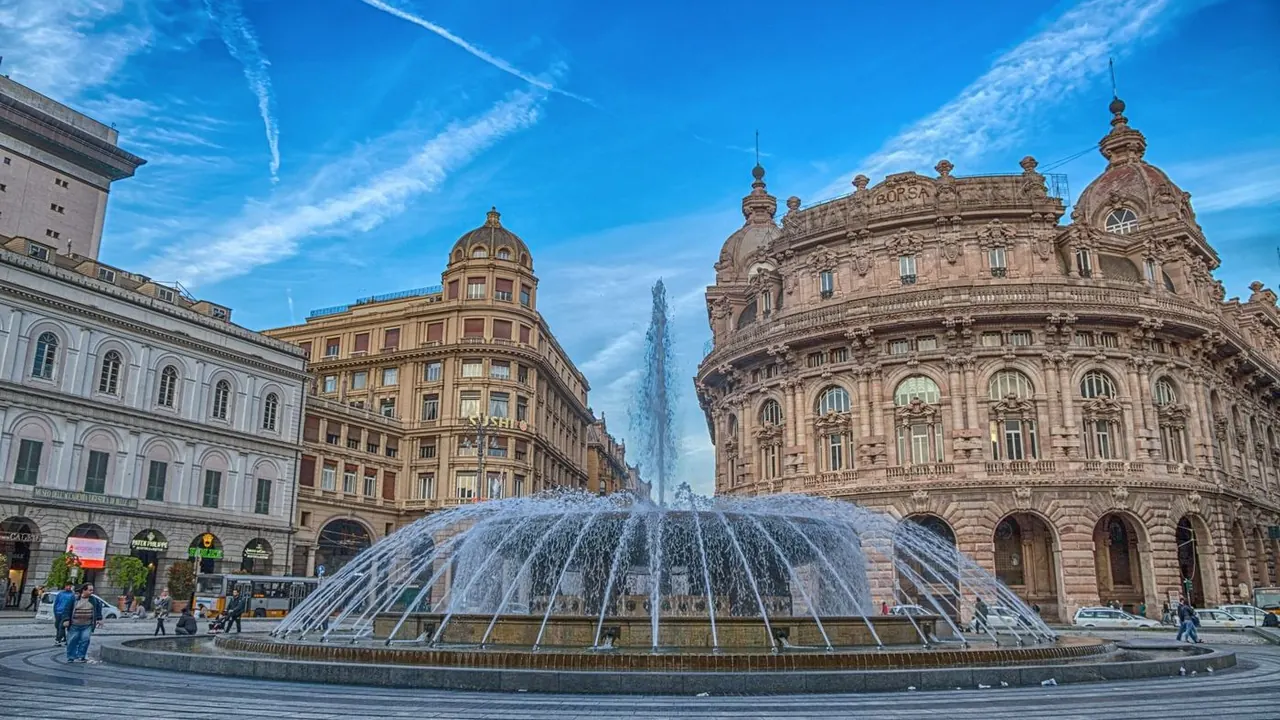
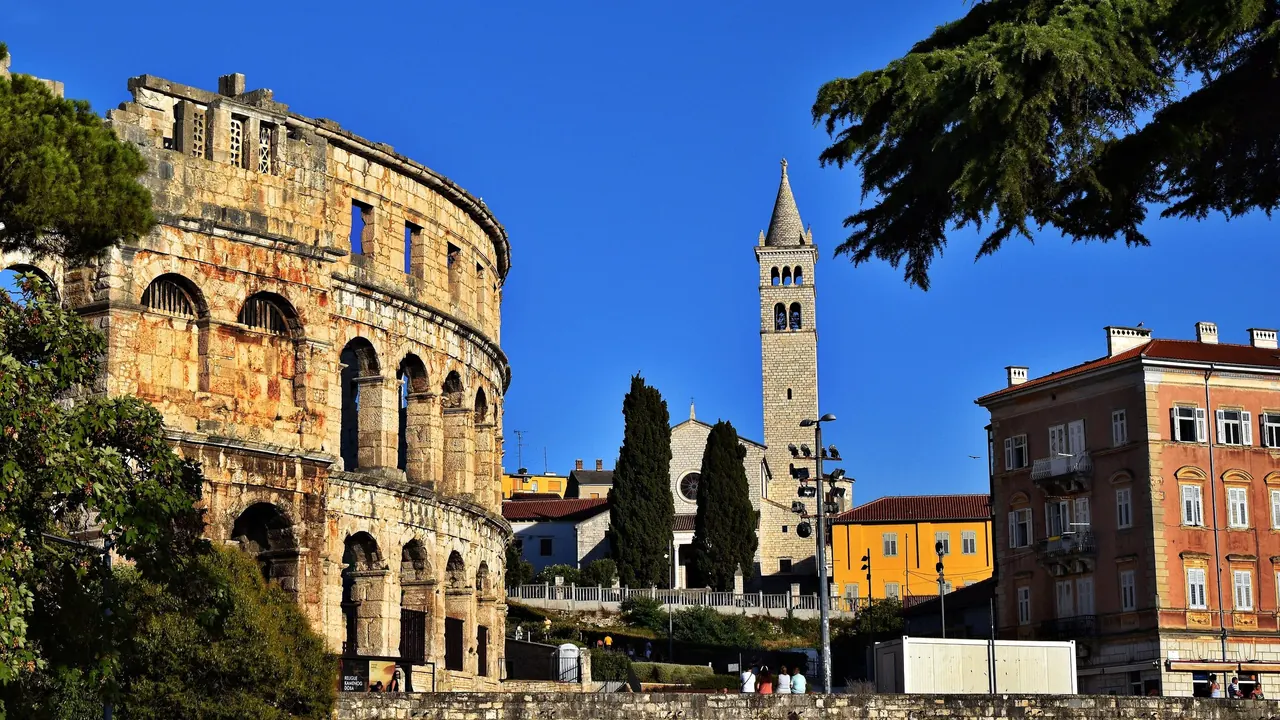
Photos: Genoa by Faber1893, CC BY-SA 4.0, cropped; Pula by Miroslav.vajdic, CC BY-SA 4.0, cropped.
Genoa or Pula?
Our verdict in twelve categories, each scored against the same fixed benchmark cities, and the climate month by month, so you can choose for your trip.
Choose Genoa for
- shopping
- food and drink
- live music and the arts
Genoa suits a traveller who wants a real city with the sea alongside it. It has the medieval caruggi and the Rolli palaces, focaccia and pesto in the city that invented them, opera at the Carlo Felice, and the Riviera and the Cinque Terre a train ride away without a car. It rewards walking and curiosity more than lying on a beach.
Choose Pula for
- beaches
If the sea comes first, pick Pula. The coves of Verudela, Stoja and Kamenjak offer clearer, wilder swimming than Genoa's shores lined with rented loungers. The Arena and the Forum give you plenty of Roman history in a day or two. It is a smaller, slower base for touring Istria, and it works best with a car for Rovinj, the hill towns and the truffle and wine estates.
Scoreboard
Twelve categories on one fixed scale from 0 to 100. The shaded stretch is the gap between the two.
Your match
Pick a travel style or drag the sliders, and both match scores follow your weighting.
Wins on shopping and food and drink with your weighting.
Wins on beaches with your weighting.
What matters to you?
Category by category
What the scores mean for a trip.
Beaches & swimming
Pula is the better place to swim. Its rock platforms and pebble coves around Verudela and Stoja are a short ride from the centre, pines shade the shoreline, and the protected headland at Kamenjak has dozens of wild coves and cliff ledges that Genoa cannot match.
In Genoa, swimming is part of city life. You can use the small cove at Boccadasse, the bathing establishments over the rocks on Corso Italia and the platforms below Nervi, but the better Riviera beaches are a train ride away and many of them are covered in loungers. Neither city has sand nearby. In Pula you need water shoes, and from Genoa the sandy beaches are west at Varazze.
Food & drink
Genoa eats better, and more easily. Focaccia for breakfast, trofie with pesto, farinata and fried fish from the old-town friggitorie, and the produce of the Mercato Orientale mean an excellent local kitchen without leaving the centre.
Istrian cooking is just as distinctive, with truffle on fuži, scampi buzara and a glass of Malvazija. But Pula itself has few good restaurants, and the tables by the Arena lean towards tourist menus. The best meals are in family konobas in the hinterland, which usually means a drive.
Culture & sights
Genoa has much more to see. Its medieval centre is one of the largest in Europe, and above it the Strade Nuove are lined with palaces whose painted halls hold Van Dyck, Rubens and Paganini's violin. Add the Palazzo Ducale, the Palazzo Reale, the Lanterna and the maritime museum, and a curious visitor can easily spend several days without running out of sights.
Pula is compact rather than thin. The Arena is one of the best-preserved Roman amphitheatres anywhere, and the Temple of Augustus, the Arch of the Sergii and the mosaics in the backstreets make the Roman town easy to follow. The Venetian fortress with its history museum and the forts and civic buildings of the Austro-Hungarian naval base add later chapters, but all of it fits into a day or two.
Nightlife
Neither city is for a big night out. The differences are in season and setting. Genoa's evenings mean aperitivo in the medieval squares around Piazza delle Erbe and the university lanes, where students keep weekends busy all year. In summer the crowd moves to the beach clubs along Corso Italia.
In Pula there is little going on outside summer. From June to September it moves out to the beach and cocktail bars on Verudela and around Medulin, and a few small clubs fill up. A typical evening is a glass of wine by the harbour with the Arena lit up behind you.
Nature & outdoors
Genoa has more varied walking right from the city. A funicular climbs to Righi and the fortress trail along the ridges, the Portofino park has cliff paths down to San Fruttuoso, and the Cinque Terre's terraced trails are a train ride away. Boats from the harbour go whale and dolphin watching in the Pelagos Sanctuary.
Pula's landscape is lower and gentler, with stony macchia, pine and olive groves. It is at its best on Kamenjak for walking, cycling, kayaking and windsurfing, and there are naval-era wrecks for divers. For real hills you have to drive to the Učka range.
Day trips
Genoa has the edge, mainly because almost every outing starts at a railway station. Camogli and Santa Margherita are under an hour east, with Portofino a short hop beyond, and the same line carries on to Sestri Levante and the five villages of the Cinque Terre. Westward lie the walled Finale Ligure Borgo, Noli and the towers of Albenga. Milan and Turin are close enough inland for the Last Supper or a museum day.
Pula's list is nearly as appealing: Rovinj piled on its peninsula, the Byzantine mosaics of the Euphrasian Basilica at Poreč, and the hill towns of Motovun, Grožnjan and Hum with their truffle and wine estates. There is also the boat from Fažana to the Brijuni islands, and Opatija, Piran and Trieste stretch the range across two borders. Most of these trips are planned around a hired car rather than a timetable.
Good for families
Both work for a family vacation, in different ways. In Genoa the attractions are concentrated in the Porto Antico, with its large aquarium, the walk-through submarine at the Galata and the funiculars, but the steep lanes and many stairs are hard going with a pushchair.
In Pula, family days are spent at the sea, in the shallow bays of Medulin and Premantura. There is a smaller aquarium in an old fort, children can climb around the Arena, and a dinosaur park and a water park are within an hour by car.
Getting around
Genoa is easier without a car. Funiculars, public lifts and a short metro line deal with the hills, and the coastal railway runs to Nervi and the Riviera towns, though buses are slow in the narrow streets.
Pula's flat, compact centre is pleasant on foot, and city buses reach Verudela. Beyond town, though, the train is slow and regional buses are infrequent, so you need a car or a scooter for Kamenjak, the wider coast and the hill towns.
Shopping & style
Genoa has a proper shopping street in the arcaded Via XX Settembre, smarter Italian labels on Via Roma and in the Galleria Mazzini, and old-town workshops making silver filigree and coral. Pula has chain stores and souvenir shops on its pedestrian street. The things worth taking home from Pula are edible: olive oil, truffle products, rakija and pršut from the market or straight from the producers.
Affordability
Overall costs are similar, but you save in different places. In Genoa, focaccia and farinata make eating cheap and central hotels are reasonable for Italy, but loungers and the smart Riviera towns make a beach day expensive.
Pula is cheapest in spring and autumn, when private apartments are easy to find. In July and August, rooms cost about as much as on Western European coasts, and the hire car most visitors need adds to the bill.
Live music & performing arts
Genoa has a programme all year: opera, ballet and symphony concerts at the Teatro Carlo Felice, concerts in Paganini's honour, and small clubs where the city's singer-songwriter tradition lives on.
Pula's great asset is seasonal. A summer concert or a film festival screening inside the Roman Arena is unforgettable on a warm night. Outside summer there is little beyond theatre in Croatian.
Wellness & relaxation
Neither city is a spa destination, and in both the relaxing happens outdoors. Genoa's quiet corner is Nervi, with its villa gardens and seafront promenade, and the thermal baths of Acqui Terme are a little over an hour away, though the centre itself is noisy.
Pula relies on the spas of the resort hotels on Verudela and in Medulin. Outside high summer it is slower and calmer overall, with pine-shaded coastal paths and long coffees on the Forum.
When should you go?
Pick your month. The climate figures are measured averages, not a forecast.
Genoa in July
Pula in July
Daytime high, °C
Rainfall in the month, mm
Where the figures come from
Genoa has no rain gauge within 25 km of the centre, so its rainfall comes from a gridded climate dataset read at the city rather than from a gauge further away.
Genoa's sunshine is measured 80 km from the centre, at Capo Mele.
Pula's temperatures are measured 87 km from the centre, at Trieste.
Pula has no rain gauge within 25 km of the centre, so its rainfall comes from a gridded climate dataset read at the city rather than from a gauge further away.
Temperature and rainfall are climate normals, averaged over the years shown. Genoa: 1991-2020 normals, Genova / Sestri (6.7 km from centre). Pula: 1991-2020 normals, Trieste (87 km from centre).
Both cities swim from June to September, and the sea reaches about 25°C in August in each. Pula is the hotter of the two in high summer, at around 29°C, and its midday heat makes sightseeing hard work. Genoa's shaded lanes stay more comfortable. Late May, June and early September are the best balance in both.
Autumn is where they part. Genoa becomes very wet from September, and October brings about 212mm of rain. Pula's rain comes later and is lighter, peaking in November at around 107mm. In winter Genoa is milder, with highs near 12°C and more sunshine, so it makes the better off-season city break. Pula is cooler, greyer and quiet in those months.
Which traveller are you?
On a beach and sun trip, Pula is the better pick. The coves around Verudela and the wild, car-free headland at Kamenjak put clear water and pine shade within easy reach. In Genoa, swimming fits around the city, off rocks, platforms and rented loungers.
For a culture and arts trip, Genoa wins comfortably. The Rolli palaces, the caruggi, the cathedral and the marble of Staglieno fill several days, and evenings can end at the Carlo Felice opera house. Pula's Roman sights are memorable but done in a day or two.
On a food and nightlife trip, choose Genoa. Pesto, focaccia and farinata are found all over the old town, and aperitivo around Piazza delle Erbe goes on all year. In Pula the best Istrian meals are out in the countryside, and evenings fade once summer ends.
Before you go
| Measure | Genoa | Pula |
|---|---|---|
| Official language | Italian | Croatian |
| Currency | Euro (EUR) | Euro (EUR) |
| Sockets | CFL230 V, 50 Hz | CF230 V, 50 Hz |
| Driving side | Right | Right |
| Time zone | UTC+1, UTC+2 in summer | UTC+1, UTC+2 in summer |
| Emergency number | 112 | 112 |
| Elevation | 20 m | 5 m |
| Main airport | Genoa Cristoforo Colombo Airport (GOA)7 km from centre25 non-stop destinations | Pula Airport (PUY)7 km from centre34 non-stop destinations |
| Public holidays this year | 13 days | 14 days |
By the numbers
| Measure | Genoa | Pula |
|---|---|---|
| City population | 558,745 | 52,220 |
| People per km² | 2,325 | 971 |
| Museums within 10 km | 51 | 4 |
| UNESCO World Heritage sites within 50 km | 1 | 1 |
| Swim season, months above 21 °C | 4 months | 4 months |
Where else could you go?
Every comparison below shares a destination with this one, so you can follow Genoa or Pula somewhere new.