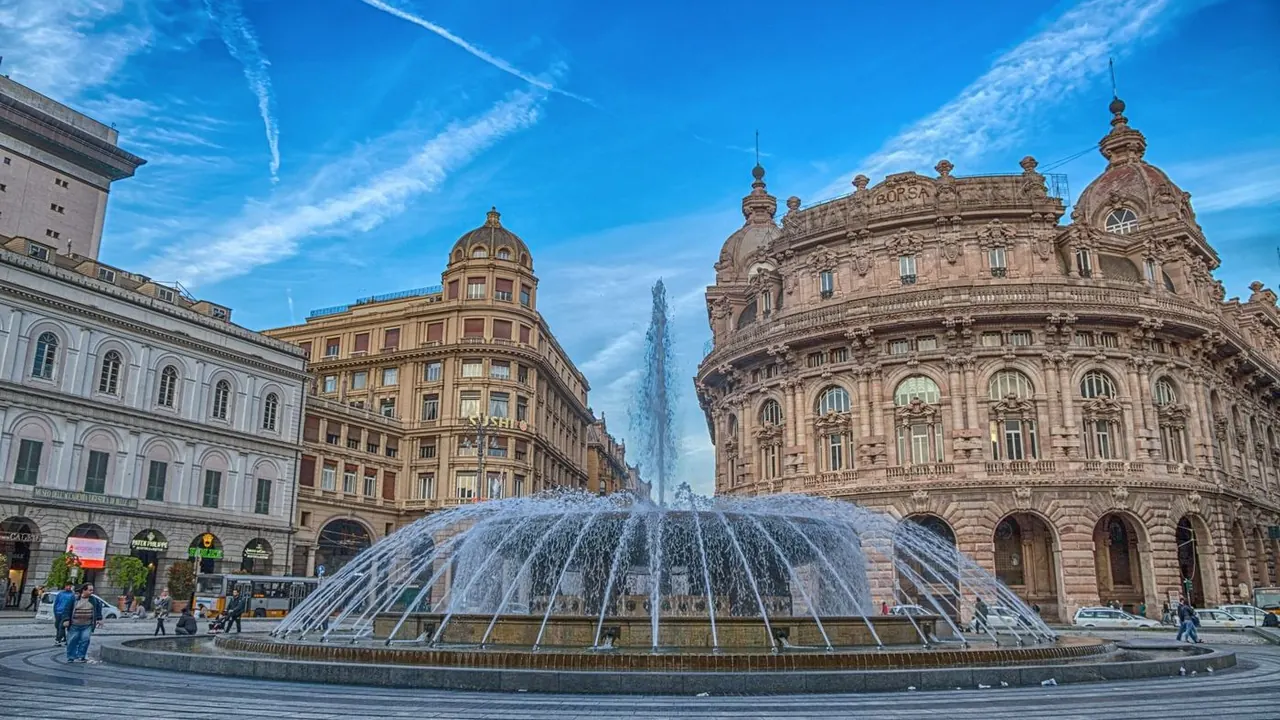
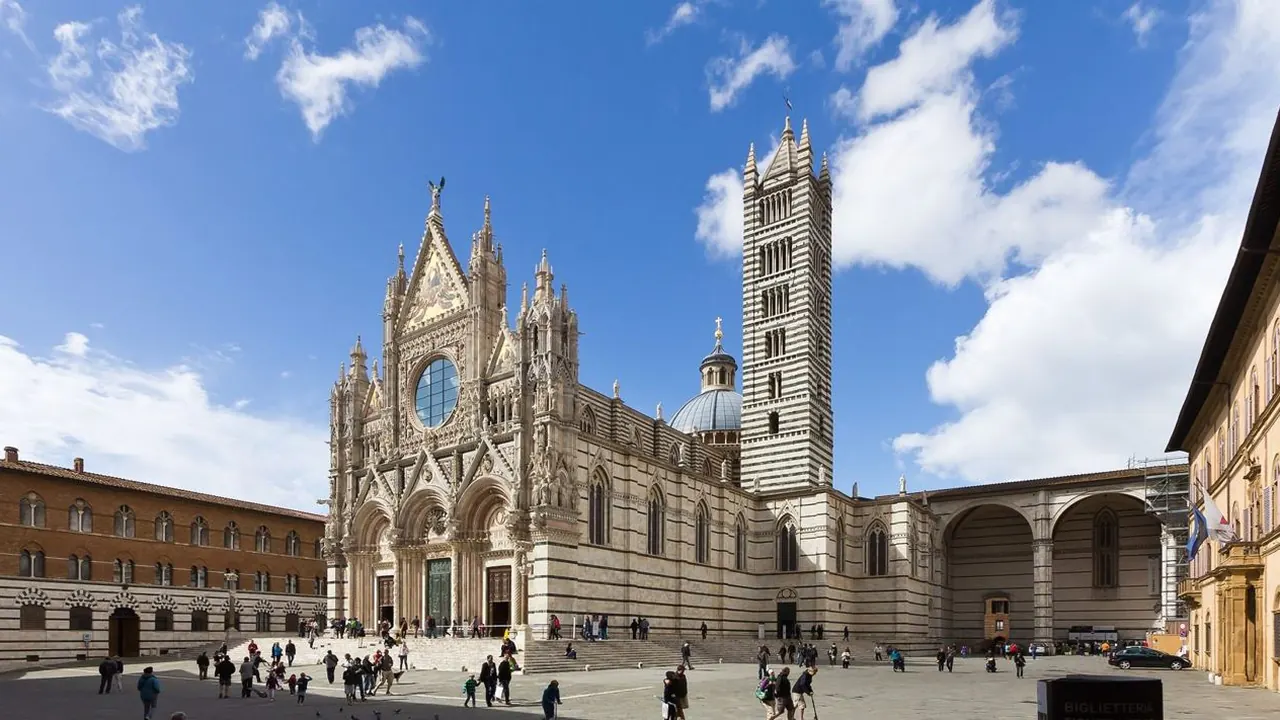
Photos: Genoa by Faber1893, CC BY-SA 4.0, cropped; Siena by Raimond Spekking, CC BY-SA 4.0, cropped.
Genoa or Siena?
Our verdict in twelve categories, each scored against the same fixed benchmark cities, and the climate month by month, so you can choose for your trip.
Choose Genoa for
- beaches
- families
- live music and the arts
Genoa suits the traveller who wants a real city by the water: a port with a huge medieval quarter, an afternoon swim in Boccadasse or Nervi, cliff paths on the Portofino promontory and focaccia for breakfast. It is the better pick for families, for anyone who wants the sea within reach, and for those who like a little evening life and an opera house on the side.
Choose Siena for
- wellness
- day trips
- culture and sights
Choose Siena for a slower Tuscan stay built around one of Europe's most intact medieval towns and the countryside that surrounds it. Its strength lies beyond the walls: Chianti, the Val d'Orcia, hill towns, abbeys and warm spring pools, best explored with a hire car. Couples, wine lovers and travellers who want long dinners and quiet evenings will find it the more rewarding base.
Scoreboard
Twelve categories on one fixed scale from 0 to 100. The shaded stretch is the gap between the two.
Your match
Pick a travel style or drag the sliders, and both match scores follow your weighting.
Wins on beaches and families with your weighting.
Wins on wellness and day trips with your weighting.
What matters to you?
Category by category
What the scores mean for a trip.
Beaches & swimming
This is the clearest gap between the two. Genoa lets you swim without leaving the city, from the pebble cove at Boccadasse, the bathing establishments along Corso Italia or the rock platforms under Nervi's promenade, and the coves of Camogli, Rapallo and Sestri Levante are a short train ride away. The shores are mostly pebble and lounger-lined, but a daily swim fits easily around sightseeing.
Siena has no sea at all. The Maremma beaches near Castiglione della Pescaia are well over an hour's drive, so in practice swimming means a hotel or agriturismo pool unless you move to the coast for a few nights.
Food & drink
Genoa eats a little better, and more of its best food is on the street: focaccia at breakfast, farinata and panissa from old friggitorie, pesto with trofie, and seafood in harbour trattorias and fishing hamlets, washed down with Vermentino. The Mercato Orientale shows off Liguria's produce.
Siena's cooking is heartier and inland, with pici, ribollita, cinta senese pork and wild boar, plus a baking tradition of panforte and ricciarelli. Its real advantage is wine, with Chianti Classico, Brunello and Vino Nobile all grown nearby. Both cities are regional rather than varied, so neither is the place for international food.
Culture & sights
The two are evenly matched, but they reward different ways of sightseeing. Genoa is a big, layered city: its sprawling maze of caruggi, the Rolli palaces of Via Garibaldi with their Van Dycks and painted halls, the striped cathedral, the Lanterna and the sculpture of Staglieno cemetery. It keeps surprising people who arrive expecting only a port.
Siena is smaller and more concentrated, with its whole centre a single medieval set piece. The Campo, Lorenzetti's Good and Bad Government frescoes, the Duomo's inlaid floor and Duccio's Maestà are works of the first rank, and the contrade give each quarter its own identity. Two or three days see Siena's highlights, while Genoa takes longer to uncover.
Nightlife
Neither is a party city, but Genoa offers more to do after dinner. Aperitivo crowds fill the squares around Piazza delle Erbe at weekends, and in summer the evening moves to waterfront bars at the Porto Antico and beach clubs along Corso Italia.
In Siena an evening is a long meal, a glass on the Campo and a walk home, with a few student pubs and almost no clubs. The streets come alive late only around the Palio, when the contrade dine outdoors.
Nature & outdoors
Genoa has more variety outdoors because it has both mountains and sea. You can take the funicular to Righi and walk the ring of fortresses, follow cliff paths to San Fruttuoso on the Portofino promontory or reach the Cinque Terre trails by train. Whale-watching boats in the Pelagos Sanctuary, kayaking and diving add the sea.
Siena's landscape is gentler and more pastoral: the clay hills of the Crete Senesi, the Val d'Orcia and the Montagnola woods. Its standout is cycling on the strade bianche gravel roads straight from town, but there is no coast and nothing high or wild.
Day trips
Both are superb bases, and Siena edges ahead for sheer density. Within short drives lie San Gimignano, Monteriggioni, the Chianti villages, Volterra, Pienza, Montalcino and Montepulciano, plus abbeys such as Sant'Antimo and San Galgano, with Florence a bus ride away. The catch is that most of this needs a car.
Genoa's trips run along a single railway line, which makes them easy without one: Camogli, Portofino and Sestri Levante to the east, the Cinque Terre a little further, and Finale Ligure and Noli to the west. Milan and Turin are close enough for a city day.
Good for families
Genoa is much easier with children, mainly thanks to the Porto Antico. The aquarium, the Galata museum's submarine, the science centre, the biosphere and the panoramic lift can fill a couple of days, and riding the funiculars and public lifts is a treat in itself. The old town's steep, dark lanes are tough with a pushchair, though.
Siena is safe and largely car-free, and older children enjoy climbing the Torre del Mangia and watching the contrada drummers, but there is nothing built for young visitors. Families usually stay at a countryside farmhouse with a pool and come into town for a few hours.
Getting around
Both centres are best on foot and both are steep. Genoa has more mechanical help, with funiculars, a rack railway, public lifts and a short metro line, and its coastal railway reaches Nervi and the Riviera towns without a car, though buses crawl through congested streets.
Siena is compact and largely closed to traffic, so the sights are minutes apart, with escalators up from the station. Leaving town is the weak point: trains are slow and sparse, and the countryside really calls for a hire car.
Shopping & style
Neither is a shopping destination, but Genoa has more range. There are the arcades of Via XX Settembre, the smarter Italian labels on Via Roma and in Galleria Mazzini, and old-town workshops making silver filigree and coral alongside long-established shops selling candied fruit and pesto.
Siena keeps to clothing and leather on Banchi di Sopra, hand-painted majolica, contrada scarves and its own panforte, pecorino and wine, plus a big weekly market by the Fortezza. Its lanes off the Campo lean heavily towards souvenirs.
Affordability
Genoa is the cheaper stay. Focaccia and farinata make for very cheap meals, central hotels are reasonable by Italian standards and the funiculars and lifts cost little, though Riviera resorts and beach loungers push summer costs up.
Siena's rooms inside the walls are scarce and in demand, especially in summer and around the Palio, and the cathedral and civic museums each charge entry. Osteria lunches are good value, and staying at an agriturismo outside town often saves money.
Live music & performing arts
Genoa has the fuller programme, led by the Teatro Carlo Felice on Piazza De Ferrari with opera, ballet and symphonic seasons, and the Teatro Nazionale for Italian drama. Paganini concerts and the small clubs that keep alive its singer-songwriter tradition round it out.
Siena's musical life is serious but small and tied to its schools: Accademia Chigiana concerts in palaces and churches in summer, and Siena Jazz performances. For opera or a major orchestra you have to go to Florence.
Wellness & relaxation
Siena is clearly the more restorative choice because of the thermal water around it. Rapolano Terme's travertine pools are about half an hour away, and further south lie the steaming medieval bath at Bagno Vignoni, the free white pools of Bagni San Filippo and Petriolo's hot river, all easy to pair with a farmhouse or rural spa stay.
Genoa's centre is busy with port and traffic, and its nearest springs are inland at Acqui Terme. Calm there means Nervi's villa gardens and seafront walk, or a long lunch in a Riviera village.
When should you go?
Pick your month. The climate figures are measured averages, not a forecast.
Genoa in July
Siena in July
Daytime high, °C
Rainfall in the month, mm
Where the figures come from
Genoa has no rain gauge within 25 km of the centre, so its rainfall comes from a gridded climate dataset read at the city rather than from a gauge further away.
Genoa's sunshine is measured 80 km from the centre, at Capo Mele.
Siena's temperatures are measured 45 km from the centre, at Arezzo.
Siena has no rain gauge within 25 km of the centre, so its rainfall comes from a gridded climate dataset read at the city rather than from a gauge further away.
Temperature and rainfall are climate normals, averaged over the years shown. Genoa: 1991-2020 normals, Genova / Sestri (6.7 km from centre). Siena: 2006-2017 (rainfall 1991-2020) normals, Arezzo (45 km from centre).
Genoa has the gentler climate. The sea becomes properly swimmable from June to September, when it reaches about 25°C in August, and high summer is dry and sunny with the heat softened by the coast. Autumn brings the rain: October and November are by far the wettest months, so late spring and early summer are the sweet spot for walking the caruggi and the coastal paths, while winter stays mild for city sightseeing.
Siena, inland on its hills, swings further both ways. July and August reach about 31°C, hot work on its steep streets, and winter days are noticeably colder than on the Ligurian coast. Rain is spread more evenly through the year, with November the wettest at around 127mm. April, May, September and October are the months for both the town and the countryside.
Which traveller are you?
For a beach and sun trip, Genoa is the only real option. It has swimming coves and bathing platforms within the city and Riviera bays a short train ride away, while from Siena the nearest beaches take a full day's outing.
On a family trip with children, Genoa wins on its harbour alone: the aquarium, the walk-through submarine, the science centre and the funiculars fill days. Siena has no attractions made for children and works best as half days from a farmhouse.
On a relaxing and wellness trip, Siena is the better choice. Rapolano Terme, Bagno Vignoni and the free limestone pools of Bagni San Filippo are within easy reach, and farmhouse spa stays suit slow days. Genoa's centre is busy and its nearest springs lie inland.
Before you go
| Measure | Genoa | Siena |
|---|---|---|
| Official language | Italian | Italian |
| Currency | Euro (EUR) | Euro (EUR) |
| Sockets | CFL230 V, 50 Hz | CFL230 V, 50 Hz |
| Driving side | Right | Right |
| Time zone | UTC+1, UTC+2 in summer | UTC+1, UTC+2 in summer |
| Emergency number | 112 | 112 |
| Elevation | 20 m | 322 m |
| Main airport | Genoa Cristoforo Colombo Airport (GOA)7 km from centre25 non-stop destinations | Florence Airport, Peretola (FLR)55 km from centre46 non-stop destinations |
| Public holidays this year | 13 days | 13 days |
By the numbers
| Measure | Genoa | Siena |
|---|---|---|
| City population | 558,745 | 52,812 |
| People per km² | 2,325 | 446 |
| Museums within 10 km | 51 | 30 |
| UNESCO World Heritage sites within 50 km | 1 | 5 |
| Swim season, months above 21 °C | 4 months | - |
Where else could you go?
Every comparison below shares a destination with this one, so you can follow Genoa or Siena somewhere new.