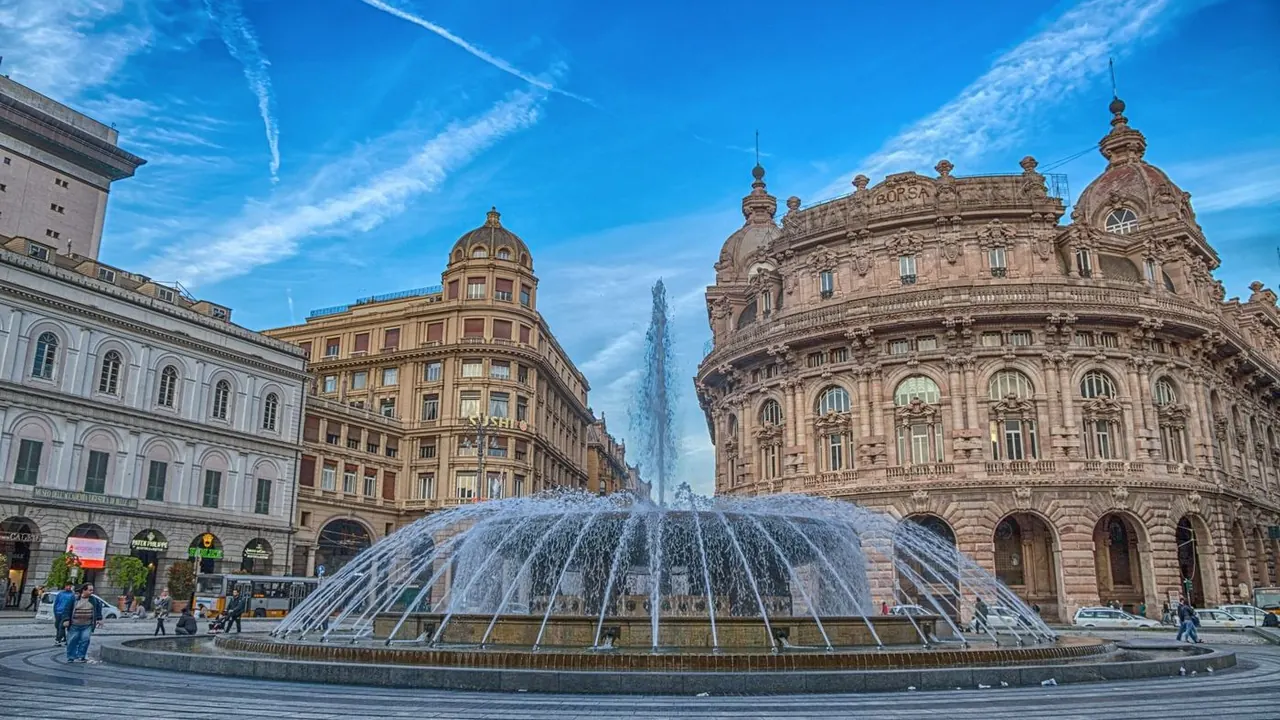
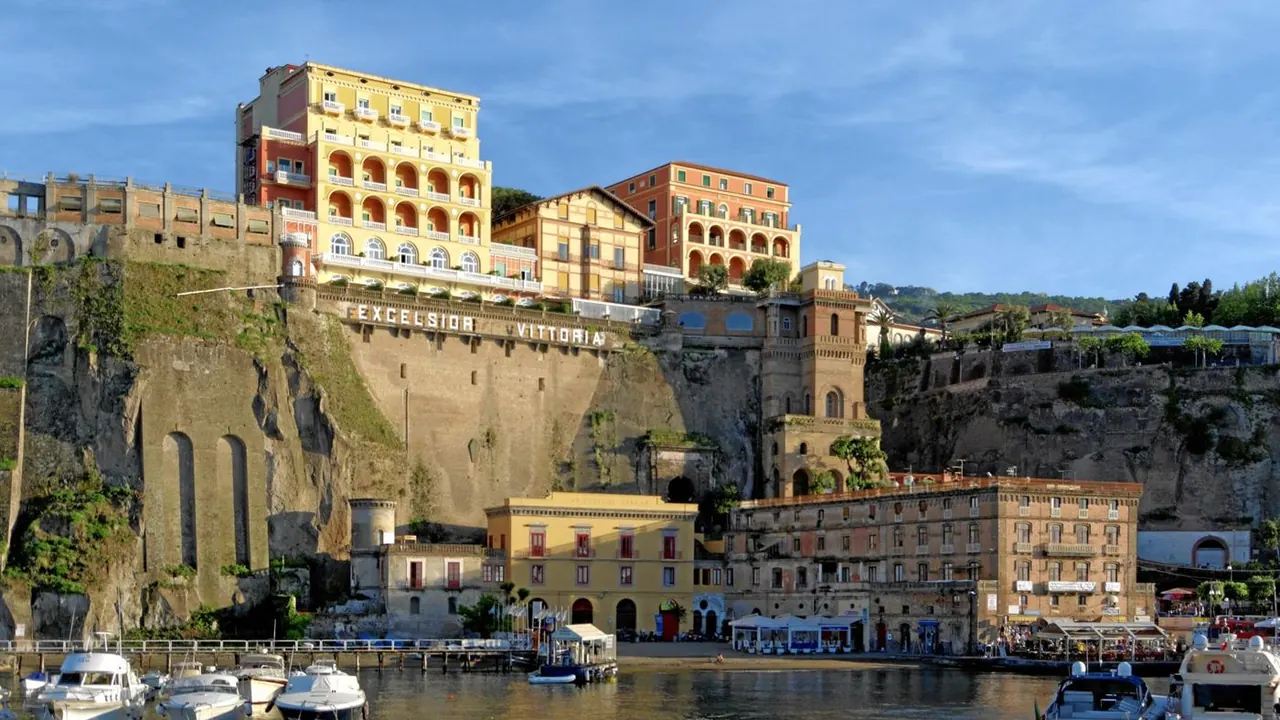
Photos: Genoa by Faber1893, CC BY-SA 4.0, cropped; Sorrento by Berthold Werner, CC BY-SA 3.0, cropped.
Genoa or Sorrento?
Our verdict in twelve categories, each scored against the same fixed benchmark cities, and the climate month by month, so you can choose for your trip.
Choose Genoa for
- culture and sights
- live music and the arts
- prices
Genoa suits the traveller who wants a real working city with plenty in it. The caruggi and the Rolli palaces give days of sightseeing, the pesto, focaccia and farinata are eaten where they were invented, and evenings run to aperitivo in old-town squares or a night at the opera. It is also cheaper, easier with children around the Porto Antico, and the Riviera is a short train ride away.
Choose Sorrento for
- wellness
- day trips
- nature and the outdoors
Choose Sorrento for a slower vacation built around excursions. The town itself is small and goes quiet after dark. Its strength is what lies around it: Pompeii, Herculaneum, Vesuvius, Capri and the Amalfi Coast are all close by. Summers are warmer, and the cliff hotels with their pools and terraces over the bay make it the easier place to unwind, though you pay more for it.
Scoreboard
Twelve categories on one fixed scale from 0 to 100. The shaded stretch is the gap between the two.
Your match
Pick a travel style or drag the sliders, and both match scores follow your weighting.
Wins on culture and sights and live music and the arts with your weighting.
Wins on wellness and day trips with your weighting.
What matters to you?
Category by category
What the scores mean for a trip.
Beaches & swimming
Neither is a sandy beach resort, and the swimming is about equally good. What differs is the setting. In Genoa you swim from inside the city, at the pebble cove of Boccadasse, the bathing establishments on the rocks along Corso Italia and the platforms below Nervi, and the train reaches the sandier shore at Varazze.
Sorrento's swimming is off wooden piers at Marina Piccola and Marina Grande into deep, clear water, or from the rocks at the Bagni della Regina Giovanna. For a pebble beach you have to take a bus or a boat. The sea is a degree or so warmer here, and paid loungers take up much of the shore in both places.
Food & drink
Genoa is the better place to eat day to day. Pesto with trofie, pansoti in walnut sauce, and farinata and fried fish from the old-town friggitorie are local food at its source, and the Mercato Orientale shows the produce behind them.
Sorrento's Campanian cooking is excellent at its best: gnocchi alla sorrentina, fish all'acqua pazza and mozzarella from the hill dairies. But the centre is full of menus for tour groups, so the good meals take some seeking out on back lanes and at Marina Grande. Sorrento has one advantage: the celebrated fine dining in the peninsula's hill villages, a top tier Genoa does not have.
Culture & sights
There is far more to see in Genoa. Its medieval quarter is one of Europe's largest, and the UNESCO-listed palaces of Via Garibaldi hold Van Dyck and Rubens. Add the striped cathedral, the Palazzo Ducale, the maritime museum and the marble sculpture of Staglieno, and the sightseeing fills several days.
Sorrento's own sights fit into a gentle day or two: the cloister of San Francesco, the Museo Correale and the ravine of the Vallone dei Mulini. Its cultural riches lie outside the town, and those belong under day trips.
Nightlife
Neither is a party town, but Genoa has more going on. Students and locals fill the small bars around Piazza delle Erbe late on weekends, and in summer the evening moves to the waterfront and the Corso Italia beach clubs. Sorrento's evenings are a passeggiata, a terrace drink and piano bars playing Neapolitan song. Most of the year it is quiet early, and the last trains leave before a night in Naples can really begin.
Nature & outdoors
Both have fine walking country, of different kinds. From Genoa a funicular climbs to the ring of hilltop forts. The Portofino promontory and the terraced Cinque Terre trails are reached by train, and boats go out to watch whales and dolphins in the Pelagos Sanctuary.
The scenery around Sorrento is more volcanic and more vertical. You can walk out to Punta Campanella facing Capri, take the Path of the Gods or Monte Faito, or climb to the rim of Vesuvius. On the water there are boats and kayaks among the Capri grottoes. In both, spring and autumn are the seasons for walking.
Day trips
Genoa is well placed for day trips, but Sorrento sits among some of Italy's most famous places. Pompeii, Herculaneum and Vesuvius are each a short ride away, Capri is under an hour by ferry, and summer boats run to Positano and Amalfi. Naples, with its archaeological museum, is about an hour off.
Genoa's trips run along one railway, to Portofino, Camogli and the Cinque Terre, and to the walled town of Finale Ligure Borgo. Milan and Turin are close enough for a museum day. It is a strong list, but less concentrated.
Good for families
Genoa has far more for children. The aquarium alone can fill half a day, and the science centre, biosphere and walk-through submarine sit beside it at the Porto Antico, with funiculars and public lifts as rides in themselves. Its drawback is the steep, stepped old town, which is hard with a pushchair.
Sorrento's flat centre is easier on that score, and children usually enjoy the boat trips to Capri and the ruins at Pompeii. Little else is made for them, though, and the swimming is into deep water off piers rather than from shallow sand.
Getting around
Getting around is a little easier in Genoa. The old town is walkable, though steep, the funiculars and lifts climb the hills, and the coastal railway reliably links Nervi and the Riviera towns. Sorrento's own centre is small and flat, but leaving it is harder: the Circumvesuviana is crowded and delay-prone, summer buses crawl round the Amalfi hairpins, and ferries are often the most comfortable option. In neither place is a car worth the trouble.
Shopping & style
Genoa has more variety. Via XX Settembre and Via Roma cover the Italian labels, and the old town has long-established shops for candied fruit, olive oil and pesto, along with filigree silver made in small workshops.
Most of what Sorrento sells is lemon-themed: limoncello, soaps and painted ceramics. Its standouts are intarsia woodwork and leather sandals made to measure while you wait. For fashion you would go to Naples or Capri.
Affordability
Genoa is clearly cheaper. It is a mid-range city that feels good value for Italy, with street food for very little and central hotels below the prices of better-known cities. Sorrento charges like a sought-after resort in summer, for sea-view rooms, lidos and boat trips. Its cheap trains and back-lane pizzerias help, and spring and late autumn bring hotel rates down. In Genoa, the costs climb only once you reach the smart Riviera towns.
Live music & performing arts
Genoa has a proper cultural calendar. The Teatro Carlo Felice stages opera, ballet and symphonic concerts, the Teatro Nazionale is an established drama company, and Paganini's city honours him with concerts. Sorrento offers tarantella and Neapolitan song shows staged for visitors, and summer chamber music in the San Francesco cloister. For opera you would need an evening trip to the San Carlo in Naples.
Wellness & relaxation
Sorrento is the better place to rest. The cliff hotels have spas and pools above the bay, the villa gardens set an unhurried pace, and Ischia's thermal gardens by the sea are a ferry ride away. Genoa's quiet corner is Nervi, with its promenade and villa parks, and its nearest spa waters are inland at Acqui Terme. The centre itself, with the port and the traffic, is not restful.
When should you go?
Pick your month. The climate figures are measured averages, not a forecast.
Genoa in July
Sorrento in July
Daytime high, °C
Rainfall in the month, mm
Where the figures come from
Genoa has no rain gauge within 25 km of the centre, so its rainfall comes from a gridded climate dataset read at the city rather than from a gauge further away.
Genoa's sunshine is measured 80 km from the centre, at Capo Mele.
Sorrento has no rain gauge within 25 km of the centre, so its rainfall comes from a gridded climate dataset read at the city rather than from a gauge further away.
Sorrento's sunshine is measured 54 km from the centre, at Grazzanise.
Temperature and rainfall are climate normals, averaged over the years shown. Genoa: 1991-2020 normals, Genova / Sestri (6.7 km from centre). Sorrento: 2005-2025 (sunshine 1991-2020, rainfall 1991-2020) normals, Capri (17 km from centre).
Both are at their best from May to early October, but Sorrento is the warmer of the two. Midsummer afternoons in Genoa peak around 28°C, which is comfortable in its shaded lanes. Sorrento reaches 29°C in July and August, when midday sightseeing and the exposed hill trails are hard going. The sea is warm enough to swim in at both from June to September, and at Sorrento it is still pleasant in October. July is the sunniest month in both places, and the driest in Genoa, though Sorrento is driest in August.
Rain returns in September. Genoa is wettest in October and November, and Sorrento has its heaviest month in November, with 151mm, and a wetter winter overall. Winters are mild in both. That is fine for Genoa's palaces and museums, but grey and cool for a resort that lives by the sea.
Which traveller are you?
For a trip on a tight budget, Genoa makes it easy to stay central, walk to most sights and eat standing at an old-town counter without feeling you are missing much. In Sorrento, saving money means giving up the sea view, the lido and the boat trip, the very things you came for.
On a relaxing and wellness trip, Genoa makes you go looking for calm, usually out at Nervi, and then brings you back to the noise of the port. In Sorrento the calm comes to you: book a hotel with a pool and a view of the bay, and let the days run to long lunches.
For travellers who come for the ancient world, Genoa's history is medieval and Renaissance, so Sorrento is the base. Pompeii is about half an hour away on the Circumvesuviana, Herculaneum is just beyond it, and the Greek temples of Paestum make a full day out.
Before you go
| Measure | Genoa | Sorrento |
|---|---|---|
| Official language | Italian | Italian |
| Currency | Euro (EUR) | Euro (EUR) |
| Sockets | CFL230 V, 50 Hz | CFL230 V, 50 Hz |
| Driving side | Right | Right |
| Time zone | UTC+1, UTC+2 in summer | UTC+1, UTC+2 in summer |
| Emergency number | 112 | 112 |
| Elevation | 20 m | 50 m |
| Main airport | Genoa Cristoforo Colombo Airport (GOA)7 km from centre25 non-stop destinations | Naples International Airport (NAP)30 km from centre131 non-stop destinations |
| Public holidays this year | 13 days | 13 days |
By the numbers
| Measure | Genoa | Sorrento |
|---|---|---|
| City population | 558,745 | 15,407 |
| People per km² | 2,325 | 1,541 |
| Museums within 10 km | 51 | 6 |
| UNESCO World Heritage sites within 50 km | 1 | 5 |
| Swim season, months above 21 °C | 4 months | 5 months |
Where else could you go?
Every comparison below shares a destination with this one, so you can follow Genoa or Sorrento somewhere new.