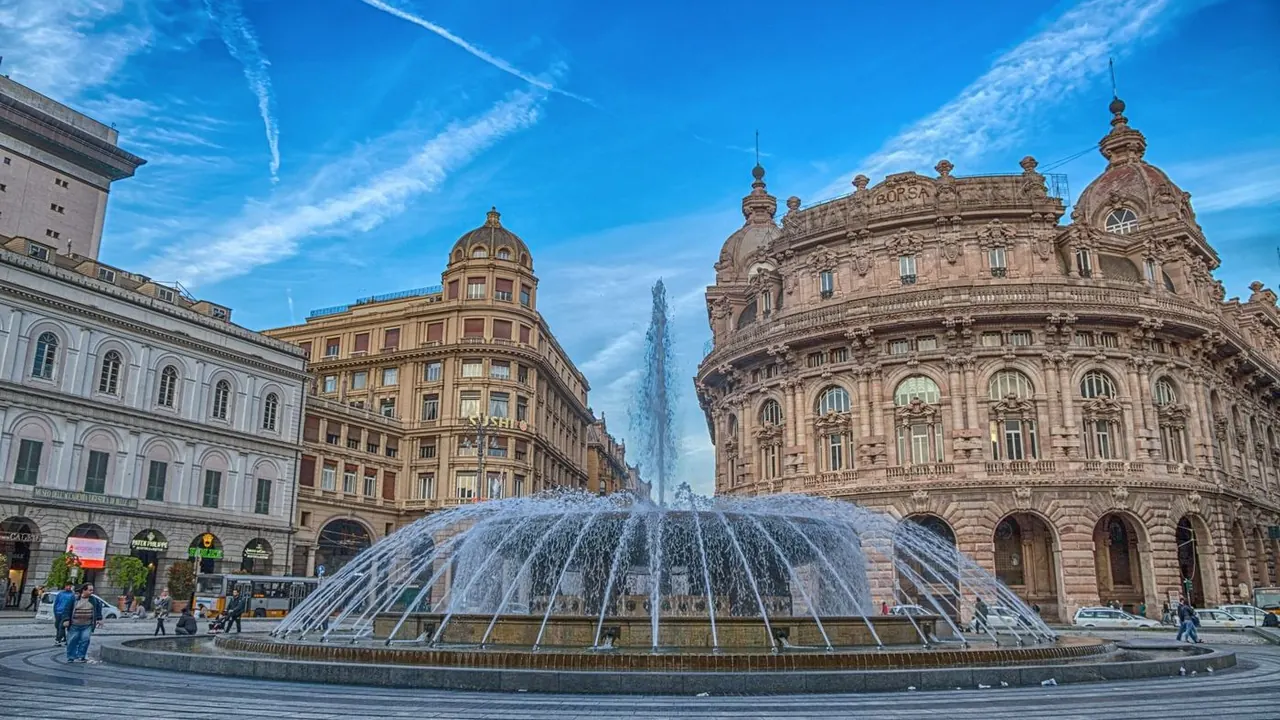
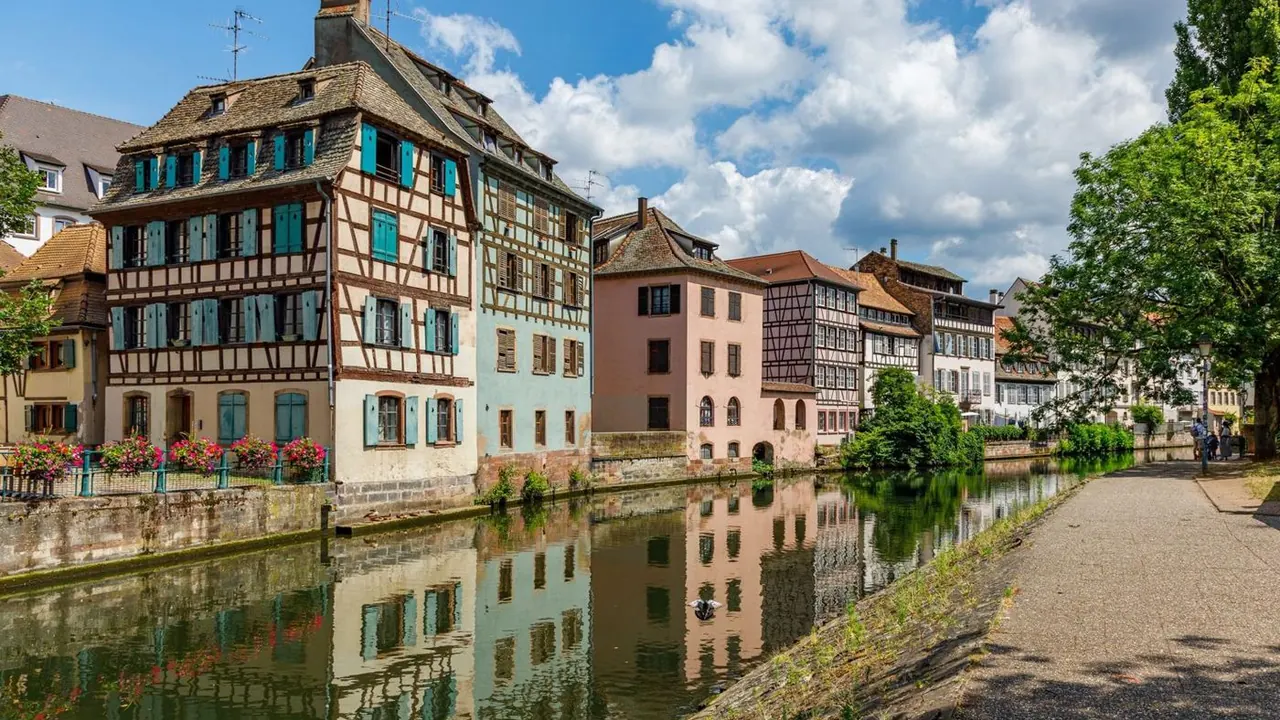
Photos: Genoa by Faber1893, CC BY-SA 4.0, cropped; Strasbourg by Edoardo Colombo, Pexels License.
Genoa or Strasbourg?
Our verdict in twelve categories, each scored against the same fixed benchmark cities, and the climate month by month, so you can choose for your trip.
Choose Genoa for
- beaches
- nature and the outdoors
- prices
Genoa is for the traveller who wants a city with the sea attached. Medieval lanes and palace museums fill the mornings, and the afternoon can be a swim at Nervi or a train along the Riviera to Camogli or the Cinque Terre. Its hills, coastal paths and Ligurian cooking give it more range than Strasbourg, and it costs less, but the city is steep, crowded and rarely restful.
Choose Strasbourg for
- wellness
- getting around
- shopping
Strasbourg suits a calmer, more orderly stay. The old town island is flat and compact, trams and bike lanes make it easy to get around, and the Alsace wine villages, the Vosges and Baden-Baden's baths are all close by. It is the better pick for an unhurried few days of good food, cycling and canal-side walks. Choose it for winter too, when the Christmas market and hearty winstub cooking come into their own.
Scoreboard
Twelve categories on one fixed scale from 0 to 100. The shaded stretch is the gap between the two.
Your match
Pick a travel style or drag the sliders, and both match scores follow your weighting.
Wins on beaches and nature and the outdoors with your weighting.
Wins on wellness and getting around with your weighting.
What matters to you?
Category by category
What the scores mean for a trip.
Beaches & swimming
Genoa has the sea. Boccadasse's pebble cove, the bathing establishments along Corso Italia and the rocks below Nervi are all in the city, and the Riviera towns along the railway add larger bays. Expect pebbles, rented loungers and crowded summer weekends, though, rather than wide stretches of sand.
Strasbourg is far inland, so swimming means its old gravel-pit lakes, such as the Baggersee at the end of the tram line. They have calm fresh water and grassy banks, good for cooling off on a hot day, but they are not a reason to visit.
Food & drink
Genoa eats more distinctively and more cheaply day to day. There is focaccia at breakfast, pesto pasta at lunch, and farinata and fried fish from the friggitorie in the caruggi, with seafood and Vermentino along the coast. Its weakness is a thin fine-dining tier.
Strasbourg's cooking is heavier, a mix of French and German: choucroute, baeckeoffe and tarte flambée in a wood-panelled winstub, with Alsace Riesling by the pichet. It has the stronger high-end restaurants of the two, but the tables around the cathedral lean towards tourist menus, and the food suits a cold evening better than a summer one.
Culture & sights
Genoa has more to discover. One of Europe's largest medieval quarters spreads below the Rolli palaces of Via Garibaldi, where painted halls hold Van Dyck and Rubens, and the striped cathedral, the old harbour and the marble sculpture of Staglieno could fill several more days.
Strasbourg's heritage is more compact and easier to take in. The pink sandstone cathedral and its astronomical clock, the timber-framed houses of Petite France and the German-built Neustadt form one UNESCO ensemble. Add the Palais Rohan museums and the European institutions, and two or three days covers it comfortably.
Nightlife
Neither city is built for a big night out, and both are quiet on weeknights. In Genoa, evenings mean aperitivo in medieval squares around Piazza delle Erbe and, in summer, beach clubs along the coast. Strasbourg's student crowd fills the beer cellars of the Krutenau and the riverside terraces, but things wind down earlier, often by midnight.
Nature & outdoors
Genoa's landscape is far more dramatic, with the outdoors right on its doorstep. A funicular takes you up to the ring of hilltop forts, the cliff paths of the Portofino promontory lead down to San Fruttuoso, and the Cinque Terre trails are a train ride away. Boats also leave the harbour to watch whales and dolphins in the Pelagos Sanctuary.
Strasbourg is flat, and its strength is easy cycling along the Rhine and the canals, with storks and beavers in the riverside forests. The real hiking, in the Vosges and the Black Forest, is about an hour away and much easier with a car.
Day trips
Genoa's excursions run along the sea. Camogli, Santa Margherita and Sestri Levante are stops on the coastal railway, with a short bus or boat ride from Santa Margherita to Portofino, and the Cinque Terre villages are about an hour and a half by train. Inland, Milan and Turin are close enough for a museum day.
From Strasbourg, the trips lead into vineyards and across a border. Colmar is half an hour south, the wine villages of Riquewihr and Eguisheim lie along the route between, and Freiburg and Heidelberg are across the Rhine. Trains serve the towns well, but the wine route is easier by car or bike.
Good for families
Genoa's family appeal is concentrated in one place, the Porto Antico. It has one of Europe's largest aquariums and the walk-through submarine at the Galata museum, and children can ride the funiculars and public lifts. Away from the harbour, steep stairs and dark lanes make pushchairs hard work, and there is little green space outside the Nervi parks.
Strasbourg is easier day to day. Its flat, largely car-free centre has boat trips around the Grande Ile, storks and rowing boats in the Orangerie park, and hands-on science at Le Vaisseau. Europa-Park, about an hour away, is the treat to plan around.
Getting around
Strasbourg is the easier city to get around. The old town island is pedestrianised and small enough to cross on foot, and trams and separated cycle lanes reach everything else, including Kehl across the Rhine.
Genoa takes more effort. The centre is a walkable maze, but it climbs steeply from the water, so funiculars and public lifts do the hard work, and buses crawl through congested streets. Its strongest link is the coastal railway to Nervi and the Riviera.
Shopping & style
Neither city is a destination for fashion or luxury, and in both the best buys are regional. In Genoa, look for silver filigree, coral, pesto and candied fruit from old shops in the caruggi. Strasbourg offers Alsace wine, Soufflenheim pottery and printed linens, and in December its long-established Christmas market fills the centre with stalls.
Affordability
Genoa is the cheaper stay. Focaccia and farinata make meals very cheap, central hotels cost less than in Italy's most visited cities, and the funiculars cost little. Costs rise mainly when you pay for loungers or stay in the smart Riviera towns in summer.
Strasbourg is priced like a French regional city. Winstub meals and wine by the pichet are fair, and many sights are free, but hotels are the big cost, and rooms are scarce and expensive during the Christmas market and the European Parliament's sessions.
Live music & performing arts
Genoa's stage life looks to its past. The Carlo Felice on Piazza De Ferrari is the place for opera, ballet or an orchestral night, and as Paganini's home town the city keeps coming back to his music. Its more personal side is the cantautori, the singer-songwriters it gave Italy, whose songs still fill small clubs. That makes an informal night of live music easier to find here than a grand production.
Strasbourg has the slightly fuller calendar, and more of it is new work. It has an opera house, a philharmonic and one of France's leading drama stages, and on top of those an autumn festival of contemporary music, a jazz festival, dance and experimental theatre. Very little happens outside that programme, though. You get the most from Strasbourg by booking a festival or a concert night ahead, while a Genoa evening can be left more to chance.
Wellness & relaxation
Strasbourg is the better place to slow down. It has the tiled pools and hammam of the Bains municipaux in town, Baden-Baden's thermal baths are within an hour, and canal-side walks set an easy pace for most of the year.
Genoa has no bathing tradition and is lively rather than restful. For quiet, head to the villa gardens and promenade at Nervi, or take a long lunch in a Riviera village. The nearest thermal spa, Acqui Terme, is over an hour inland.
When should you go?
Pick your month. The climate figures are measured averages, not a forecast.
Genoa in July
Strasbourg in July
Daytime high, °C
Rainfall in the month, mm
Where the figures come from
Genoa has no rain gauge within 25 km of the centre, so its rainfall comes from a gridded climate dataset read at the city rather than from a gauge further away.
Genoa's sunshine is measured 80 km from the centre, at Capo Mele.
Temperature and rainfall are climate normals, averaged over the years shown. Genoa: 1991-2020 normals, Genova / Sestri (6.7 km from centre). Strasbourg: 1991-2020 normals, Strasbourg (9.1 km from centre).
Genoa has the longer and sunnier season. From June to September the days are warm and the sea is warm enough to swim, reaching about 25°C in August, and July is the driest month. August highs of 28°C can make the steep climbs hot work, so May and late September are the most comfortable months for walking. Autumn brings the rain, with October the wettest month at 212mm. Winters are mild, but grey and damp.
Strasbourg has a continental pattern. Winters are cold, with January highs around 5°C and little sunshine from November to January, so a December visit means short, chilly days. Summers are pleasantly warm, peaking around 26°C, but this is also the wettest stretch, with showers and thunderstorms from May to August. For walking and cycling, late spring and September are the sweet spot in both cities. Genoa is the better bet from October to March, when its milder air makes walking much more pleasant than in Strasbourg.
Which traveller are you?
For a beach and sun trip, Genoa is the only real option. It has swimming coves and platforms within the city, and the Riviera beaches are a short train ride away. Strasbourg's lifeguarded gravel-pit lakes are fine for a hot afternoon but nothing more.
On a relaxing and wellness trip, Strasbourg is the calmer choice. It has a historic public bathhouse, Baden-Baden's thermal baths are under an hour away, and the flat streets, canals and riverside cycling set an easy pace. Genoa's port, traffic and steep lanes rarely let you unwind.
For a short city break, Strasbourg is easier to fit into a few days. The pedestrianised island holds the cathedral, Petite France and the main museums, and the trams cover everything else. Genoa rewards a longer stay, because its steep, maze-like centre and Riviera excursions take time to enjoy.
Before you go
| Measure | Genoa | Strasbourg |
|---|---|---|
| Official language | Italian | French |
| Currency | Euro (EUR) | Euro (EUR) |
| Sockets | CFL230 V, 50 Hz | CE230 V, 50 Hz |
| Driving side | Right | Right |
| Time zone | UTC+1, UTC+2 in summer | UTC+1, UTC+2 in summer |
| Emergency number | 112 | 112 |
| Elevation | 20 m | 132 m |
| Main airport | Genoa Cristoforo Colombo Airport (GOA)7 km from centre25 non-stop destinations | Strasbourg Airport (SXB)10 km from centre43 non-stop destinations |
| Public holidays this year | 13 days | 11 days |
By the numbers
| Measure | Genoa | Strasbourg |
|---|---|---|
| City population | 558,745 | 293,771 |
| People per km² | 2,325 | 3,752 |
| Museums within 10 km | 51 | 21 |
| UNESCO World Heritage sites within 50 km | 1 | 1 |
| Swim season, months above 21 °C | 4 months | - |
Where else could you go?
Every comparison below shares a destination with this one, so you can follow Genoa or Strasbourg somewhere new.