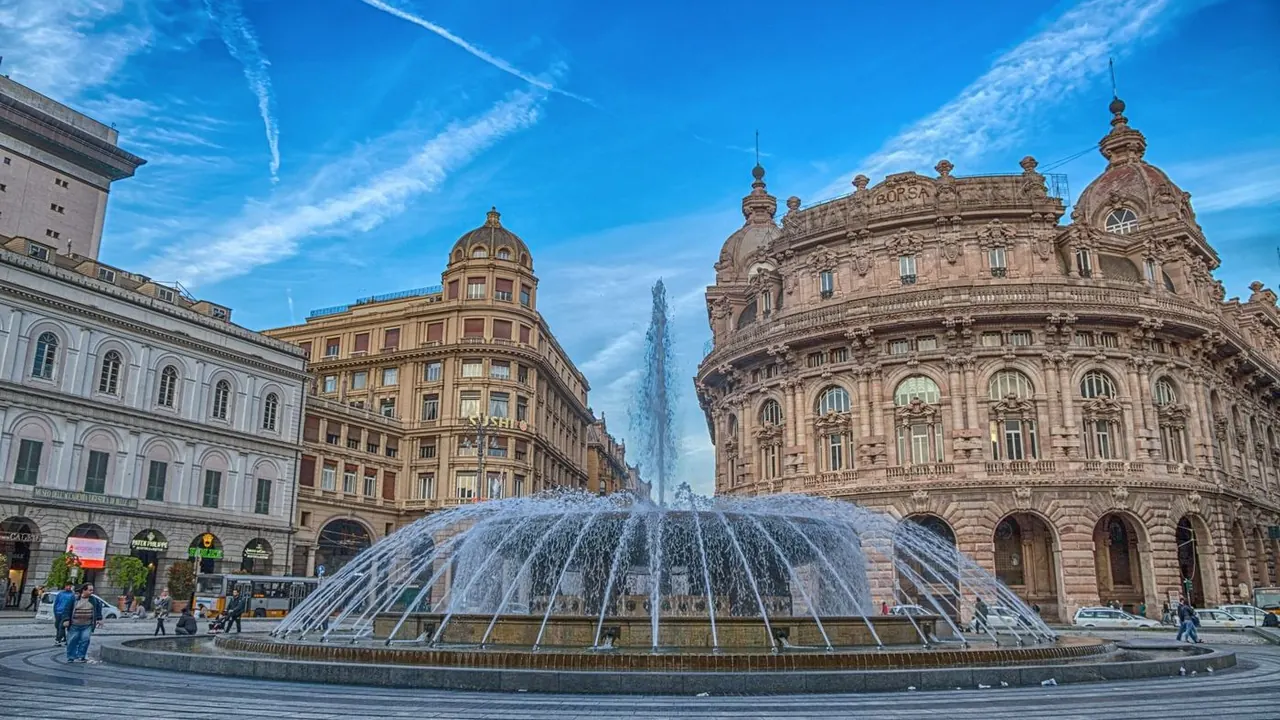
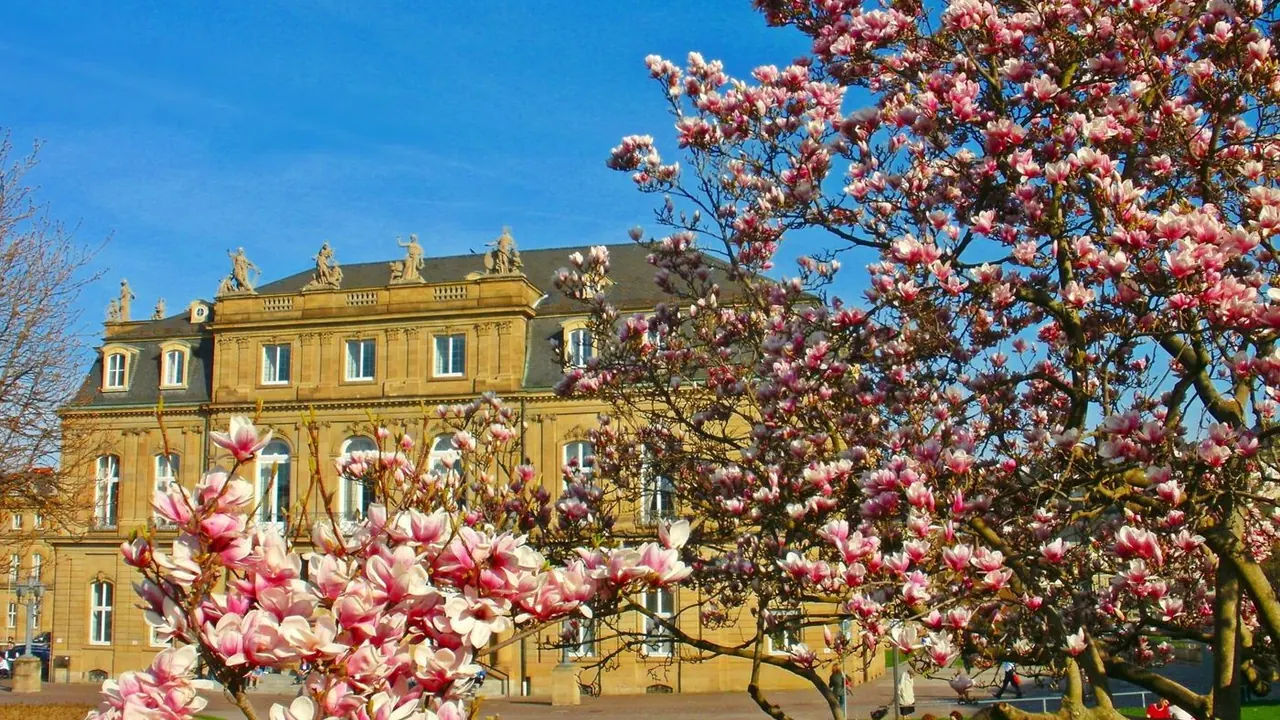
Photos: Genoa by Faber1893, CC BY-SA 4.0, cropped; Stuttgart by Baden de, CC BY 3.0, cropped.
Genoa or Stuttgart?
Our verdict in twelve categories, each scored against the same fixed benchmark cities, and the climate month by month, so you can choose for your trip.
Choose Genoa for
- beaches
- nature and the outdoors
- prices
Genoa is the choice for a trip that mixes city and sea. You get a swim most afternoons, pesto and focaccia where they were invented, a medieval maze of lanes under Renaissance palaces, and cliff paths to Portofino and the Cinque Terre a train ride away. It also costs less day to day, which suits travellers happy to trade polish for character and steep stairs.
Choose Stuttgart for
- wellness
- live music and the arts
- shopping
Stuttgart rewards visitors who care more about evenings in the theatre and afternoons in warm water than about the coast. Its ballet and opera are among Europe's finest, its mineral baths are a real local habit, and its flat centre and joined-up trains make it easy to get around. Car lovers, brand shoppers and anyone using it as a base for castles and university towns will find it the more comfortable fit.
Scoreboard
Twelve categories on one fixed scale from 0 to 100. The shaded stretch is the gap between the two.
Your match
Pick a travel style or drag the sliders, and both match scores follow your weighting.
Wins on beaches and nature and the outdoors with your weighting.
Wins on wellness and live music and the arts with your weighting.
What matters to you?
Category by category
What the scores mean for a trip.
Beaches & swimming
This is the widest gap between the two. Genoa lets you swim without leaving town, at the cove of Boccadasse, from the bathing establishments along Corso Italia or off the rocks at Nervi. Better bays at Camogli, Sestri Levante and Varazze are a short train ride away. Expect pebbles, rented loungers and crowded weekends rather than a beach-resort vacation.
Stuttgart offers no beach life at all. The Neckar is a working river, Max-Eyth-See is for boating, and a summer swim means an outdoor pool, some of them fed by mineral springs.
Food & drink
Genoa eats better and more distinctively: pesto with trofie, pansoti in walnut sauce, focaccia at breakfast, and chickpea farinata and fried fish by the slice from old friggitorie in the caruggi. Seafood and Vermentino along the coast complete it, though high-end dining is thin.
Stuttgart's Swabian table is heartier, with Maultaschen, Käsespätzle and onion-heaped roast beef in wine taverns. Its strengths are the city's own vineyards, the seasonal Besen taverns and a deeper fine-dining tier than Genoa's, but its street food is far more limited.
Culture & sights
Genoa has more to see and more of it is old. One of Europe's largest medieval quarters runs below the UNESCO-listed palaces of Via Garibaldi and Via Balbi, where the painted halls of Palazzo Rosso and Palazzo Bianco are as striking as the Van Dycks. Add San Lorenzo's striped cathedral and the marble sculpture of Staglieno, and the city fills several days.
Stuttgart's sights are modern rather than medieval: the Mercedes-Benz and Porsche museums, the Staatsgalerie with its postmodern wing, and the Le Corbusier houses of the Weissenhof Estate. Wartime bombing left the historic core in pockets around Schlossplatz, and two or three days covers it.
Nightlife
Neither city is built for a big night out, and both go quiet on weeknights. What differs is the setting. In Genoa it is aperitivo and late wine in the medieval squares around Piazza delle Erbe, moving to the seafront and beach clubs in summer.
Stuttgart has more of a club layer, in basements and old industrial spaces with an electronic following, plus the bar strip on Theodor-Heuss-Strasse. Its biggest nights come at set times of year, with the beer tents of the Cannstatter Volksfest and the wine village in the old centre.
Nature & outdoors
Genoa's landscape is the more dramatic, with steep hills dropping into the sea. A funicular takes you up to the ridge forts above the port, the Portofino promontory's cliff paths lead down to San Fruttuoso, and the Cinque Terre trails are a train ride away. Whale and dolphin trips, kayaking and diving add the sea.
Stuttgart's countryside is gentler: vineyard trails above the Neckar, deer forests at Rotwildpark and Schönbuch, and easy riverside cycling. The limestone cliffs and caves of the Swabian Jura and the Black Forest ridges are about an hour out, good walking but without a coastline.
Day trips
Both are excellent bases, and the choice comes down to coast against castles. Genoa's trips run along a single railway: Camogli, Portofino and Sestri Levante to the east, the Cinque Terre a little further, quieter Finale Ligure and Noli to the west, with Milan and Turin about an hour and a half inland.
Stuttgart's list is about palaces, abbeys and old towns. You can reach baroque Ludwigsburg, half-timbered Esslingen, Tübingen's punts, Heidelberg's castle, Maulbronn monastery, Hohenzollern on its hill and Ulm's great spire, and Strasbourg makes a long day over the border.
Good for families
Children are well catered for in both cities, but in different ways. Genoa has one big draw: the Porto Antico, with its large aquarium, science centre, biosphere and walk-through submarine all side by side. Away from the harbour, the dark, stepped lanes are hard work with a pushchair, though swimming coves and gelato make up for it.
Stuttgart spreads its family appeal more evenly. Wilhelma's zoo and gardens fill a day, Killesberg has a miniature railway and animals, and there are playgrounds, outdoor pools and beer gardens, plus a fairy-tale garden at Ludwigsburg.
Getting around
Stuttgart is the easier city to move around. Its centre, from Königstrasse to the Markthalle and Schlossplatz, is flat and walkable, and one ticket covers light rail, S-Bahn, buses, the rack railway and the funicular, out to Wilhelma, the car museums and the airport.
Genoa takes more effort. The old town is a steep maze, the metro is a single short line and buses crawl through narrow streets, though the funiculars and public lifts help on the hills. Its trump card is the coastal railway, which makes Nervi and the Riviera easy without a car.
Shopping & style
Stuttgart is the better place for a shopping trip. Königstrasse is a long pedestrian high street, a nineteenth-century family department store anchors the designer end, and the outlet town of Metzingen is half an hour away. Independent shops sit around Calwer Strasse and the Bohnenviertel.
Genoa's appeal is smaller and more particular: arcaded Via XX Settembre for Italian labels, but above all old-town shops for candied fruit, olive oil and pesto, and workshops making silver filigree and coral.
Affordability
Genoa is the cheaper stay. Street food like focaccia and farinata costs very little, central hotels undercut Italy's best-known cities, and only the smart Riviera resorts and lounger rentals add up in summer.
Stuttgart is a prosperous business city with prices to match, and hotel rooms are at their dearest during trade fairs. Weekend stays and hearty tavern meals soften the bill, but smart dining and central rooms are noticeably expensive.
Live music & performing arts
Stuttgart is the city to plan an evening around. The Stuttgart Ballet, famous since John Cranko's time, and an adventurous opera company share the state theatre beside the palace gardens. The Liederhalle carries a strong Bach tradition, and the Möhringen theatres run long musical seasons, with jazz through the week.
Genoa offers enough for a night or two. There is opera and ballet at the Carlo Felice, Paganini concerts and small clubs that keep its singer-songwriter heritage alive, while the drama at the Teatro Nazionale is in Italian.
Wellness & relaxation
Stuttgart has a real bathing culture, which Genoa lacks. The mineral springs of Bad Cannstatt and Berg feed public baths where you soak in naturally fizzy warm water, indoors and out, with saunas at the larger ones.
In Genoa, unwinding means a walk along Nervi's promenade and villa gardens or a long lunch in a Riviera village. Spas are mostly in hotels, and the nearest thermal waters are at Acqui Terme, over an hour inland.
When should you go?
Pick your month. The climate figures are measured averages, not a forecast.
Genoa in July
Stuttgart in July
Daytime high, °C
Rainfall in the month, mm
Where the figures come from
Genoa has no rain gauge within 25 km of the centre, so its rainfall comes from a gridded climate dataset read at the city rather than from a gauge further away.
Genoa's sunshine is measured 80 km from the centre, at Capo Mele.
Temperature and rainfall are climate normals, averaged over the years shown. Genoa: 1991-2020 normals, Genova / Sestri (6.7 km from centre). Stuttgart: 1991-2020 normals, Stuttgart / Neckartal (2.8 km from centre).
Genoa has the longer and sunnier warm season. The sea is warm enough for swimming from June, reaching about 25°C in August, and midsummer is dry and bright, with highs around 28°C, warm but rarely too hot for the lanes, which stay shaded anyway. The rain sets in from September and peaks in October at about 212mm, so autumn is the wettest time to go. Winters are mild enough for sightseeing in a jacket, and spring is the best season for coastal walks.
Stuttgart has a sharper continental swing. Winter days hover around 6°C and are grey, with half Genoa's sunshine, so it suits indoor plans like the museums, the stage and the mineral baths. Late spring to early autumn is the pleasant stretch for walking and beer gardens, though summer is its wettest season, with showers bringing about 79mm in July. September and October, when the vineyards and the Jura turn, are its most reliable months for walking.
Which traveller are you?
On a beach and sun trip, Genoa is the only real option, best for someone who wants an afternoon swim between sights rather than a week on a lounger. Stuttgart lies far inland, where a summer swim means an outdoor pool.
For a relaxing and wellness trip, Stuttgart suits travellers after an unhurried routine: a morning soak alongside locals, an afternoon vineyard walk, an evening at the ballet. Genoa's stairs, crowded lanes and working port reward exploring more than unwinding.
On a trip on a tight budget, Genoa goes further for travellers happy to eat standing up and spend their days outdoors: free swims off the rocks, walks to the ridge forts, cheap coastal trains. Stuttgart's best moments, the ballet and fine dining, come at a price.
Before you go
| Measure | Genoa | Stuttgart |
|---|---|---|
| Official language | Italian | German |
| Currency | Euro (EUR) | Euro (EUR) |
| Sockets | CFL230 V, 50 Hz | CF230 V, 50 Hz |
| Driving side | Right | Right |
| Time zone | UTC+1, UTC+2 in summer | UTC+1, UTC+2 in summer |
| Emergency number | 112 | 112 |
| Elevation | 20 m | 245 m |
| Main airport | Genoa Cristoforo Colombo Airport (GOA)7 km from centre25 non-stop destinations | Stuttgart Airport (STR)10 km from centre124 non-stop destinations |
| Public holidays this year | 13 days | 12 days |
By the numbers
| Measure | Genoa | Stuttgart |
|---|---|---|
| City population | 558,745 | 609,365 |
| People per km² | 2,325 | 2,938 |
| Museums within 10 km | 51 | 42 |
| UNESCO World Heritage sites within 50 km | 1 | 3 |
| Swim season, months above 21 °C | 4 months | - |
Where else could you go?
Every comparison below shares a destination with this one, so you can follow Genoa or Stuttgart somewhere new.